
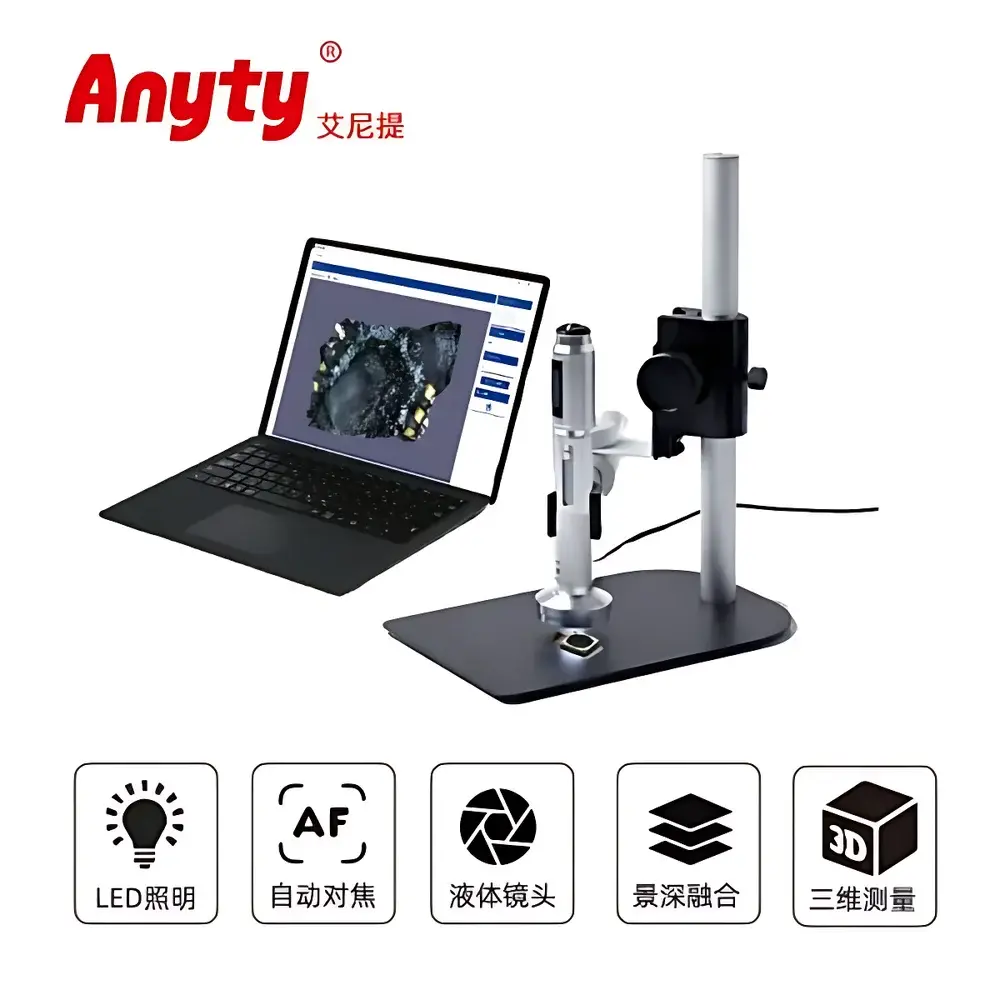
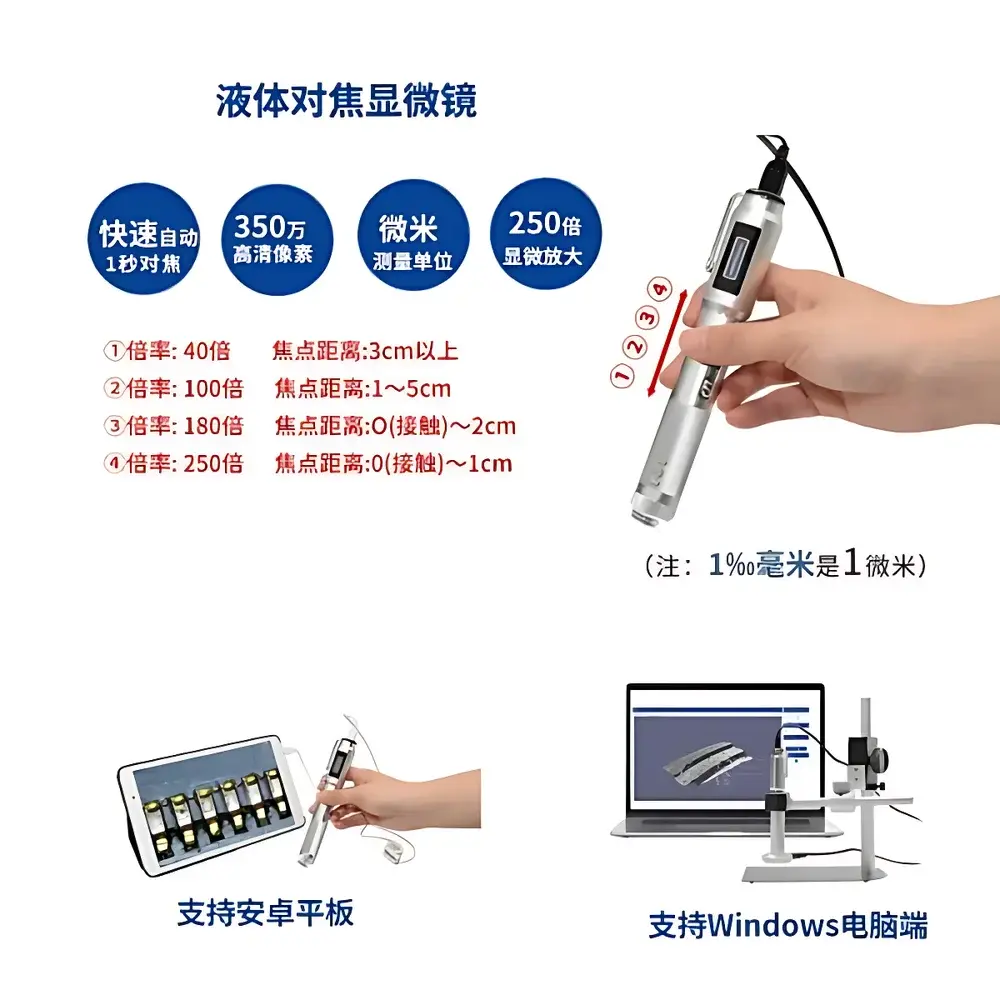
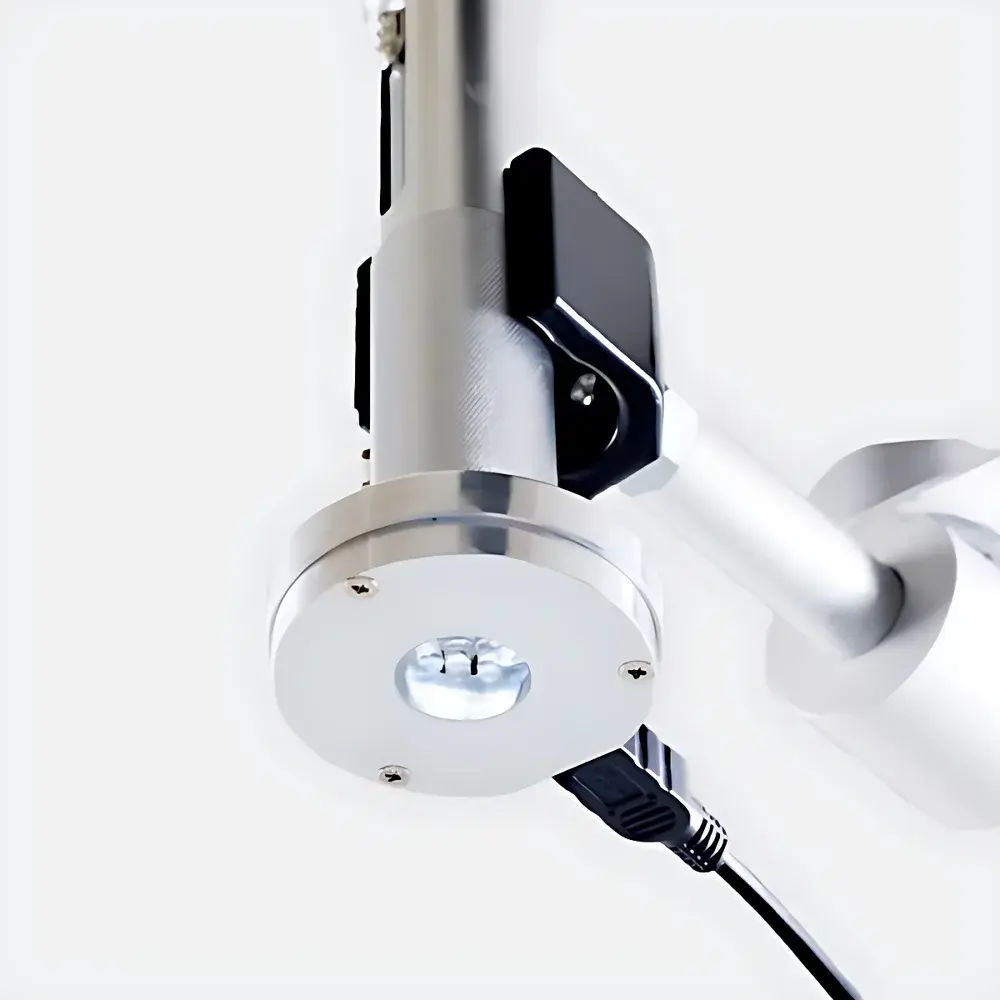
Anyty 3R-MSBTVTY-3DSF Portable Liquid-Lens Autofocus 3D Reconstruction Digital Microscope
| Brand | Anyty |
|---|---|
| Origin | Beijing, China |
| Manufacturer Type | OEM Manufacturer |
| Country of Origin | China |
| Model | 3R-MSBTVTY-3DSF |
| Imaging Sensor | CMOS |
| Magnification | Up to 250× |
| Focus Mechanism | Electromechanical Liquid Lens with Dual-Mode Autofocus (Hardware & Software-Controlled) |
| Light Source | Integrated Adjustable LED Illumination |
| Connectivity | USB-C and Wireless (Wi-Fi/Bluetooth) for Mobile & PC Integration |
| Lens Technology | Human-Eye-Mimicking Adaptive Liquid Lens |
Overview
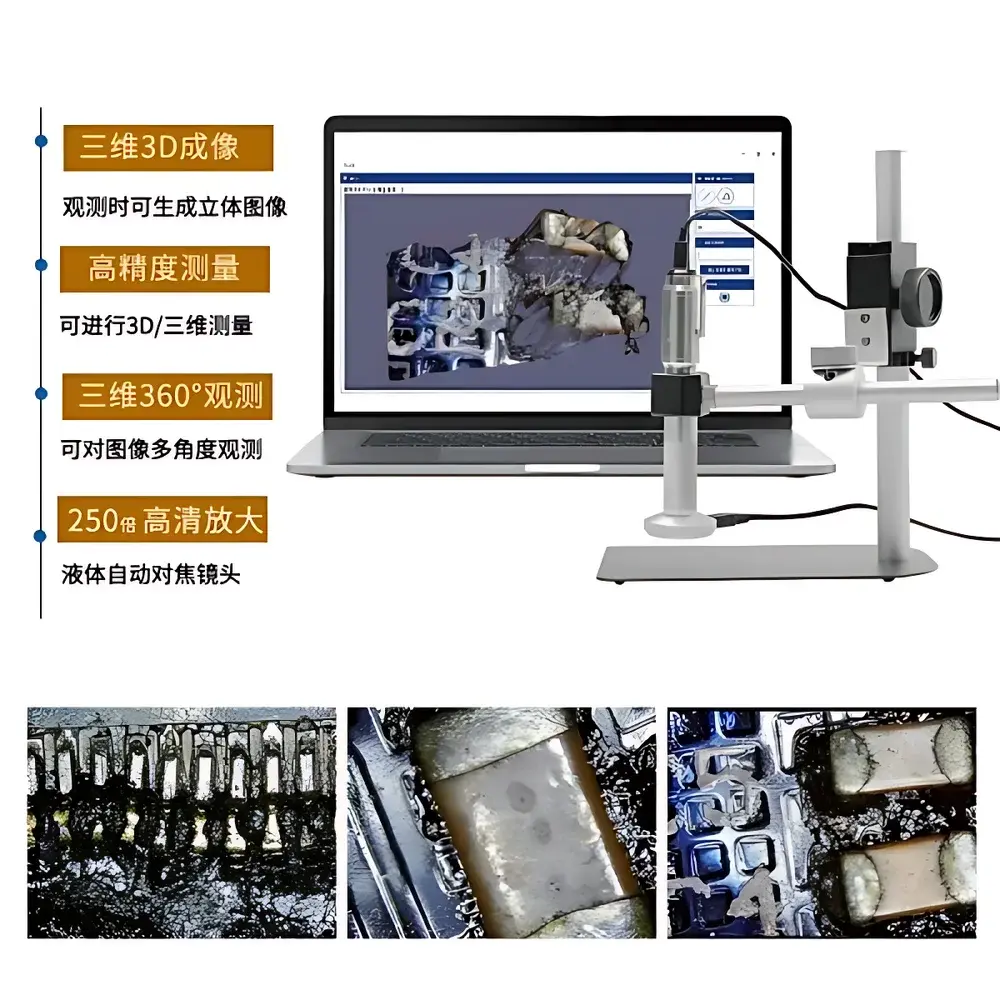
The Anyty 3R-MSBTVTY-3DSF is a field-deployable digital microscope engineered for high-fidelity 3D surface reconstruction, precision dimensional metrology, and real-time optical inspection in non-laboratory environments. Unlike conventional fixed-focus or mechanically actuated zoom systems, this instrument employs an adaptive liquid lens technology—where refractive index and curvature are dynamically modulated via electrowetting—to achieve rapid, hysteresis-free focus adjustment across a continuous depth range. This principle enables consistent optical sectioning and Z-stack acquisition without mechanical backlash or thermal drift, supporting accurate height mapping and topographic profiling. Designed for forensic documentation, electronics failure analysis, heritage conservation, and in-situ quality control, the 3R-MSBTVTY-3DSF delivers calibrated 250× magnification with true-color fidelity, minimal chromatic aberration, and sub-pixel edge resolution—critical for ISO/IEC 17025-compliant visual inspection workflows.
Key Features
- Adaptive liquid lens autofocus system enabling sub-100 ms focus response time and repeatable Z-positioning within ±0.5 µm tolerance across 0–50 mm working distance
- Dual-control autofocus architecture: hardware-triggered (dedicated physical button) and software-driven (via Anyty MicroVision Suite), both supporting programmable focus presets
- Integrated multi-angle white LED illumination with adjustable intensity and cold-light spectral output (5000K CCT), minimizing thermal load on heat-sensitive specimens
- USB-C 3.2 Gen 1 interface for lossless 1080p60 video streaming and still capture; optional Wi-Fi 5 (802.11ac) and Bluetooth 5.0 modules for wireless tethering to iOS/Android tablets and Windows laptops
- Compact monolithic housing (142 × 58 × 45 mm), IP52-rated against dust ingress and incidental moisture, compatible with standard C-mount accessories and third-party calibration targets
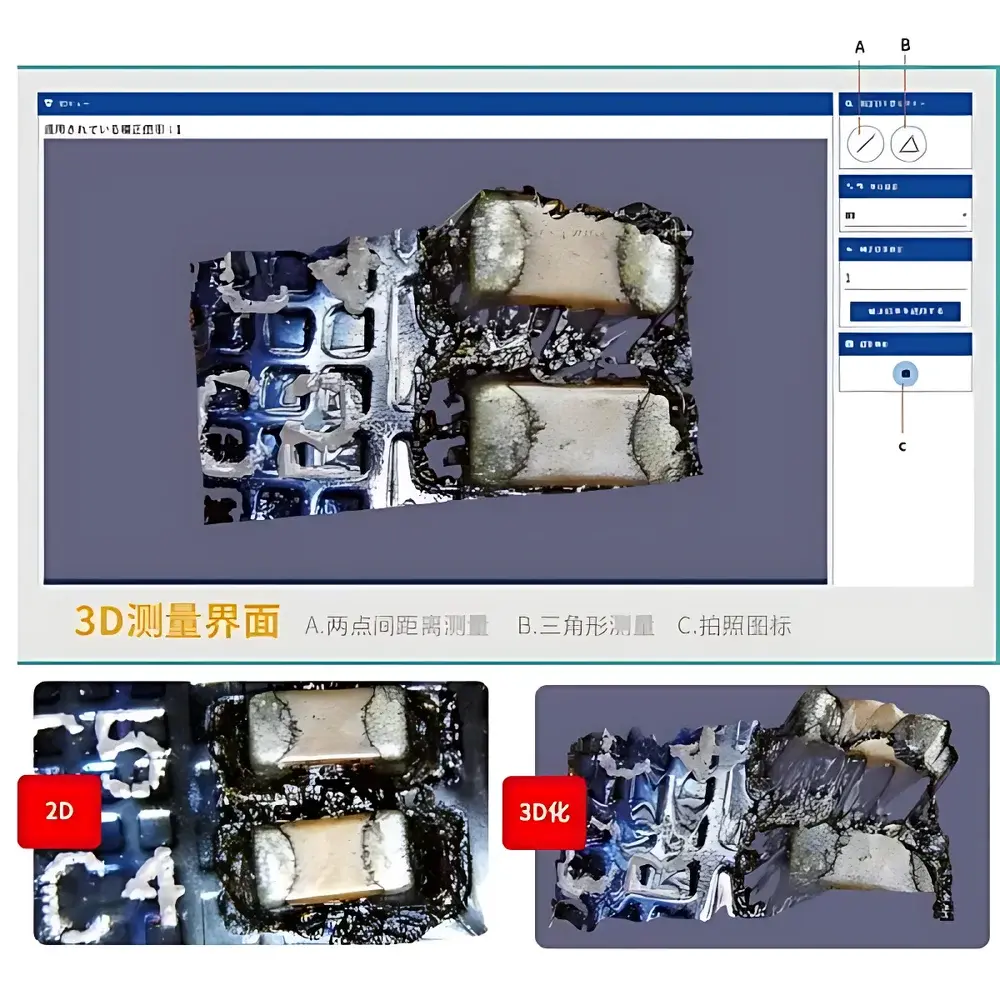
- Real-time 3D reconstruction engine embedded in firmware—generates STL-compatible surface meshes from sequential focal planes using structure-from-focus algorithms compliant with ASTM E2923-22 for optical 3D measurement validation
Sample Compatibility & Compliance
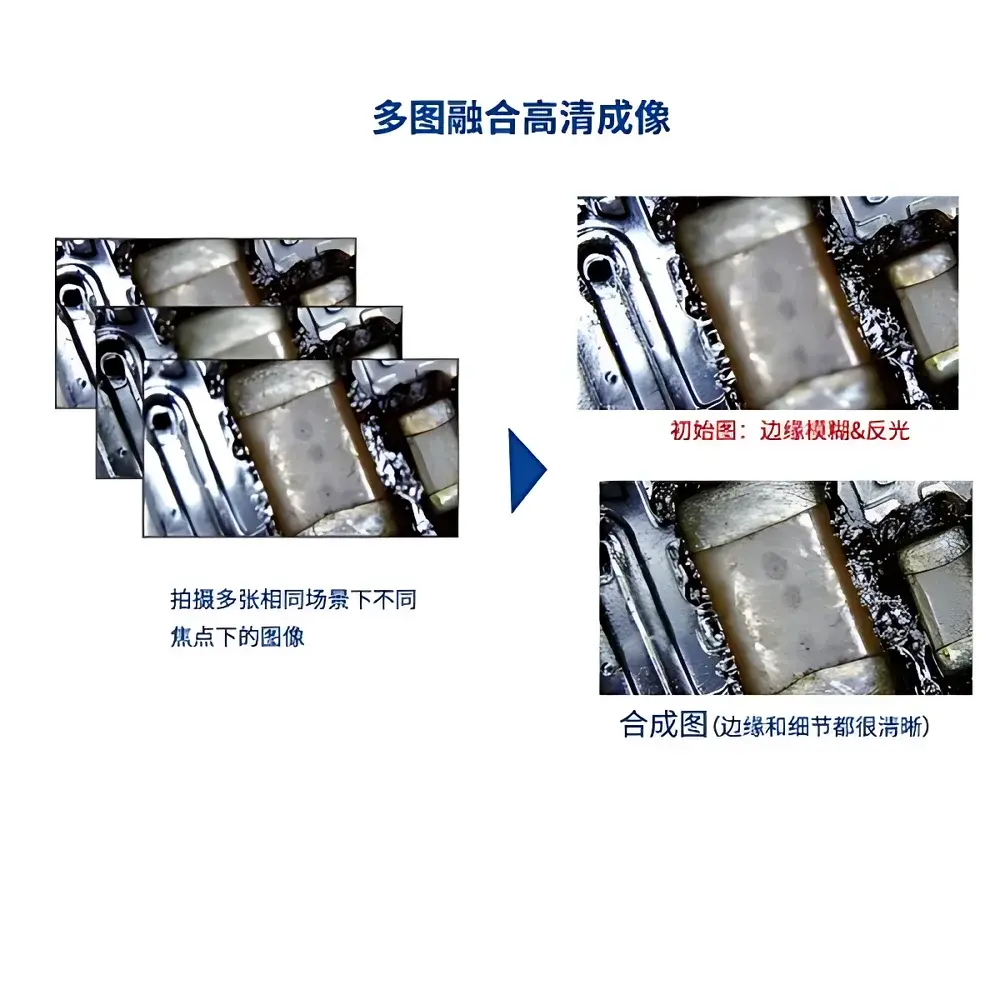
The 3R-MSBTVTY-3DSF accommodates reflective, translucent, and low-contrast specimens—including solder joints, textile fibers, corrosion layers, ink strokes on archival paper, and microelectronic traces—without requiring vacuum coating or conductive staining. Its extended depth-of-field mode (EDOF) mitigates defocus blur in uneven surfaces, while the liquid lens’s absence of moving parts ensures long-term stability under vibration or temperature fluctuation (operating range: 5–40 °C). The device conforms to IEC 61000-6-3 (EMC emission limits) and IEC 61000-6-2 (immunity requirements), and its optical calibration protocol supports traceability to NIST-traceable reference standards. Firmware version 2.4+ includes audit trail logging and user access controls aligned with GLP/GMP documentation prerequisites per FDA 21 CFR Part 11 Annex 11 guidelines.
Software & Data Management
The bundled Anyty MicroVision Suite (v4.2+) provides full control over imaging parameters, Z-stack acquisition, 3D rendering, and quantitative measurement (line, area, angle, step height, roughness Ra/Rz). All raw image sequences and reconstructed point clouds are stored in vendor-neutral formats: TIFF (16-bit linear), CSV (Z-stack metadata), and OBJ/STL (mesh exports). The software implements role-based permissions, encrypted local database storage, and export logs with timestamps, operator IDs, and instrument serial numbers—facilitating compliance with ISO 9001 clause 7.5.3 and ISO/IEC 17025:2017 clause 7.8.2. Remote firmware updates are authenticated via RSA-2048 signatures to ensure integrity.
Applications
- Electronics Manufacturing: Solder void detection, BGA ball coplanarity verification, and conformal coating thickness assessment using calibrated depth-slicing
- Forensic Science: Toolmark comparison, fiber cross-section analysis, and document alteration detection through layer-resolved reflectance imaging
- Cultural Heritage: Non-contact pigment stratigraphy of painted surfaces and micro-crack propagation monitoring in conservation treatments
- Materials R&D: Real-time observation of phase transitions in polymers and thin-film dewetting dynamics under ambient conditions
- Field-Based QA/QC: On-site inspection of weld seams, additive manufacturing part porosity, and composite laminate delamination
FAQ
Does the liquid lens require periodic recalibration?
No—the liquid lens module is factory-calibrated and sealed; no user-serviceable recalibration is needed. System-level focus accuracy is verified during each power-on self-test using internal photodiode feedback.
Can measurement data be exported to LIMS or ERP systems?
Yes—CSV and XML exports support automated ingestion into LabVantage, Thermo Fisher SampleManager, and SAP QM modules via configurable REST API endpoints included in the Enterprise License tier.
Is the microscope compatible with third-party stereomicroscope stands or articulating arms?
Yes—it features a standardized 1/4″-20 UNC threaded base mount and optional adapter plates for Leica, Olympus, and Mitutoyo mounting interfaces.
What is the maximum Z-stack depth achievable in a single acquisition?
Up to 200 focal planes at user-defined step intervals (0.1–10 µm), limited only by specimen height and available RAM; typical acquisition time for 100-plane stacks is under 45 seconds.
Does the device meet medical device regulatory requirements?
While not classified as a Class II medical device, its design and documentation package satisfies essential requirements of IEC 62304 (software lifecycle) and ISO 13485:2016 Annex A for use as a supporting tool in ISO 15189-accredited pathology labs.



