
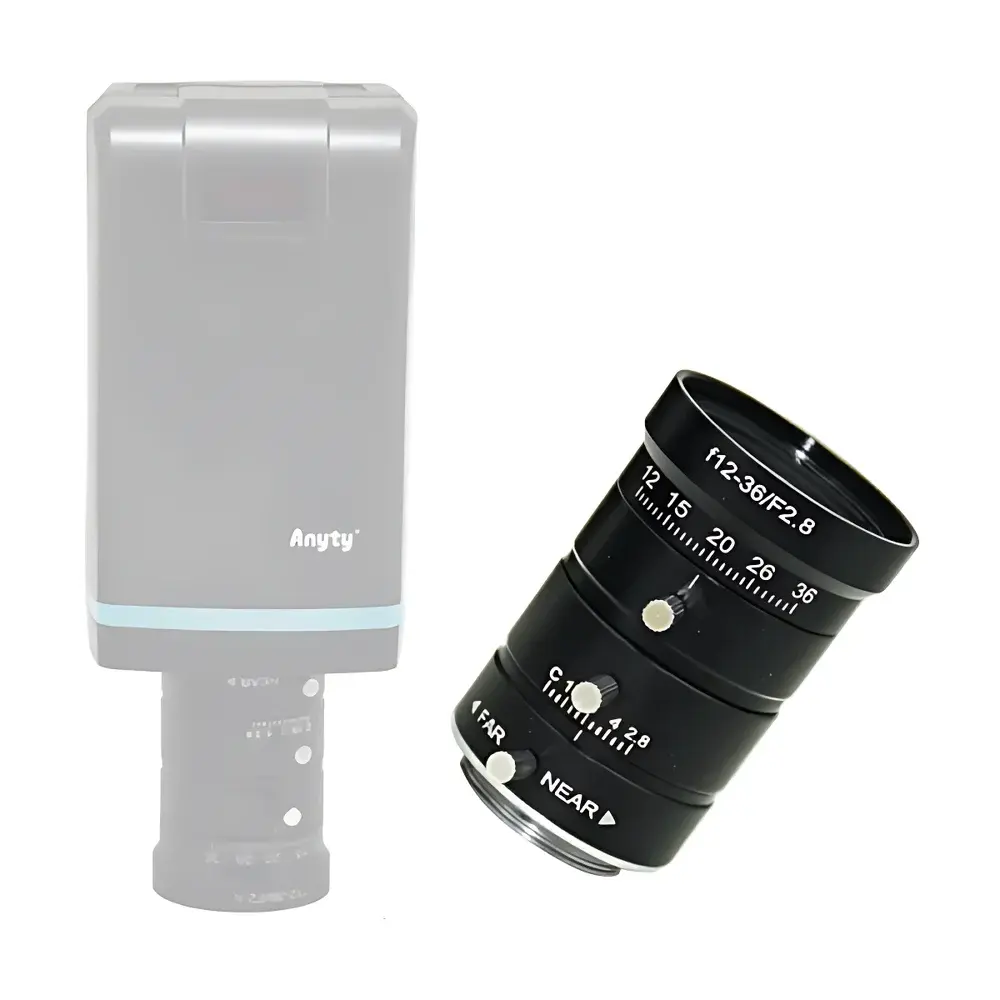
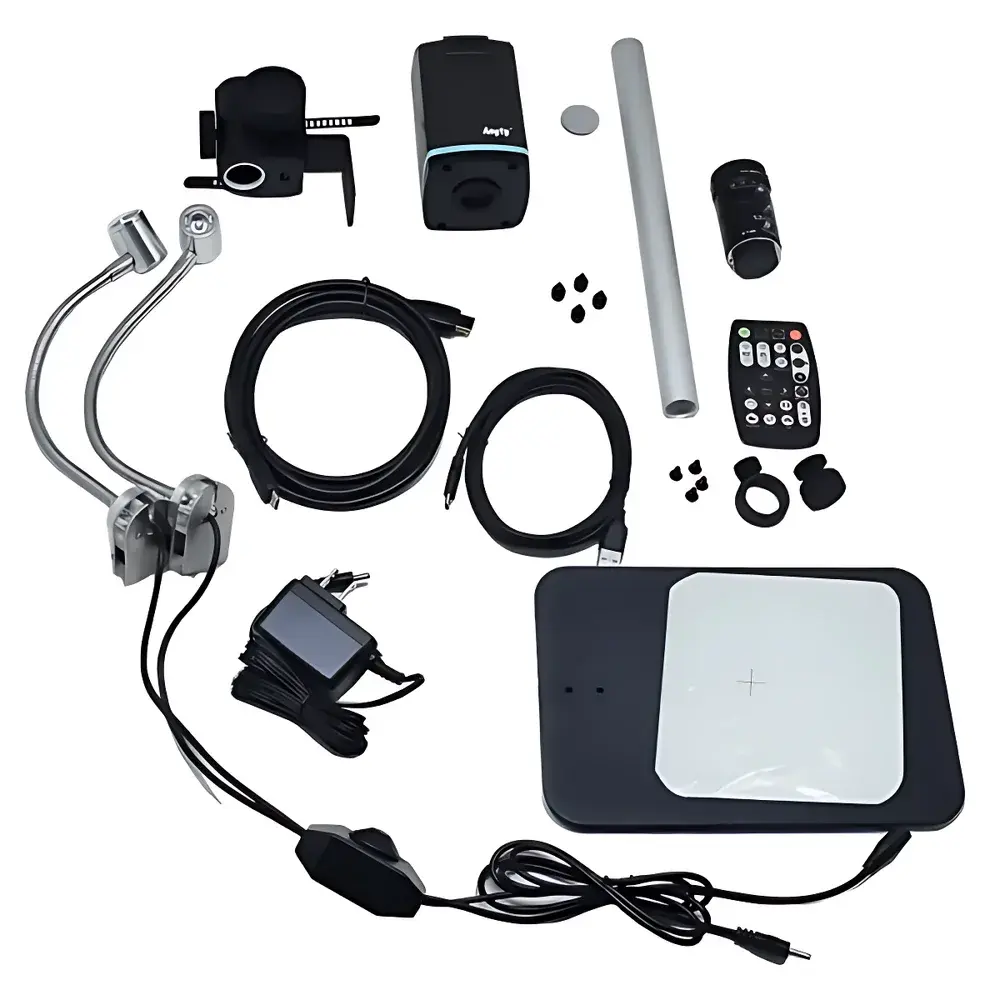
Anyty 3R-MSTVUSB142W High-Performance Wide-Field Digital Microscope
| Brand | Anyty |
|---|---|
| Origin | Beijing, China |
| Manufacturer Type | Direct Manufacturer |
| Regional Classification | Domestic (China) |
| Model | 3R-MSTVUSB142W |
| Imaging Sensor | CMOS |
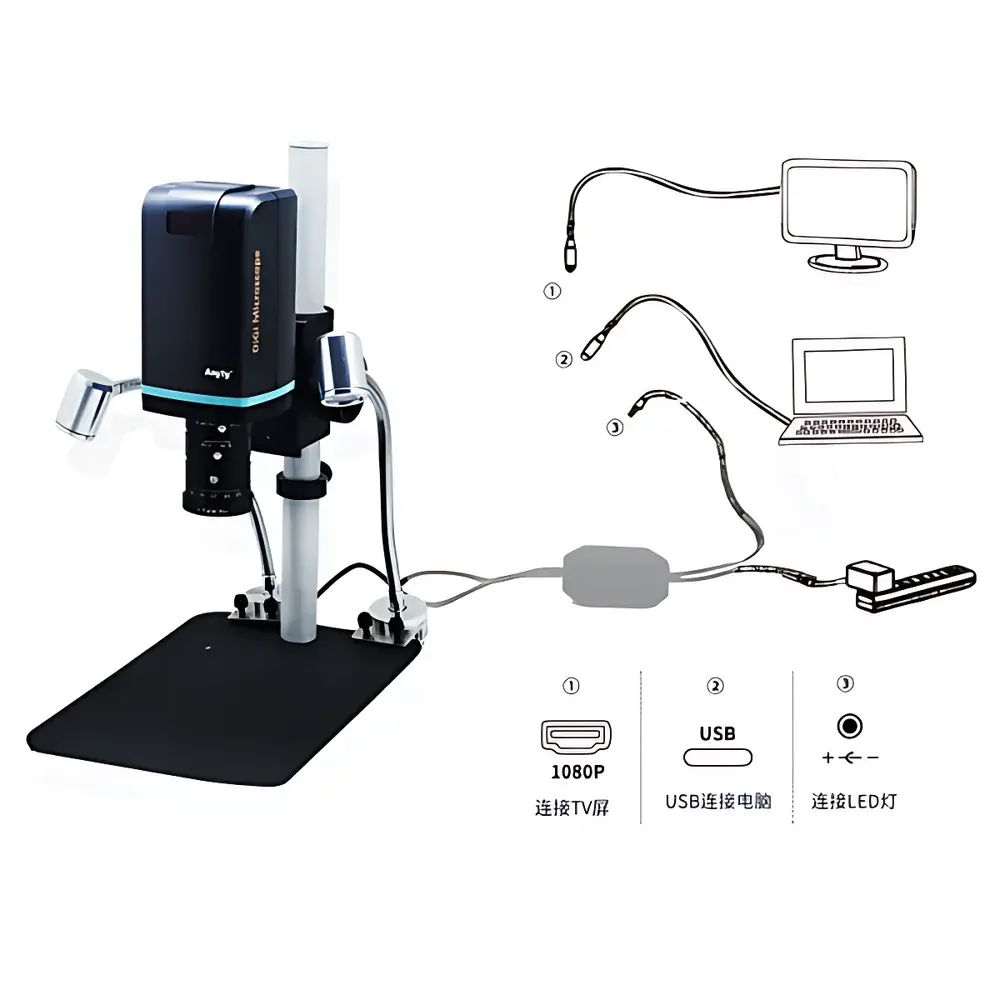
| Connectivity | USB 3.0 + HDMI output |
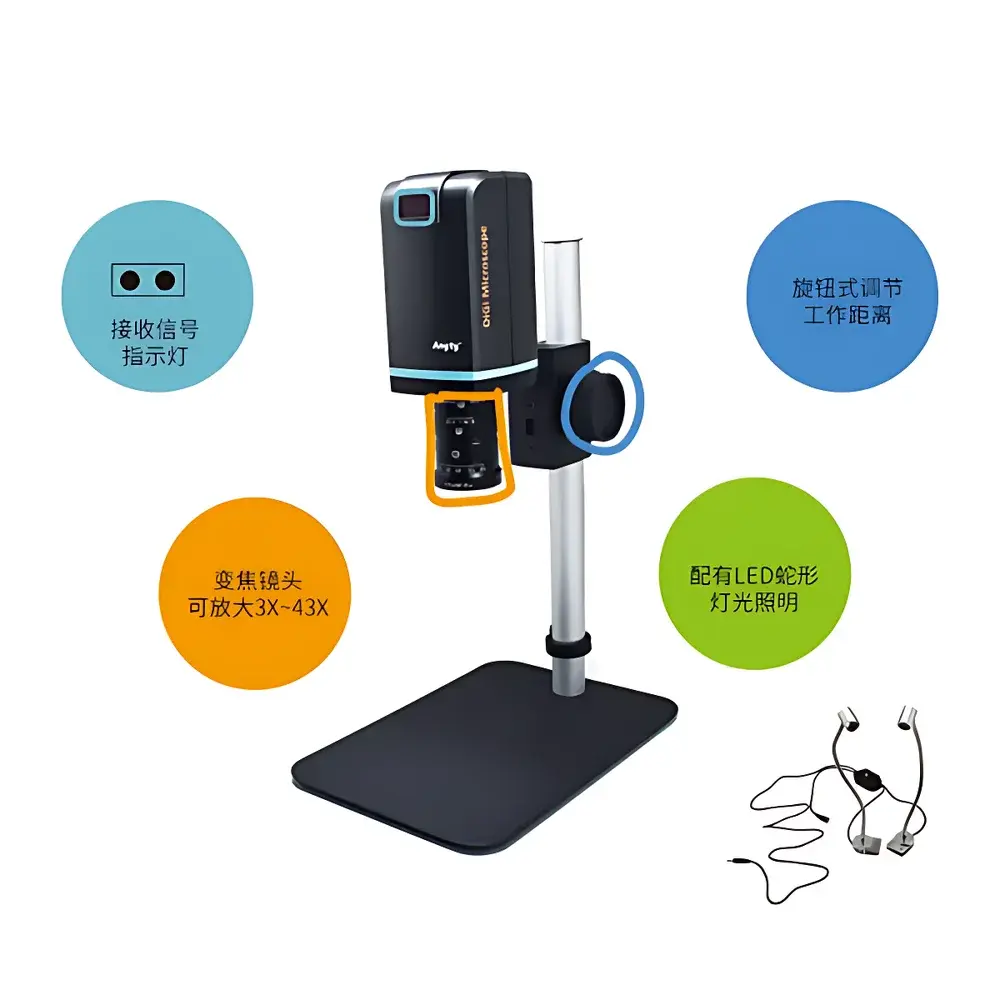
| Magnification Range | 3×–43× |
| Optical Configuration | Motorized Zoom Lens with Extended Depth-of-Field Fusion |
| Video Resolution | 1080p Full HD |
| Core Functions | Real-time Measurement, Image Capture, Video Recording, Timed Recording, Image Comparison, Auto/Manual Focus |
Overview
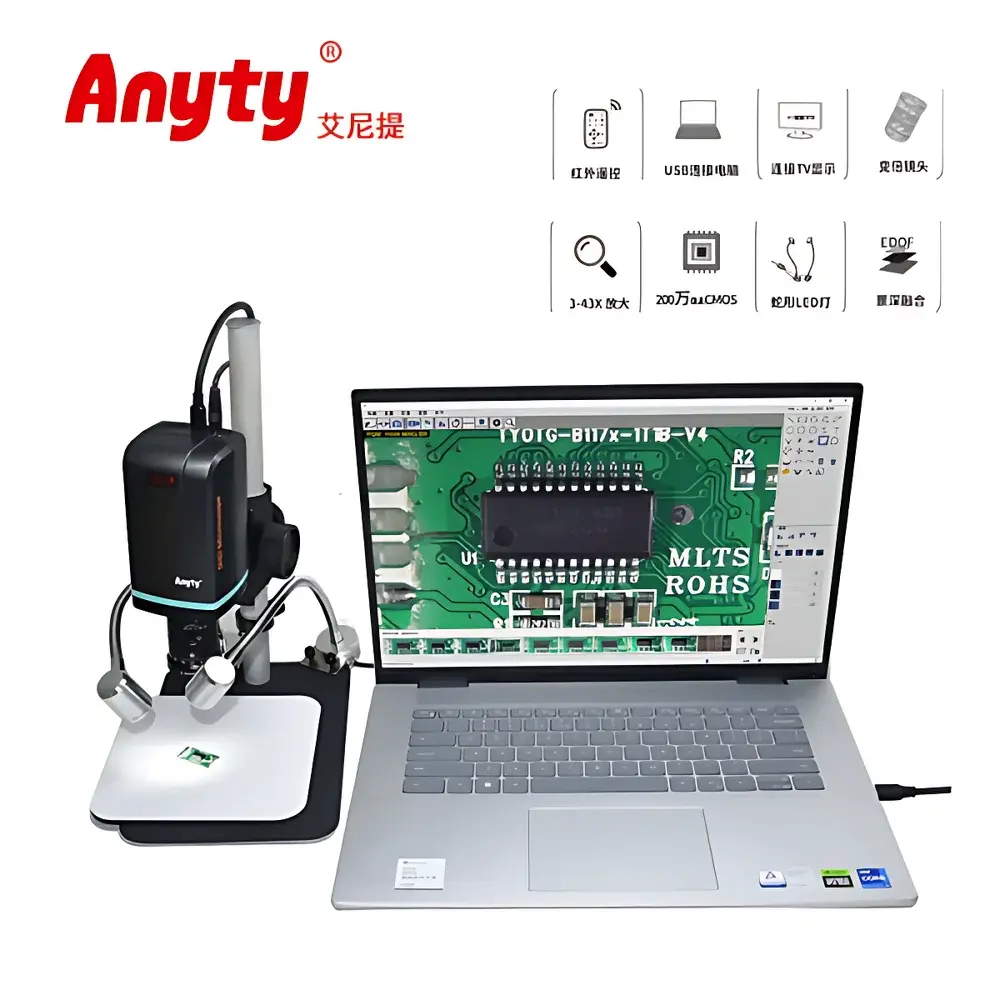
The Anyty 3R-MSTVUSB142W is a high-performance wide-field digital microscope engineered for industrial inspection, quality control, education, and routine laboratory documentation. Unlike conventional optical microscopes requiring eyepieces and subjective visual interpretation, this system employs a calibrated CMOS imaging sensor coupled with a motorized zoom optical path to deliver real-time, distortion-corrected 1080p video and still imagery directly to external displays or host computers via dual-output architecture (HDMI + USB 3.0). Its core design principle centers on quantitative visual analysis: the integrated measurement engine supports pixel-to-unit calibration against traceable standards, enabling repeatable linear, angular, and area measurements without auxiliary ocular reticles or third-party software plugins. The extended depth-of-field (EDF) fusion algorithm—applied in real time or post-capture—synthesizes multiple focal planes into a single fully focused image, significantly reducing operator dependency on precise Z-axis positioning during multi-layer or topographically complex sample evaluation.
Key Features
- Wide-field optical path with motorized zoom lens delivering continuous magnification from 3× to 43× (equivalent to ~1.2–17.2 mm field of view at working distance)
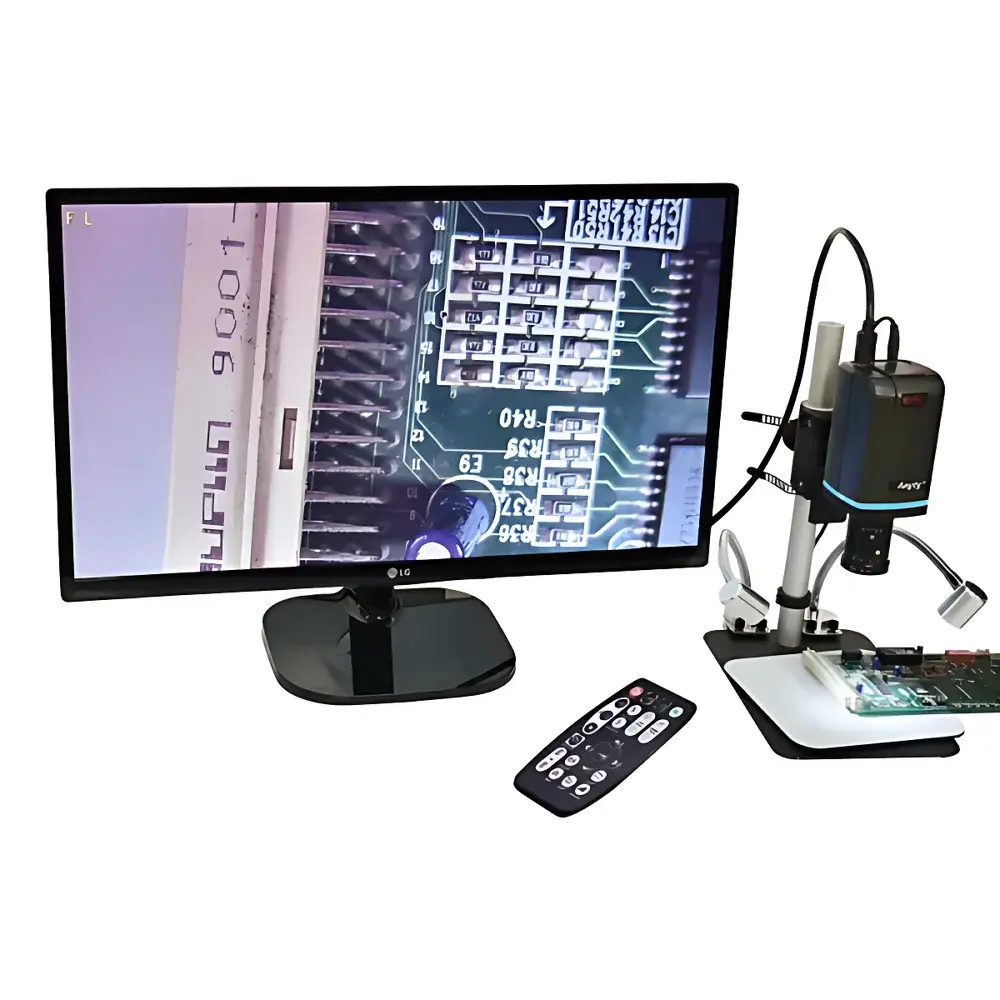
- Dual high-bandwidth output: native HDMI for live monitoring on large-format displays and USB 3.0 interface for low-latency image streaming, device control, and data logging on Windows/macOS/Linux hosts
- Real-time extended depth-of-field (EDF) image synthesis—configurable for auto-focus-triggered capture or manual stack acquisition
- Built-in measurement suite compliant with ISO 10360-8 geometric metrology principles: supports point-to-point, parallel line, circle, arc, angle, and overlay comparison modes with user-defined unit scaling (µm, mm, inch)
- Full HD 1080p (1920 × 1080) video recording at up to 60 fps; timed capture intervals programmable from 1 second to 24 hours
- Embedded non-volatile memory for saving calibration profiles, annotation templates, and user presets across sessions
Sample Compatibility & Compliance
The 3R-MSTVUSB142W accommodates a broad range of macro-to-mesoscale specimens—including printed circuit boards (PCBs), solder joints, textile fibers, metallurgical cross-sections, botanical sections, and polymer surfaces—without requiring vacuum coating or conductive staining. Its working distance (≥85 mm at lowest magnification) permits integration into production-line fixtures or glove-box environments. While not certified for medical diagnostic use per FDA 21 CFR Part 820 or IEC 62304, the instrument adheres to electromagnetic compatibility (EMC) requirements outlined in GB/T 18268.1–2010 (equivalent to IEC 61326-1) and safety standards per GB 4793.1–2007 (IEC 61010-1). Calibration traceability follows NIST-traceable reference standards for dimensional verification, supporting GLP-aligned documentation workflows where measurement uncertainty reporting is required.
Software & Data Management
The microscope ships with proprietary Anyty Vision Suite v4.x—a lightweight, installer-free application compatible with Windows 10/11 (64-bit) and macOS 12+. The software implements audit-trail functionality compliant with basic ALCOA+ principles: each captured image/video embeds EXIF metadata including timestamp, magnification setting, calibration ID, focus mode, and user login (when domain-authenticated). Export formats include TIFF (uncompressed), PNG (lossless), MP4 (H.264), and CSV (measurement logs). Batch processing supports automated naming conventions, folder structuring by date/user/project, and export of annotated reports in PDF format with embedded scale bars and measurement overlays. No cloud synchronization or remote telemetry is enabled by default; all data remains local unless explicitly exported by the user.
Applications
- Electronics manufacturing: solder joint integrity assessment, component placement verification, and PCB trace inspection per IPC-A-610 Class 2/3 criteria
- Materials science labs: grain boundary mapping, coating thickness estimation (via edge-detection assisted measurement), and corrosion morphology documentation
- Educational institutions: comparative anatomy studies, mineral identification, and student-led quantitative microscopy projects
- Forensic document examination: ink bleed analysis, paper fiber characterization, and indented writing recovery support
- Quality assurance departments: incoming material inspection, first-article verification, and non-destructive defect cataloging aligned with ISO 9001 clause 8.6
FAQ
Is the 3R-MSTVUSB142W compatible with Linux operating systems?
Yes—USB 3.0 video streaming is supported via UVC (USB Video Class) compliance, enabling integration with open-source tools such as OBS Studio, OpenCV-based custom scripts, or commercial machine vision SDKs.
Does the system support calibration certificate issuance?
Calibration procedures follow internal SOPs traceable to national length standards; formal ISO/IEC 17025-accredited certificates are available upon request through authorized service partners.
Can multiple users store individual measurement presets?
Yes—user profiles are saved locally with encrypted credential handling; each profile retains distinct calibration maps, annotation libraries, and report templates.
What is the maximum recommended working distance for stable EDF fusion?
For optimal depth fusion performance, samples should be positioned within ±15 mm of the nominal focal plane defined during initial calibration—exceeding this range may reduce edge sharpness in fused output.
Is firmware update capability provided?
Firmware updates are distributed quarterly via the Anyty Support Portal and applied through the Vision Suite interface; version history and release notes are publicly archived.



