
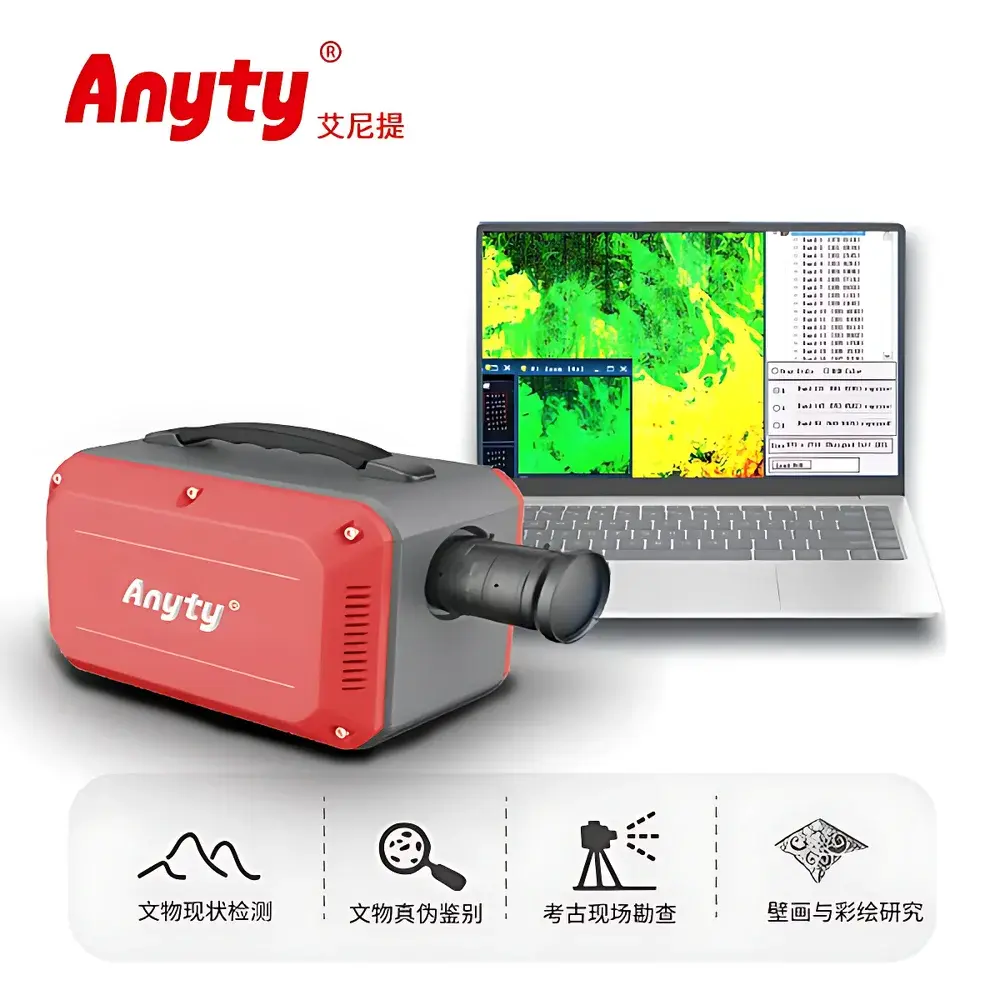
Anyty 3R-PPSC417 Hyperspectral Imaging Camera for Non-Contact Cultural Heritage Analysis
| Brand | Anyty |
|---|---|
| Origin | Beijing, China |
| Manufacturer Type | Direct Manufacturer |
| Region Classification | Domestic (China) |
| Model | 3R-PPSC417 |
| Pricing | Upon Request |
| Operating Principle | Reflectance-Based Hyperspectral Imaging |
| Deployment Modes | Ground-Based & Airborne (UAV-Compatible) |
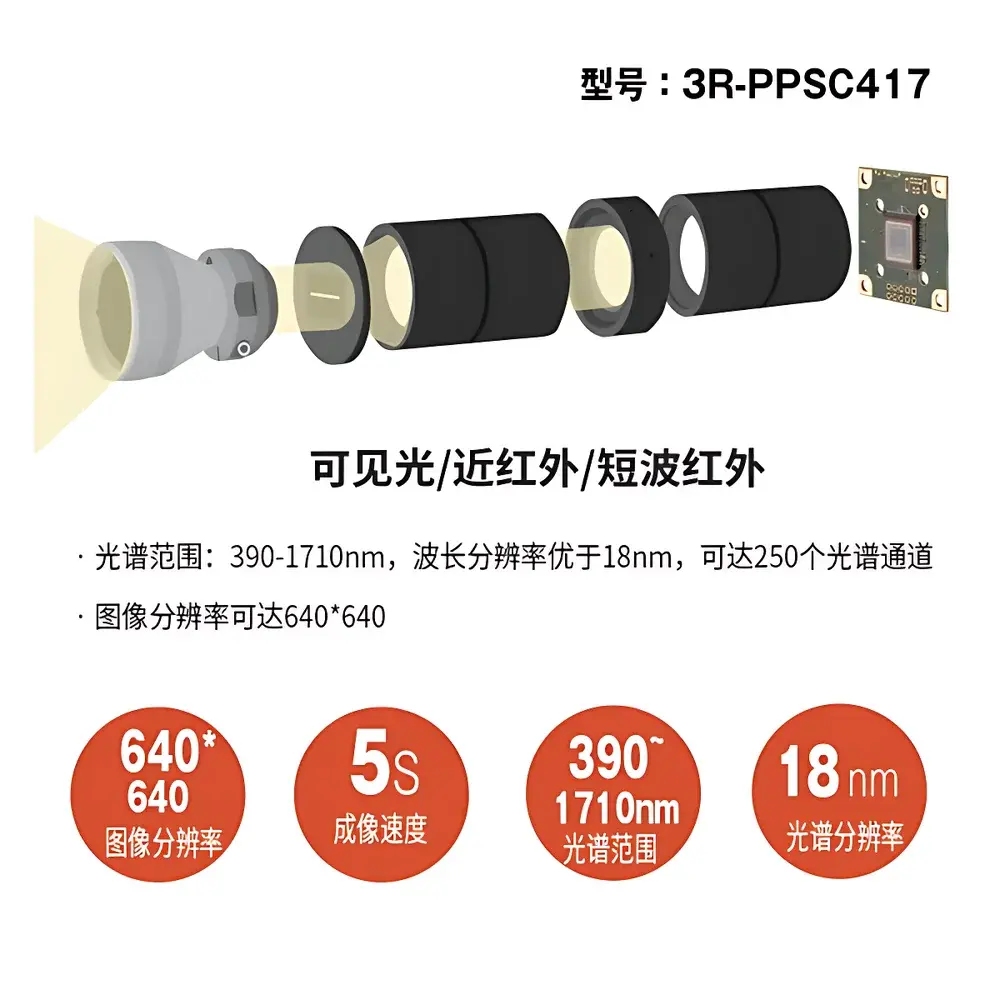
| Spectral Range | 390–1710 nm |
| Spectral Resolution | 18 nm |
| Spatial Resolution | 640 × 640 pixels |
| Total Field of View (TFOV) | 25° |
Overview
The Anyty 3R-PPSC417 is a purpose-engineered hyperspectral imaging camera designed specifically for non-invasive material characterization in cultural heritage science. It operates on the principle of reflectance-based hyperspectral imaging—capturing spatially resolved spectral signatures across the ultraviolet–visible–near-infrared (UV–Vis–NIR) spectrum (390–1710 nm) at 18 nm spectral resolution. Unlike conventional RGB or multispectral systems, this instrument acquires contiguous spectral bands per pixel, enabling robust spectral unmixing, endmember extraction, and chemometric classification of surface materials without physical sampling or illumination-induced photodegradation. Its compact, ruggedized architecture supports field-deployable operation in museum conservation labs, excavation sites, underwater platforms, and UAV-mounted survey missions—meeting the stringent requirements of ethical archaeological practice and preventive conservation protocols.
Key Features
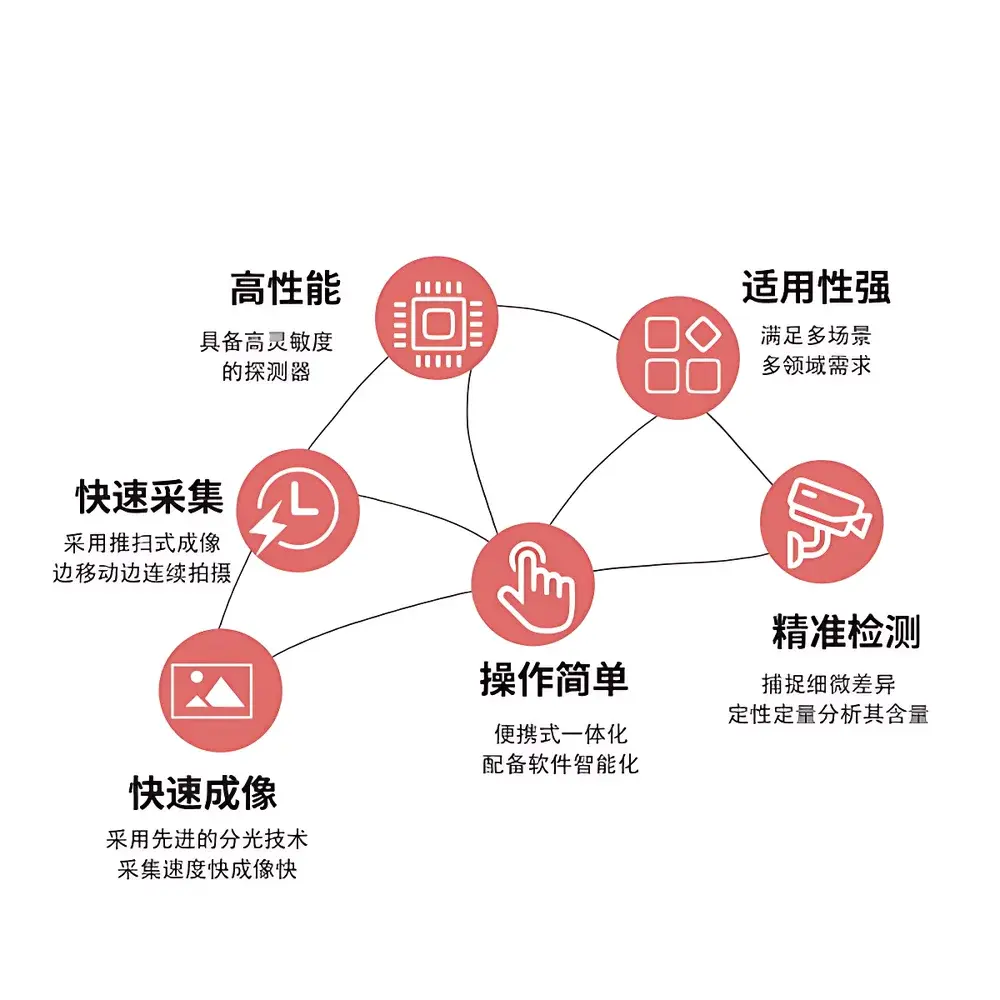
- Full-spectrum coverage from 390 nm to 1710 nm enables detection of pigment binders, corrosion products (e.g., azurite vs. malachite), ceramic glaze composition, and organic residues invisible to broadband imaging.
- 18 nm spectral resolution ensures discrimination between spectrally adjacent minerals (e.g., kaolinite vs. illite) and degradation markers (e.g., cellulose oxidation products in ancient paper).
- 640 × 640 spatial resolution delivers high-fidelity spectral cubes suitable for macro-scale artifact documentation and micro-regional analysis when coupled with motorized focus stages or telecentric optics.
- 25° total field of view balances wide-area coverage with sufficient radiometric sampling density—optimized for handheld scanning, tripod-mounted close-range surveys, and low-altitude UAV payloads.
- Native compatibility with industry-standard data interchange formats (ENVI .hdr/.bil, HDF5) ensures seamless integration into existing digital curation workflows and FAIR-compliant archival pipelines.
Sample Compatibility & Compliance
The 3R-PPSC417 is validated for direct, non-contact interrogation of fragile, light-sensitive, and irreplaceable objects—including painted wooden coffins, lacquerware, illuminated manuscripts, corroded metal artifacts, and waterlogged organic remains. It conforms to ICOM-CC (International Council of Museums – Committee for Conservation) guidelines for non-destructive analytical techniques and aligns with ASTM E2821–19 (“Standard Guide for Nondestructive Examination of Cultural Property Using Hyperspectral Imaging”). All acquired spectral datasets retain full wavelength calibration metadata traceable to NIST-traceable reference standards. For regulated environments (e.g., federally funded heritage projects), raw data logs support GLP-compliant audit trails when paired with timestamped GPS/IMU synchronization modules.
Software & Data Management
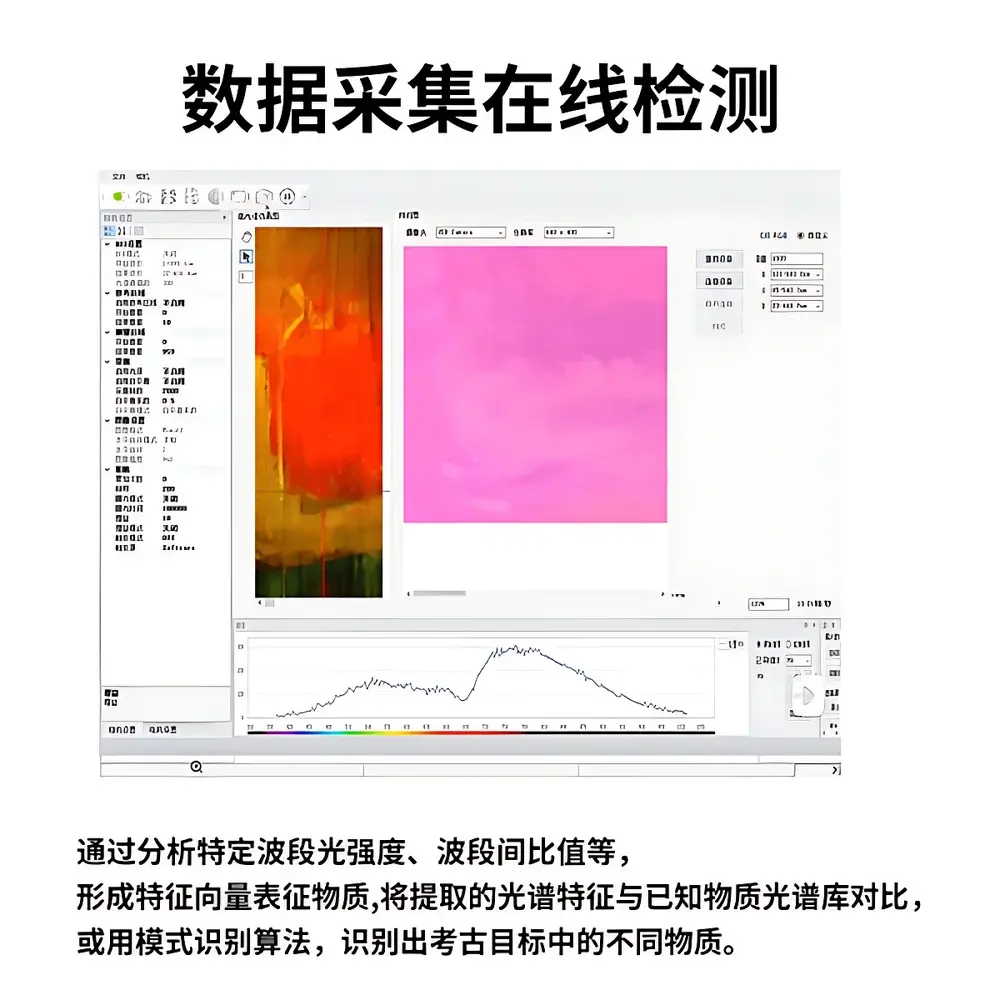
The system ships with Anyty Hyperspectral Studio (v4.x), a dedicated processing suite supporting radiometric correction, atmospheric compensation (for airborne use), spectral library matching (using built-in databases of >2,400 reference spectra for pigments, minerals, and binding media), and PCA-based anomaly detection. Export functions include CSV spectral profiles, false-color composites (e.g., NDVI analogues for organic residue mapping), and georeferenced GeoTIFF stacks compatible with QGIS and ArcGIS. Software architecture complies with ISO/IEC 17025:2017 Annex A.2 for measurement uncertainty propagation and supports optional 21 CFR Part 11-compliant electronic signature modules for institutional QA/QC validation.
Applications
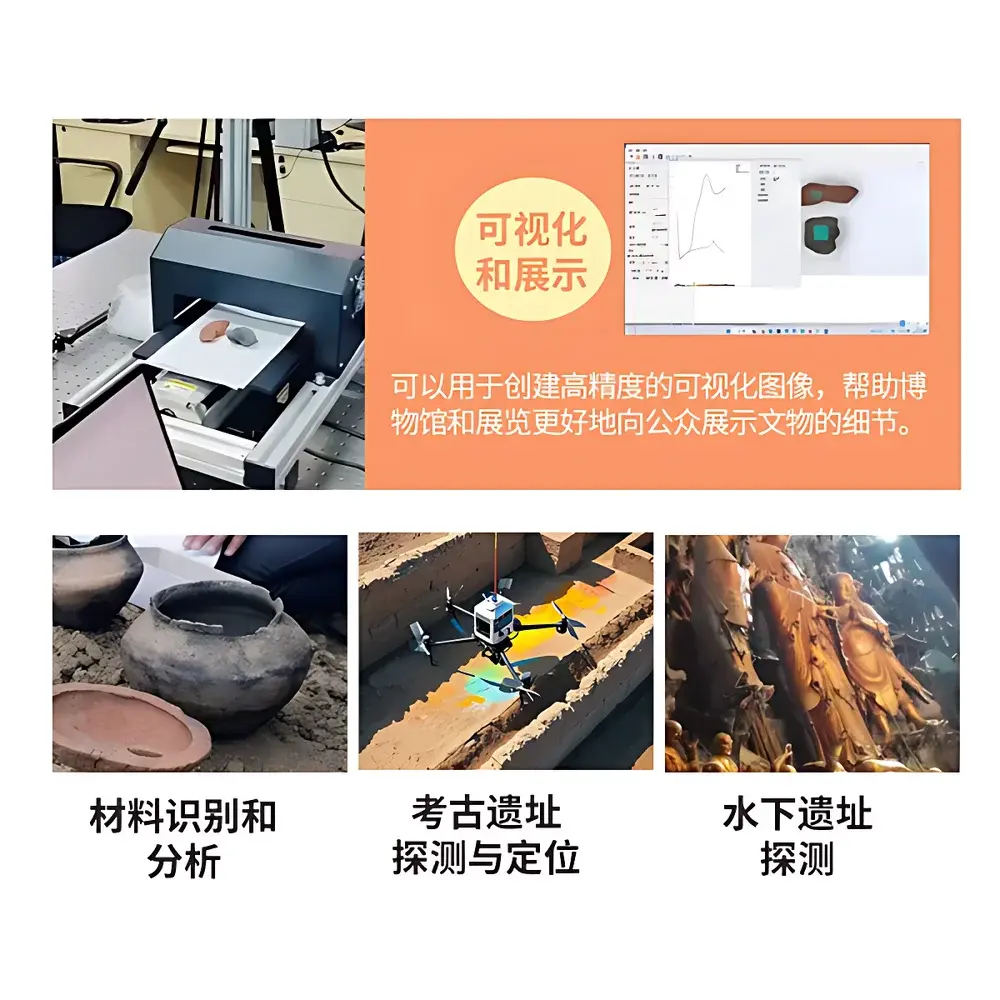
- Museum Conservation: Mapping varnish yellowing, underdrawing revelation in panel paintings, and identification of restoration interventions via spectral divergence thresholds.
- Field Archaeology: Detection of subsurface features (e.g., buried walls, kiln structures) through vegetation stress indices and soil spectral anomalies in UAV-based surveys.
- Underwater Archaeology: Integration with ROV-mounted housings (IP68-rated enclosure optional) for spectral discrimination of submerged ceramics, amphorae, and shipwreck timber species under turbid conditions.
- Provenance Research: Statistical comparison of clay matrix spectral fingerprints across regional kiln sites using supervised machine learning classifiers (SVM, Random Forest) trained on reference collections.
- Digital Archiving: Generation of spectral “digital twins” compliant with IIIF Image API specifications for long-term, interoperable access in institutional repositories.
FAQ
Is the 3R-PPSC417 calibrated for quantitative reflectance measurements?
Yes—each unit undergoes factory calibration using Spectralon® reference panels certified to NIST SRM 2035, with spectralon-based dark-current and flat-field corrections embedded in acquisition firmware.
Can it be integrated with existing drone platforms?
Yes—the camera supports MAVLink-compatible gimbal control and outputs synchronized trigger pulses and PPS timing signals for precise geo-registration with RTK-GNSS receivers.
Does the software support batch processing of large site-level datasets?
Yes—Hyperspectral Studio includes a CLI mode and Python SDK (via REST API) for automated pipeline execution on HPC clusters or cloud infrastructure.
What spectral libraries are included by default?
The base installation includes the ECMA Pigment Database, USGS Mineral Spectral Library v7, and the British Museum’s Historic Binding Media Reference Set.
Is underwater housing available as an OEM option?
Yes—Anyty offers a pressure-rated titanium housing (rated to 300 m depth) with anti-fouling optical windows and integrated LED illumination modules optimized for 450–650 nm excitation bands.



