
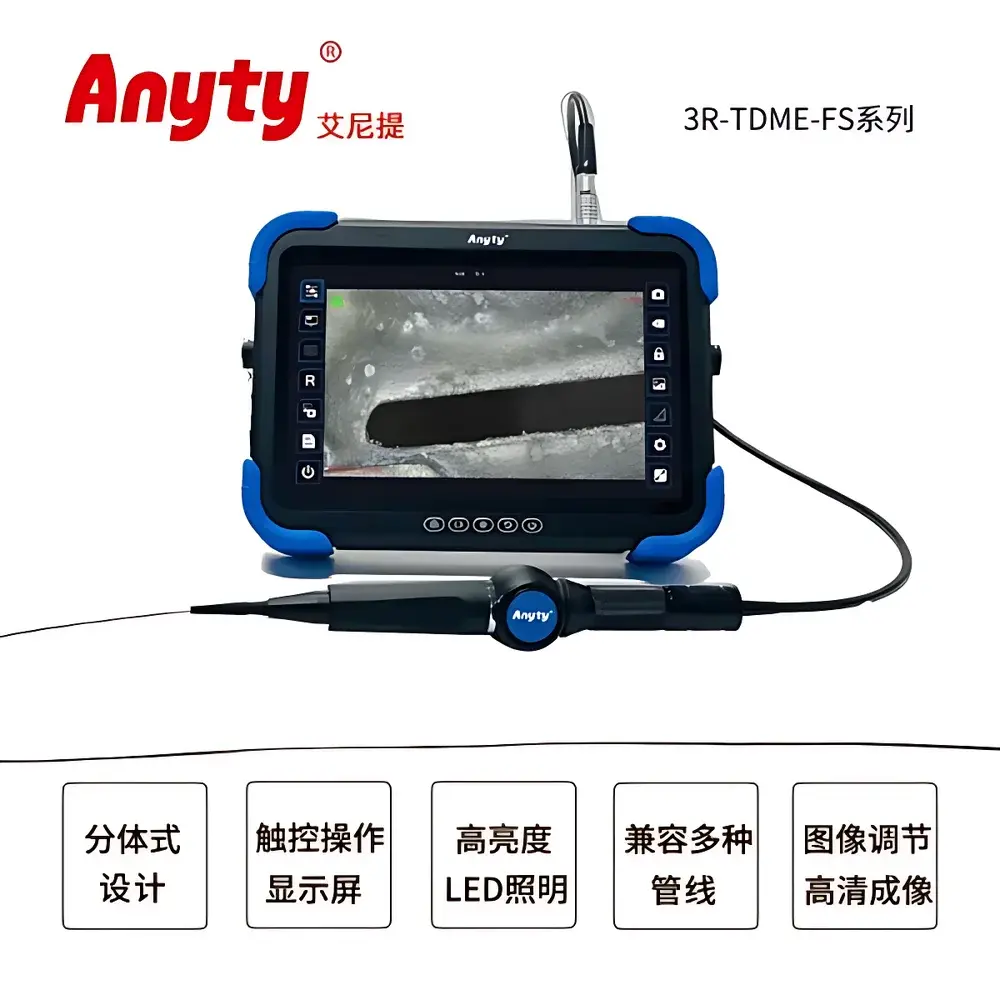
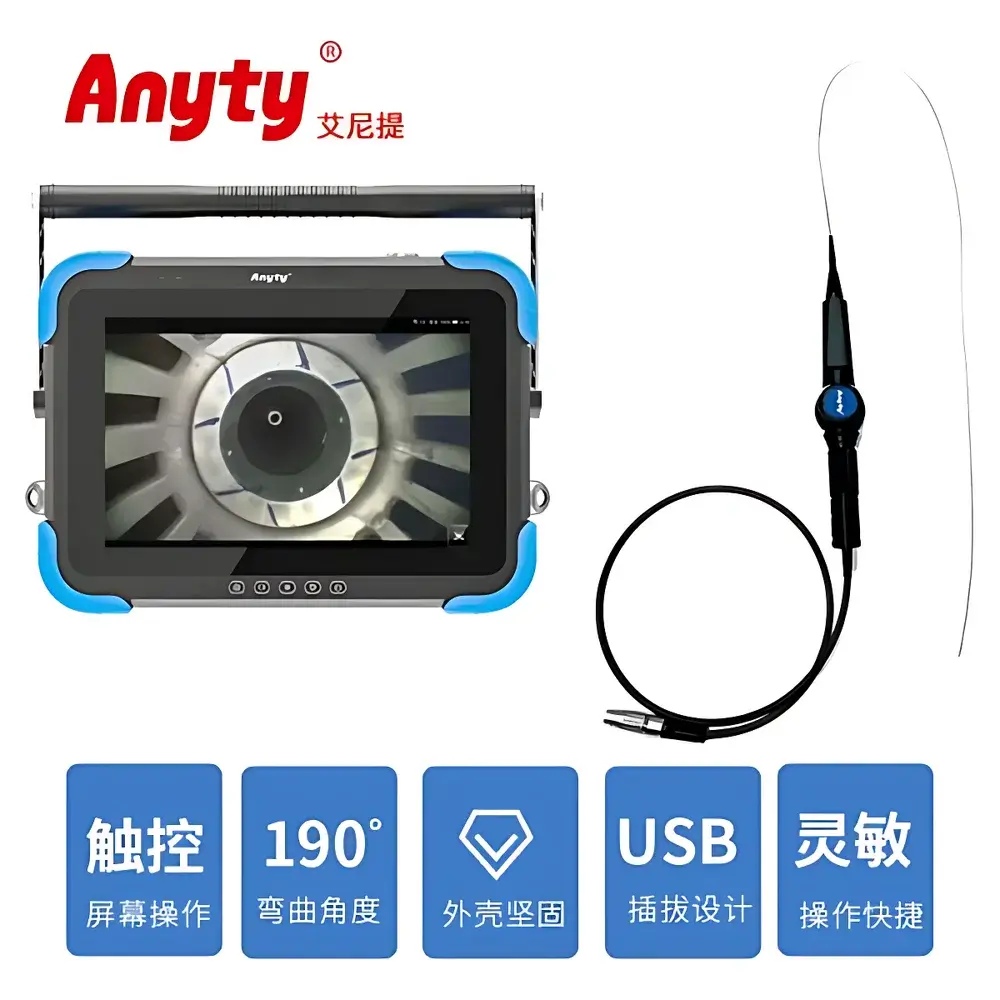
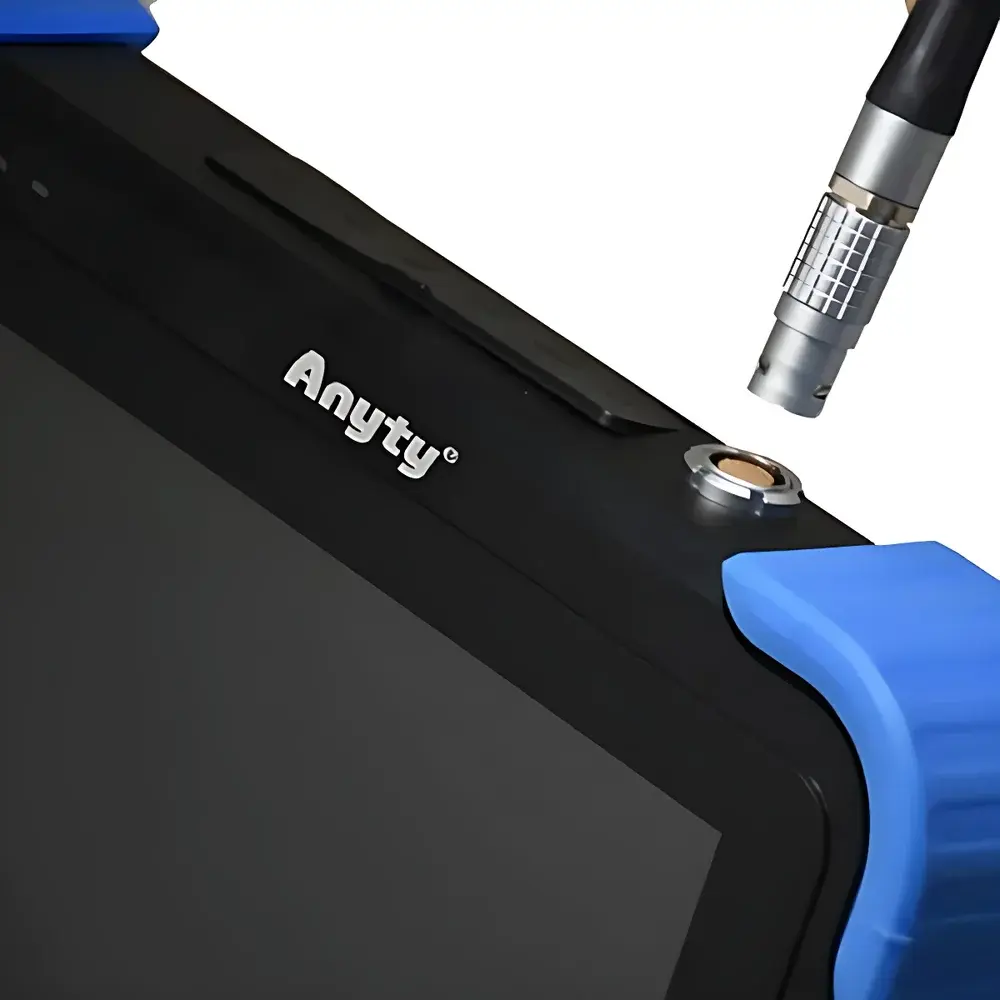
Anyty 3R-TDME-FS Smart Industrial Borescope System
| Brand | Anyty |
|---|---|
| Origin | Beijing, China |
| Manufacturer | Yes |
| Country of Origin | China |
| Model | 3R-TDME-FS |
| Display Size | 10.1-inch TFT LCD Touchscreen |
| Imaging Sensor | 1 MP CMOS |
| Articulation | 360° Full-Range Mechanical Steering |
| Probe Diameter Compatibility | 1.0–8.0 mm |
| Insertion Tube Options | Straight-view, Side-view, and Dual-angle (Straight/Side) Configurations |
| Illumination | Adjustable High-Intensity LED, Max Output >70,000 lx |
| Image & Video Functions | Still Capture, Real-time Recording, On-device Annotation (Freehand Drawing), Contrast/Brightness/Gamma Adjustment, Invert (Negative) Mode |
| Storage | Internal Flash + Removable microSD Card Support |
| Connectivity | USB-C, Wi-Fi 5 (802.11ac), Bluetooth 5.0 |
| Operating System | Embedded Android 11 with Custom NDT UI |
Overview
The Anyty 3R-TDME-FS Smart Industrial Borescope System is a modular, high-mobility remote visual inspection (RVI) platform engineered for precision non-destructive testing (NDT) in confined, inaccessible, or hazardous environments. Built upon a dual-component architecture—comprising a ruggedized handheld control unit and a detachable 10.1-inch high-resolution capacitive touchscreen tablet—the system enables real-time, operator-guided visual assessment without disassembly or process interruption. Its core imaging principle relies on coherent fiber-optic light transmission combined with digital CMOS sensor capture at the distal tip, delivering 1 MP resolution with low-latency video streaming (up to 30 fps). The system adheres to fundamental NDT integrity requirements: optical clarity under variable illumination, mechanical stability during articulation, and traceable image metadata generation—critical for forensic documentation, regulatory audits, and maintenance recordkeeping.
Key Features
- Modular Design: Separable control handle and 10.1-inch touchscreen tablet allow flexible deployment—tablet can be mounted on tripods, vehicle dashboards, or used independently for remote collaboration.
- Full 360° Articulation: Precision-engineered four-way steering mechanism provides unrestricted directional control of the insertion tube tip, enabling comprehensive cavity scanning without reinsertion.
- Adaptive Illumination System: High-output white LED array (≥70,000 lx at 1 cm) with 10-step digital intensity control ensures consistent contrast across reflective, absorptive, or soot-covered surfaces—essential for fire investigation and pipeline inspection.
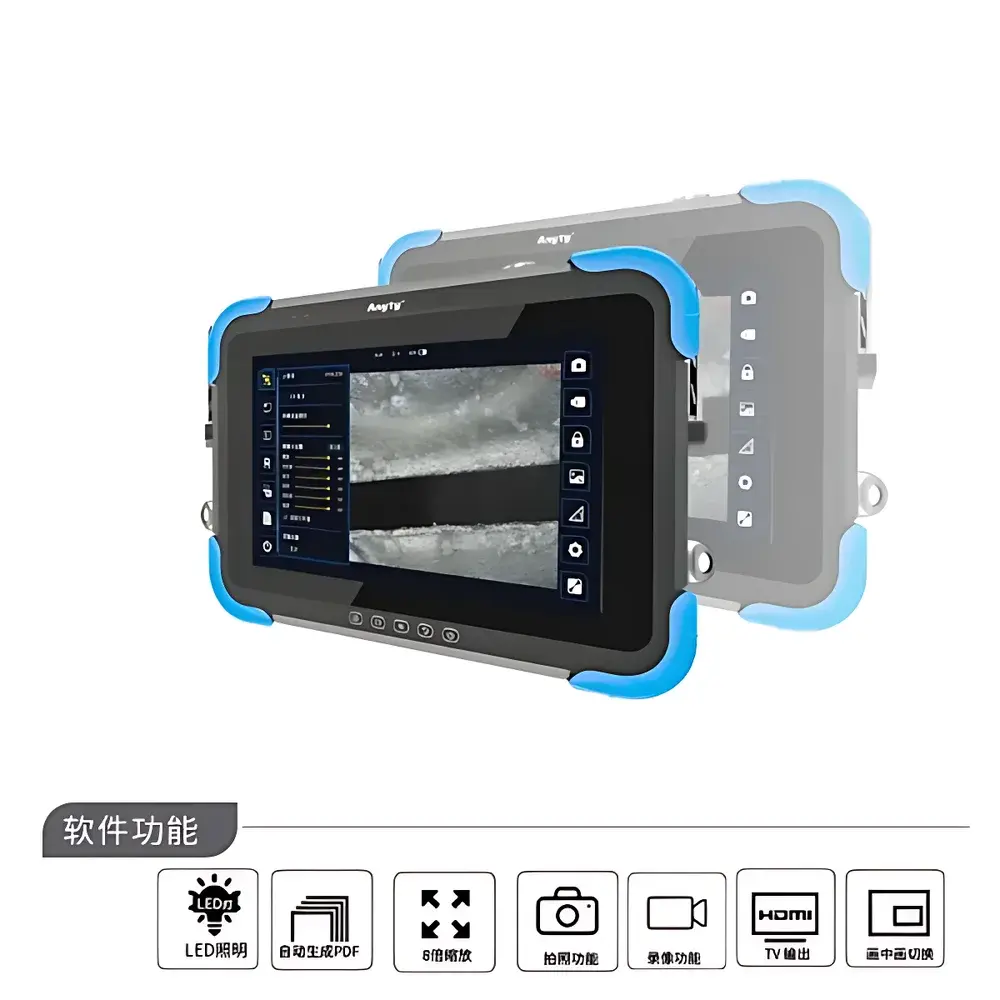
- On-Device Image Intelligence: Integrated annotation engine supports timestamped freehand drawing, region-of-interest labeling, brightness/contrast/gamma tuning, and grayscale inversion—facilitating rapid defect identification and report drafting in situ.
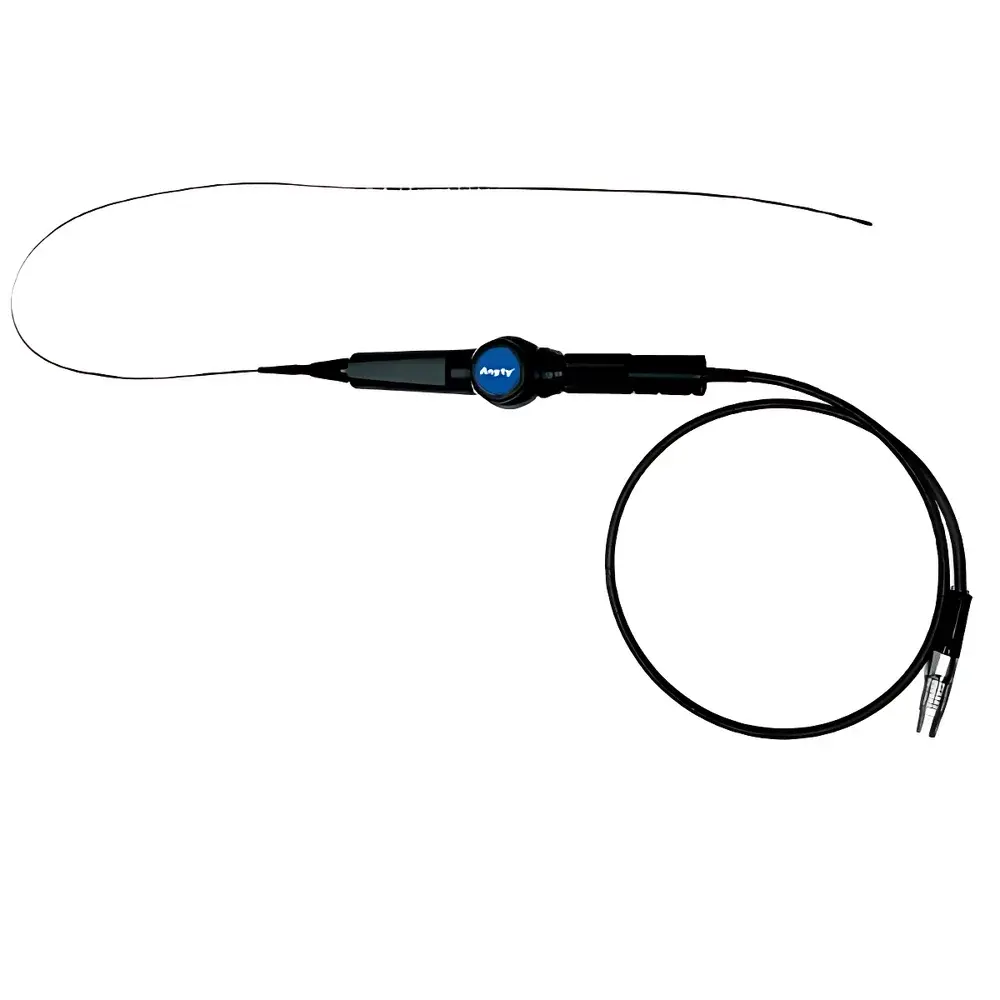
- Multi-Probe Interchangeability: Supports standardized probe interfaces for 1.0 mm to 8.0 mm outer diameter insertion tubes—including straight-view (0°), side-view (90°), and dual-angle (0°/90°) configurations—enabling application-specific optical path optimization.
- Regulatory-Ready Data Handling: All captured images and videos embed EXIF metadata (date/time, probe ID, illumination level, zoom factor); export formats include JPEG, MP4 (H.264), and PDF reports with embedded annotations.
Sample Compatibility & Compliance
The 3R-TDME-FS is validated for use across metallic, composite, ceramic, and polymer-based structures where internal surface geometry prohibits direct access. It complies with ISO 20816-1 (mechanical vibration evaluation), ASTM E2578-21 (standard guide for borescope selection and use), and meets IP67 ingress protection rating for dust/water resistance during field operations. For regulated sectors—including pharmaceutical equipment validation (FDA 21 CFR Part 11 compliant data logging optional via third-party software integration) and rail infrastructure inspection (EN 13632-2 alignment)—the system supports audit-trail-enabled workflows when paired with secure cloud storage or local NAS deployment.
Software & Data Management
The embedded Android 11 OS runs a purpose-built NDT interface optimized for glove-compatible touch input and landscape/portrait orientation switching. Image and video files are stored in a hierarchical folder structure by date, session ID, and probe serial number. Metadata is preserved during transfer via USB-C or encrypted Wi-Fi sync. Optional SDK access enables integration with enterprise CMMS (e.g., IBM Maximo, SAP PM) and digital twin platforms for automated defect tagging and lifecycle tracking. Firmware updates are delivered over-the-air (OTA) with cryptographic signature verification to ensure integrity.
Applications
- Fire Investigation: Documentation of burn patterns, electrical arcing traces, and structural compromise within wall cavities or HVAC ducts.
- Petrochemical Maintenance: Inspection of turbine blades, heat exchanger tubes, and weld joints in ASME Section V-compliant workflows.
- Pharmaceutical Manufacturing: Visual verification of clean-in-place (CIP) efficacy inside stainless-steel bioreactors and fill-finish lines per USP <1058> guidance.
- Railway Rolling Stock: Assessment of brake caliper housings, gearbox internals, and suspension component wear without axle removal.
- Municipal Infrastructure: Condition monitoring of sewer laterals, storm drains, and culverts per ASTM D5863-22 standards.
- Law Enforcement & Forensics: Covert entry point verification, evidence documentation in confined spaces, and post-breach structural integrity analysis.
FAQ
What is the minimum bending radius supported by the 3R-TDME-FS insertion tubes?
Standard probes maintain a ≥5×OD minimum bend radius; custom ultra-flexible variants (optional) support ≤3×OD without signal degradation.
Can the system operate in explosive atmospheres (ATEX Zone 1)?
The base unit is not ATEX-certified; however, intrinsically safe probe variants (IEC 60079-0/-11 compliant) are available under separate model designation upon request.
Is calibration traceable to national standards?
Yes—optical magnification and field-of-view verification are performed using NIST-traceable reticle targets; calibration certificates are issued per ISO/IEC 17025-accredited procedures.
Does the tablet support external GPS geotagging?
Integrated GNSS receiver enables automatic latitude/longitude/time stamping of all media; external Bluetooth GPS modules may be paired for enhanced positional accuracy.
How is cybersecurity addressed in firmware and data transmission?
All OTA updates require SHA-256 signature validation; Wi-Fi transfers default to WPA3-Enterprise with TLS 1.2 encryption; local storage supports FIPS 140-2 compliant AES-256 full-disk encryption.



