
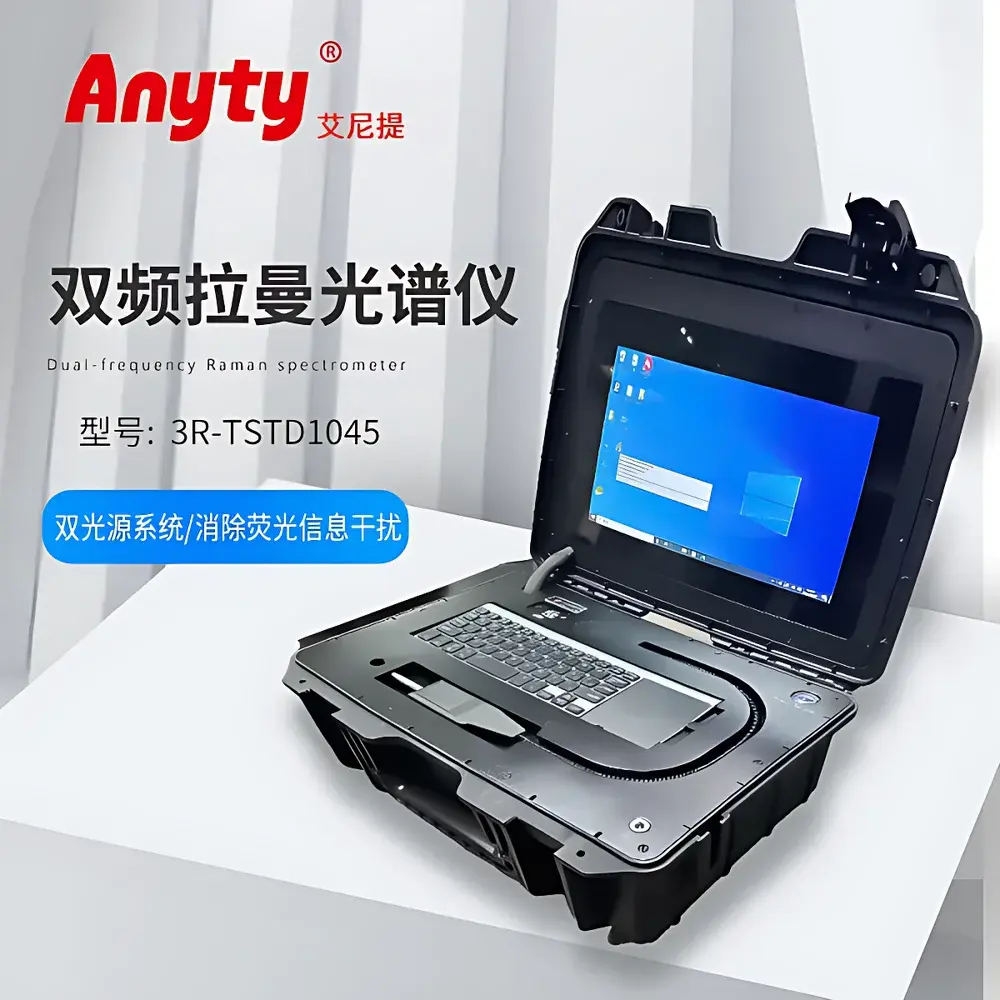
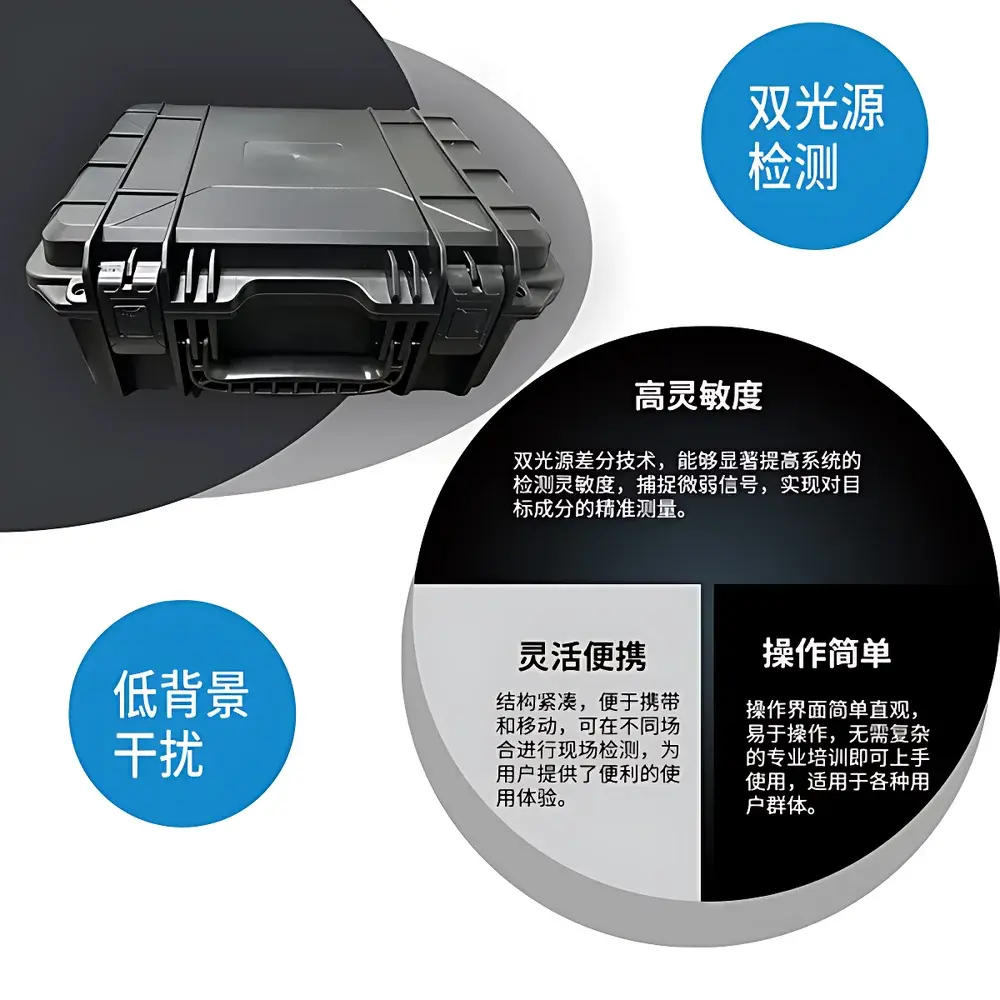
Anyty 3R-TSTD1045 Dual-Frequency Raman Spectrometer
| Brand | Anyty |
|---|---|
| Origin | Beijing, China |
| Manufacturer Type | Original Equipment Manufacturer (OEM) |
| Regional Classification | Domestic (PRC) |
| Model | 3R-TSTD1045 |
| Price | Upon Request |
| Spectral Range | 150–3500 cm⁻¹ |
| Spectral Resolution | ≤6 cm⁻¹ |
Overview
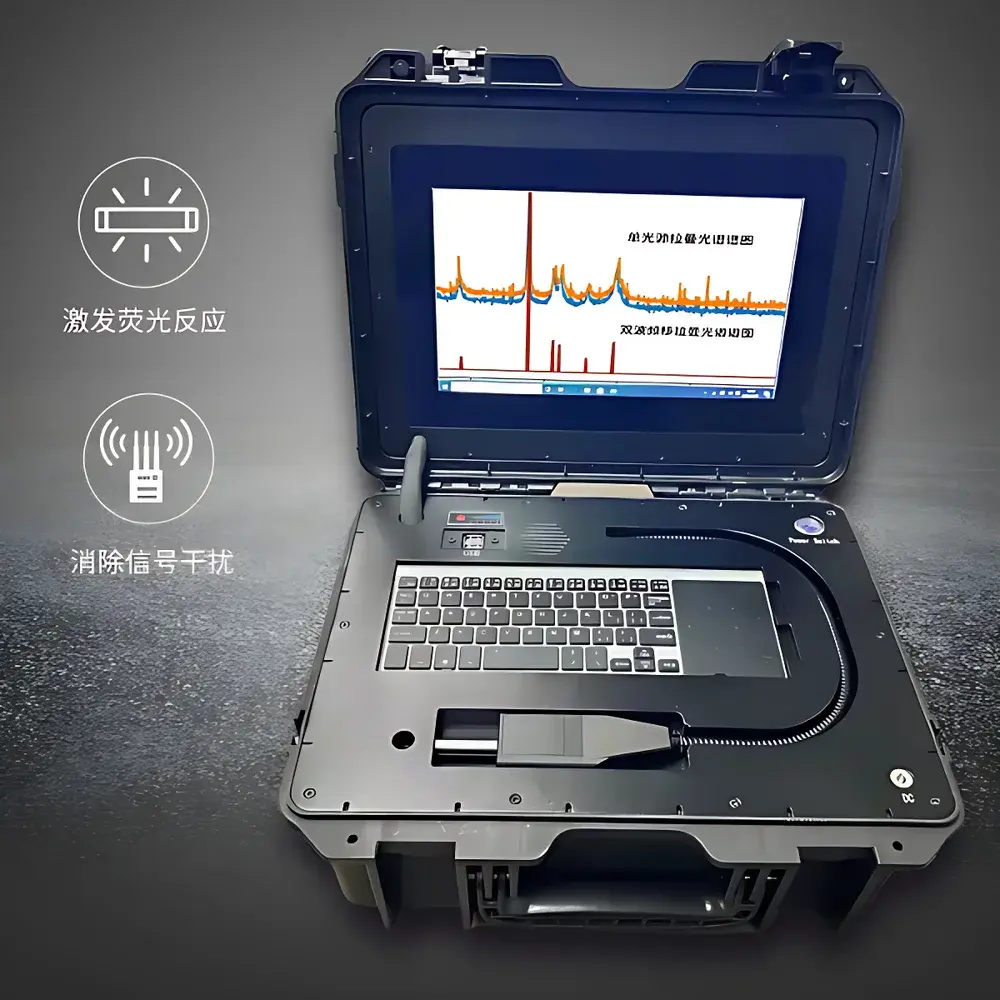
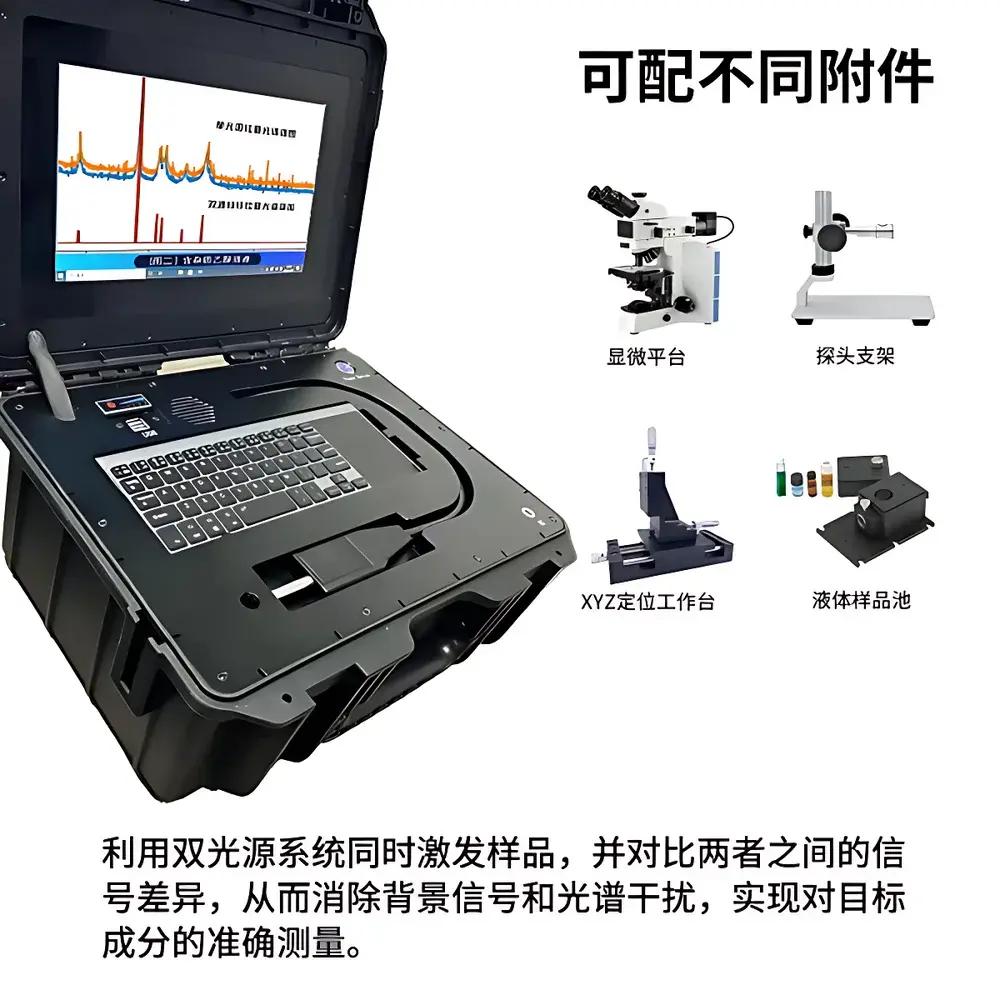
The Anyty 3R-TSTD1045 Dual-Frequency Raman Spectrometer is an engineered solution for high-fidelity molecular fingerprinting in complex, fluorescence-prone matrices. Unlike conventional single-laser Raman systems, this instrument employs two independently tunable excitation wavelengths—typically in the visible (e.g., 532 nm) and near-infrared (e.g., 785 nm or 1064 nm) ranges—to acquire complementary spectral datasets from the same sample location. By comparing intensity-modulated Raman bands across frequencies and applying algorithmic fluorescence subtraction—such as polynomial baseline correction, multivariate curve resolution (MCR), or differential spectral ratioing—the system significantly suppresses broadband fluorescent background while preserving true vibrational signatures. This dual-excitation architecture is particularly effective for samples exhibiting strong autofluorescence, including biological tissues, dyed textiles, aged polymers, and mineral-impregnated gemstones. Designed for laboratory-based qualitative and semi-quantitative analysis, the 3R-TSTD1045 delivers reproducible spectra with a calibrated wavenumber accuracy of ±1 cm⁻¹ and supports trace-level identification under ambient or controlled environmental conditions.
Key Features
- Dual-laser excitation platform enabling synchronized acquisition at two discrete wavelengths to isolate Raman scattering from overlapping fluorescence emission
- Fixed-grating spectrometer with thermoelectrically cooled CCD detector ensuring signal stability and low dark-current noise
- Integrated optical fiber probe with adjustable working distance (5–20 mm) and interchangeable objective lenses for macro- and micro-sampling
- Onboard spectral preprocessing engine supporting real-time fluorescence removal via iterative baseline estimation and adaptive smoothing
- Modular design compliant with ISO/IEC 17025 calibration traceability requirements; factory-certified wavelength and intensity calibration using NIST-traceable polystyrene and silicon standards
- Robust aluminum-alloy chassis with EMI-shielded electronics, suitable for shared lab environments and field-deployable forensic mobile units
Sample Compatibility & Compliance
The 3R-TSTD1045 accommodates solid, powder, gel, and liquid specimens without mandatory preparation—enabling non-destructive, through-container analysis of sealed evidence bags or glass vials. Its optical configuration meets ASTM E1840-22 guidelines for forensic Raman spectroscopy and supports GLP-compliant documentation workflows when paired with validated software. The system is compatible with standard Raman reference libraries (e.g., RRUFF, SDBS, and commercial forensic drug databases) and supports spectral matching against user-defined custom libraries. All firmware and hardware components adhere to IEC 61000-4 electromagnetic compatibility standards and CE marking requirements for laboratory instrumentation within the EU regulatory framework.
Software & Data Management
The instrument operates with Anyty’s proprietary SpectraView Pro v3.2 software, a Windows-based application designed for analytical traceability and audit readiness. It provides full spectral acquisition control, automated peak identification (with customizable signal-to-noise thresholds), and batch processing for multi-sample comparative analysis. Data files are saved in open-format .spc and .csv exports, preserving raw intensity, wavenumber, integration time, laser power, and environmental metadata (temperature, humidity). Software features include 21 CFR Part 11-compliant user access levels, electronic signature capability, and immutable audit trails recording all spectral manipulations—including baseline corrections, normalization methods, and library search parameters. Exported reports conform to ISO/IEC 17025 clause 7.8.2 for result reporting integrity.
Applications
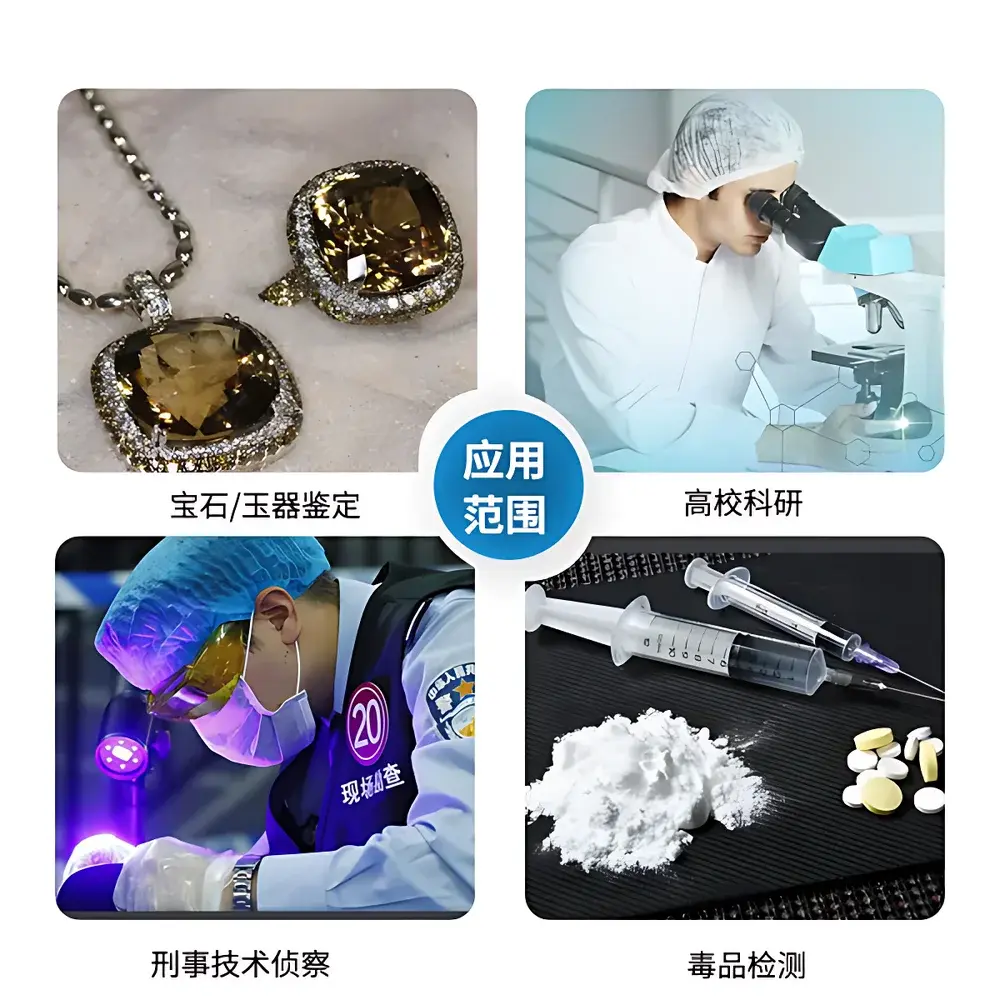
- Gemological authentication: Differentiation of natural vs. synthetic gemstones (e.g., ruby, emerald, jadeite) based on lattice defect signatures and trace-element-associated Raman shifts
- Academic research: In situ monitoring of polymer crystallization kinetics, carbon nanomaterial functionalization, and catalytic surface reactions under inert atmospheres
- Forensic science: Rapid identification of illicit substances (e.g., fentanyl analogues, synthetic cannabinoids) directly through transparent packaging, minimizing chain-of-custody disruption
- Pharmaceutical quality control: Polymorph screening of active pharmaceutical ingredients (APIs) and excipient compatibility assessment in solid dosage forms
- Cultural heritage analysis: Non-invasive pigment identification in historical manuscripts and painted artifacts without sampling or solvent exposure
FAQ
Does the 3R-TSTD1045 support quantitative analysis?
Yes—when used with matrix-matched calibration standards and validated chemometric models (e.g., PLS regression), it enables semi-quantitative concentration estimation for homogeneous solid-phase samples.
Can the system be integrated into automated lab workflows?
It supports RS-232 and USB virtual COM port communication protocols, allowing bidirectional control and data streaming via LabVIEW, Python (PySerial), or third-party LIMS interfaces.
Is external cooling required for extended operation?
No—the spectrometer’s TE-cooled detector maintains stable performance up to 8 hours continuously without auxiliary chillers.
What safety certifications does the laser subsystem carry?
Both excitation lasers comply with IEC 60825-1:2014 Class 3B laser product requirements, with integrated interlocks, key-controlled activation, and beam shutter mechanisms.
How is spectral calibration verified during routine use?
Users may perform daily verification using the included polystyrene reference slide; calibration drift beyond ±0.5 cm⁻¹ triggers a warning and recommends recalibration using the factory-provided Si wafer standard.
Related Products





