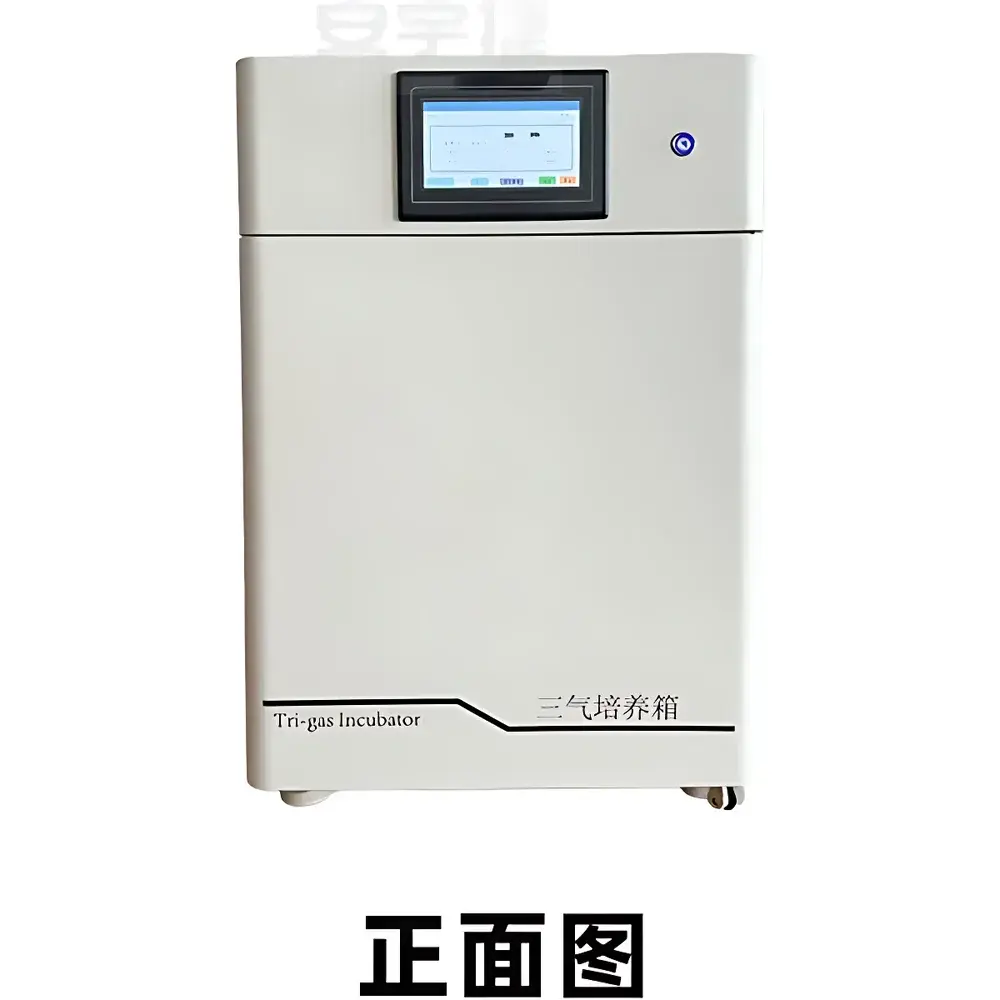
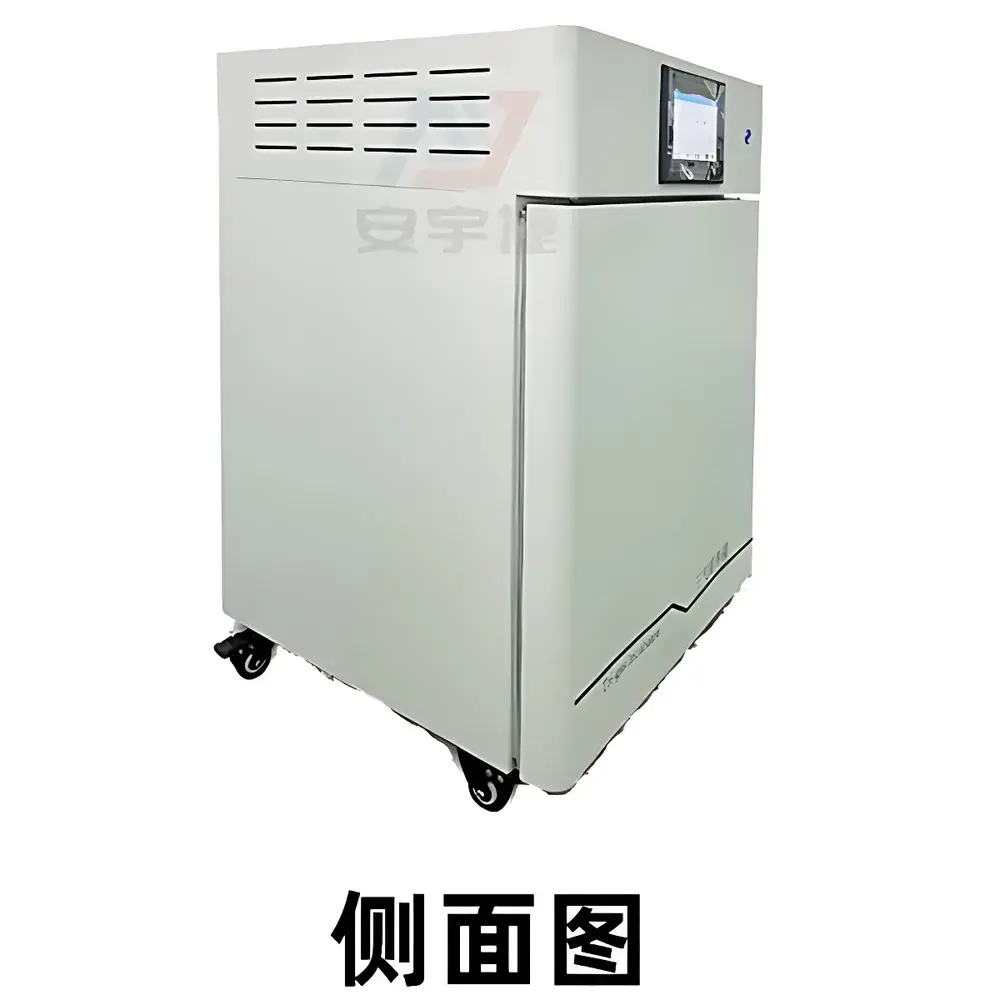
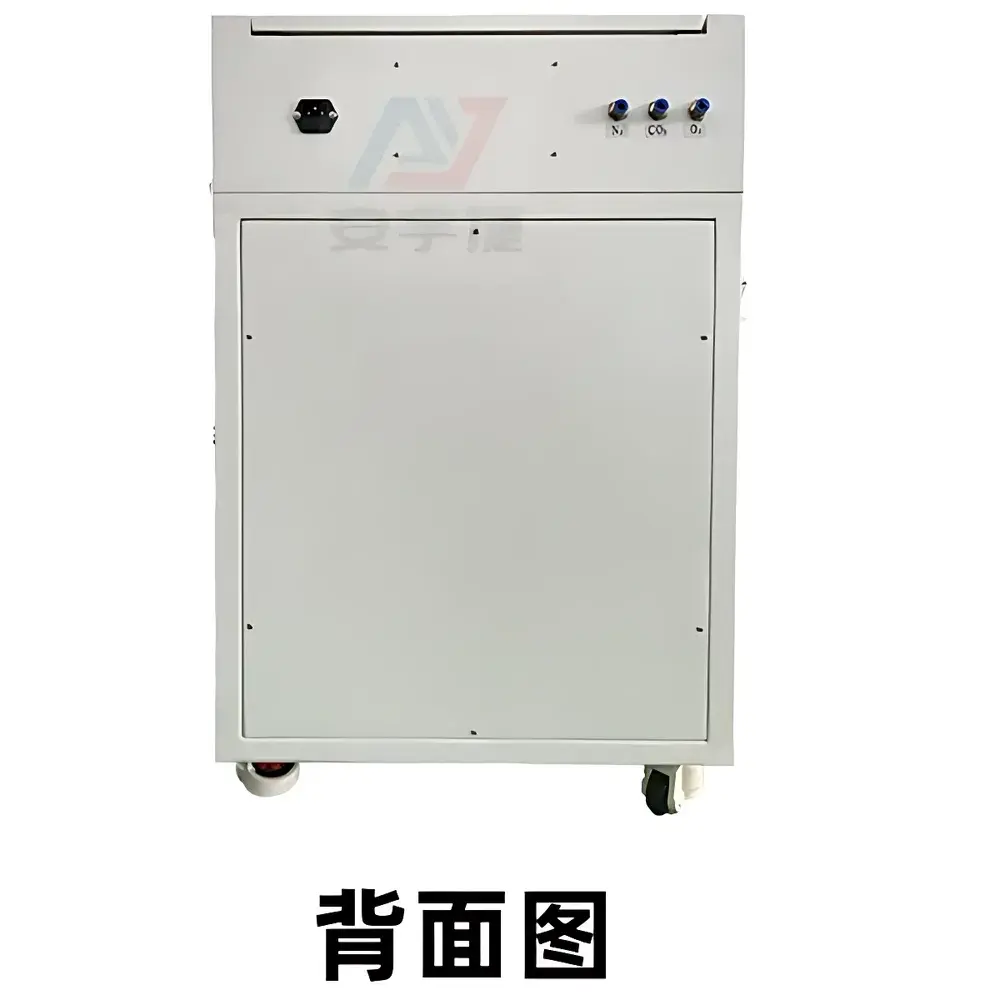
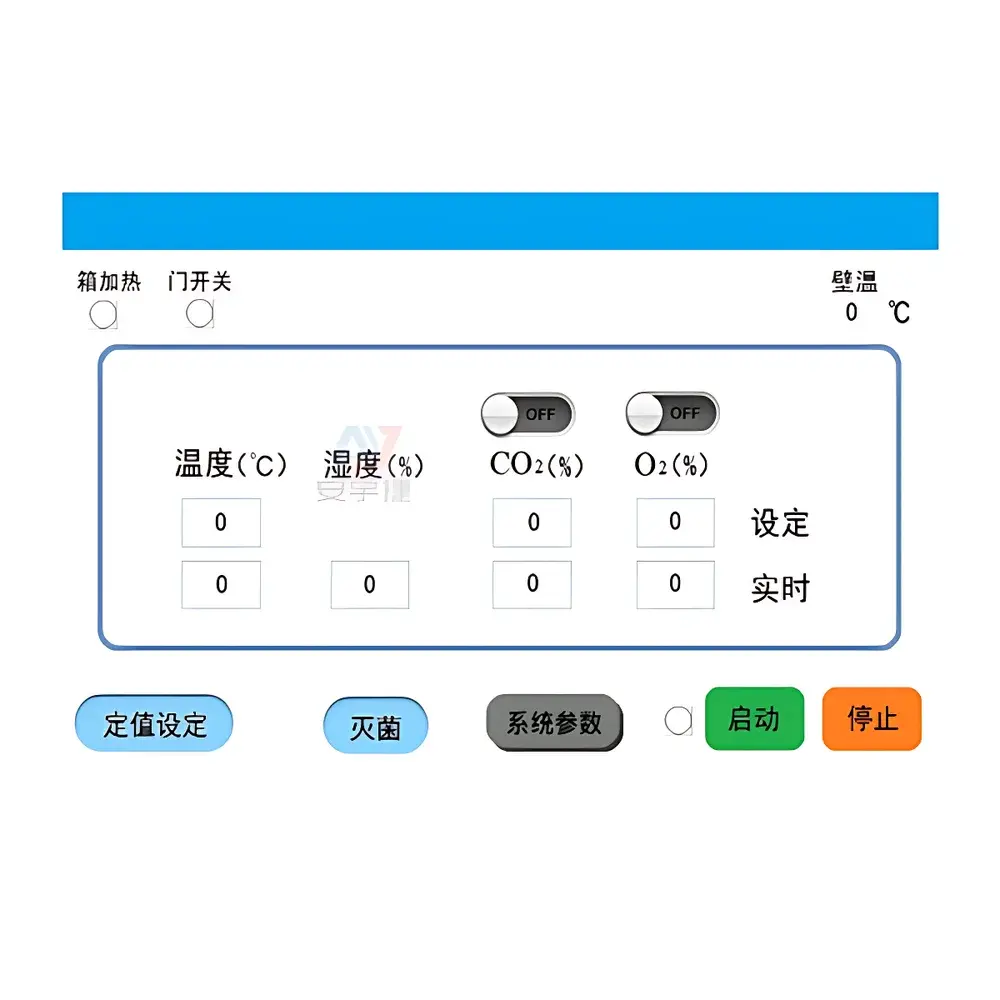
AnYuJie AYJ-KB100B Water-Jacketed Tri-Gas Incubator
| Brand | AnYuJie |
|---|---|
| Origin | Zhejiang, China |
| Manufacturer Type | Authorized Distributor |
| Instrument Type | Water-Jacketed Tri-Gas Incubator |
| O₂ Range | 1–95% ±0.3% |
| CO₂ Range | 0–20% ±0.1% |
| Temperature Range & Stability | RT+3°C to 60°C |
| Humidity | ≥90% RH (natural evaporation from 304 stainless steel water pan) |
| Capacity | 100 L |
| Dimensions (W×D×H) | 550 × 530 × 890 mm |
| Display | Capacitive Touchscreen Interface |
| Gas Control Logic | Dual-gas mixing with N₂/O₂/CO₂ prioritization for cross-interference minimization |
| Sterilization | UV lamp + optional 90°C high-temperature humidified sterilization |
| Air Circulation | Micro-airflow system with six-sided chamber heating + independent door temperature control |
| Compliance | Designed for GLP-compliant cell culture workflows |
Overview
The AnYuJie AYJ-KB100B is a precision-engineered water-jacketed tri-gas incubator designed for rigorous life science applications requiring independent, dynamic regulation of oxygen (O₂), carbon dioxide (CO₂), and nitrogen (N₂) concentrations. Unlike conventional CO₂-only incubators, this system implements a dual-path gas mixing architecture—switching between N₂-dominant and O₂-dominant injection protocols—to achieve stable, interference-free control across the full O₂ range (1–95%) while maintaining CO₂ accuracy (0–20% ±0.1%). The core measurement system integrates an infrared (IR) CO₂ sensor with inherent resistance to humidity and temperature drift, and a zirconia-based electrochemical O₂ sensor delivering fast response (5 years typical service life). Temperature uniformity of ±0.3°C at 37°C is sustained via six-sided water-jacketed heating elements combined with an independently controlled door-heating circuit—minimizing thermal gradients during frequent access. Humidity is maintained above 90% RH through natural evaporation from a seamless, electropolished 304 stainless steel water pan, eliminating condensation-related contamination risks.
Key Features
- Water-jacketed thermal architecture ensures superior temperature stability and reduced external ambient sensitivity compared to air-jacketed designs.
- Dual-sensor gas monitoring: IR-based CO₂ detection and zirconia O₂ sensing enable simultaneous, non-competing concentration feedback control.
- Micro-airflow circulation system replicates natural convection patterns—accelerating recovery times: O₂ re-stabilization to 1% takes ≤10 minutes post-door opening (vs. >30 min in standard units).
- Independent door temperature control decouples chamber thermal management from lab ambient fluctuations—critical for multi-user facilities.
- UV sterilization module integrated into the ceiling assembly; optional 90°C high-temperature humidified sterilization cycle validated for mycoplasma and fungal spore eradication per ISO 14644-1 Class 5 cleanroom standards.
- HEPA filtration (99.99% @ 0.3 µm) on intake and exhaust pathways prevents airborne particulate ingress during operation and recovery phases.
- Intuitive capacitive touchscreen interface with multilingual support (English, German, Japanese), real-time trend logging, and configurable alarm thresholds for all critical parameters.
Sample Compatibility & Compliance
The AYJ-KB100B supports a broad spectrum of biologically sensitive samples—including primary human stem cells, hypoxia-responsive tumor lines (e.g., HT-29, MCF-7), microaerophilic pathogens (Helicobacter pylori), obligate anaerobes (Clostridium perfringens), and plant tissue explants—under physiologically relevant gas conditions. Its design aligns with key regulatory expectations for cell culture environments: temperature and gas data are timestamped and stored locally with optional export to LIMS-compatible CSV or PDF formats. While not pre-certified for FDA 21 CFR Part 11, the system’s audit trail functionality—including user login logs, parameter change history, and sterilization cycle records—supports validation under GLP and GMP frameworks. It meets ISO 13485 requirements for environmental control in medical device manufacturing support labs and complies with ASTM E2925-21 guidelines for incubator performance verification.
Software & Data Management
The embedded firmware provides continuous logging of temperature, O₂, CO₂, and relative humidity at user-defined intervals (1–60 min). All datasets include metadata: operator ID, session start/end timestamps, and event annotations (e.g., door open/close, sterilization initiation). Remote monitoring is enabled via Ethernet (TCP/IP) or optional Wi-Fi module, allowing integration with centralized building management systems (BMS) or laboratory information systems (LIS). No proprietary cloud platform is required; raw data files adhere to FAIR principles (Findable, Accessible, Interoperable, Reusable) and can be ingested directly into Python/Pandas or MATLAB workflows for statistical analysis. Firmware updates are delivered via USB flash drive with cryptographic signature verification to ensure integrity.
Applications
- Tumor biology: Maintenance of cancer stem cells under 1–5% O₂ to preserve undifferentiated phenotypes and enhance chemoresistance modeling.
- Microbiological diagnostics: Cultivation of fastidious clinical isolates per CLSI M45-A3 recommendations for anaerobic and microaerophilic organisms.
- Regenerative medicine: Expansion of mesenchymal stromal cells (MSCs) in low-O₂ environments to improve viability and differentiation potential.
- Wound healing research: Exposure of fibroblast monolayers to hyperoxic conditions (40–60% O₂) to quantify collagen synthesis and oxidative stress markers.
- Agricultural biotechnology: Controlled germination assays under variable O₂ partial pressures to assess seed metabolic resilience.
FAQ
What gas purity specifications are recommended for optimal performance?
High-purity grade gases are mandatory: CO₂ ≥99.995%, O₂ ≥99.999%, N₂ ≥99.999%. Contaminants such as oil vapor or moisture will degrade sensor longevity and compromise calibration stability.
Can the incubator operate without water in the jacket?
No. The water jacket is integral to thermal mass and stability; dry operation voids warranty and risks heater element failure.
Is HEPA filter replacement tracked by the system?
Yes—the interface displays cumulative runtime and prompts replacement every 6 months or 2,000 operating hours, whichever occurs first.
Does the unit support third-party CO₂/O₂ sensor calibration?
Calibration ports conform to ISO 8573-1 for traceable gas standard introduction; certified reference gases (e.g., NIST-traceable 5% CO₂ in air) may be used with documented procedure.
What is the maximum allowable ambient temperature for installation?
Operational ambient range is 19–25°C; sustained exposure above 28°C degrades humidity recovery performance and increases compressor duty cycle.
Related Products