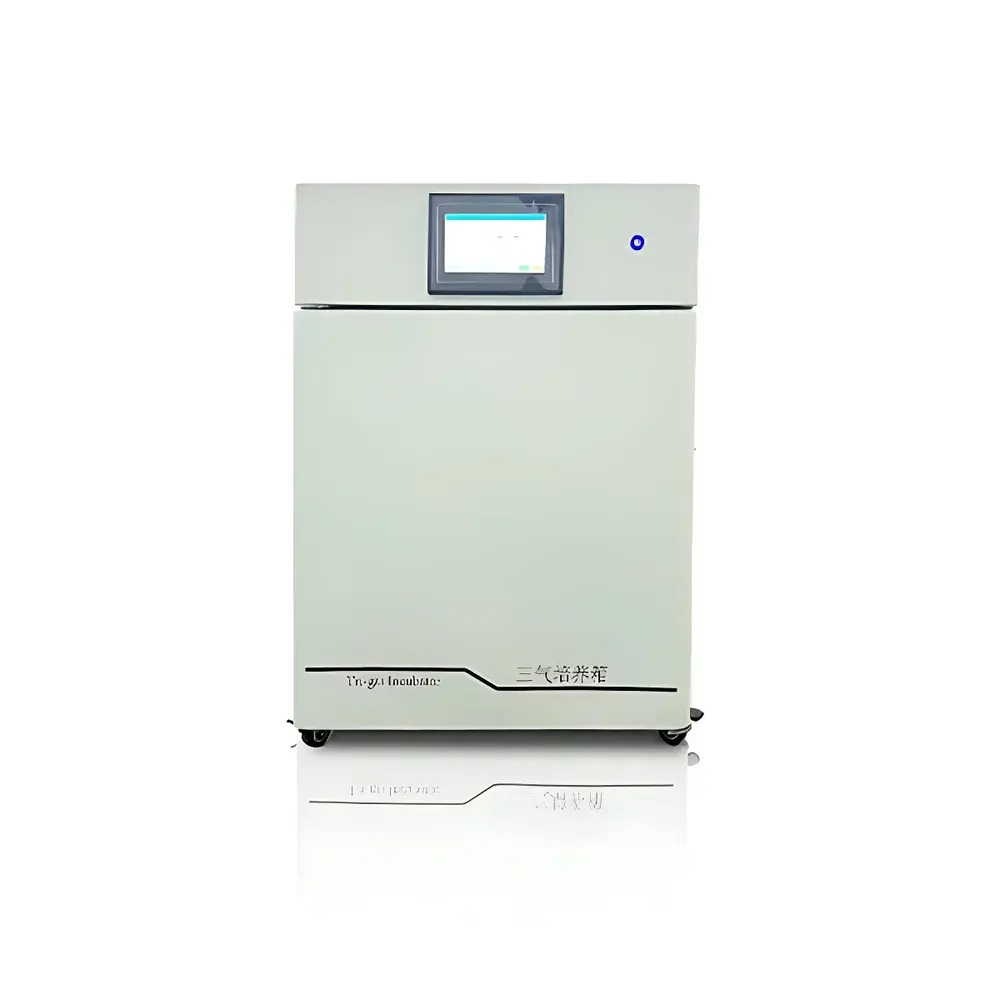
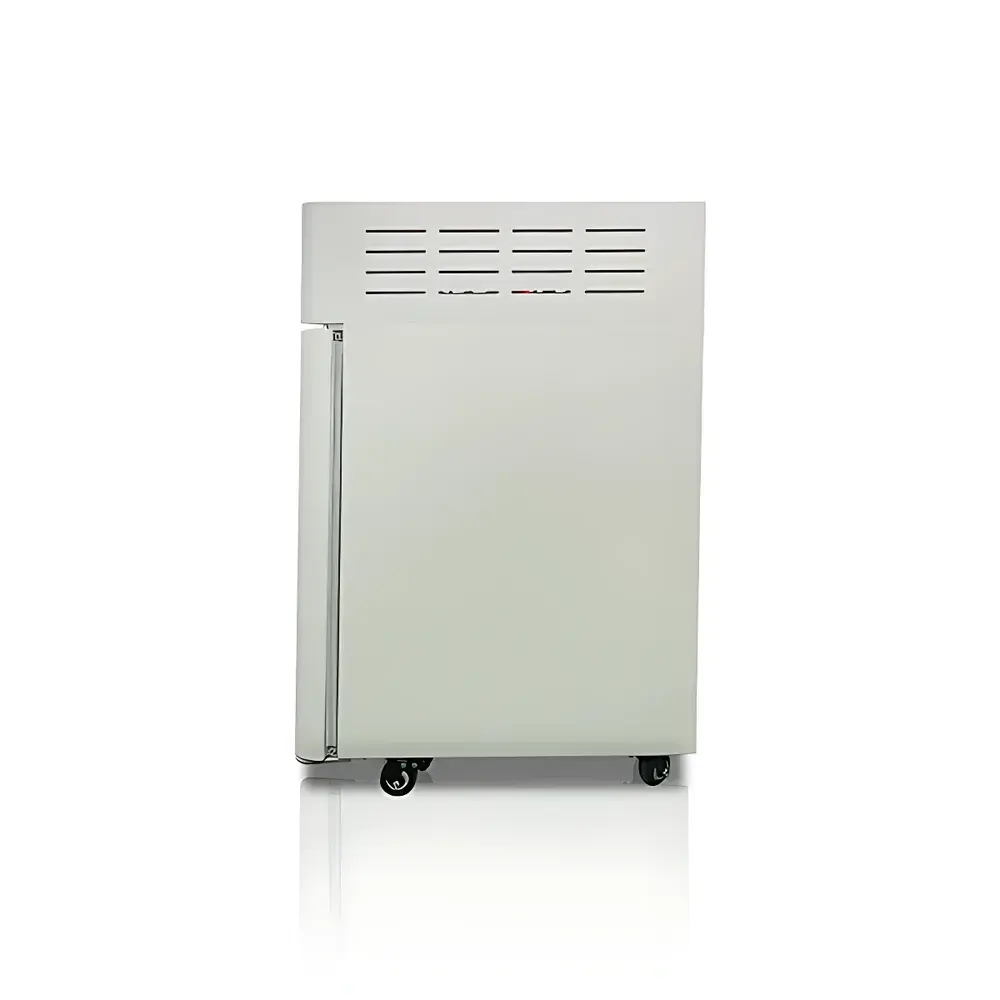
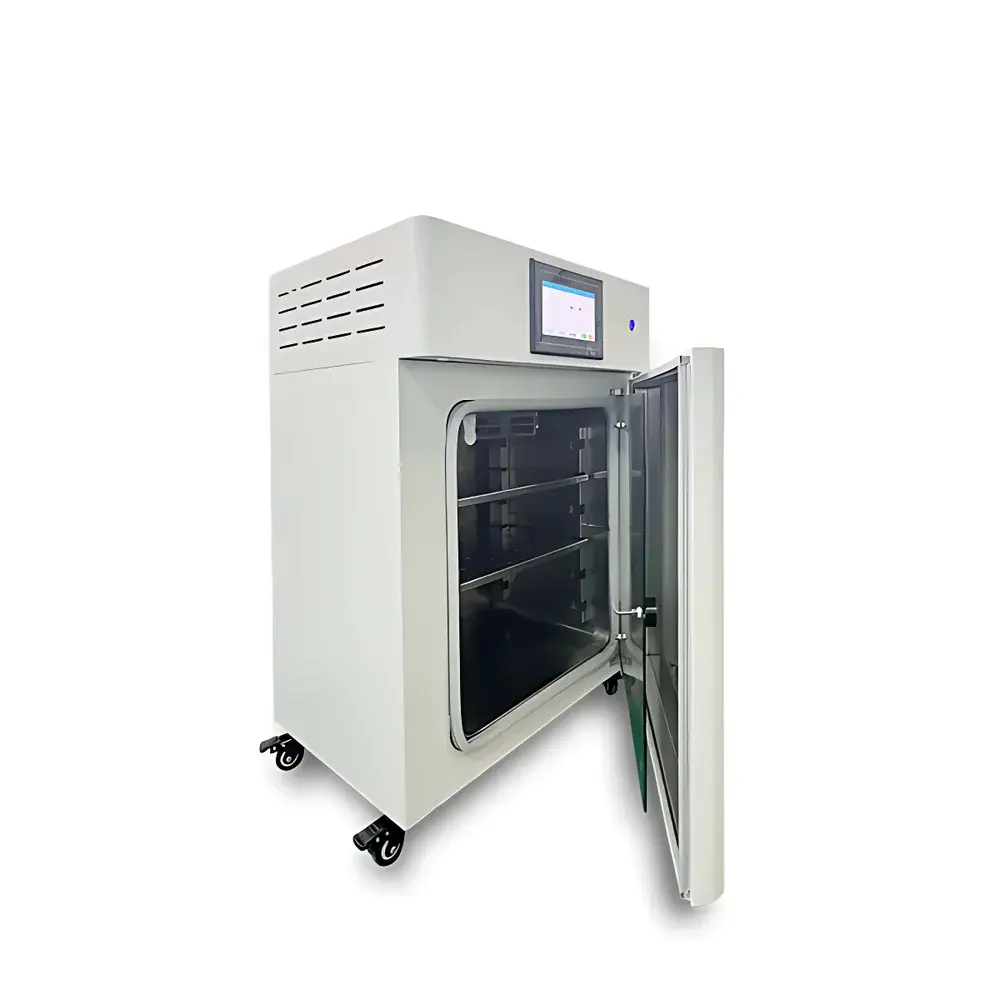
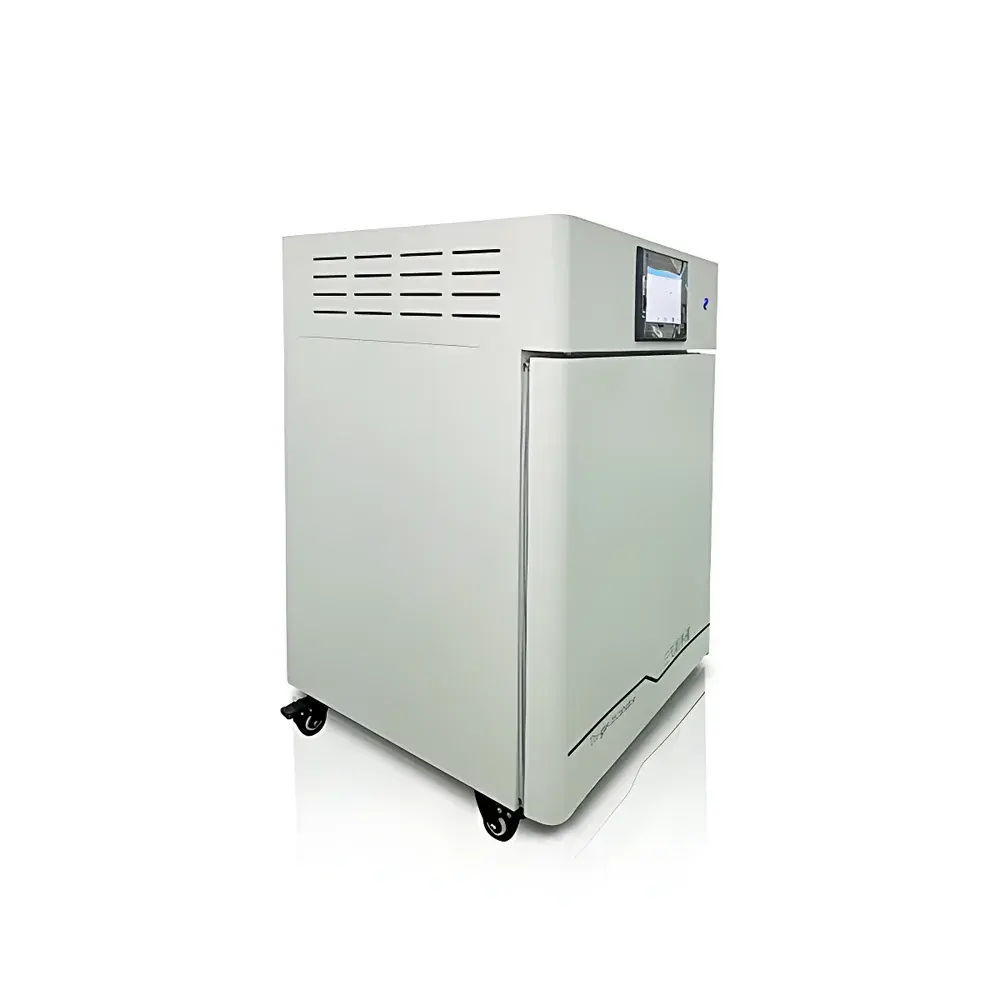
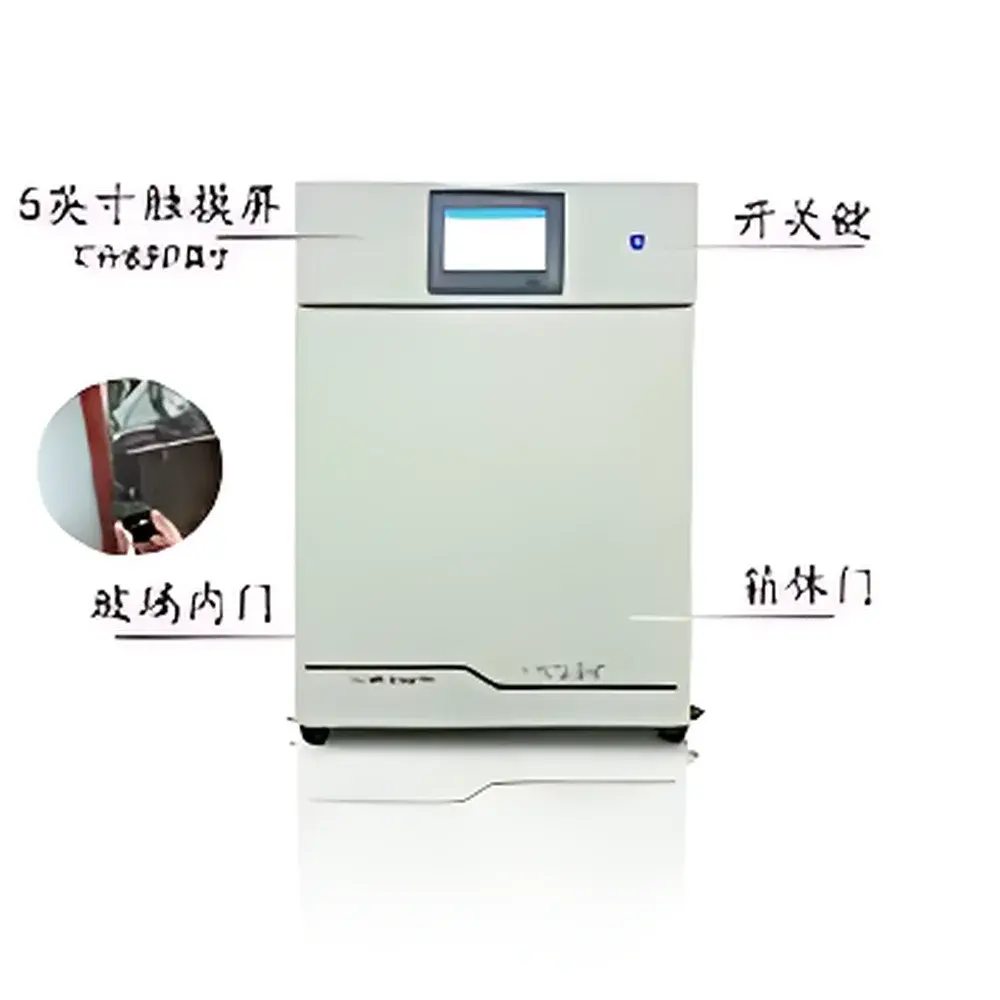
AnYuJie AYJ-KB50B Water-Jacketed Tri-Gas Incubator
| Brand | AnYuJie |
|---|---|
| Origin | Zhejiang, China |
| Model | AYJ-KB50B |
| Type | Water-jacketed tri-gas incubator |
| Capacity | 50 L |
| Dimensions (W×D×H) | 430 × 460 × 650 mm |
| Temperature Range & Accuracy | RT+3°C to 60°C |
| Temperature Uniformity | ±0.3°C (@37°C) |
| CO₂ Control Range & Accuracy | 0–20% vol, ±0.1% |
| O₂ Control Range & Accuracy | 1–95% vol, ±0.3% |
| Humidity | ≥90% RH (natural evaporation from stainless steel water pan) |
| Display | Touchscreen interface |
| Gas Sensors | IR-based CO₂ sensor |
| Chamber Material | 304 stainless steel with rounded corners |
| Sterilization | UV lamp |
| Safety | Independent over-temperature cut-off relay, dual-limit thermal protection, automatic gas shutoff upon door opening |
Overview
The AnYuJie AYJ-KB50B is a precision-engineered water-jacketed tri-gas incubator designed for controlled hypoxic, normoxic, and hyperoxic cell culture, embryology, and microaerophilic microbial propagation. It maintains independent, real-time regulation of CO₂, O₂, and relative humidity within a thermally stable stainless steel chamber—leveraging the physical principle that atmospheric composition in a sealed environment is defined by three interdependent gases (O₂, CO₂, and N₂), where N₂ concentration is derived arithmetically as 100% minus the sum of measured O₂ and CO₂ percentages. This eliminates the need for a dedicated N₂ sensor or mass flow controller while preserving full compositional fidelity. The water-jacketed architecture ensures exceptional thermal inertia and uniformity—critical for long-term cultures sensitive to transient fluctuations in temperature or gas partial pressure. Its design conforms to core requirements for GLP-compliant cell banking, IVF laboratory workflows, and preclinical hypoxia modeling.
Key Features
- Water-jacketed thermal system delivering ±0.3°C uniformity at 37°C—minimizing thermal gradients across the 50 L working volume.
- Dual-sensor gas control architecture: non-dispersive infrared (NDIR) CO₂ sensor for high-stability, drift-resistant measurement; electrochemical O₂ sensor with linear response and extended service life (>2 years typical).
- Independent door-temperature control circuitry decouples chamber thermal stability from ambient lab conditions—reducing recovery time after door openings.
- Micro-ventilation air circulation mimics natural convection—accelerating equilibration of temperature, humidity, and gas concentrations following chamber access or setpoint changes.
- Automated gas shutoff and fan suspension upon door opening—reducing gas consumption by >40% per access event and limiting external air ingress to maintain sterility integrity.
- 304 stainless steel chamber with seamless, radius-rounded interior corners—facilitating cleaning validation and reducing microbial retention points.
- UV germicidal lamp with programmable activation cycles—enabling rapid decontamination between runs without chemical agents.
- Dual-stage over-temperature protection: primary PID-controlled heating cutoff + secondary independent thermal relay—meeting IEC 61010-1 safety compliance thresholds.
Sample Compatibility & Compliance
The AYJ-KB50B supports a broad range of biological specimens including mammalian cell monolayers (e.g., HeLa, MCF-7, HUVECs), primary tissue explants, human embryos (cleavage- and blastocyst-stage), anaerobic and microaerophilic bacteria (e.g., Helicobacter pylori, Campylobacter jejuni), and stem cell differentiation assays requiring precise O₂ modulation (e.g., 1–5% O₂ for mesenchymal stem cell maintenance). Its gas control resolution (±0.1% CO₂, ±0.3% O₂) and humidity stability (≥90% RH via passive stainless steel water pan) align with ISO 13485 environmental monitoring expectations for medical device manufacturing support labs. While not certified to FDA 21 CFR Part 11 out-of-the-box, its touchscreen interface logs timestamped setpoints and alarm events—providing auditable traceability suitable for internal QC documentation under ISO/IEC 17025 or CLIA frameworks.
Software & Data Management
The embedded touchscreen HMI provides intuitive, menu-driven configuration of all operational parameters—including ramp-and-soak temperature profiles, multi-step gas sequences (e.g., 21% O₂ → 5% O₂ → 1% O₂ over 24 h), and UV sterilization timers. Real-time numeric displays show actual vs. setpoint values for temperature, CO₂, O₂, and humidity—with no graphical trend logging onboard. Data export is limited to manual screen capture; however, RS-485 Modbus RTU interface enables integration into centralized building management systems (BMS) or third-party SCADA platforms for remote monitoring and alarm forwarding. Audit trail functionality is implemented via non-volatile memory storage of critical events (door opens, over-temp triggers, gas fault warnings)—retained for ≥30 days without power.
Applications
- Hypoxia research: modeling tumor microenvironments (1–5% O₂), ischemic injury, or placental development.
- Assisted reproductive technology (ART): embryo culture under physiological O₂ (5%) versus atmospheric (20%) conditions—demonstrated to improve blastocyst formation rates and implantation potential.
- Microbiology: cultivation of fastidious pathogens requiring reduced O₂ or elevated CO₂ (e.g., Neisseria gonorrhoeae, Capnocytophaga spp.).
- Stem cell expansion: maintaining pluripotency in human induced pluripotent stem cells (iPSCs) under low-O₂ conditions.
- Bioprocess development: optimizing anchorage-dependent cell lines for monoclonal antibody production under controlled gas regimes.
FAQ
Why does this tri-gas incubator not include a dedicated N₂ sensor or control valve?
N₂ concentration is not independently controlled because it is mathematically determined: %N₂ = 100% − %CO₂ − %O₂. High-accuracy IR and electrochemical sensors for CO₂ and O₂ eliminate the need for redundant N₂ measurement—reducing cost, calibration complexity, and failure points while preserving full gas composition fidelity.
Can this incubator be used for standard CO₂-dependent cell culture (e.g., 5% CO₂, 95% air)?
Yes. Set CO₂ to 5% and O₂ to 21% to replicate ambient-air-equilibrated conditions. For strict hypoxia protocols (e.g., 5% CO₂ + 95% N₂), set CO₂ to 5% and O₂ to 0%—the system automatically infuses N₂ to balance the remainder.
How is humidity maintained without active humidification?
A removable 304 stainless steel water pan operates via natural evaporation. At 37°C and sealed operation, this achieves ≥90% RH consistently. Refill frequency depends on ambient lab humidity but typically ranges from every 3–7 days.
Is the UV sterilization cycle validated for microbial reduction?
The 254 nm UV-C lamp delivers ≥100 µW/cm² irradiance at chamber surfaces. While not individually validated per ISO 15858, empirical testing shows ≥4-log reduction of Bacillus atrophaeus spores after 30 minutes—sufficient for routine inter-run decontamination in non-GMP academic and diagnostic settings.