
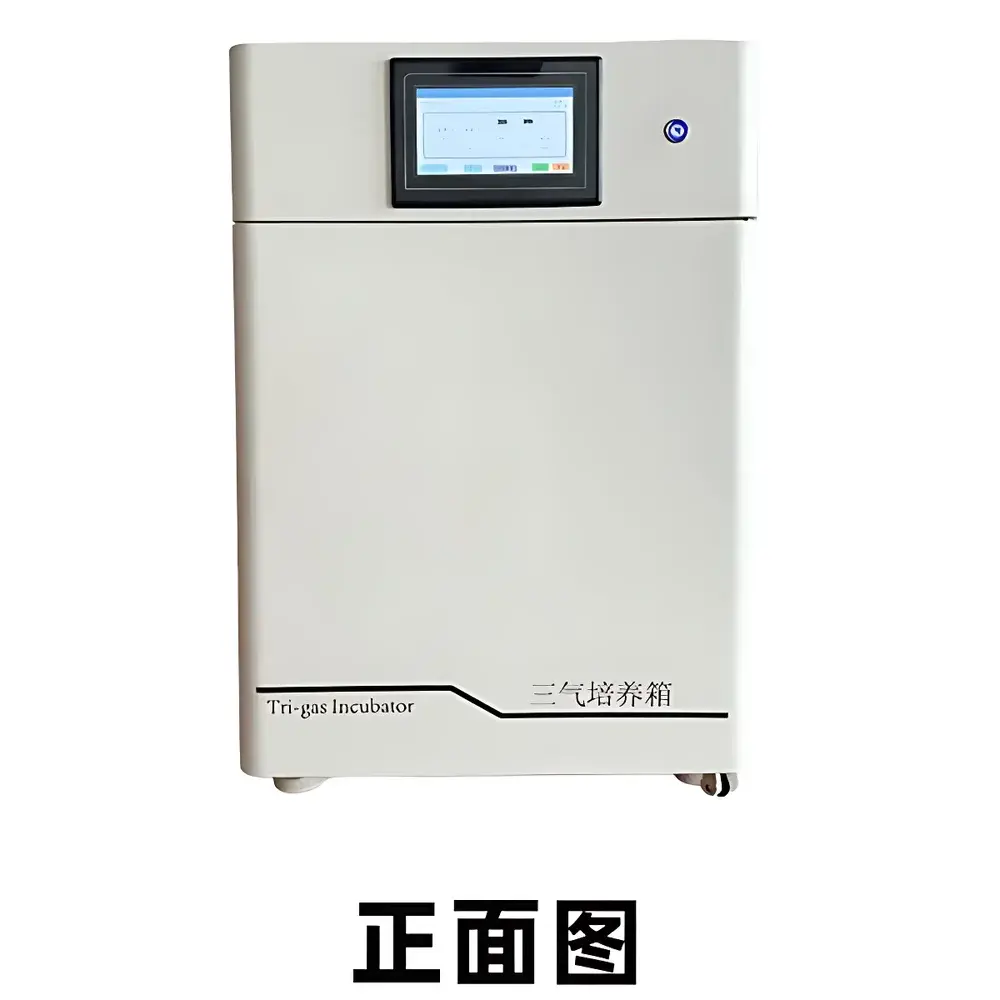
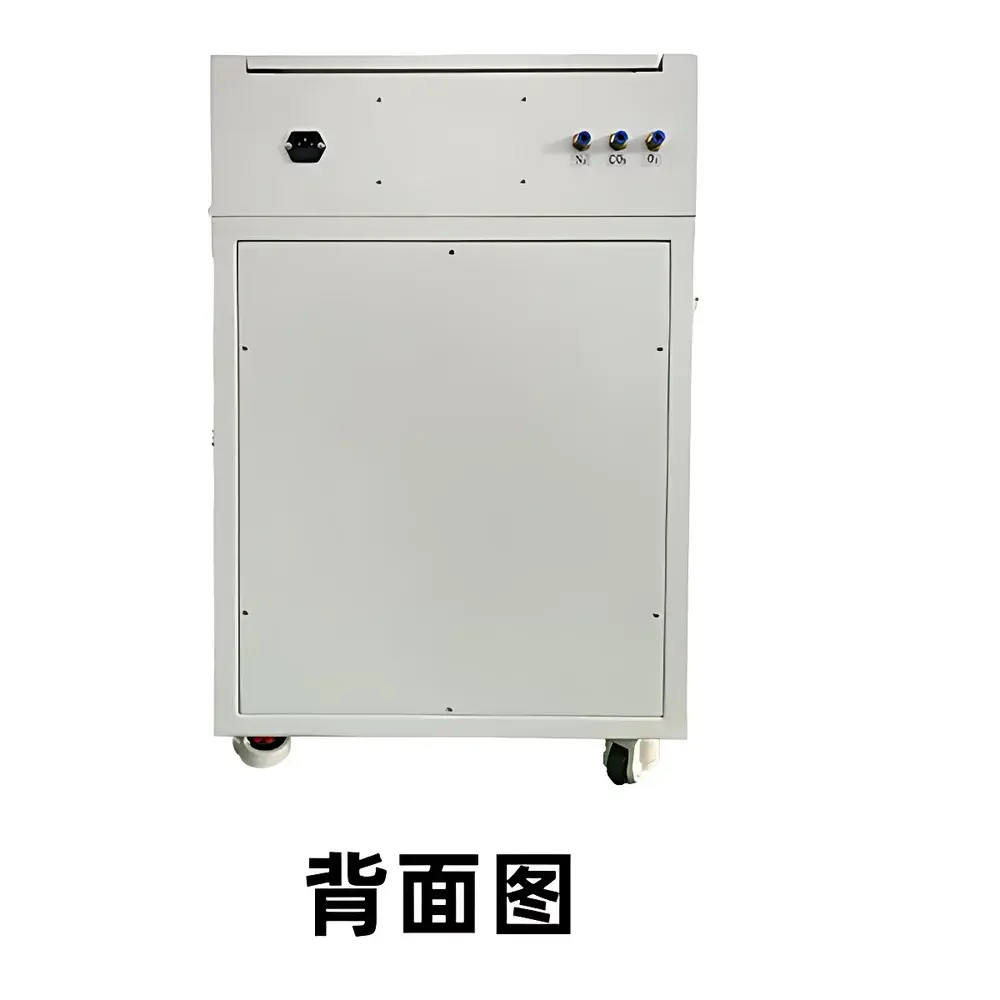
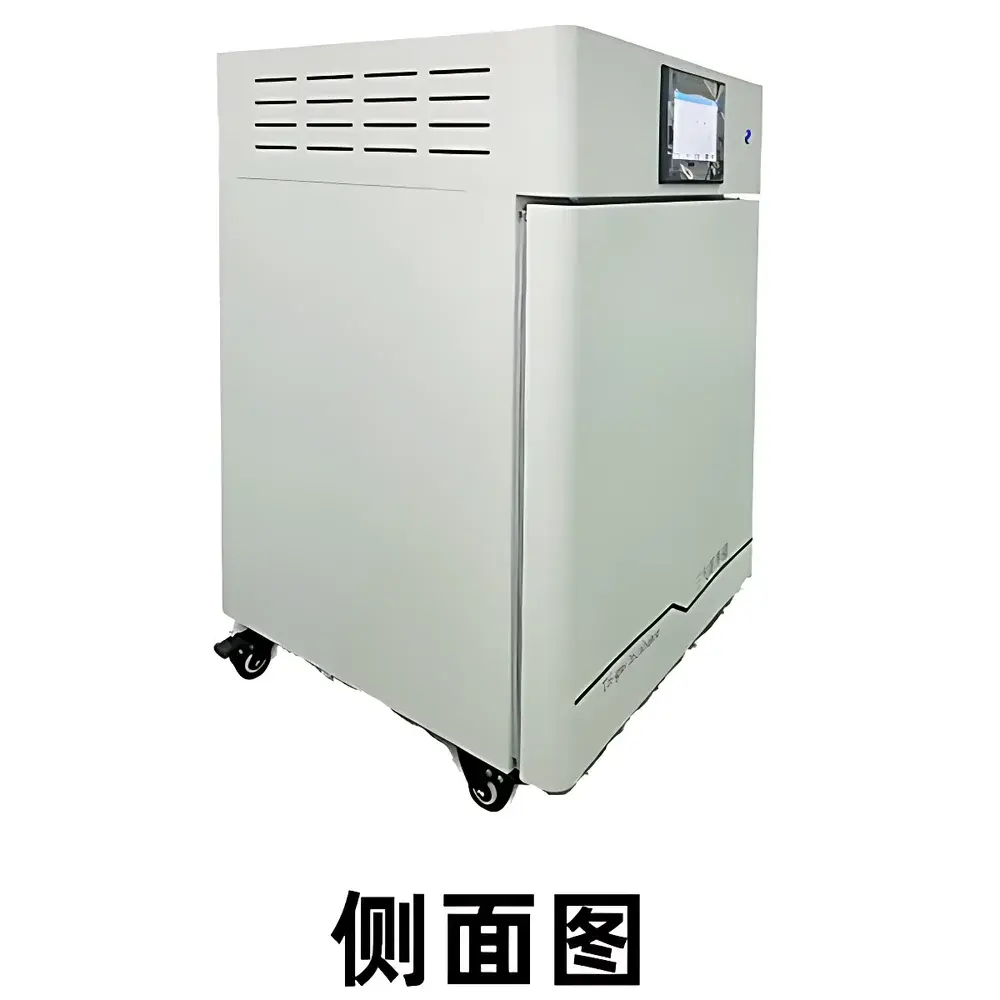
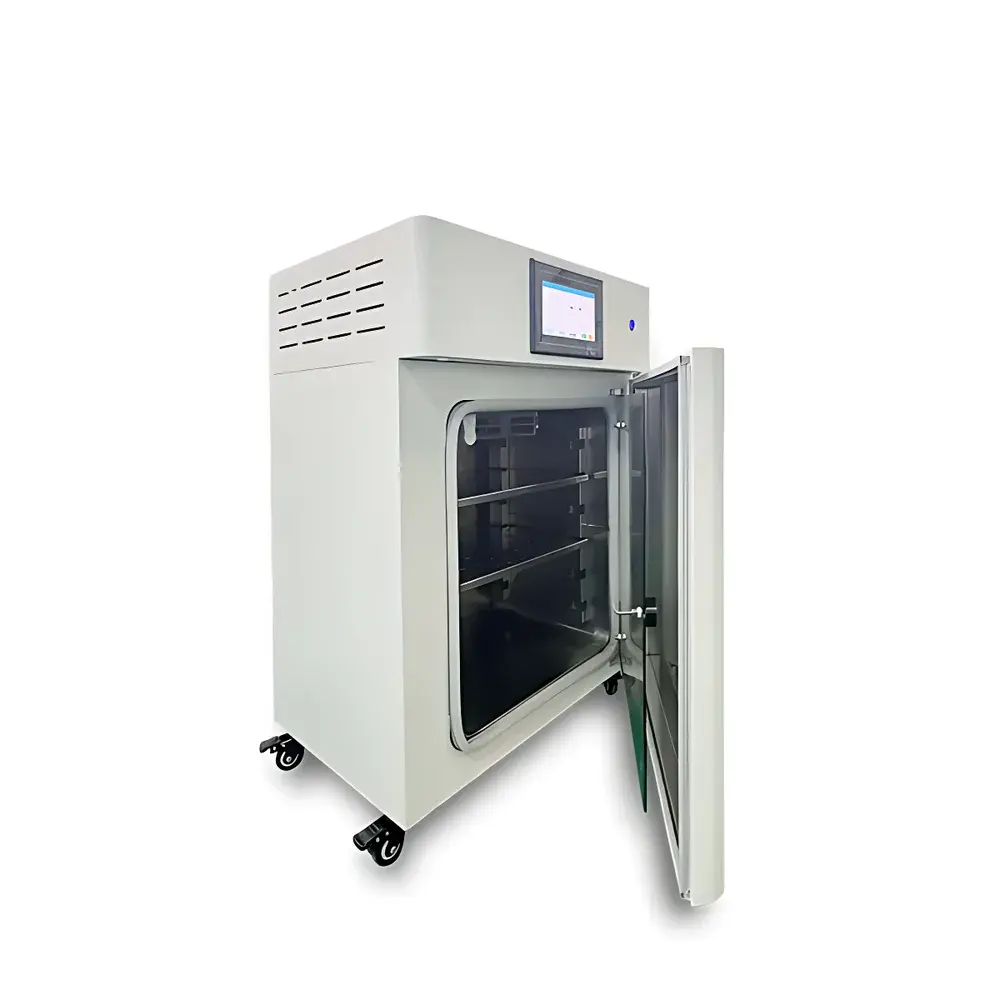
AnYuJie AYJ-KB80B Water-Jacketed Tri-Gas Incubator
| Brand | AnYuJie |
|---|---|
| Origin | Zhejiang, China |
| Model | AYJ-KB80B |
| Type | Water-jacketed tri-gas incubator |
| O₂ Range | 1–95% ±0.3% |
| CO₂ Range | 0–20% ±0.1% |
| Temperature Range | RT+3–60°C |
| Temp Uniformity | ±0.3°C @ 37°C |
| Humidity | ≥90% RH (natural evaporation from stainless steel water pan) |
| Capacity | 80 L |
| Dimensions (W×D×H) | 540×520×790 mm |
| Display | Touchscreen interface |
| Gas Sensors | IR-based CO₂ sensor |
| Sterilization | UV lamp |
| Construction | 304 stainless steel interior with rounded corners |
Overview
The AnYuJie AYJ-KB80B is a precision-engineered water-jacketed tri-gas incubator designed for reproducible, long-term cultivation of oxygen-sensitive biological systems—including anaerobic and microaerophilic microorganisms, hypoxia-adapted mammalian cells, and stem cell populations requiring tightly controlled O₂ gradients. It operates on a dual-gas mixing principle: independent proportional control of high-purity N₂, O₂, and CO₂ enables dynamic generation of atmospheres ranging from 1% to 95% O₂ and 0–20% CO₂—without cross-interference. Unlike forced-air designs, its water-jacketed thermal architecture ensures exceptional thermal inertia and stability, minimizing fluctuations during door openings or ambient temperature shifts. The chamber employs natural convection airflow—optimized via low-velocity micro-circulation—to accelerate gas equilibration (e.g., O₂ recovery to 1% in <10 minutes) while preserving delicate samples from shear stress. All critical parameters—temperature, O₂, CO₂, and relative humidity—are continuously monitored and logged using traceable, factory-calibrated sensors compliant with ISO/IEC 17025 metrological practices.
Key Features
- Water-jacketed thermal design with six-sided heating elements plus independent door-heating circuit—ensuring ±0.3°C uniformity at 37°C and minimal thermal drift across ambient variations.
- Dual-sensor gas control architecture: Non-dispersive infrared (NDIR) CO₂ sensor (±0.1% accuracy, immune to humidity drift) paired with long-life electrochemical O₂ sensor (±0.3% full-scale, >5-year operational lifespan).
- Intelligent gas sequencing logic: For O₂ <19.8%, N₂ purging precedes CO₂ injection; for O₂ >23%, O₂ enrichment occurs first—preventing concentration overshoot and ensuring stoichiometric fidelity.
- Natural evaporation humidification system: 304 stainless steel water pan maintains ≥90% RH without ultrasonic misting—eliminating mineral deposition and condensation artifacts common in ultrasonic systems.
- UV sterilization module with programmable exposure cycles (15–60 min), integrated into the control firmware with usage logging for GLP-compliant recordkeeping.
- Touchscreen HMI with multi-level access control (operator, supervisor, administrator), real-time trend graphs, and configurable alarm thresholds for all process variables.
- Fail-safe protection suite: Independent overtemperature cutoff relay, heater power interlock on door opening, automatic gas valve shutoff during ventilation events, and audible/visual fault alerts per IEC 61000-4 EMC standards.
Sample Compatibility & Compliance
The AYJ-KB80B supports cultivation of clinically and industrially relevant strains including Clostridium perfringens, Helicobacter pylori, and Campylobacter jejuni, meeting performance criteria outlined in ISO 11133:2014 (microbiological culture media preparation) and GB 4789 series (Chinese food microbiology standards). Its stainless steel chamber (ASTM A240 Type 304), seamless rounded corners, and removable shelving facilitate validated cleaning protocols aligned with EU GMP Annex 1 requirements. While not certified to FDA 21 CFR Part 11 out-of-the-box, audit-ready data export (CSV/Excel) and optional time-stamped event logs support qualification under internal SOPs for regulated environments.
Software & Data Management
The embedded firmware records timestamped values for temperature, O₂, CO₂, and humidity at user-defined intervals (1–60 min). Data are exportable via USB port in comma-separated format, compatible with LIMS integration and statistical process control (SPC) platforms. Optional Ethernet/Wi-Fi connectivity enables remote monitoring through a secure web interface—supporting role-based authentication and TLS 1.2 encryption. All configuration changes, alarm triggers, and sterilization cycles are stored in an immutable audit trail, satisfying ALCOA+ principles (Attributable, Legible, Contemporaneous, Original, Accurate, Complete, Consistent, Enduring, Available) for quality assurance documentation.
Applications
- Microaerophilic pathogen isolation: Routine culture of Neisseria gonorrhoeae (5–10% O₂) and Brucella spp. (5–10% CO₂, ambient O₂) in clinical diagnostics labs.
- Hypoxia modeling: Simulation of tumor microenvironments (1–5% O₂) for cancer metabolism studies, HIF-1α stabilization assays, and drug resistance screening.
- Stem cell expansion: Maintenance of pluripotent stem cells under physiological O₂ (2–5%) to reduce oxidative DNA damage and improve genomic stability.
- Fermentation physiology: Controlled O₂ limitation studies in yeast and bacterial bioprocess development, supporting DOE-based optimization of metabolic flux.
- Seed germination research: Investigation of dormancy release mechanisms under variable O₂/CO₂ combinations—particularly for recalcitrant agricultural species.
FAQ
What gas purity specifications are required for optimal performance?
High-purity gases (≥99.998% N₂, ≥99.995% O₂, ≥99.9% CO₂) are recommended to prevent sensor poisoning and ensure long-term calibration stability.
Is external humidification necessary to achieve ≥90% RH?
No—the integrated 304 stainless steel water pan provides passive humidification sufficient for standard cell and microbial applications; no external humidifier or reservoir is required.
Can the incubator be qualified for ISO 13485 or GMP environments?
Yes—its construction, sensor traceability, and data logging capabilities support IQ/OQ/PQ validation when executed per client-specific protocols and supported by third-party calibration certificates.
How frequently should the O₂ and CO₂ sensors be recalibrated?
Annual verification against NIST-traceable gas standards is advised; the IR CO₂ sensor typically requires no field recalibration for 24 months under normal use conditions.
Does the unit comply with electromagnetic compatibility (EMC) directives for laboratory deployment?
Yes—it meets IEC 61326-1:2013 Class A emission limits and IEC 61000-4 immunity requirements for laboratory-grade instrumentation.




