
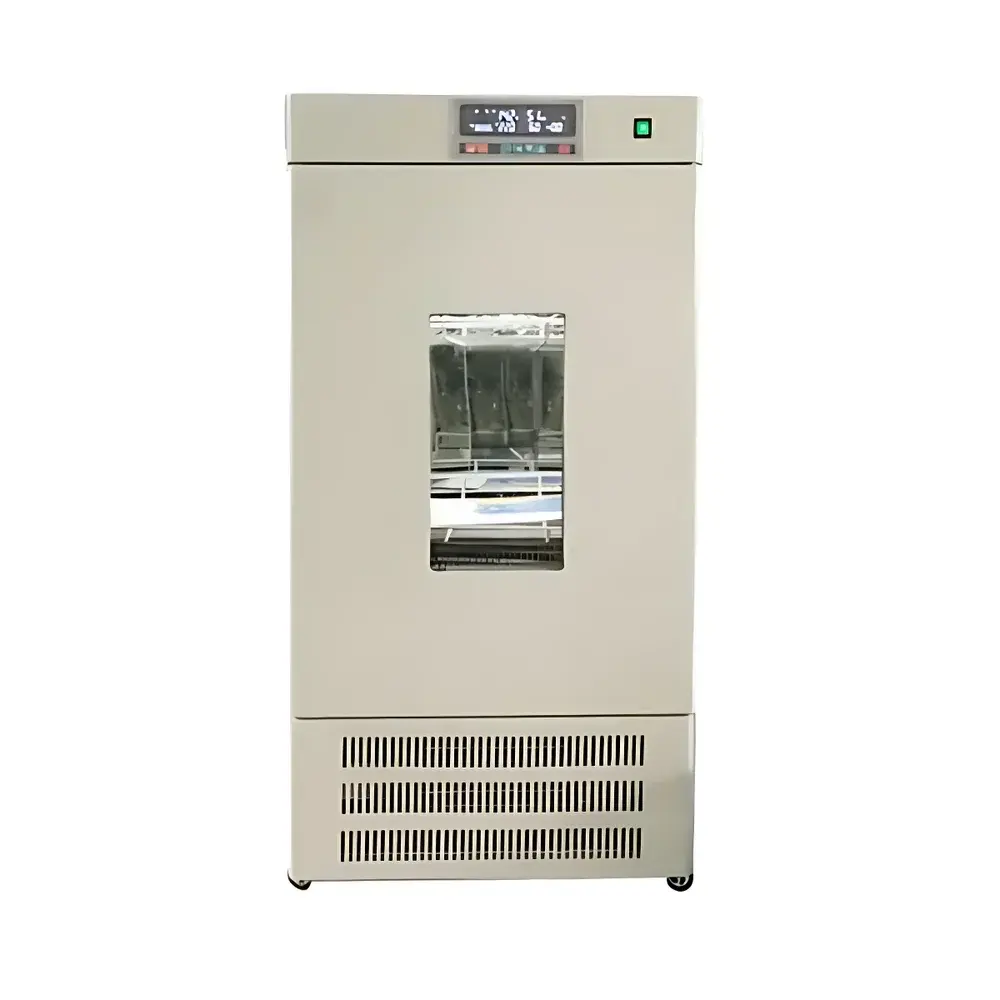
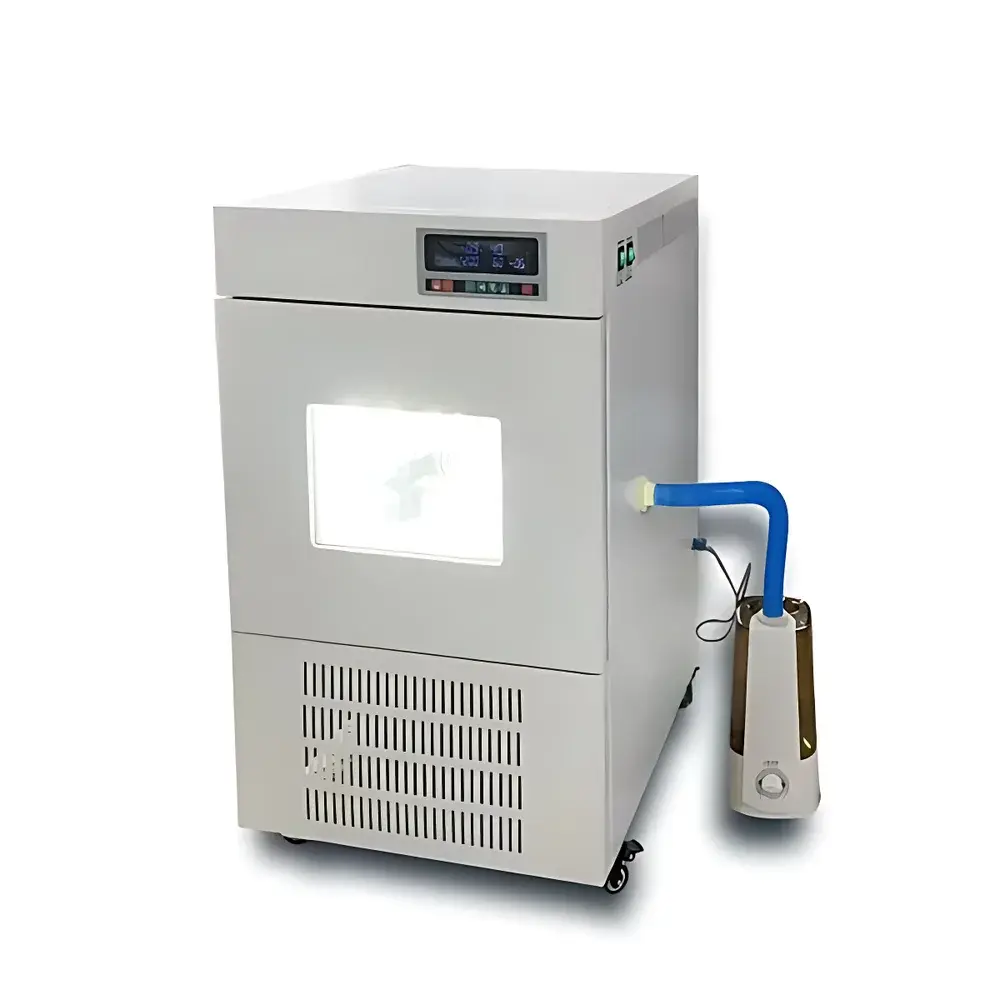
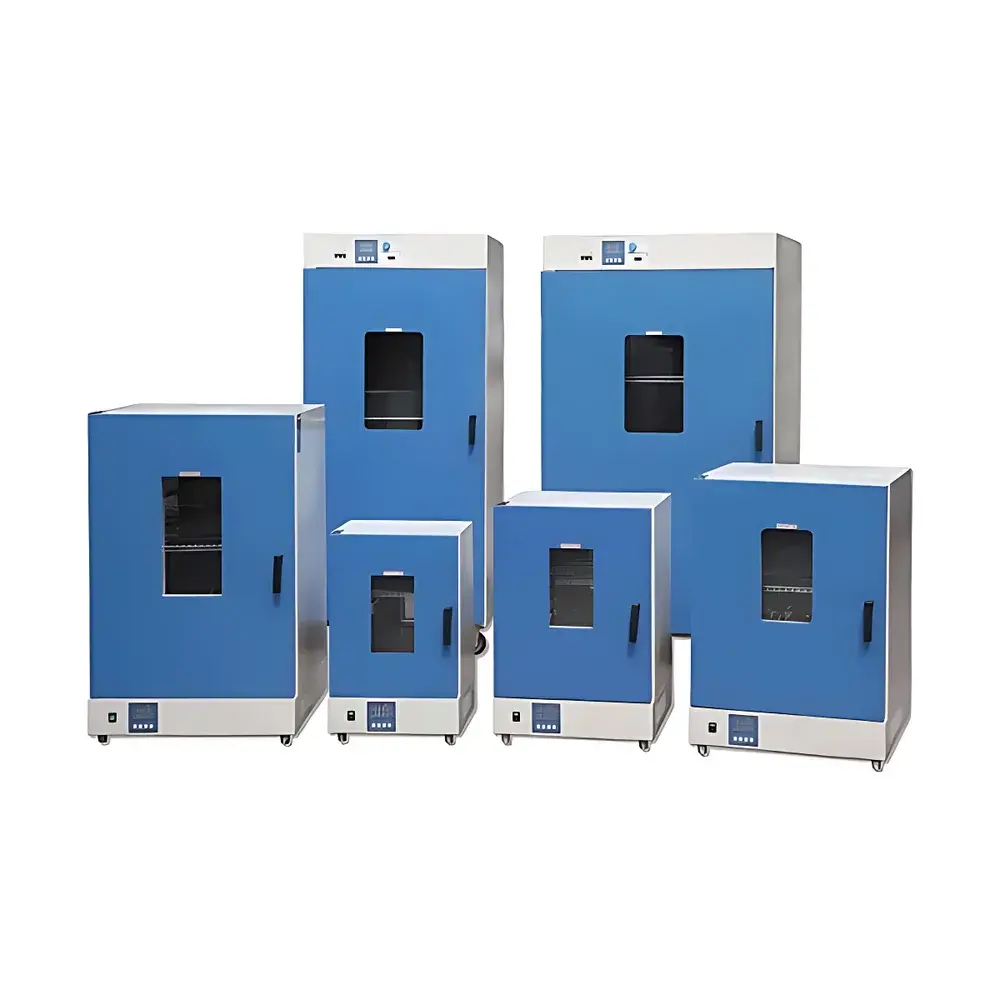
AnYuJie HWS-250B Temperature and Humidity Controlled Incubator
| Brand | AnYuJie |
|---|---|
| Origin | Zhejiang, China |
| Manufacturer Type | Authorized Distributor |
| Product Category | Domestic |
| Model | HWS-250B |
| Heating Method | Air-jacketed |
| Cooling Method | Compressor-based refrigeration |
| Humidification System | External water reservoir |
| Temperature Range (with humidification) | 5–50°C |
| Temperature Range (without humidification) | 5–50°C |
| Temperature Fluctuation | ±1°C |
| Temperature Uniformity | ±1°C |
| Humidity Range | 40–95% RH |
| Humidity Accuracy | ±5% RH |
| Chamber Capacity | 250 L |
| External Dimensions (W×D×H) | 600 × 640 × 1340 mm |
Overview
The AnYuJie HWS-250B Temperature and Humidity Controlled Incubator is a precision-engineered environmental chamber designed for stable, long-term maintenance of biological samples under tightly regulated thermal and hygroscopic conditions. Built upon air-jacketed heating architecture and compressor-driven active cooling, the system delivers independent, simultaneous control of temperature and relative humidity across a biologically relevant operational envelope (5–50°C / 40–95% RH). Its core thermodynamic design employs forced-air convection via a stainless-steel circulation duct and centrifugal blower to ensure spatial uniformity—critical for reproducible cell culture, seed germination, BOD incubation, and stability testing in compliance with ISO 17025 and GLP frameworks. The unit integrates dual-door insulation, ultrasonic humidification, and a dedicated external water reservoir to minimize contamination risk and simplify maintenance—making it suitable for routine use in QC laboratories, academic research facilities, pharmaceutical development labs, and agricultural biotechnology centers.
Key Features
- Air-jacketed heating system with independent compressor-based cooling ensures rapid thermal response and minimal cross-interference between temperature and humidity control loops.
- Ultrasonic humidification module coupled with a high-capacity external water reservoir enables consistent, particle-free moisture delivery and eliminates internal condensation buildup on sensor surfaces.
- Dual-pane insulated door with magnetic seal minimizes thermal leakage and improves energy efficiency while maintaining structural rigidity and optical clarity.
- Stainless-steel interior chamber and circulation duct resist corrosion, facilitate cleaning, and comply with biosafety standards for repeated sterilization cycles.
- Embedded microprocessor controller with PID algorithms provides programmable ramp/soak profiles, real-time deviation alerts, and non-volatile parameter storage.
- Comprehensive safety architecture includes over-temperature cutoff, humidity sensor fault detection, compressor high/low pressure interlocks, and audible/visual alarm outputs.
Sample Compatibility & Compliance
The HWS-250B accommodates standard microbiological and botanical sample formats—including Petri dishes, multi-well plates, Erlenmeyer flasks, and plant growth trays—within its 250 L working volume. Its uniform airflow pattern and low-vibration operation prevent sediment disturbance in liquid cultures and support aerobic microbial growth kinetics per ASTM D5210 and USP . The unit meets essential electrical safety requirements per IEC 61010-1 and supports traceable calibration through accessible sensor ports for third-party verification. While not certified for Class II biosafety or explosion-proof operation, its design aligns with general laboratory infrastructure guidelines outlined in ANSI/ASHRAE Standard 110 and EU Directive 2014/30/EU (EMC). Humidity control performance remains validated within 40–95% RH at ambient temperatures ≤30°C and relative humidity ≤85%—conditions recommended for uninterrupted operation per manufacturer specifications.
Software & Data Management
The incubator operates via an embedded 4.3-inch TFT-LCD interface supporting multilingual menus (English, Chinese), password-protected parameter editing, and event-log recording (up to 10,000 entries) with timestamped entries for temperature/humidity setpoints, deviations, and alarm triggers. Optional RS-485 Modbus RTU output enables integration into centralized lab monitoring systems (e.g., LabVantage, Thermo Fisher SampleManager) for automated data archival and audit trail generation compliant with FDA 21 CFR Part 11 requirements when paired with validated middleware. No proprietary cloud platform is included; all local data export occurs via USB flash drive in CSV format for offline analysis in Excel or MATLAB environments.
Applications
- Biochemical Oxygen Demand (BOD) testing per APHA Standard Methods 5210B and ISO 5815-1.
- Seed germination and plant phenotyping studies requiring precise diurnal humidity cycling.
- Microbial culture maintenance for quality control in food, water, and pharmaceutical manufacturing.
- Stability assessment of diagnostic reagents and lyophilized biologics under ICH Q1A(R2) intermediate storage conditions.
- Environmental simulation for ecotoxicology assays involving aquatic invertebrates and algae.
- Educational use in undergraduate life science laboratories for controlled variable experimentation.
FAQ
What is the recommended ambient operating environment for this incubator?
The unit must be installed in a well-ventilated room with ambient temperature between 15–30°C and relative humidity ≤85%. Direct sunlight and proximity to heat sources or HVAC exhaust vents must be avoided.
How often should the external water reservoir be refilled and cleaned?
Refill frequency depends on set humidity level and ambient conditions; typical intervals range from daily to every 3 days at 95% RH. Clean the reservoir weekly with deionized water and soft lint-free cloth to prevent mineral scaling.
Does the HWS-250B support validation documentation packages (IQ/OQ/PQ)?
Yes—factory calibration certificates and user-accessible sensor test points allow qualified users to perform on-site OQ protocols. Full IQ/PQ templates are available upon request for GMP-regulated installations.
Can the incubator operate continuously at 5°C with full humidification?
No. While the temperature range includes 5°C, sustained operation below 10°C with active humidification may cause internal condensation and compromise humidity sensor accuracy. Refer to Section 4.2 of the operator manual for low-temperature dehumidification procedures.
Is remote monitoring or Ethernet connectivity supported?
Not natively. Communication is limited to RS-485 Modbus RTU. Integration with Ethernet-enabled SCADA or BMS requires an external protocol converter (e.g., Moxa NPort series) configured by the end user.




