
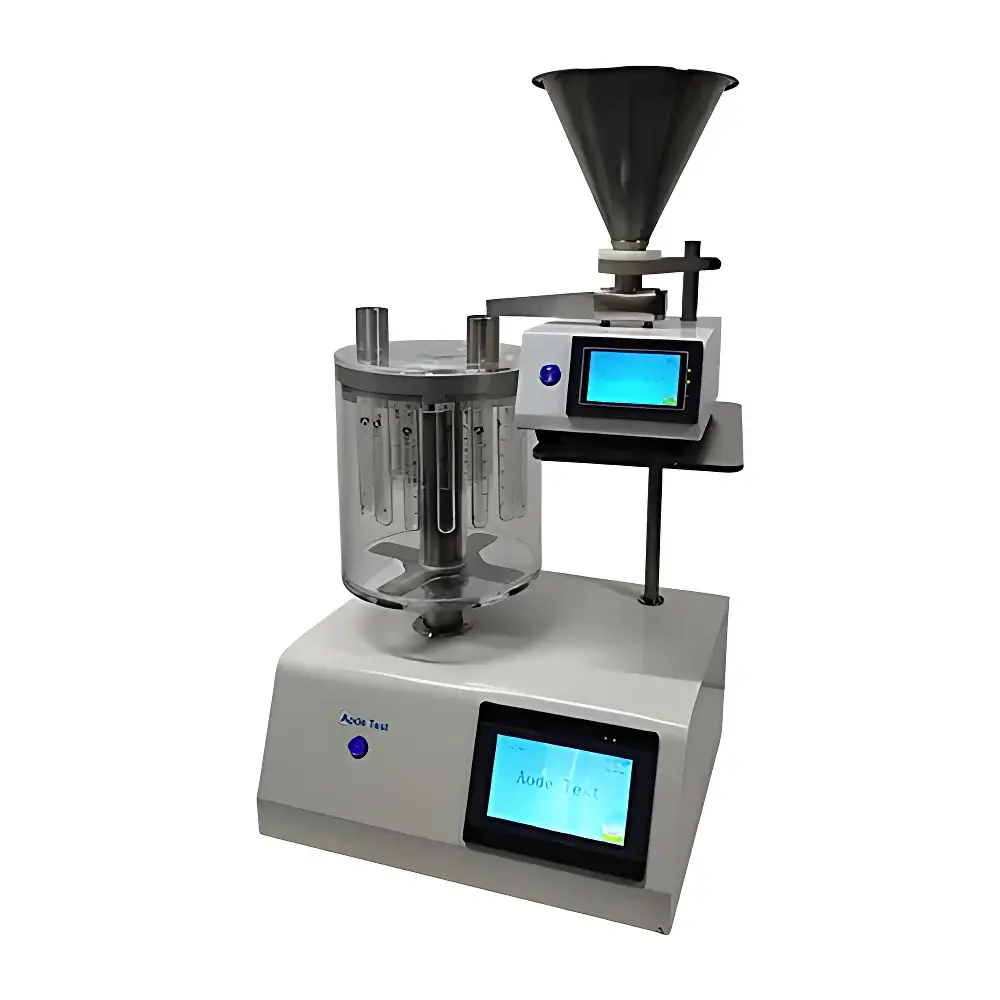
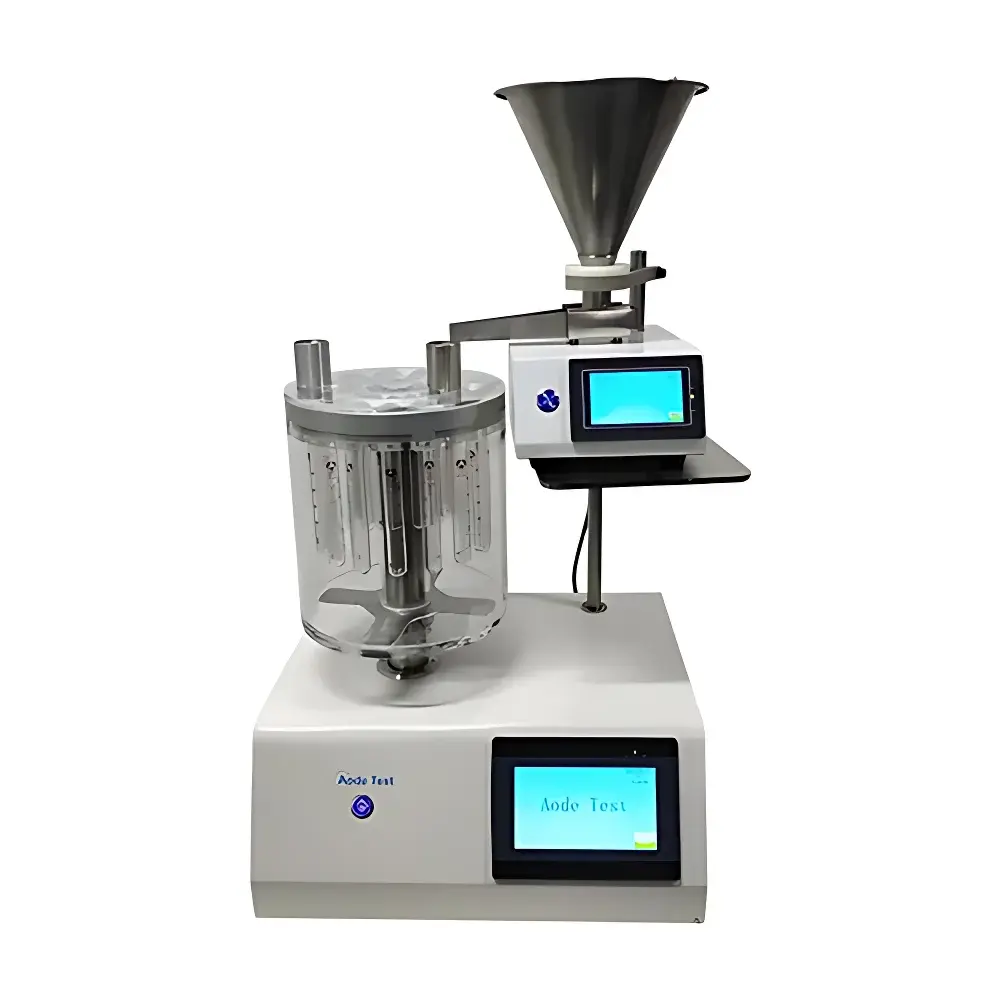
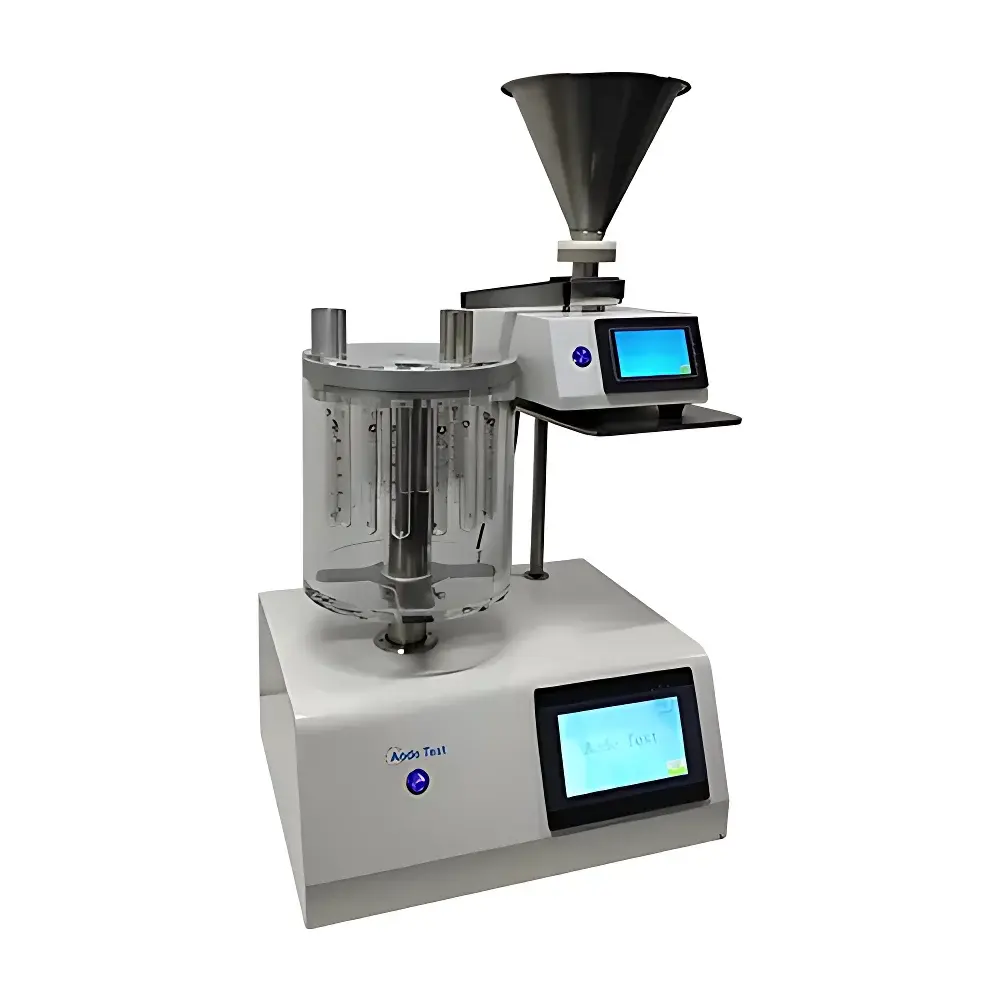
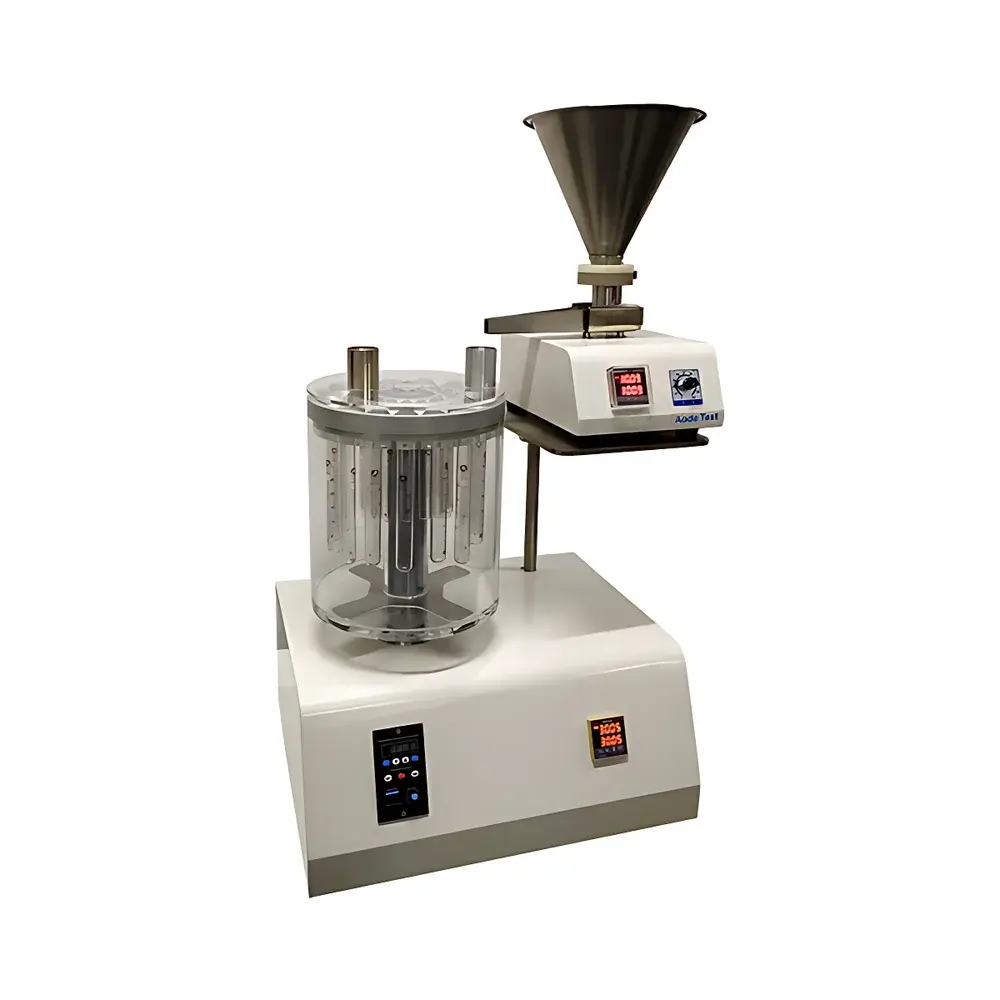
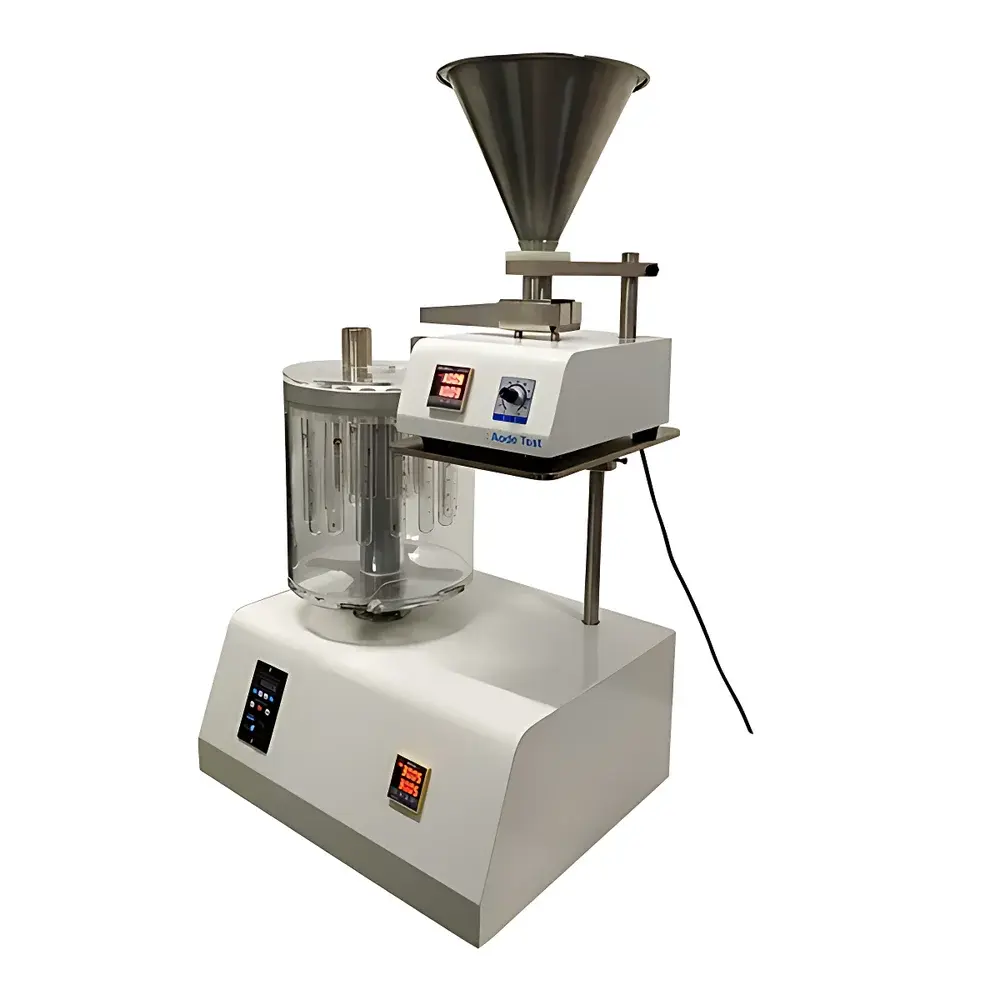
Aode Aode-102 Tube-Type Rotational Sample Divider
| Brand | Aode |
|---|---|
| Origin | Liaoning, China |
| Manufacturer Type | Direct Manufacturer |
| Country of Origin | China |
| Model | Aode-102 (211221) |
| Price Range | USD 7,000 – 14,000 |
| Maximum Feed Particle Size | 10 mm |
| Number of Subsamples per Cycle | 15 |
| Power Supply | 220 V, 50 Hz, 50 W |
| Maximum Single-Batch Sample Volume | 1500 mL |
| Rotational Speed Range | 20–50 rpm |
| Tube Capacity Options | 5–100 mL (glass vials) |
| Control Interface | 7-inch color LCD touchscreen |
| Sample Types | Dry powders, suspensions, emulsions, granular solids |
Overview
The Aode Aode-102 Tube-Type Rotational Sample Divider is a precision-engineered laboratory instrument designed for representative subsampling of heterogeneous bulk materials. It operates on the principle of gravitational, centrifugally assisted rotational division—where a uniformly fed sample stream is distributed across multiple collection positions via a rotating eccentric funnel assembly. This mechanism ensures statistically valid mass reduction while preserving the compositional integrity and particle size distribution of the original batch. Unlike manual or static splitter methods, the Aode-102 eliminates operator-induced bias and flow-channeling effects by enforcing consistent feed rate, symmetrical trajectory, and synchronized rotation-to-collection timing. Its architecture complies with fundamental sampling theory as defined in ISO 13320 (particle size analysis—general principles) and supports adherence to ASTM D6938 (standard practice for sampling particulate materials), making it suitable for laboratories requiring traceable, auditable sample preparation workflows.
Key Features
- Automated, closed-loop sample handling: Integrated vibratory feeder and programmable rotational actuator ensure uniform material delivery and reproducible angular positioning.
- Dual eccentric sampling funnels: Inner funnel (low-volume mode) and outer funnel (high-volume mode) provide flexible subsample volume control without mechanical recalibration.
- 7-inch full-color capacitive touchscreen interface: Enables intuitive configuration of rotation speed (20–50 rpm), cycle count, tube indexing sequence, and real-time status monitoring.
- Modular tube carousel compatibility: Accepts standard borosilicate glass vials ranging from 5 mL to 100 mL; carousel alignment tolerances ≤ ±0.15° ensure leak-free, drop-aligned filling.
- Low-power, brushless DC motor drive: Delivers stable torque across the operational speed range with thermal overload protection and encoder-based speed feedback for ±0.5 rpm repeatability.
- Minimal cross-contamination design: All wetted surfaces are accessible for cleaning; funnel geometry prevents material retention between cycles.
Sample Compatibility & Compliance
The Aode-102 accommodates free-flowing dry powders (e.g., cement clinker, pharmaceutical excipients, metal alloys), semi-fluid suspensions (e.g., ceramic slurries, dairy emulsions), and granular aggregates up to 10 mm in maximum particle dimension. It is not intended for fibrous, highly cohesive, or hygroscopic materials without prior conditioning. The system meets structural and electrical safety requirements per IEC 61010-1:2010 for laboratory equipment. While not certified to GLP or GMP out-of-the-box, its deterministic operation, non-volatile parameter storage, and timestamped cycle logging support integration into validated workflows compliant with FDA 21 CFR Part 11 when paired with appropriate LIMS or ELN software.
Software & Data Management
The embedded firmware stores up to 200 method profiles—including speed setpoint, funnel selection, tube count, and pause intervals—with automatic timestamping and cycle counter tracking. Exportable CSV logs include date/time, total cycles completed, average rpm deviation, and tube position sequence. No proprietary software installation is required; configuration and diagnostics are performed entirely via the onboard HMI. For enterprise integration, RS-232 and optional Ethernet (Modbus TCP) interfaces enable remote command execution and status polling, supporting synchronization with laboratory automation systems (LAS) and electronic lab notebooks (ELN) that require audit-trail-capable instrumentation metadata.
Applications
- Academic research labs: Standardized sample splitting for XRD, SEM-EDS, and BET surface area analysis where mass representativeness directly impacts data validity.
- QC/QA in pharmaceutical manufacturing: Preparation of homogeneous subsamples for content uniformity testing (USP ) and dissolution sampling.
- Cement and construction materials testing: Division of blended raw meal or finished clinker prior to fineness (Blaine) or chemical analysis (XRF).
- Food & agricultural laboratories: Representative subsampling of milled grains, spices, or powdered dairy products for mycotoxin screening or nutritional profiling.
- Materials science facilities: Splitting of battery cathode precursors, catalyst powders, or additive manufacturing feedstocks prior to rheological or thermal characterization.
FAQ
What types of materials are incompatible with the Aode-102?
Materials exhibiting strong electrostatic adhesion (e.g., nano-sized silica), high moisture content (>15% w/w), or fibrous morphology (e.g., cellulose pulp) may cause bridging or incomplete discharge and are not recommended without pre-drying or granulation.
Can the Aode-102 be integrated into an automated sample prep line?
Yes—via its RS-232 serial port or optional Ethernet module, the unit accepts ASCII command sets for start/stop, speed adjustment, and status query, enabling coordination with robotic arms, conveyor triggers, or central SCADA systems.
Is calibration required before first use?
No routine calibration is specified; however, users should verify funnel centering and tube alignment using the included alignment jig and perform a three-cycle dry-run validation with inert tracer particles to confirm subsample mass CV ≤ 3.5% (per ISO 13320 Annex B).
Does the instrument comply with ISO 13320 or ASTM D6938?
It implements core physical principles referenced in both standards—particularly rotational symmetry, constant feed rate, and geometric equivalence—but final compliance determination rests with the user’s documented validation protocol and uncertainty budgeting per ISO/IEC 17025.



