
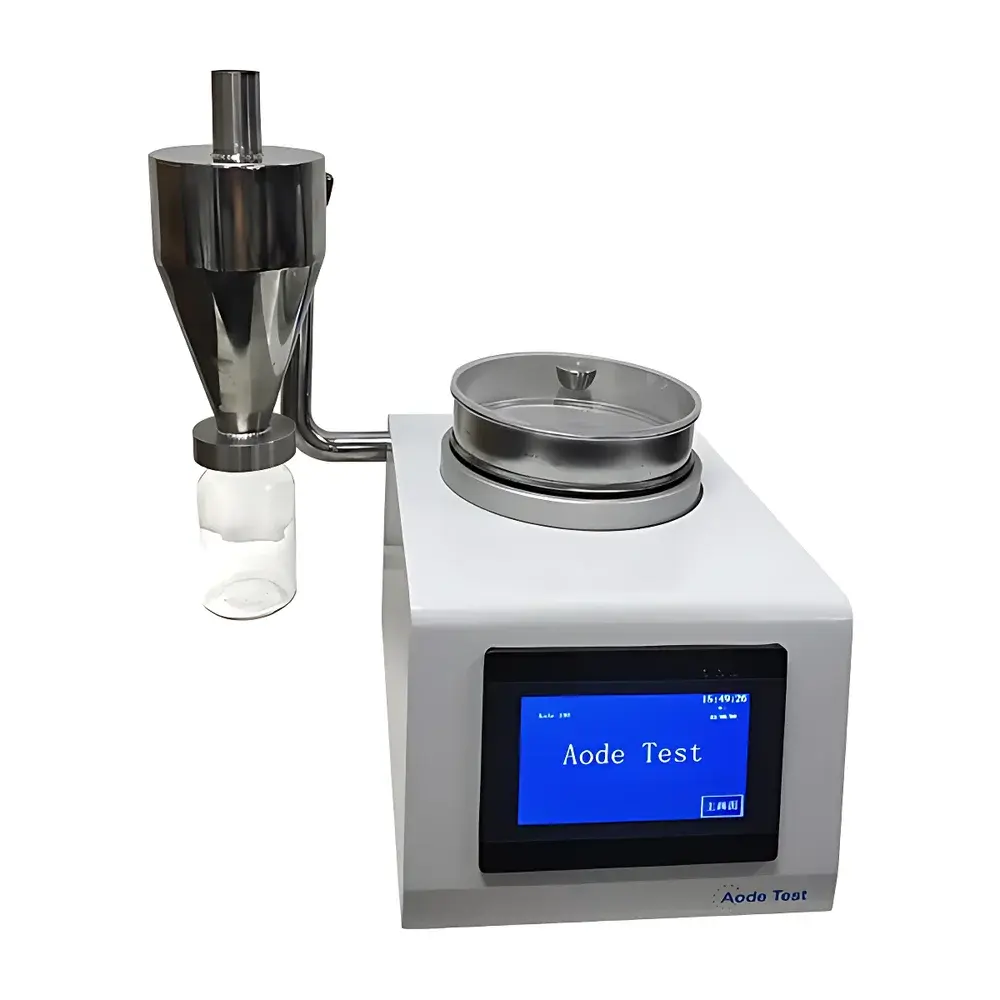
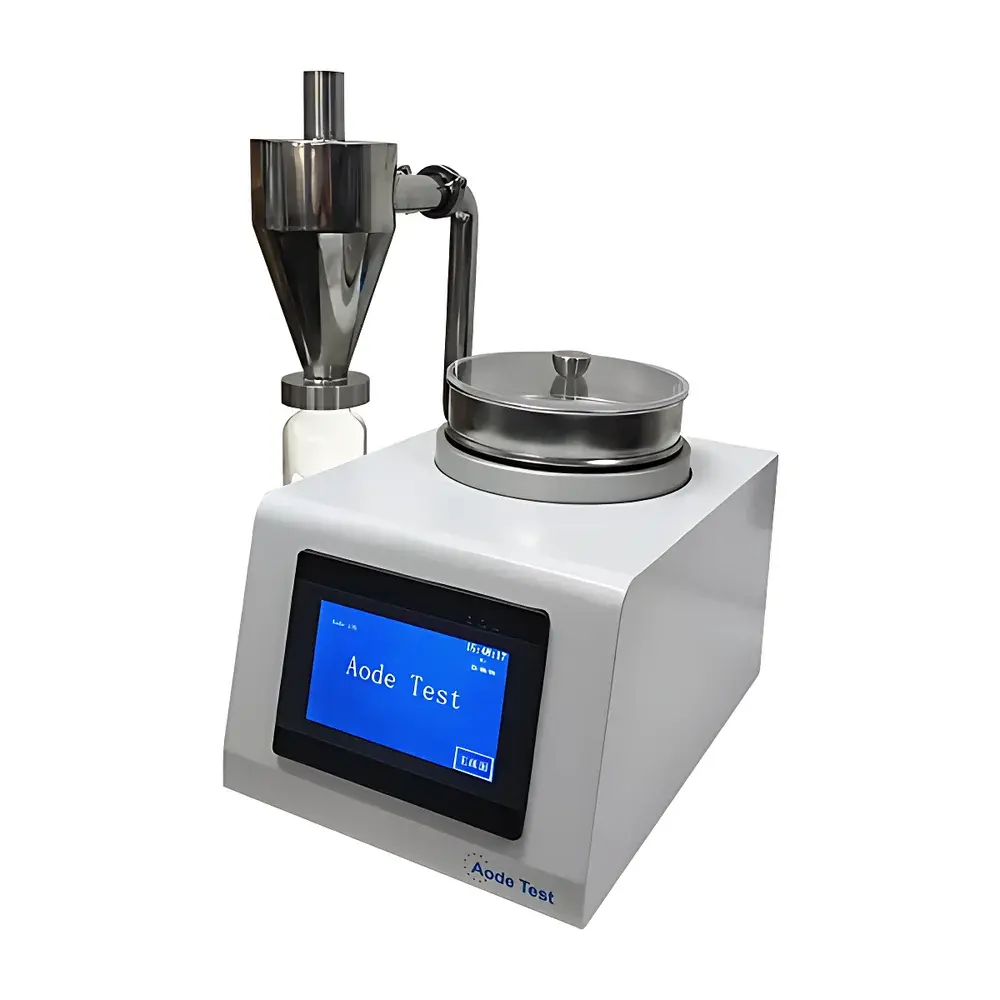
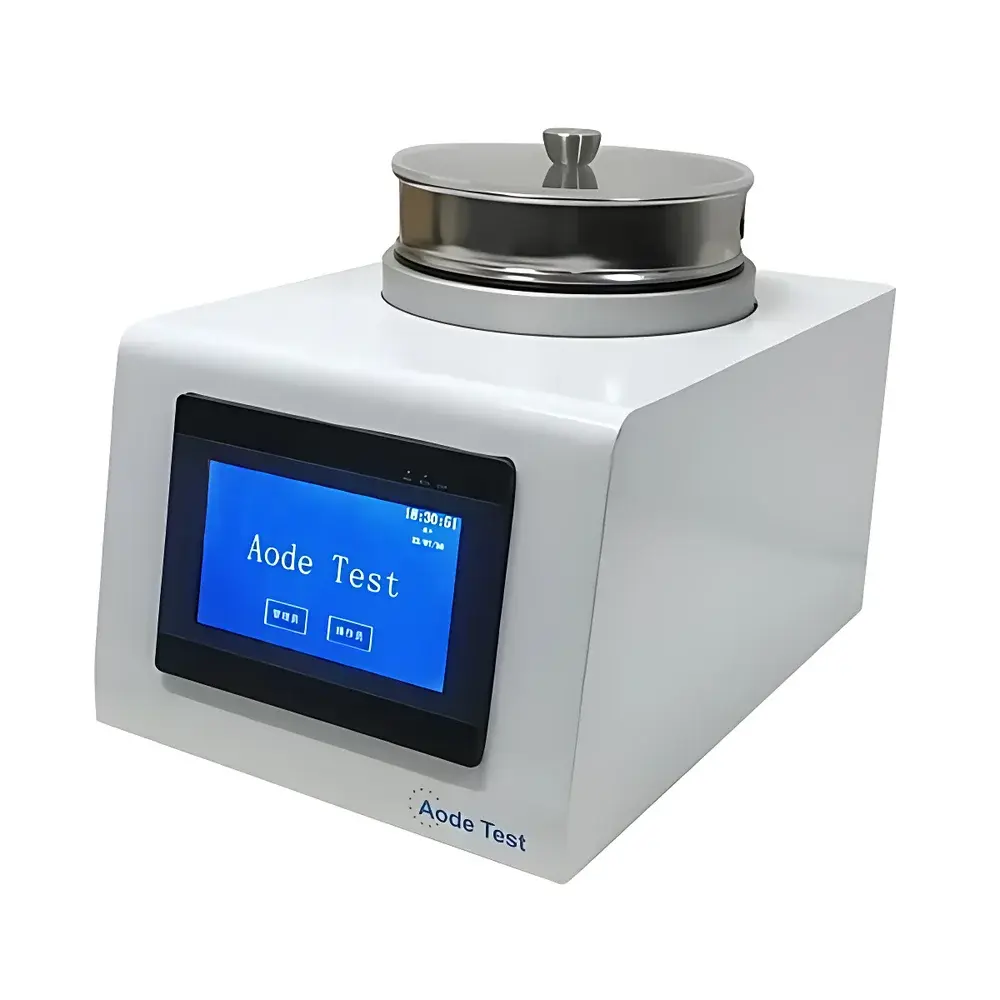
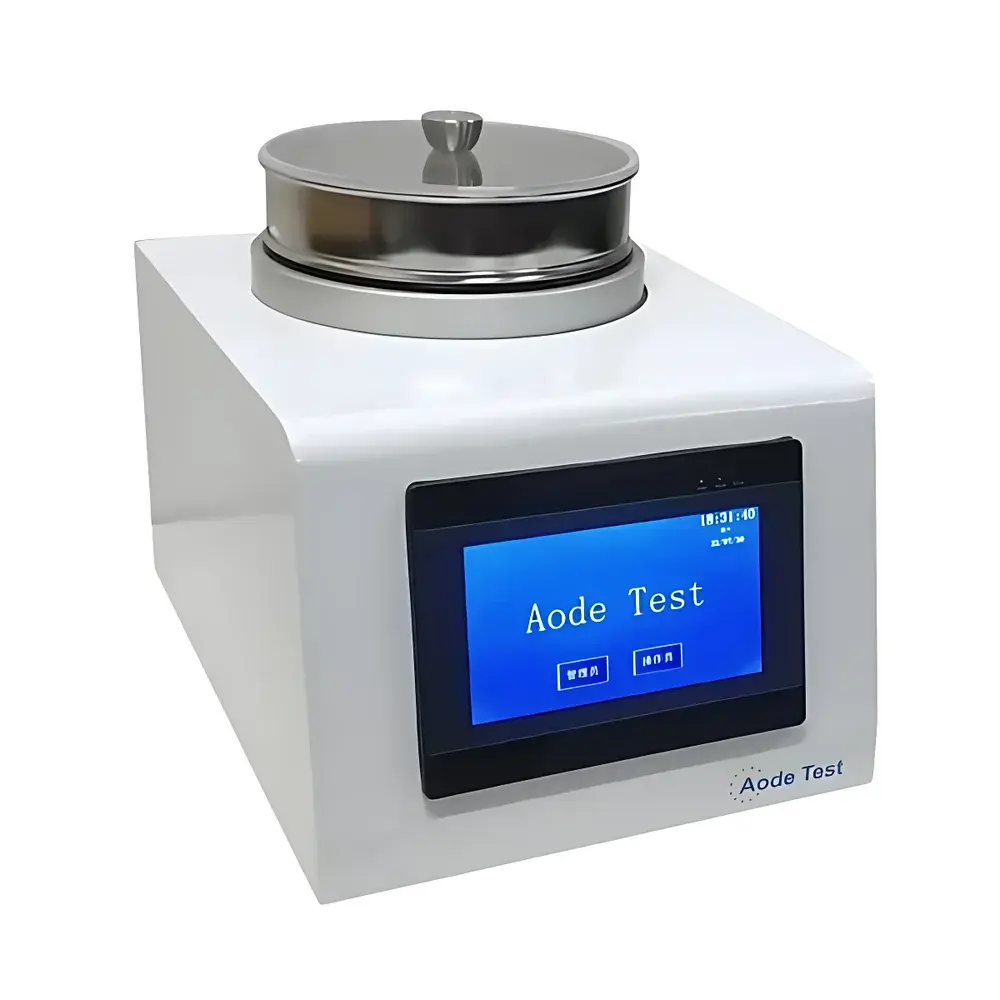
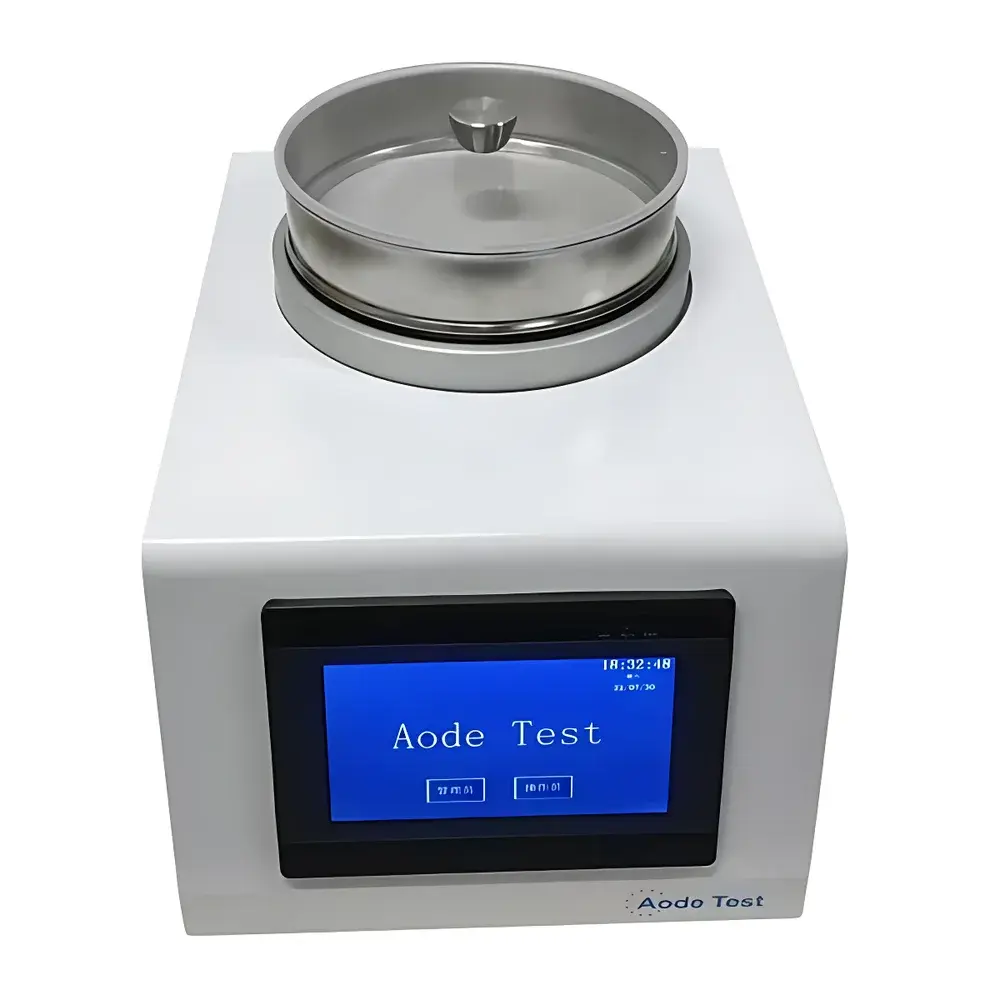
Aode Aode-200 Air Jet Sieve Analyzer
| Brand | Aode |
|---|---|
| Origin | Liaoning, China |
| Manufacturer Type | Manufacturer |
| Model | Aode-200 |
| Measurement Range | 5 µm – 4000 µm |
| Maximum Sample Load | 100 g |
| Sieving Stages | 2 |
| Input Voltage | 220 VAC, 50 Hz |
| Operating Negative Pressure | 0 to −1000 Pa |
| Air Flow Rate | 30–120 m³/h |
| Rotational Speed | 5–30 rpm |
| Display | 7-inch color TFT touchscreen |
| Dimensions (W×D×H) | 300 × 400 × 225 mm |
| Weight | 20 kg |
| Standard Sieve Compatibility | ≤203 mm diameter |
| Pressure Display Accuracy | <5% |
| Minimum Time Setting | 1 min |
| Typical Sieving Duration | 2–5 min |
| Environmental Temp. | −10°C to 50°C |
| Relative Humidity | <90% RH |
Overview
The Aode Aode-200 Air Jet Sieve Analyzer is a precision-engineered instrument designed for rapid, high-reproducibility dry powder particle size analysis based on the principle of air jet sieving. Unlike mechanical vibratory or tapping sieves, this system employs controlled negative-pressure airflow generated by a low-noise vacuum source and directed through a rotating slotted nozzle positioned beneath a standard test sieve. The resulting turbulent air jet fluidizes the sample, disperses agglomerates via inertial impact against a transparent polycarbonate lid, and actively clears obstructed apertures—enabling reliable separation of fine, cohesive, electrostatic, or adhesive powders down to 5 µm. Its operational foundation aligns with the air jet sieving method described in Chapter 0982 “Particle Size and Particle Size Distribution” of the Chinese Pharmacopoeia (2020 Edition, Volume IV), and supports compliance-driven workflows in regulated environments where traceability and method robustness are essential.
Key Features
- 360° rotating slotted nozzle design ensures uniform radial air distribution across the full sieve surface, maximizing dispersion efficiency and minimizing localized clogging.
- Integrated pressure transducer continuously monitors real-time chamber pressure, enabling stable, repeatable sieving conditions within ±5% accuracy—even during extended operation.
- 7-inch color TFT touchscreen interface provides intuitive control over critical parameters: sieving time (1–99 min), negative pressure (0 to −1000 Pa), and rotational speed (5–30 rpm).
- Automatic calculation module computes cumulative oversize and undersize mass percentages directly from collected fractions, eliminating manual post-processing errors.
- Transparent polycarbonate lid allows full visual observation of particle behavior during sieving—critical for troubleshooting agglomeration dynamics or flow anomalies.
- Self-cleaning OPEN MESH function (optional) enhances resolution near cut-point thresholds by repositioning near-size particles for secondary exposure to airflow.
- High-efficiency sample recovery: ≥99.9% collection rate achieved via optimized cyclonic separation and sealed collection vessel design.
- Modular architecture supports dual-stage sieving (up to two nested sieves) using optional auxiliary hardware, enabling simultaneous multi-cut analysis per run.
Sample Compatibility & Compliance
The Aode-200 is validated for dry, free-flowing or marginally cohesive powders—including coal fines, pharmaceutical excipients (e.g., microcrystalline cellulose), catalysts, pigments, ceramic precursors, and polymer additives. It excludes moisture-sensitive, hygroscopic, or thermally labile materials requiring inert gas purging or temperature-controlled handling. Instrument design conforms to ISO 2591-1:2022 (Testing sieves — Part 1: Technical requirements and testing) and supports method validation per USP , ASTM E11-22, and ISO 9276-1:2014 (Representation of results of particle size analysis). While not inherently 21 CFR Part 11 compliant, its RS232 interface enables integration with LIMS or ELN systems supporting audit-trail-enabled data capture when paired with validated third-party software.
Software & Data Management
The embedded firmware stores up to 100 test records locally, each containing timestamp, operator ID (manually entered), sieve specifications, pressure/time/speed settings, and calculated mass distribution data. Optional thermal printer output (via built-in port) generates hard-copy reports compliant with GLP documentation standards. RS232 connectivity permits bidirectional communication with external balances (for tare-weight synchronization) or laboratory information management systems. All numerical parameters are user-adjustable without firmware modification, facilitating method transfer across laboratories. Export functionality supports CSV-formatted datasets for statistical process control (SPC) or comparative analysis in Excel or dedicated particle characterization software.
Applications
This analyzer delivers consistent performance in quality control laboratories across power generation (coal fineness testing per ASTM D7504), pharmaceutical manufacturing (excipient granulometry per Ph. Eur. 2.9.31), specialty chemicals (catalyst support sizing), and advanced materials R&D (nanocomposite filler dispersion assessment). Its ability to resolve sub-20 µm fractions—particularly when coupled with optional ultrasonic assist modules—makes it suitable for evaluating micronized APIs, spray-dried lactose, and fumed silica. Routine use cases include batch release testing, raw material qualification, formulation development, and stability study monitoring where inter-laboratory comparability and minimal operator dependency are required.
FAQ
What particle size range is supported by the Aode-200?
The instrument is validated for nominal separation between 5 µm and 4000 µm; optimal resolution is achieved between 10 µm and 2000 µm using certified reference sieves traceable to NIST or equivalent national metrology institutes.
Can the Aode-200 be used for wet sieving or slurry samples?
No—it is strictly intended for dry powder analysis. Introduction of liquid or high-moisture content samples may damage the vacuum system and compromise sieve integrity.
Is calibration required before each use?
Routine calibration is not required; however, daily verification using certified reference powders (e.g., glass beads or ground limestone standards) is recommended to confirm system performance and maintain measurement traceability.
How does the Aode-200 prevent sieve blinding during prolonged operation?
Continuous negative-pressure airflow combined with rotating nozzle-induced turbulence dislodges particles adhering to mesh surfaces, while the impact dispersion mechanism reduces static charge accumulation that contributes to clogging.
Does the instrument meet international regulatory requirements for pharmaceutical testing?
It satisfies the technical criteria outlined in Ph. Eur. 2.9.31 and USP for air jet sieving methods. Full regulatory compliance requires site-specific IQ/OQ/PQ validation and documented procedural controls aligned with GMP Annex 15 guidelines.



