
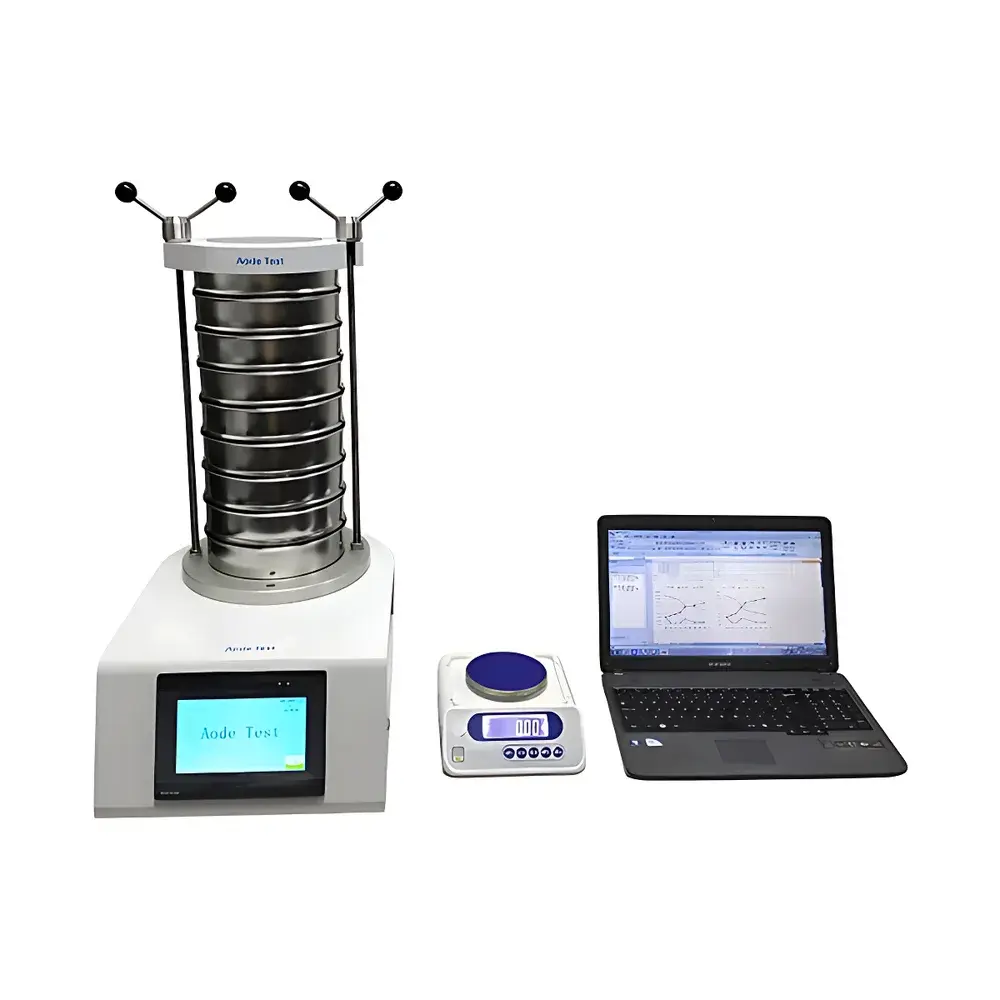
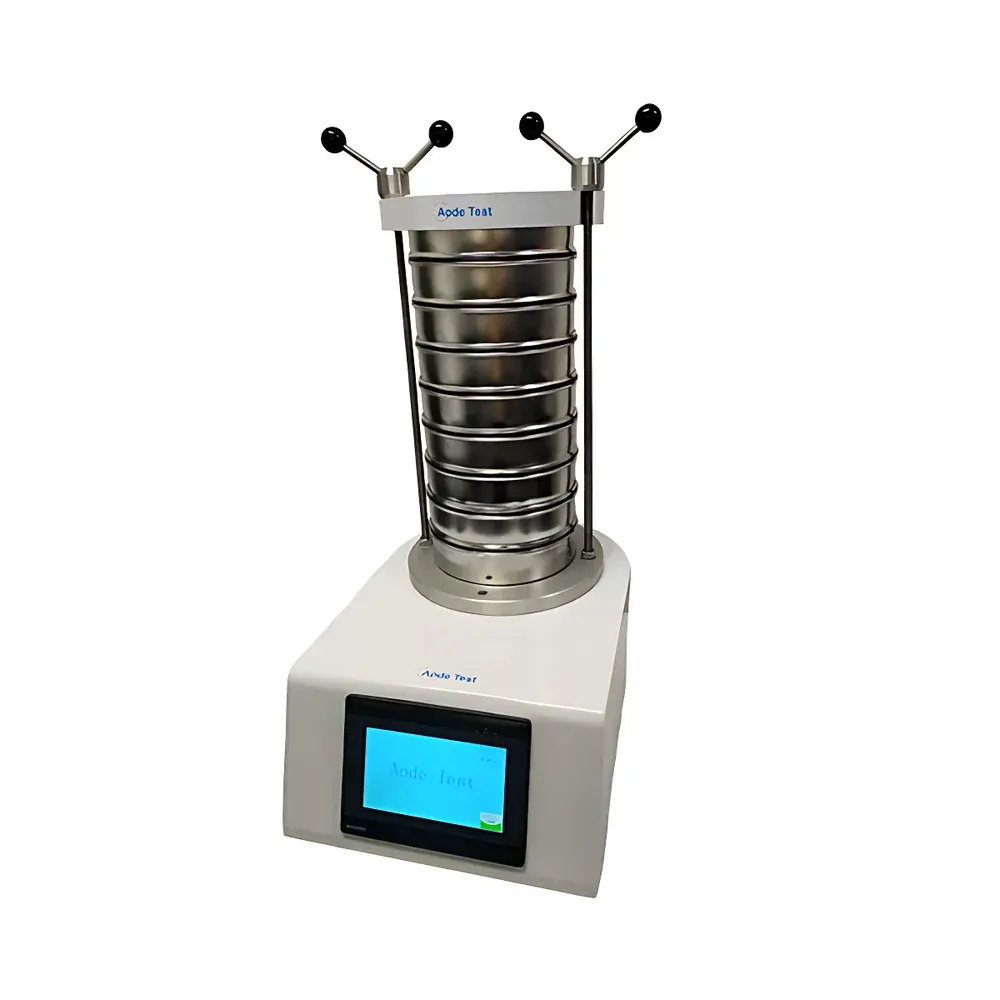
Aode Aode200B Electromagnetic 3D Vibratory Sieve Analyzer
| Brand | Aode |
|---|---|
| Model | Aode200B |
| Drive Type | Electromagnetic 3D Vibration |
| Sample Compatibility | Dry powders, granules, and fine/coarse aggregates |
| Software Integration | Embedded sieve analysis software with automatic mass upload, real-time distribution calculation, and ASTM/USP-compliant reporting |
| Compliance | Meets ISO 2591-1, ASTM E11, USP <786>, and Chinese Pharmacopoeia IV sieve requirements |
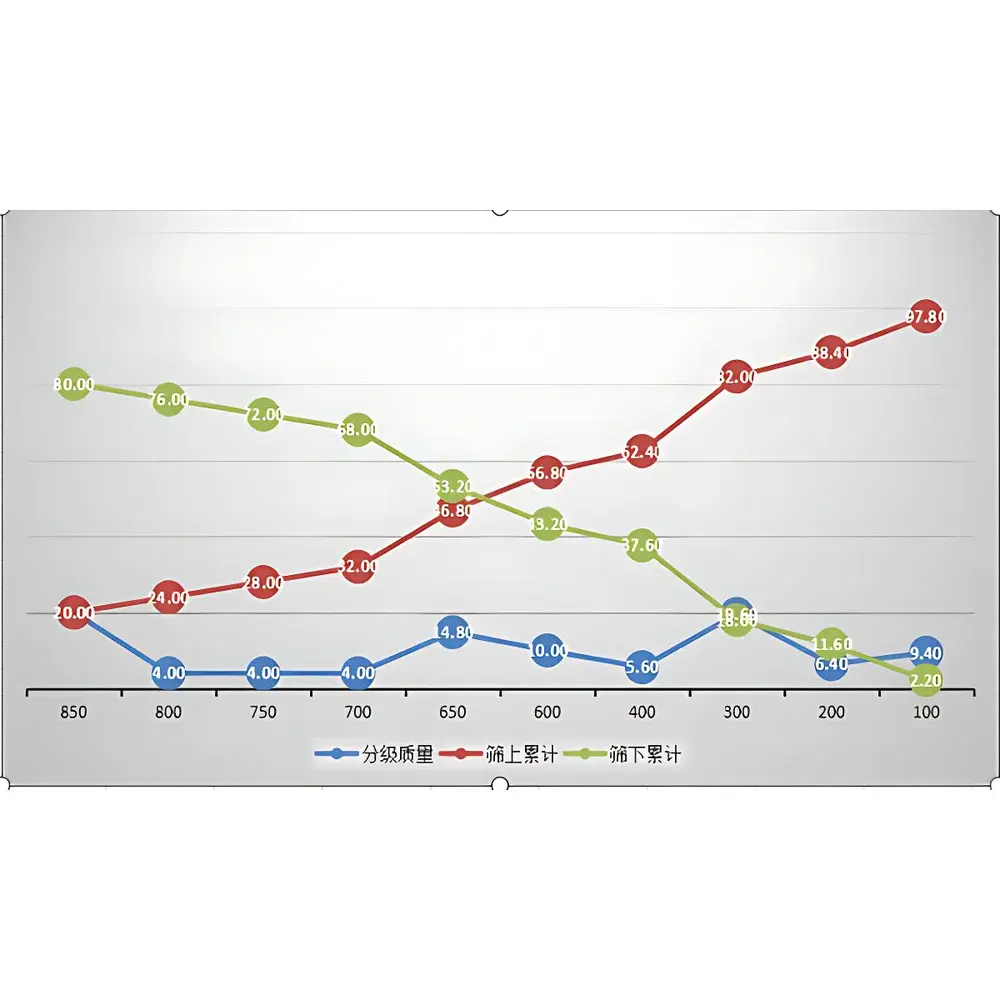
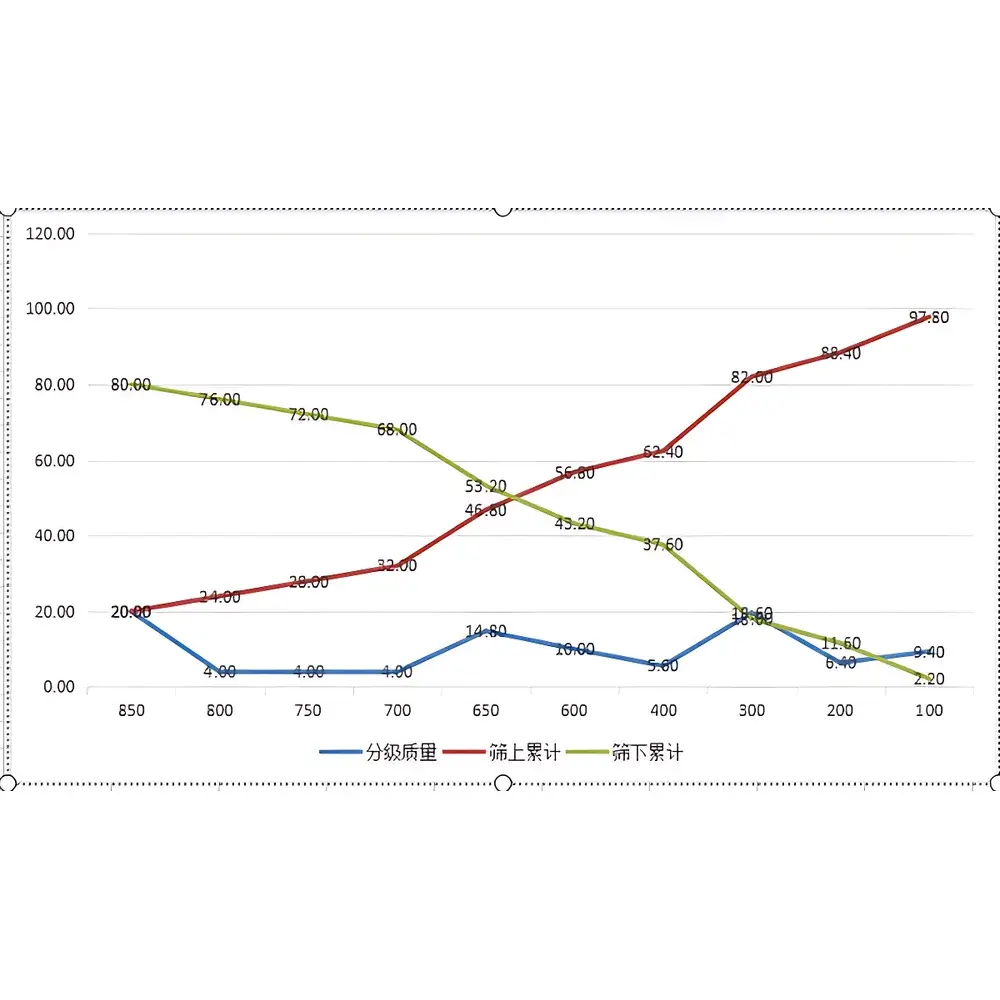
| Data Output | Automatic particle size distribution (%) per sieve mesh, cumulative/differential curves, PDF/CSV export, unlimited report storage |
| Power Supply | 220 VAC, 50 Hz |
Overview
The Aode Aode200B Electromagnetic 3D Vibratory Sieve Analyzer is a precision-engineered dry-sieving instrument designed for reproducible, high-efficiency particle size distribution analysis of free-flowing powders, granules, and aggregate fractions. Unlike conventional mechanical or rotary sievers, the Aode200B employs a controlled electromagnetic actuation system that generates simultaneous vertical, horizontal, and rotational vibrational motion—mimicking natural particle agitation to maximize passage through sieve apertures while minimizing blinding and segregation artifacts. This 3D vibration profile ensures uniform energy transfer across the entire sieve stack, significantly enhancing screening efficiency for challenging materials such as cohesive pharmaceutical excipients, metal powders, ceramic precursors, and construction aggregates. The instrument is explicitly calibrated and validated for pharmacopeial compliance (USP , EP 2.9.34, ChP IV), making it suitable for QC laboratories operating under GLP/GMP frameworks where traceable, auditable sieve data is mandatory.
Key Features
- Electromagnetic 3D vibration drive: Delivers consistent amplitude and frequency control (adjustable 0–300 rpm equivalent energy output) without mechanical wear, ensuring long-term repeatability and minimal maintenance.
- Integrated analytical software suite: Real-time acquisition of tare and retained mass per sieve level via digital load-cell interface; automatic calculation of % retained, % passing, and cumulative distribution per ISO 9276-2 standards.
- Full digital workflow: On-device display with touchscreen navigation; post-analysis generation of differential and cumulative particle size distribution curves; export in PDF (with lab header, operator ID, timestamp, and audit trail metadata) and CSV formats.
- Modular sieve stack compatibility: Accepts standard ISO/ASTM/EU-pharmacopeia sieve frames (φ200 mm or φ203 mm) up to 7 layers; supports stainless steel, brass, and nylon meshes from 20 µm to 125 mm nominal aperture.
- Robust architecture: All-metal housing with anti-vibration damping feet; IP54-rated enclosure for dust resistance; CE-marked electrical safety compliance.
Sample Compatibility & Compliance
The Aode200B accommodates a broad spectrum of dry particulate materials—including but not limited to API powders, lactose blends, catalysts, foundry sands, mineral ores, and recycled construction aggregates—provided they exhibit sufficient flowability and lack strong electrostatic or hygroscopic tendencies. It conforms to critical international standards governing sieve analysis methodology and instrumentation validation: ASTM E11 (Specification for Woven Wire Test Sieve Cloth), ISO 2591-1 (Methods of test for determination of particle size distribution — Sieving method), USP (Particle Size Distribution — Sieve Analysis), and Chinese Pharmacopoeia Volume IV (General Chapter 0982). Each unit undergoes factory calibration using NIST-traceable reference standards and ships with a Certificate of Conformance documenting sieve frame dimensional tolerances and vibration amplitude linearity.
Software & Data Management
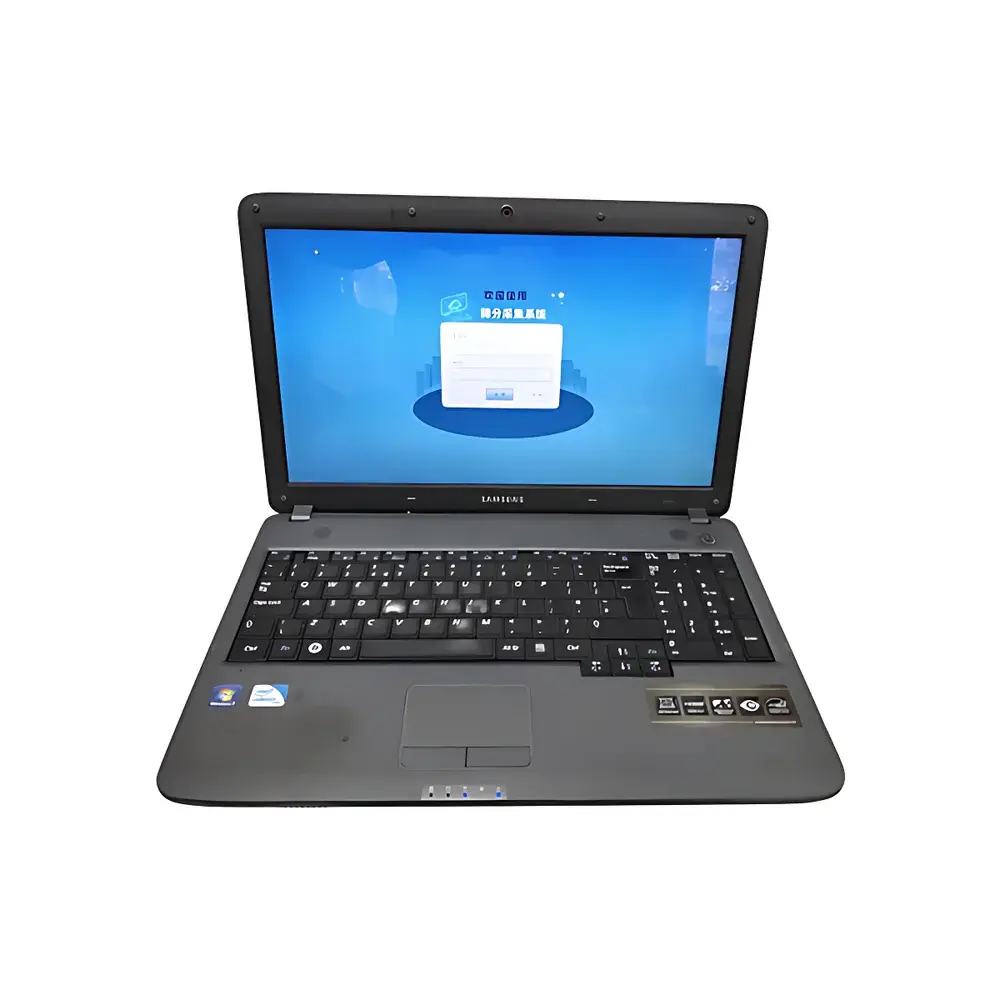
The embedded Windows-based software provides full 21 CFR Part 11 readiness through configurable user roles, electronic signatures, and immutable audit trails. Every analysis session logs operator ID, date/time stamp, sieve stack configuration, total run duration, ambient temperature/humidity (optional sensor input), and raw mass values before and after sieving. Data integrity is preserved via local encrypted database storage; reports include graphical overlays of historical comparisons and statistical process control (SPC) metrics (e.g., RSD across replicate runs). Exported files retain embedded metadata required for regulatory submissions and internal quality audits. No cloud dependency or third-party licensing is required—software is permanently licensed per instrument.
Applications
- Pharmaceutical development & manufacturing: Excipient qualification, blend uniformity assessment, granule sizing pre-compression, and final product release testing per ICH Q5A and Q6A guidelines.
- Materials science labs: Characterization of additive manufacturing feedstocks (e.g., Ti-6Al-4V, Inconel 718), battery cathode/anode powders, and nanocomposite precursors.
- Construction & geotechnical QA: Gradation analysis of coarse/fine aggregates per ASTM C136 and EN 933-1; soil particle classification per USDA texture triangle protocols.
- Food & cosmetics: Flour fineness verification, spice particle homogeneity, and talc/silica grade certification.
- Academic research: Teaching particle technology fundamentals; validating computational fluid dynamics (CFD) models of granular flow behavior.
FAQ
Does the Aode200B support wet sieving?
No. The Aode200B is strictly a dry-sieving instrument. Wet sieving requires separate liquid-handling components and corrosion-resistant construction not present in this model.
Can I use non-standard sieve diameters or custom mesh sizes?
Yes—provided mechanical fitment is verified. The instrument accepts any 200 mm or 203 mm diameter sieve frame with standard rim geometry. Custom meshes (e.g., 12.5 µm sintered stainless steel) may be used if certified for structural integrity under 3D vibrational loading.
Is software validation documentation available for GMP environments?
Yes. A complete IQ/OQ protocol package—including installation checks, operational range verification, and software feature testing—is supplied with each unit and can be executed on-site by qualified personnel.
What is the maximum recommended sample mass per run?
For optimal resolution and minimal overloading artifacts, the recommended upper limit is 500 g for coarse aggregates and 100 g for fine pharmaceutical powders. Overloading reduces separation accuracy and increases run time disproportionately.
How often does the system require recalibration?
Annual verification against certified reference sieves and mass standards is recommended. Electromagnetic driver performance remains stable for >10,000 operating hours; no routine recalibration of vibration parameters is needed.



