
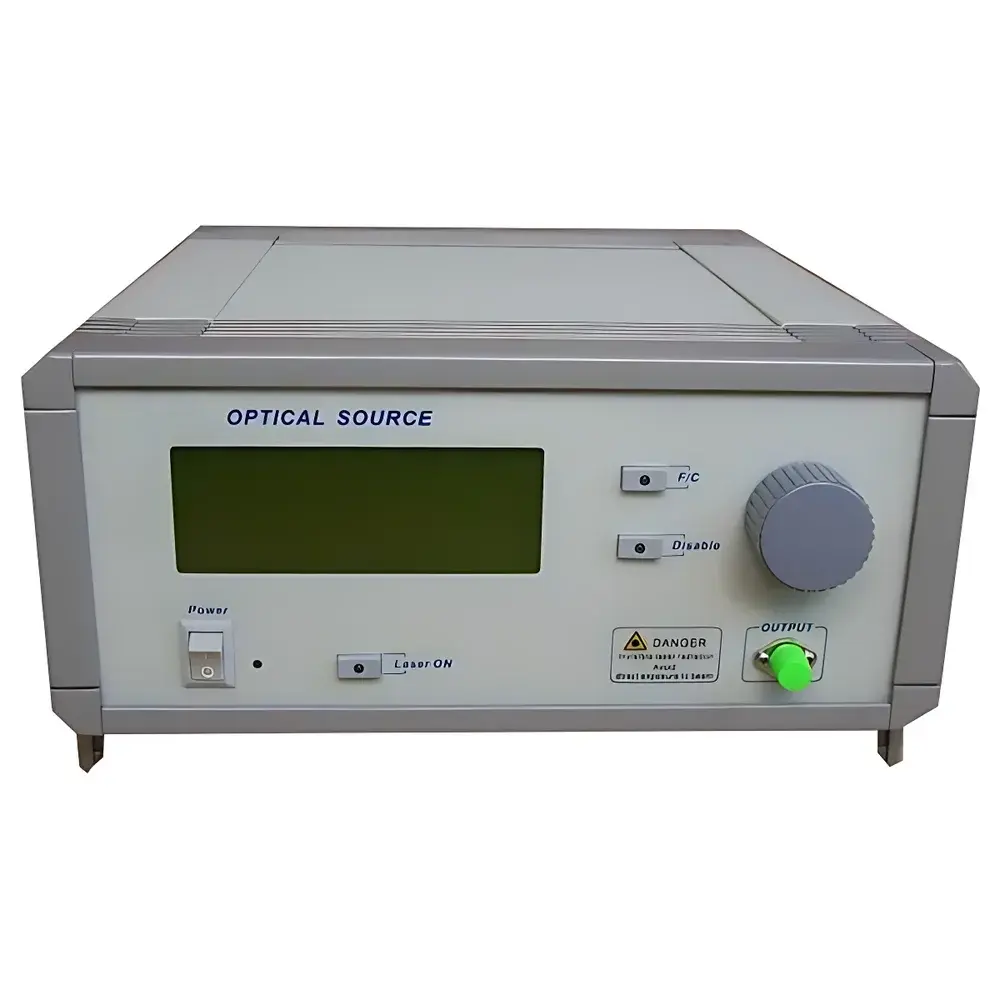
AOE Tech JF814B High-Power Fiber Laser Source
| Brand | AOE Tech |
|---|---|
| Model | JF814B |
| Output Power | Up to 10 W |
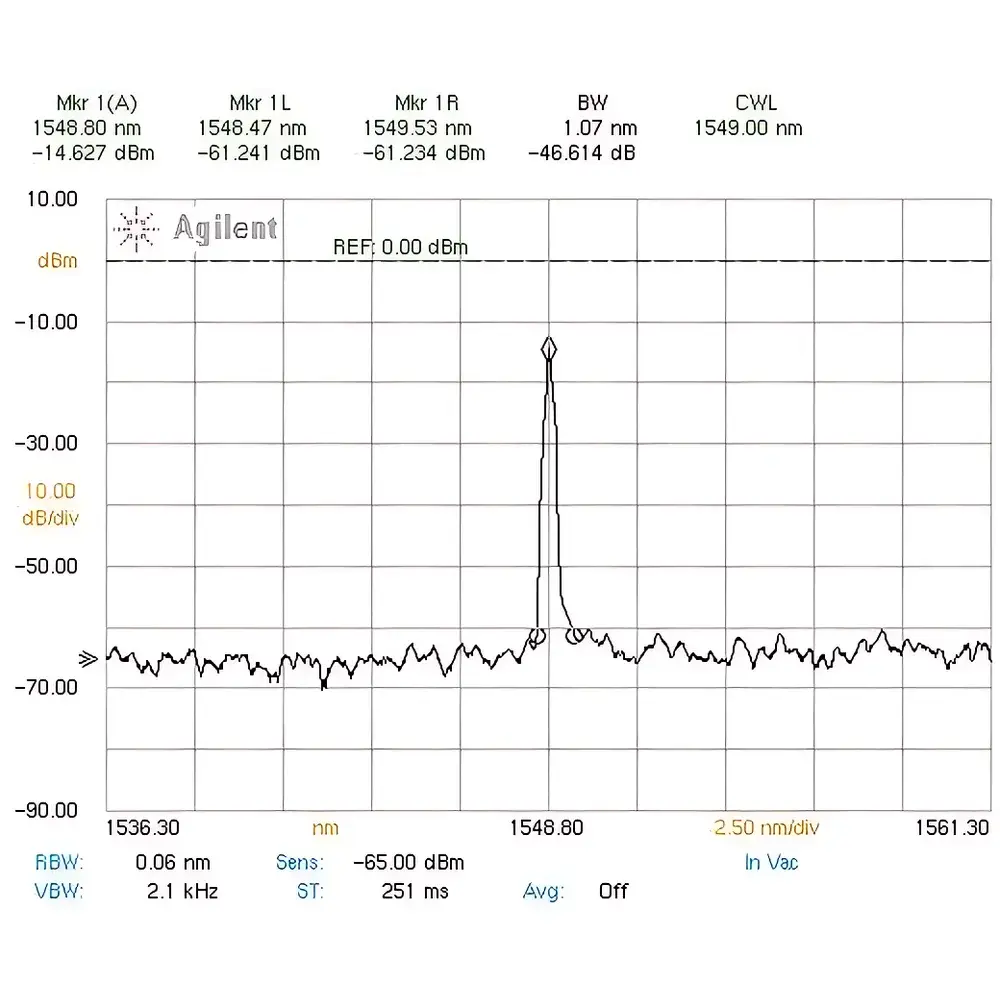
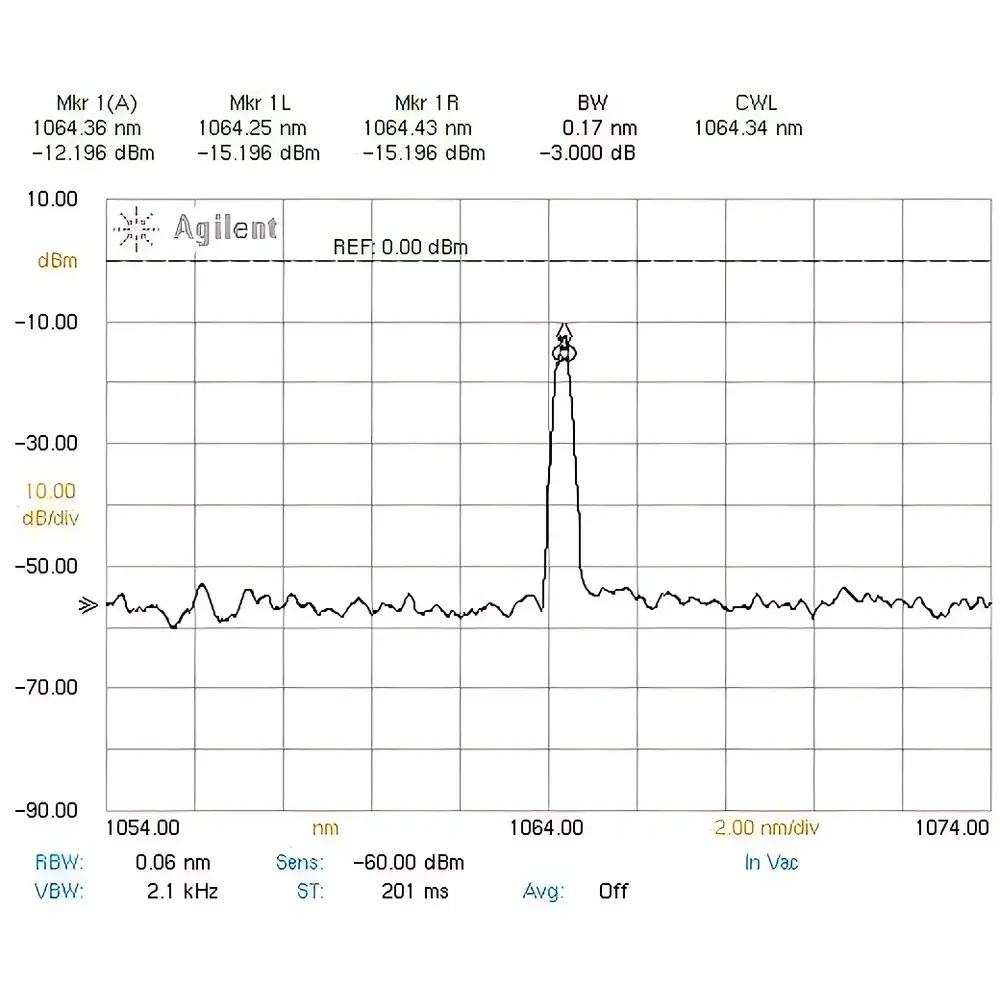
| Wavelength Options | C-band (1530–1560 nm) or 1060 nm band (1035–1080 nm) |
| Spectral Linewidth (FWHM) | < 0.1 nm |
| Side Mode Suppression Ratio (SMSR) | > 35 dB |
| Output Stability | ±0.05 dB (typ.), ±0.1 dB (max.) |
| Output Fiber | SMF-28, FC/APC connector |
| Operating Temperature | −5 to +40 °C |
| Storage Temperature | −40 to +80 °C |
| Relative Humidity | 10–85% RH (non-condensing) |
| Power Supply | 170–264 VAC, 100 W max. |
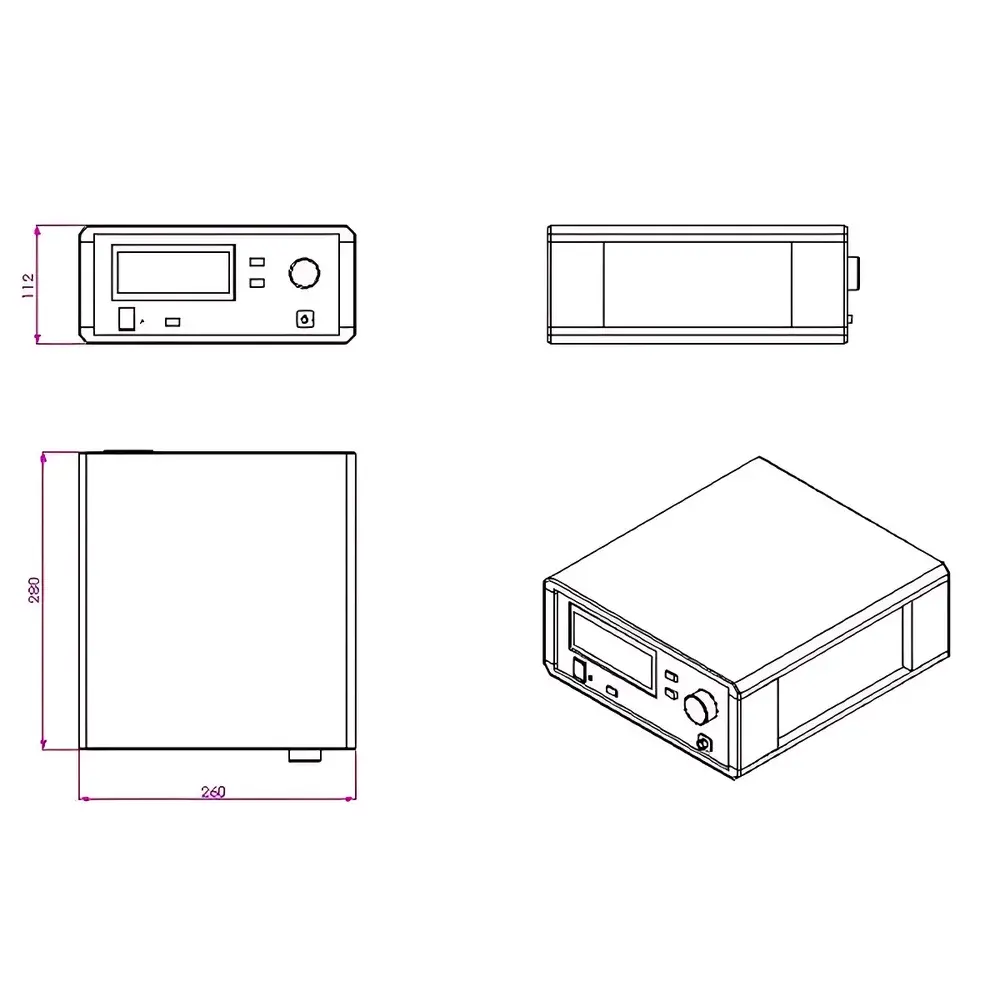
| Dimensions | 280 × 260 × 112 mm |
| Compliance | Bellcore GR-1312-CORE |
Overview
The AOE Tech JF814B High-Power Fiber Laser Source is a MOPA (Master Oscillator Power Amplifier)-configured laser system engineered for demanding optical applications requiring high brightness, narrow linewidth, and long-term power stability. It employs a telecom-grade DFB laser diode as the seed source, followed by an Er/Yb co-doped double-clad fiber amplifier stage pumped by high-brightness multimode pump diodes. This architecture enables robust amplification while preserving near-diffraction-limited beam quality and spectral purity—critical for coherent detection, nonlinear frequency conversion, and precision photonic testing. Designed for laboratory, industrial, and embedded system integration use cases, the JF814B delivers up to 10 W of single-mode CW output through SMF-28 fiber with FC/APC termination, operating in either the C-band (1530–1560 nm) or the 1060 nm band (1035–1080 nm), both configurable per customer specification.
Key Features
- High-power single-mode output: Up to 10 W CW output with TEM00 spatial profile via SMF-28 delivery fiber.
- Exceptional spectral performance: FWHM 35 dB ensure minimal mode competition and high coherence length.
- Long-term power stability: ±0.05 dB typical drift over 8 hours; ±0.1 dB maximum under controlled ambient conditions, enabled by dual-loop APC (Automatic Power Control) and ATC (Automatic Temperature Control) circuitry.
- Intelligent thermal management: Proprietary temperature regulation IC reduces thermal load and system power consumption by ≥30% compared to conventional TEC-based designs.
- High reliability: MTTF > 100,000 hours, validated per Telcordia GR-1312-CORE reliability test protocols for optoelectronic components.
- User-centric interface: Integrated LCD panel with real-time status monitoring and analog/digital power adjustment; front-panel and remote control via RS-232 or RS-485.
- Modular flexibility: Optional 1% tap port for real-time power monitoring; OEM variants available with customized wavelength, packaging, and control firmware.
Sample Compatibility & Compliance
The JF814B is compatible with standard single-mode optical components and test instrumentation used across photonics R&D, including optical spectrum analyzers (OSAs), interferometers, fiber Bragg grating (FBG) interrogators, and free-space collimation optics. Its output meets the mechanical, environmental, and operational requirements defined in Telcordia GR-1312-CORE for core network optical sources—including vibration resistance, ESD immunity (IEC 61000-4-2 Level 3), and aging performance under accelerated life testing. While not certified for medical device integration out-of-the-box, its optical and electrical specifications align with foundational safety and EMC criteria referenced in IEC 60825-1 (laser product safety) and IEC 61326-1 (EMC for measurement equipment). No FDA 510(k) or CE medical designation applies; users integrating into Class II/III systems must perform full system-level validation.
Software & Data Management
The JF814B supports ASCII command protocol over RS-232/RS-485 for integration into automated test environments. Standard commands include power setpoint adjustment, on/off control, temperature readback, and fault status polling. For traceable calibration and GLP/GMP-aligned workflows, the unit logs internal sensor data (LD current, TEC voltage, thermistor readings) at user-defined intervals when connected to a host PC running custom or third-party SCPI-compliant software. Audit trail capability is implemented at the host level; the instrument itself does not store historical power logs or enforce 21 CFR Part 11 electronic signature requirements. Firmware updates are performed via serial interface using signed binary packages verified by onboard cryptographic hash.
Applications
- Fiber device qualification: High-power stress testing of isolators, circulators, WDM filters, and FBGs under realistic optical loading conditions.
- Laser material processing R&D: Seed source for MOPA-based nanosecond pulse generation in marking, micromachining, and thin-film ablation studies.
- Biophotonics and medical optics: Pump source for optical parametric oscillators (OPOs) and supercontinuum generation in spectroscopic tissue analysis.
- Free-space optical communication: High-coherence transmitter for atmospheric channel characterization and adaptive optics feedback loops.
- Academic and teaching laboratories: Stable, tunable CW source for Michelson/Mach-Zehnder interferometry, stimulated Brillouin scattering (SBS) experiments, and fiber sensor development.
FAQ
What wavelength options are supported?
The JF814B is available in two standard bands: C-band (centered at 1550 nm, tunable from 1530–1560 nm) and 1060 nm band (tunable from 1035–1080 nm). Custom center wavelengths within these ranges are supported upon request.
Is the output polarization-maintaining?
No—the standard configuration uses non-PM SMF-28 fiber. Polarization-maintaining (PM) fiber delivery with extinction ratio >20 dB is available as an OEM option.
Can this source be modulated externally?
The JF814B supports analog modulation input (0–5 V) with bandwidth up to 100 kHz for direct intensity modulation. Digital TTL triggering is not natively supported but can be added via external driver interface.
Does it include a built-in optical isolator?
Yes—a 30 dB integrated isolator is included to protect the amplifier stage from back-reflections exceeding −45 dB return loss.
What is the warm-up time to specified stability?
Full thermal equilibrium and power stabilization are achieved within 30 minutes after power-on at 25 °C ambient; active ATC maintains setpoint within ±0.1 °C during operation.




