
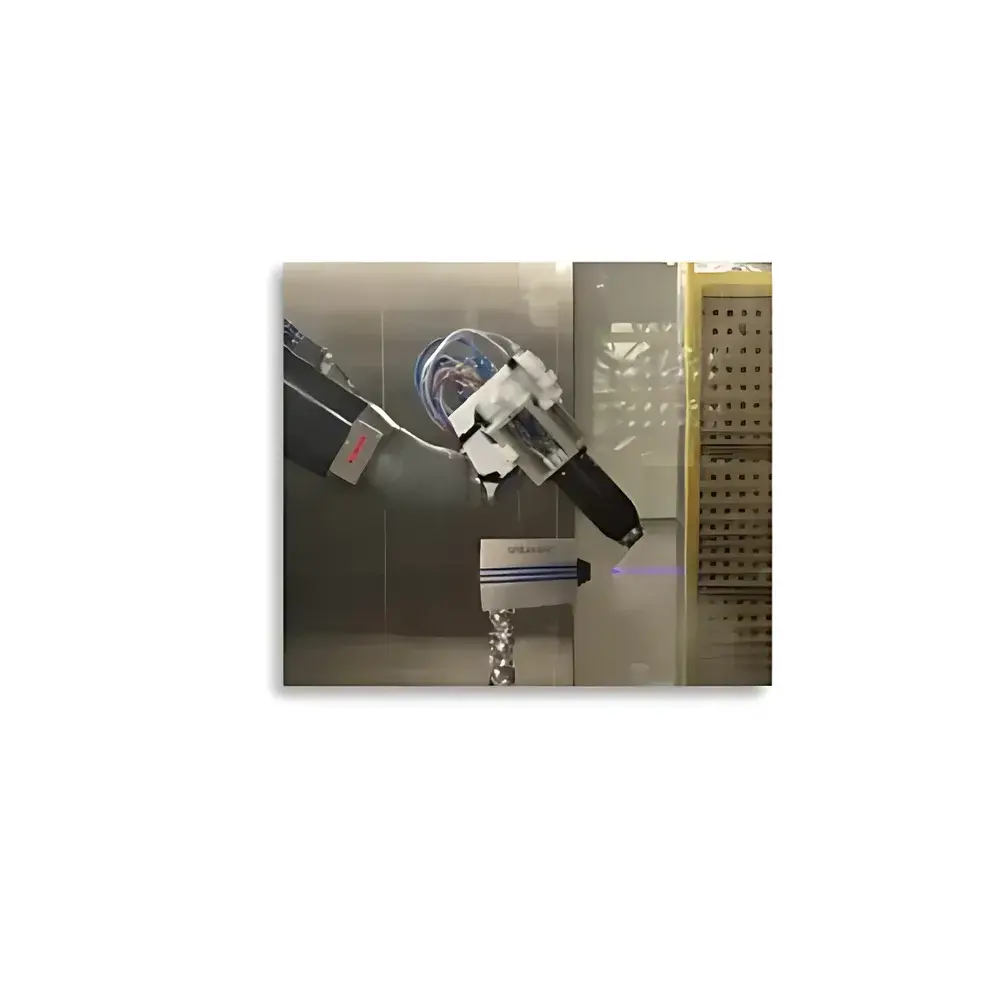
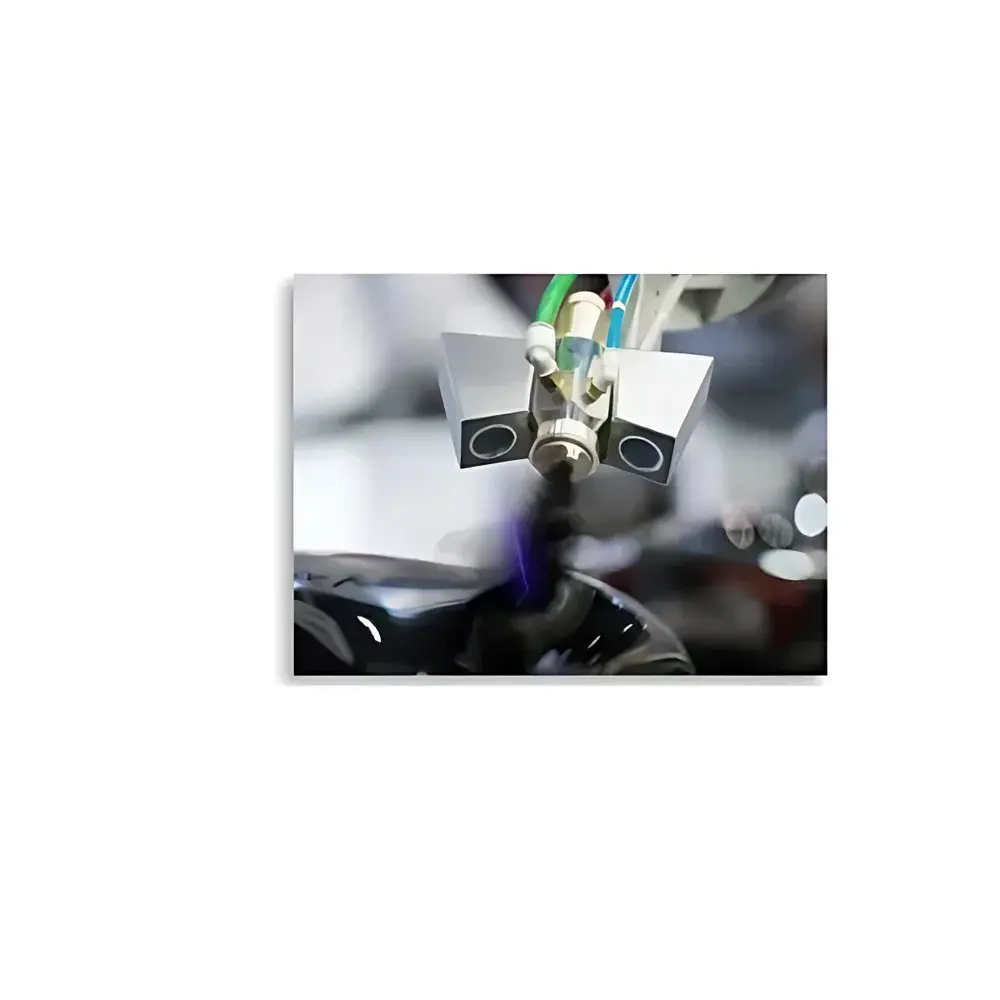
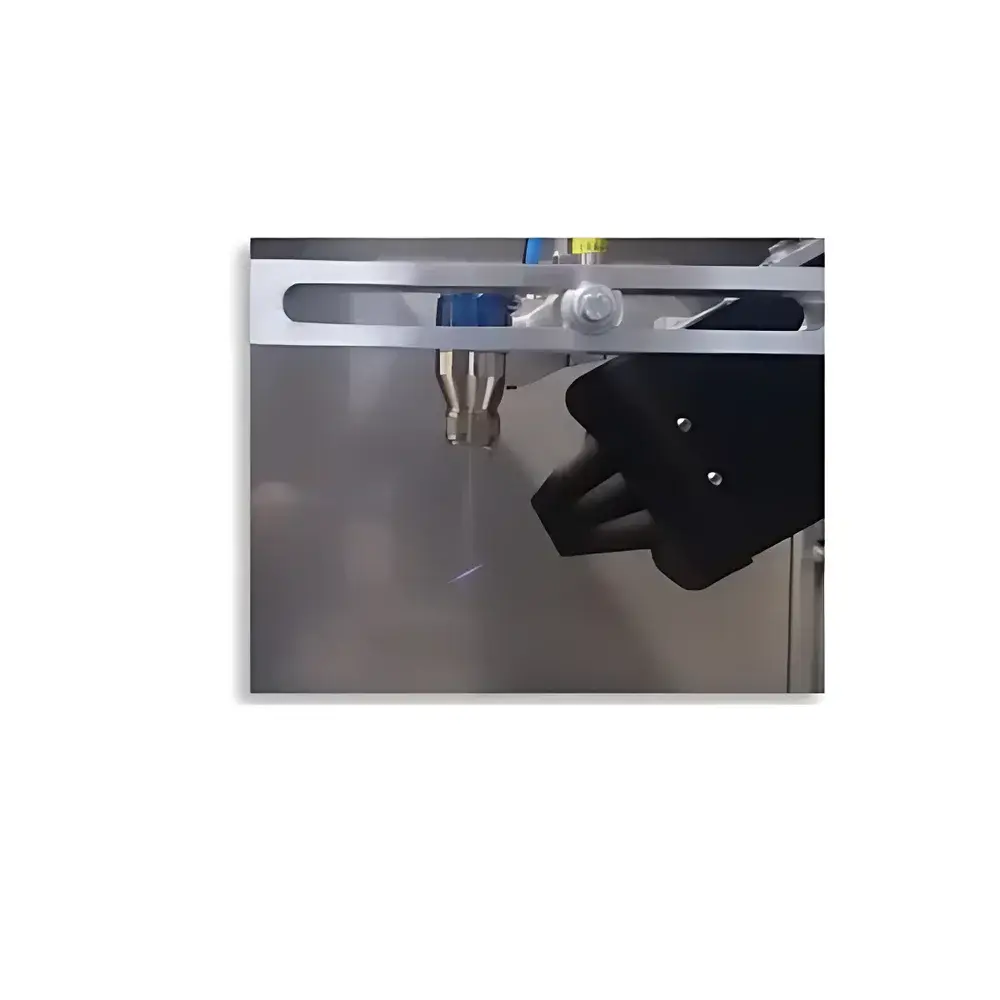
AOM SpraySpy LabLine Inline Spray Analyzer
| Brand | AOM |
|---|---|
| Origin | Germany |
| Model | SpraySpy LabLine |
| Input Impedance (Reference Electrode) | 23 MΩ |
| Sensitivity | 1 mV/pA |
| Potential Increment | 56 mV |
| Scan Rate | 1200 mV/s |
| IP Rating | IP67 |
| Measurement Principle | Laser-based single-droplet scattering time-of-flight (ToF) |
| Droplet Size Range | 5–500 µm (typical, application-dependent) |
| Velocity Range | 0.1–150 m/s |
| Data Output | Histograms, flux density, momentum, kinetic energy, opacity index, temporal event log |
| Software Platform | SprayAI™ with real-time classification (OK/NOK), audit trail, CSV/JSON export |
| Compliance | Designed for GLP/GMP-aligned R&D environments |
Overview
The AOM SpraySpy LabLine Inline Spray Analyzer is a high-precision, laser-based optical measurement system engineered for spatially resolved, single-droplet characterization in laboratory-scale spray development and formulation optimization. Unlike conventional ensemble-averaging techniques (e.g., laser diffraction or phase Doppler anemometry), the SpraySpy LabLine employs a time-of-flight (ToF) principle: individual droplets traverse a collimated laser sheet, generating discrete scattering pulses captured by high-speed photodetectors. Each pulse’s amplitude, duration, and temporal separation are algorithmically decoded to determine droplet diameter, axial velocity, opacity (via extinction ratio), and transit time—enabling true particle-by-particle analysis without statistical averaging artifacts. This direct counting methodology delivers traceable, reproducible metrics essential for correlating atomization physics with coating performance—particularly critical for effect pigments, high-solids formulations, and low-VOC systems used in automotive OEM and aerospace applications.
Key Features
- Single-droplet resolution: Measures size (5–500 µm), velocity (0.1–150 m/s), opacity, momentum, and volumetric flux density per event—not bulk averages.
- IP67-rated optical probe: Enables operation in humid, dusty, or solvent-rich lab environments; compatible with explosion-proof enclosures (ATEX Zone 2 / Class I Div 2 upon integration).
- Multi-atomizer agnostic: Validated with rotary bell (EcoBell®, AGMD), pneumatic (Picobell®, Betabell®), and ultrasonic雾化 systems—no hardware recalibration required between nozzle types.
- Real-time AI classification: Integrated SprayAI™ engine performs continuous OK/NOK assessment of spray stability, symmetry, and uniformity using adaptive thresholds trained on user-defined reference datasets.
- Full temporal event logging: Records timestamped droplet events with microsecond resolution—supporting root-cause analysis of transient anomalies (e.g., pulsation, clogging onset, electrostatic discharge effects).
- Modular software architecture: Complies with ALCOA+ data integrity principles; optional 21 CFR Part 11 configuration includes role-based access control, electronic signatures, and immutable audit trails.
Sample Compatibility & Compliance
The SpraySpy LabLine accommodates transparent, semi-transparent, and opaque droplets—including metallic-effect basecoats, ceramic suspensions, UV-curable resins, and waterborne primers—without dilution or carrier gas modification. Its non-intrusive optical path eliminates sample contamination risks and preserves native spray dynamics. While not a certified medical device or production-line QC instrument per se, its design adheres to foundational metrological rigor aligned with ISO 13322-2 (particle sizing via light scattering) and ASTM D7984 (spray pattern evaluation). Data outputs meet GLP documentation standards for pre-commercial formulation studies and are routinely cited in patent applications covering novel atomization processes and smart coating architectures.
Software & Data Management
SprayAI™ software provides both real-time dashboard visualization and post-acquisition deep analytics. Raw ToF data is processed into standardized histograms (size/velocity distributions), cumulative flux maps, and kinetic energy spectra. All datasets are stored in vendor-neutral HDF5 format with embedded metadata (timestamp, environmental conditions, operator ID, instrument calibration ID). The platform supports automated report generation (PDF/Excel), batch comparison across formulation variants, and API-driven integration with LIMS or MES systems. Audit logs record every parameter change, file export, and user login—ensuring full traceability for internal QA reviews or regulatory submissions.
Applications
- R&D of next-generation atomizers: Quantifying droplet breakup mechanisms under varying voltage, pressure, or rotational speed regimes.
- Formulation screening: Correlating rheology modifiers, surfactants, or pigment dispersion quality with spray stability metrics (e.g., coefficient of variation in Sauter mean diameter).
- Digital twin development: Feeding high-fidelity droplet data into CFD models of spray booth airflow and substrate impingement.
- Process validation: Establishing baseline spray signatures for new coating lines prior to Scale-Up—reducing trial-and-error in transfer from lab to pilot plant.
- Fault prediction: Detecting early-stage nozzle erosion or electrostatic charge decay via statistically significant shifts in velocity distribution skewness over time.
FAQ
What distinguishes SpraySpy LabLine from SpraySpy ProcessLine?
The LabLine variant prioritizes maximum parametric granularity and experimental flexibility for R&D use—featuring higher temporal resolution, extended dynamic range, and open data export protocols. The ProcessLine optimizes for ruggedness, deterministic cycle times, and PLC integration in 24/7 production settings.
Can it measure droplets in flammable solvent environments?
Yes—the optical probe requires no electrical components in the measurement zone. When housed in certified explosion-proof enclosures (e.g., ATEX-compliant housings), it safely operates in Class I, Division 1/2 or Zone 1/2 atmospheres.
Is calibration traceable to national standards?
Calibration uses NIST-traceable polystyrene latex standards (PSL) for size verification and calibrated rotating disk velocity references. Full calibration certificates—including uncertainty budgets—are provided with each system.
Does it support automated pass/fail decision logic?
Yes. SprayAI™ allows users to define multi-parameter acceptance windows (e.g., “Dv50 within ±8 µm AND velocity CV < 12%”). Deviations trigger configurable alerts, database flags, and optional PLC handshake signals.
How is data integrity ensured during long-duration experiments?
The system implements cyclic redundancy checks (CRC32) on all raw event streams, automatic file segmentation with checksum verification, and optional RAID-1 storage mirroring—all logged in the immutable audit trail.




