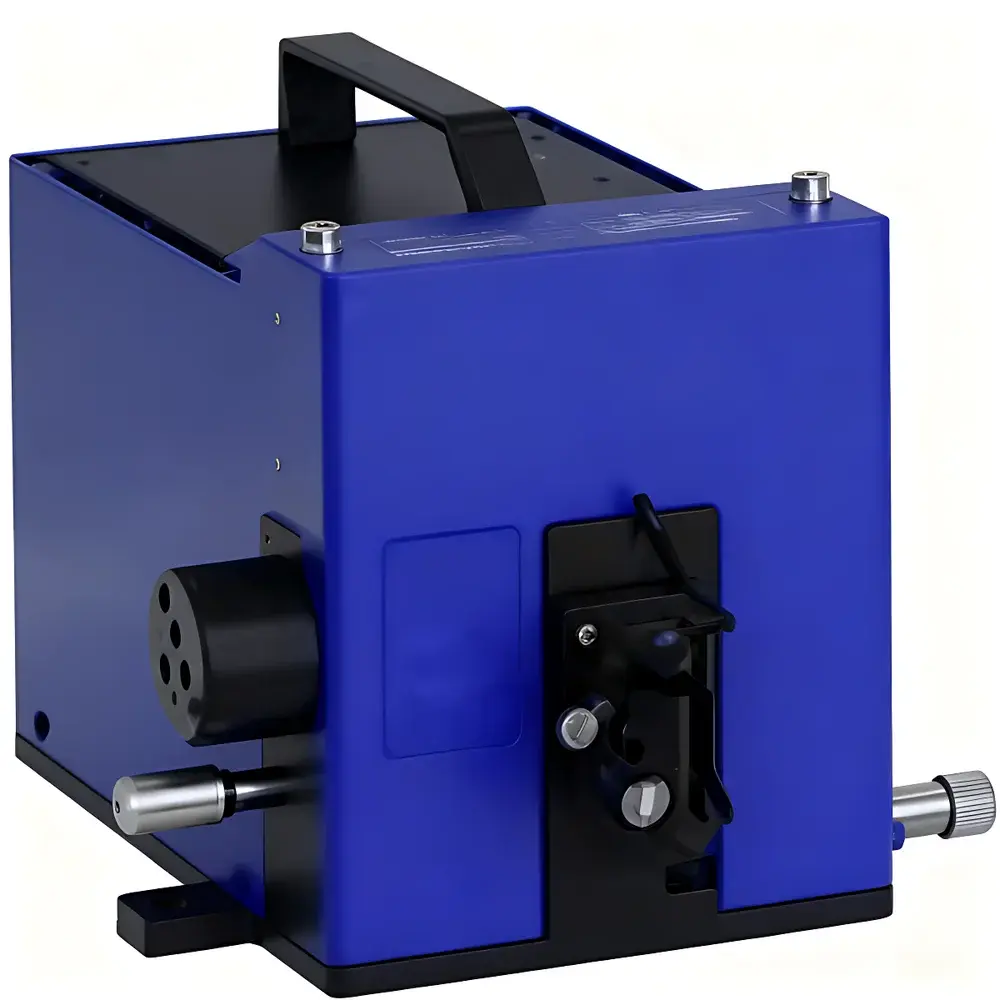
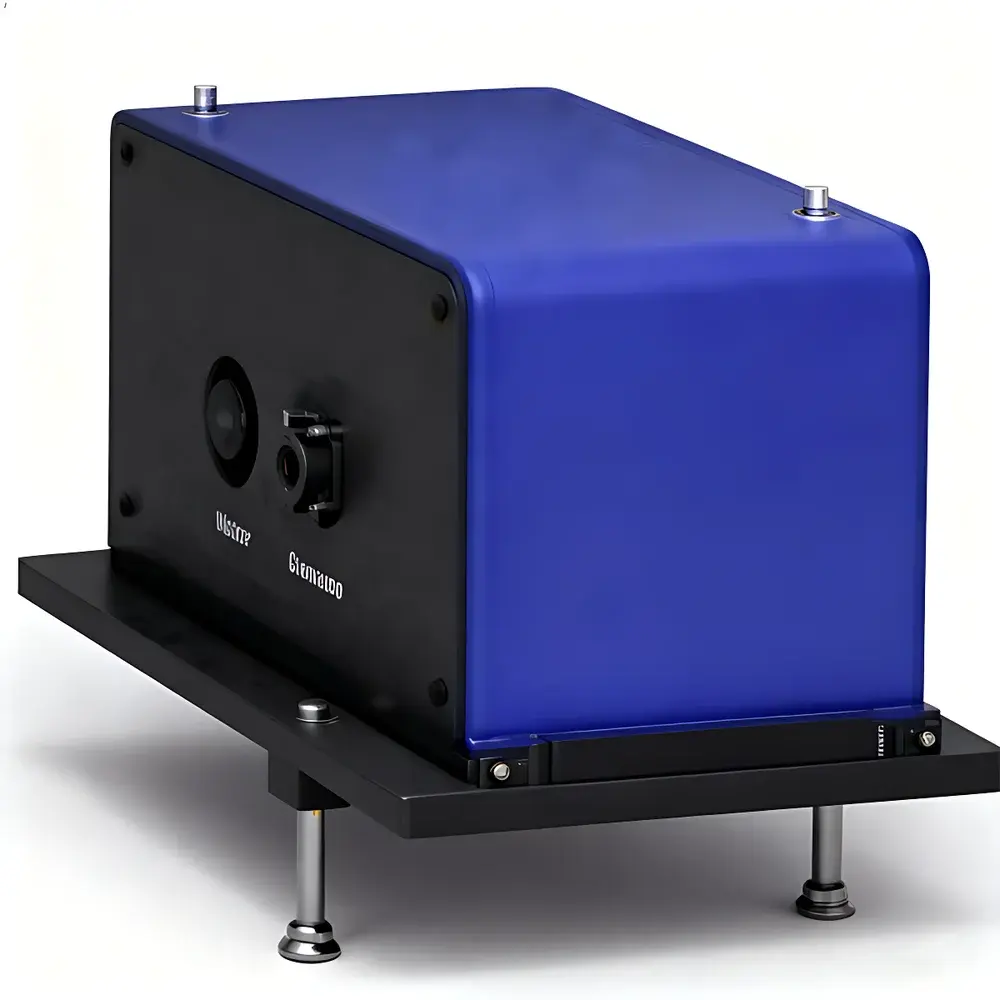
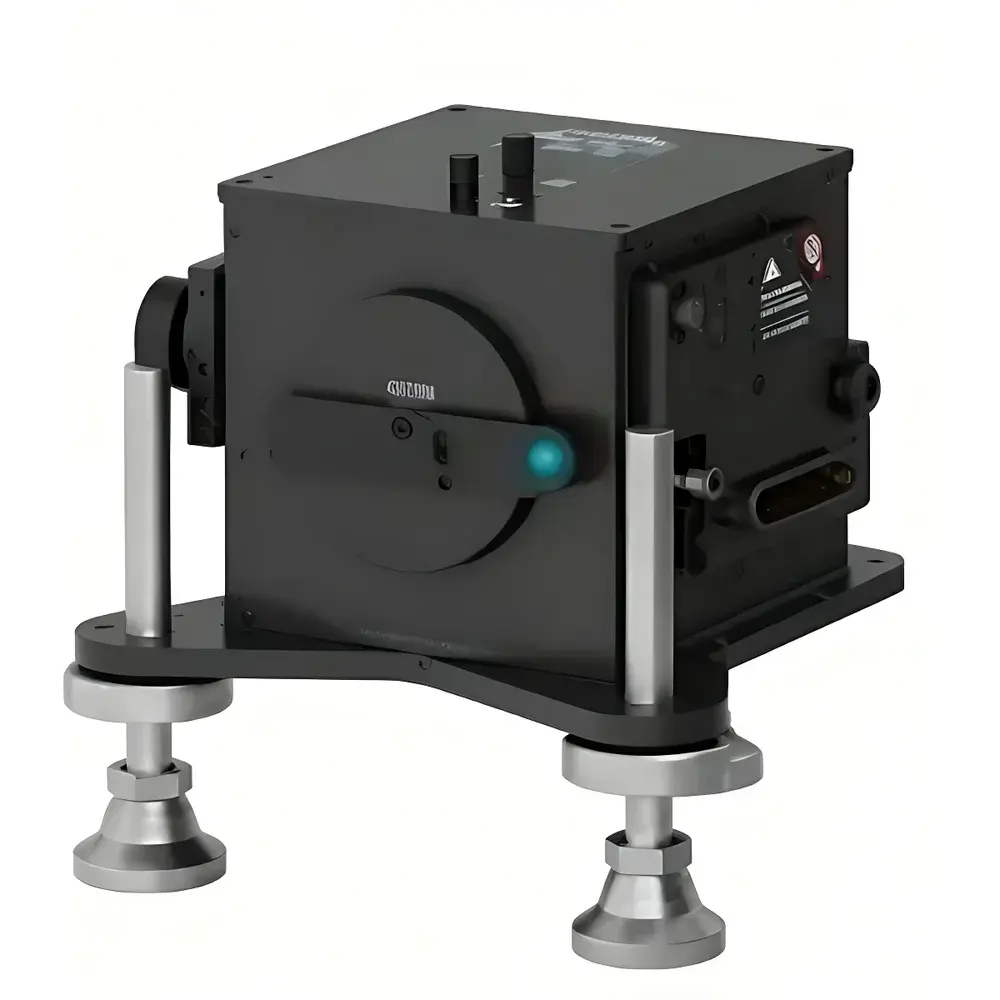
APE MIKS1-S Autocorrelator
| Brand | APE |
|---|---|
| Origin | Germany |
| Type | Scanning Autocorrelator for Ultrashort Pulse Characterization |
| Wavelength Range | 200–2000 nm |
| Pulse Duration Range | 5 fs – 500 ps |
| Dynamic Range | >10⁷ (7 orders of magnitude) |
| Scan Range | Up to ±1.5 ps (adjustable via motorized delay stage) |
| Resolution | Sub-femtosecond timing resolution (dependent on optical path stability and laser repetition rate) |
| Interface | USB 2.0 with proprietary control software |
| Compliance | CE-marked, RoHS-compliant |
Overview
The APE MIKS1-S Autocorrelator is a high-precision, motorized scanning interferometric autocorrelator engineered for the direct temporal characterization of ultrashort optical pulses in research and industrial ultrafast laboratories. Based on second-harmonic generation (SHG) in a nonlinear crystal (typically BBO or BiBO), the instrument operates on the principle of intensity autocorrelation: two time-delayed replicas of the input pulse are spatially overlapped in the crystal, generating a signal proportional to the square of the pulse intensity envelope. By scanning the optical delay with sub-micrometer precision and recording the SHG signal versus delay, the instrument reconstructs the pulse width (FWHM) with high reproducibility—without requiring phase retrieval algorithms. Designed for broadband operation, it supports single-shot or multi-shot acquisition across the deep-ultraviolet (200 nm) to near-infrared (2000 nm) spectral range, making it compatible with Ti:sapphire, Yb-based, OPA, and fiber laser systems.
Key Features
- Motorized delay line with closed-loop piezoelectric positioning for scan repeatability better than ±0.1 µm (equivalent to <0.33 fs at 800 nm)
- Interchangeable nonlinear crystals (BBO, BiBO, LBO) pre-aligned in modular mounts for optimized phase-matching across UV–NIR bands
- Integrated photomultiplier tube (PMT) or silicon photodiode detector with selectable gain and bandwidth (DC–100 MHz)
- Real-time background subtraction and noise suppression via dual-channel reference monitoring
- Compact, vibration-isolated optical bench housed in a black-anodized aluminum enclosure with magnetic shutter and beam-height adjustment
- Thermal drift compensation via internal temperature sensor and adaptive delay calibration routine
Sample Compatibility & Compliance
The MIKS1-S accepts free-space collimated beams with diameters between 2 mm and 8 mm and divergence <1 mrad. It is compatible with pulsed laser sources operating at repetition rates from 1 kHz to 80 MHz, including amplified and oscillator-only configurations. Pulse energies from 10 nJ to 1 µJ are supported without external attenuation; optional neutral density filters enable extension down to picojoule-level inputs. The system meets CE conformity requirements under the EU Electromagnetic Compatibility Directive 2014/30/EU and Low Voltage Directive 2014/35/EU. Its mechanical and optical design adheres to ISO 10110-7 for surface quality and ISO 9001:2015 manufacturing traceability standards. While not a regulated medical device, its measurement methodology aligns with ISO 13694:2021 (lasers and laser-related equipment — test methods for determination of laser beam parameters).
Software & Data Management
Control and analysis are performed via APE’s proprietary Autocorrelation Studio software (Windows 10/11, 64-bit), distributed with full source-code access for MATLAB and Python API integration (via DLL and ctypes bindings). The software provides real-time scan visualization, automatic FWHM calculation using Gaussian, sech², or user-defined fitting models, and export of raw delay–intensity data in HDF5 and CSV formats. Audit-trail functionality logs all acquisition parameters, user actions, and timestamped calibration events—supporting GLP-compliant documentation workflows. Data files include embedded metadata compliant with the HDF5 NeXus standard, enabling interoperability with third-party pulse analysis tools such as GRADY, FROG Solver, or commercial platforms like LightWave Analyzer.
Applications
- Characterization of femtosecond oscillators (e.g., mode-locked Ti:sapphire, Yb:fiber, Cr:ZnSe lasers)
- Monitoring pulse compression and dispersion compensation in chirped-pulse amplification (CPA) systems
- Validation of pulse duration after nonlinear frequency conversion (e.g., SHG, THG, DFG)
- Time-resolved spectroscopy setup alignment and diagnostic feedback
- Quality assurance in ultrafast laser manufacturing and OEM integration
- Academic research in strong-field physics, attosecond science, and coherent control experiments
FAQ
What pulse durations can the MIKS1-S measure?
It measures full-width-at-half-maximum (FWHM) pulse durations from 5 fs to 500 ps, depending on optical configuration, crystal choice, and input beam quality.
Is phase information recovered from the autocorrelation trace?
No—the MIKS1-S provides intensity autocorrelation only. Phase retrieval requires additional techniques such as FROG or SPIDER; however, the autocorrelation trace serves as a critical first-order validation prior to full field reconstruction.
Can the instrument be integrated into an automated vacuum chamber environment?
Yes—optional vacuum-compatible versions (with CF flanges and stainless-steel housing) are available upon request, supporting pressures down to 10⁻⁶ mbar.
Does the system require periodic recalibration?
The delay stage is factory-calibrated with NIST-traceable interferometric verification. Recalibration is recommended annually or after mechanical shock, using the included reference HeNe laser alignment kit.
Is remote operation supported for facility-wide laser diagnostics networks?
Yes—TCP/IP socket interface and RESTful API endpoints allow integration into centralized lab management systems (e.g., LabVIEW, EPICS, or custom SCADA platforms) for unattended pulse monitoring across multiple beamlines.