
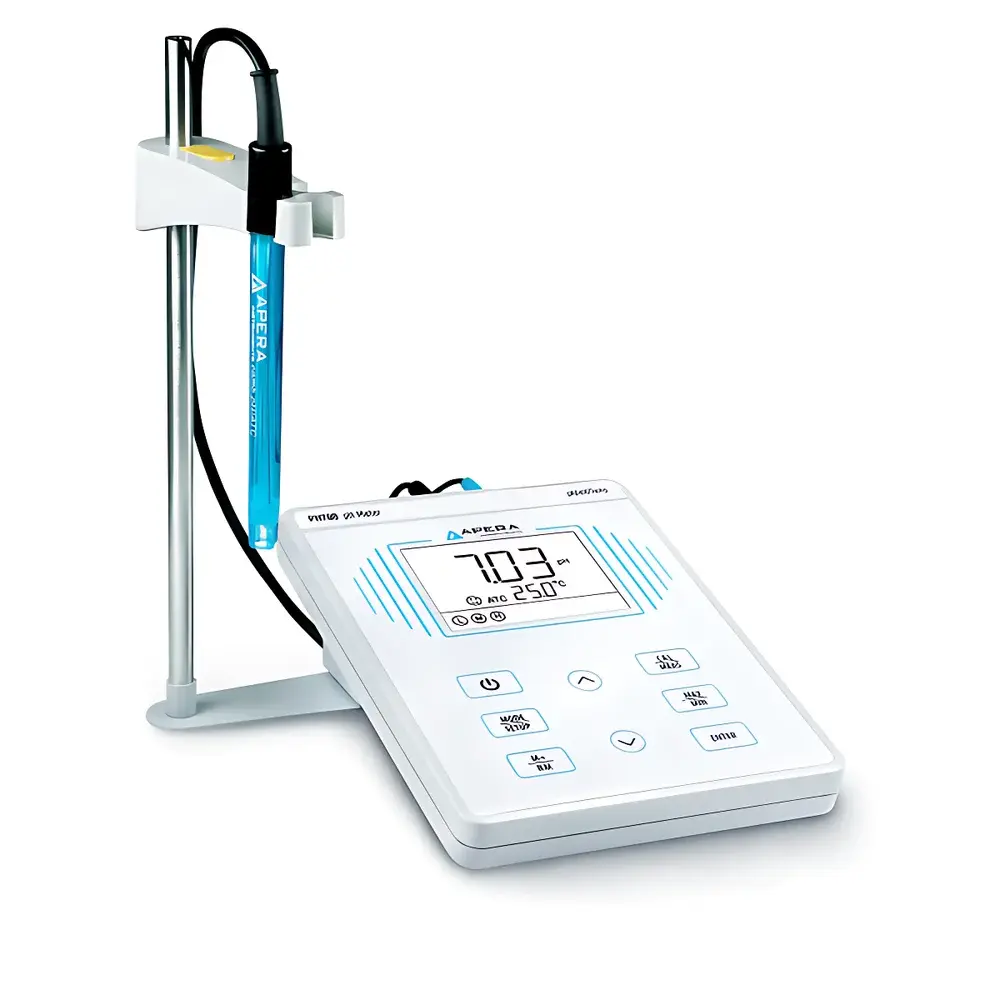
Apera Instruments PH700 Benchtop pH Meter
| Brand | Apera |
|---|---|
| Origin | Shanghai, China |
| Model | PH700 |
| Instrument Type | Benchtop |
| Parameter Type | Single-Parameter (pH) |
| Measurement Range | 0.00–14.00 pH |
| Resolution | 0.1 / 0.01 pH |
| Accuracy | ±0.01 pH ± 1 digit |
| Calibration Standards | USA & NIST traceable buffers |
| Temperature Compensation | Automatic or Manual (0–100 °C) |
| mV Range | ±1999 mV |
| mV Resolution | 1 mV |
| mV Accuracy | ±0.1% FS ± 1 digit |
| Temperature Measurement | 0.0–100.0 °C (32.0–212.0 °F), ±0.5 °C ± 1 digit |
| Data Storage | 50 sets (ID, pH/mV value, unit, temperature, temp-comp status) |
| Power Supply | DC 9 V / 300 mA adapter |
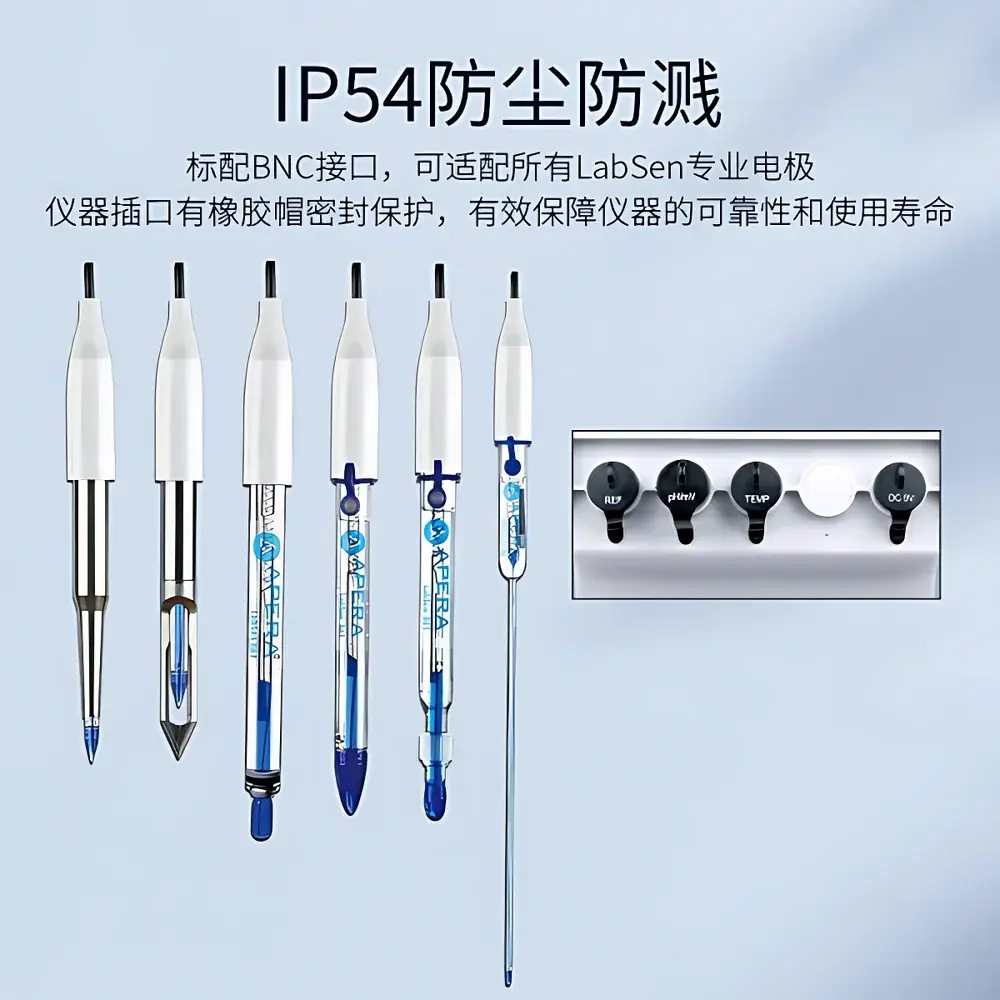
| IP Rating | IP54 |
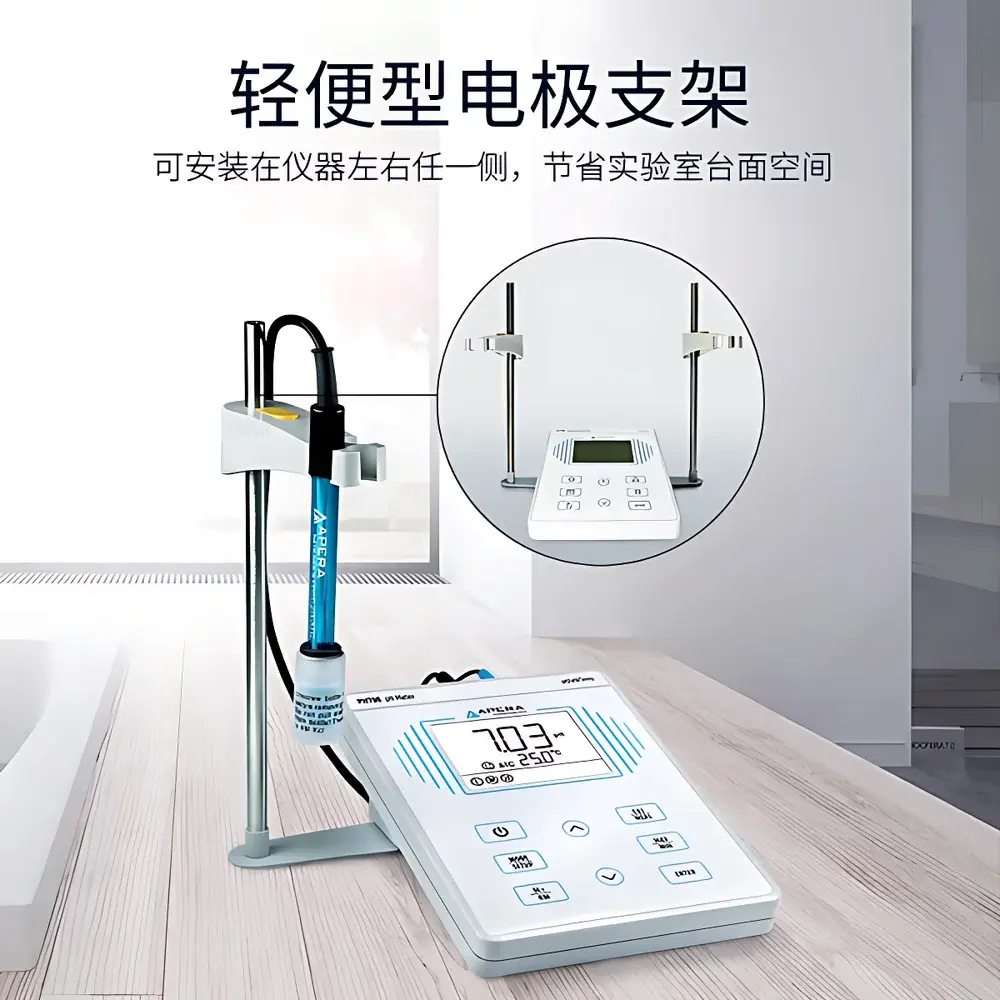
| Dimensions | 240 × 235 × 103 mm |
| Weight | 1.0 kg |
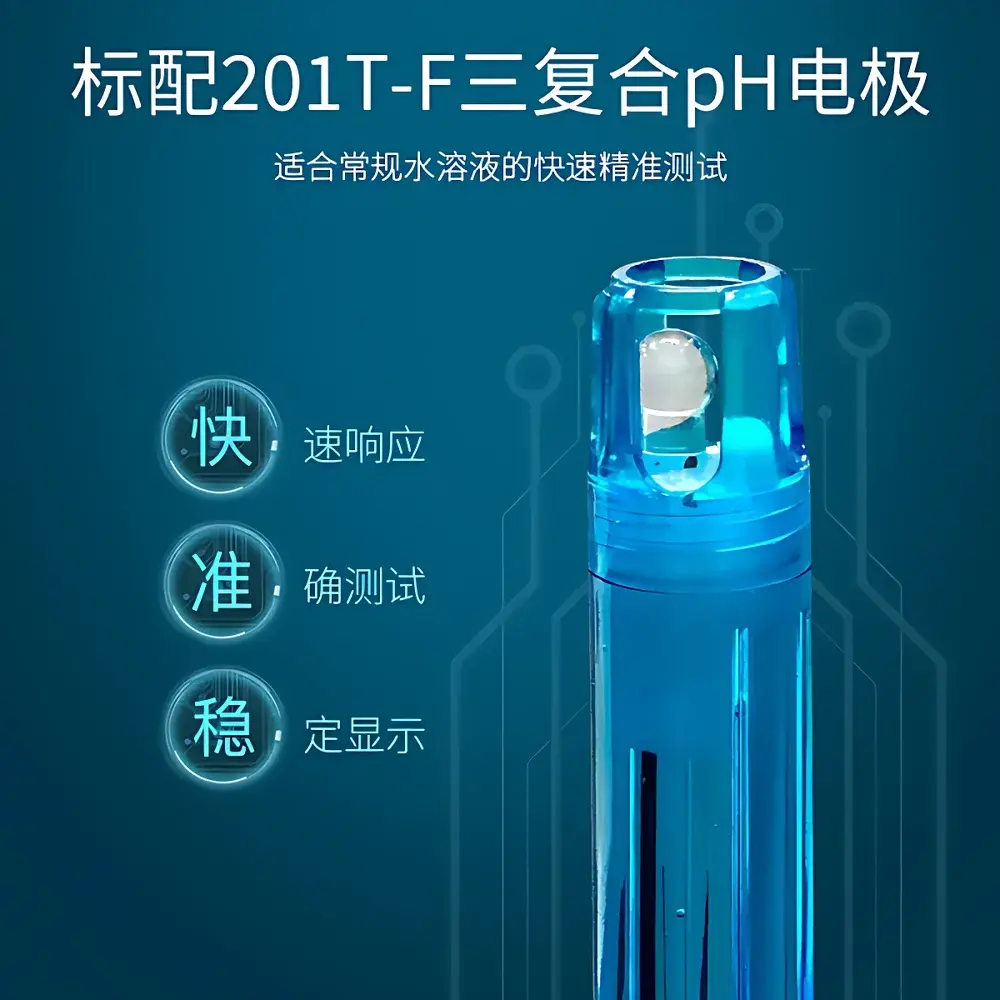
| Included Electrode | 201T-F plastic-body tri-combination pH electrode (pH + reference + integrated Pt1000 temperature sensor) |
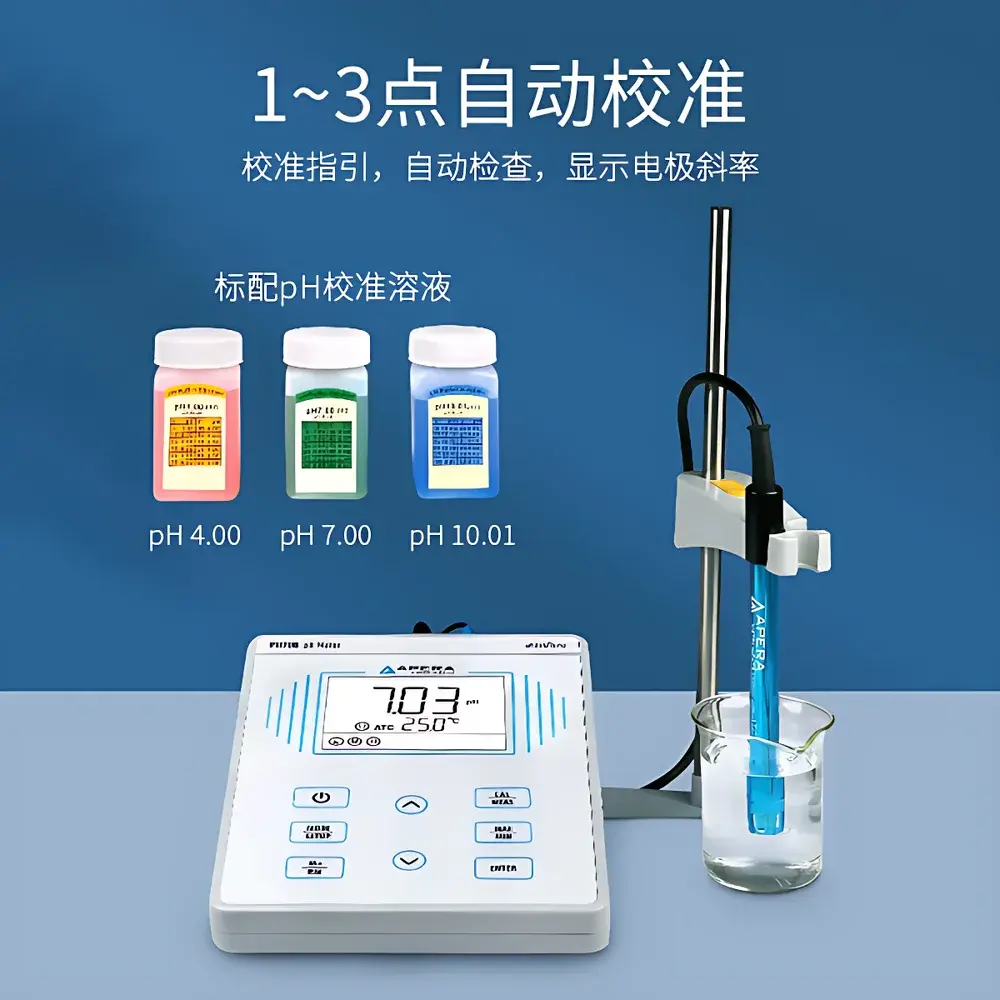
| Calibration | 1–3 point auto-calibration with slope display, buffer auto-recognition, diagnostic feedback |
Overview
The Apera Instruments PH700 Benchtop pH Meter is a precision-engineered, single-parameter electrochemical analyzer designed for reliable pH and millivolt measurements in academic teaching laboratories, quality control environments, and routine analytical workflows. Built upon a microprocessor-controlled architecture, the PH700 implements potentiometric measurement principles in accordance with ISO 3696, ASTM D1293, and USP , delivering traceable, repeatable results across the full aqueous pH scale (0.00–14.00). Its core functionality centers on high-stability glass electrode potential detection, coupled with automatic temperature compensation (ATC) via an integrated Pt1000 thermistor—ensuring thermodynamic accuracy without manual correction. The instrument operates under standard laboratory conditions (15–35 °C, ≤85% RH non-condensing) and complies with IEC 61010-1 safety requirements for electrical measurement equipment.
Key Features
- Microprocessor-based intelligence enabling 1–3 point automatic calibration with real-time slope calculation (mV/pH) and buffer auto-identification for both USA (4.01, 7.00, 10.01) and NIST (4.005, 6.865, 9.180) standard solutions.
- Dual-resolution pH display (0.1 / 0.01 pH) with ±0.01 pH ± 1 digit accuracy at 25 °C, verified per manufacturer’s calibration protocol using certified reference materials.
- 201T-F tri-combination electrode featuring low-impedance lithium glass membrane, dual junction design (ceramic frit + fiber wick) to minimize liquid junction potential drift and clogging, and lead-free glass construction compliant with EU RoHS and FDA food-contact material guidelines.
- Digital sliding-average signal processing algorithm to suppress transient noise and improve response stability—particularly beneficial during slow-equilibrating measurements in viscous or low-conductivity samples.
- Onboard data management: 50 measurement records stored with timestamp-equivalent indexing (sequence ID), pH/mV value, temperature reading, unit designation, and ATC activation status—exportable only via manual transcription (no USB/PC interface).
- IP54-rated enclosure with sealed BNC and temperature input ports protected by silicone rubber caps; lightweight ABS housing (1.0 kg) and compact footprint (240 × 235 × 103 mm) optimized for benchtop space efficiency.
Sample Compatibility & Compliance
The PH700 is validated for aqueous and low-viscosity aqueous-organic mixtures (e.g., buffer solutions, drinking water, wastewater effluents, culture media, and basic pharmaceutical preparations). It is not intended for non-aqueous solvents, highly concentrated acids/bases (>1 M), hydrofluoric acid, or samples containing sulfides, proteins, or heavy metals that may poison the reference junction. Electrode compatibility follows IUPAC recommendations for general-purpose pH measurement. The system meets CE marking requirements under Directive 2014/30/EU (EMC) and 2014/35/EU (LVD); documentation supports GLP-aligned recordkeeping when used with controlled calibration logs and electrode maintenance tracking.
Software & Data Management
The PH700 operates as a standalone embedded system with no proprietary software dependency or firmware update capability. All configuration—including calibration mode selection, resolution toggle, temperature unit (°C/°F), and auto-hold timeout—is managed via front-panel keypad navigation. Stored data remains resident in non-volatile memory until manually cleared; no audit trail, electronic signature, or 21 CFR Part 11 compliance is provided. For regulated environments requiring data integrity, users must implement external procedural controls—such as bound logbooks, dual-operator verification, and periodic electrode performance verification against fresh standards.
Applications
- Undergraduate and graduate chemistry/biology labs: pH titration endpoint detection, buffer preparation validation, enzyme activity assays.
- Environmental monitoring: Surface water and wastewater pH screening per EPA Method 150.1 and ISO 10523.
- Food & beverage QA: Monitoring of dairy fermentation, brewing mash, juice acidity, and cleaning-in-place (CIP) rinse water neutrality.
- Pharmaceutical manufacturing: In-process checks of excipient solutions and final product pH per USP monographs where specified.
- Aquaculture and hydroponics: Daily monitoring of nutrient solution pH stability to maintain optimal ion availability.
FAQ
What calibration standards are supported?
The PH700 recognizes both USA (pH 4.01, 7.00, 10.01) and NIST-traceable (pH 4.005, 6.865, 9.180) buffer series automatically during calibration.
Does the instrument support GLP or 21 CFR Part 11 compliance?
No. The PH700 lacks electronic audit trails, user authentication, or secure data export—making it suitable for non-regulated or educational use only.
Can the 201T-F electrode be used in soil slurries or high-salt media?
It is not recommended for undiluted soil extracts or >0.5 M ionic strength solutions due to junction clogging risk; a double-junction electrode (e.g., 211T-F) is advised for such applications.
Is temperature compensation mandatory for accurate pH readings?
Yes—pH is temperature-dependent. The PH700 applies the Nernst equation correction using either its built-in sensor or manual entry; omission introduces systematic error exceeding ±0.05 pH per 10 °C deviation.
How often should the electrode be recalibrated?
Calibrate before each measurement session or after every 2–4 hours of continuous use; verify daily with a mid-range standard (e.g., pH 7.00) when performing critical analyses.
Related Products





