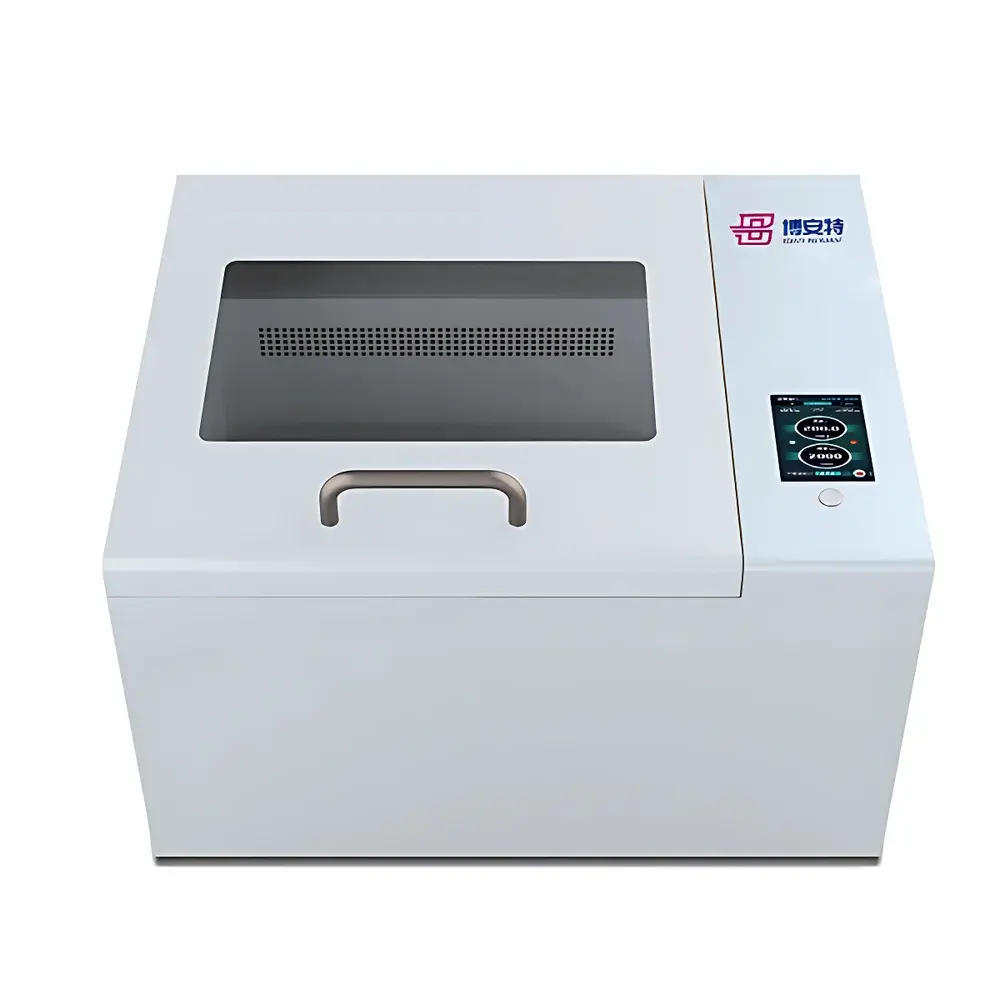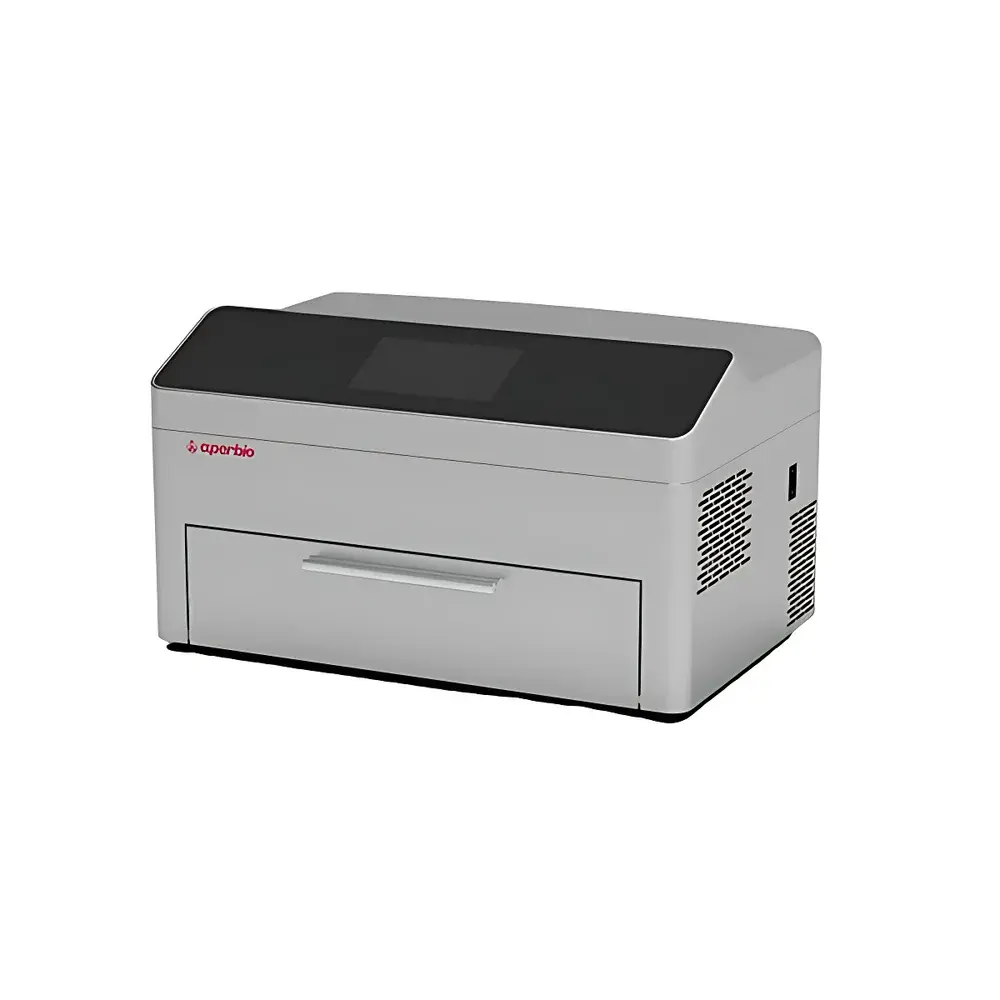
Aperbio Auto 12 Automated Western Blot Processing System
| Brand | Aperbio |
|---|---|
| Origin | Jiangsu, China |
| Manufacturer Type | Original Equipment Manufacturer (OEM) |
| Product Category | Domestic |
| Model | Auto 12 |
| Instrument Type | Automated Western Blot Processor |
| Core Component | Multi-channel incubation station with temperature-controlled gel trays |
| Temperature Control Range | 2–40 °C |
| Channel Independence | 12 individually programmable channels |
| Antibody Recovery Efficiency | Up to 95% |
| Compatible Gel Tray Sizes | Standard mini-gel (7 × 8 cm), midi-gel (10 × 10 cm), and custom-fit formats |
Overview
The Aperbio Auto 12 Automated Western Blot Processing System is an integrated benchtop platform engineered for reproducible, hands-free execution of key post-electrophoresis immunoassay steps in protein detection workflows. Unlike conventional manual blot processing or semi-automated wash stations, the Auto 12 implements precise fluidic control and thermally regulated incubation across twelve independent channels—each operating under user-defined protocols for blocking, primary antibody binding, secondary antibody conjugation, and multi-stage buffer exchange. Its architecture follows established principles of capillary-driven liquid handling and uniform convective diffusion within sealed incubation chambers, ensuring consistent antigen–antibody interaction kinetics and minimizing edge effects common in static incubation. Designed specifically for compatibility with standard SDS-PAGE gels transferred onto nitrocellulose or PVDF membranes, the system supports both chemiluminescent and fluorescent detection modalities without hardware modification.
Key Features
- Twelve fully independent processing channels enable parallel optimization of conditions—for example, testing multiple primary antibodies, titration series, or distinct blocking reagents on a single membrane set.
- Programmable temperature control (2–40 °C) maintains optimal binding kinetics for temperature-sensitive antibodies and reduces non-specific binding during extended incubations.
- Integrated antibody recovery module utilizes low-shear aspiration and residual volume minimization to reclaim >95% of primary and secondary antibodies—reducing consumable costs and improving assay sustainability.
- Modular tray design accommodates widely used gel dimensions including mini (7 × 8 cm), midi (10 × 10 cm), and custom-cut membranes, with adjustable clamping force to prevent membrane slippage or wrinkling.
- Onboard protocol library with editable step parameters (incubation time, agitation speed, wash cycle count, buffer volume per step) supports GLP-compliant documentation via timestamped log export.
- Sealed chamber architecture minimizes evaporation and cross-contamination between channels, critical for high-sensitivity detection and multiplexed experiments.
Sample Compatibility & Compliance
The Auto 12 is validated for use with electrophoretically transferred proteins on nitrocellulose and PVDF membranes following standard wet, semi-dry, or rapid transfer methods. It accepts membranes pre-cut to industry-standard sizes and integrates seamlessly with downstream imaging systems (e.g., ChemiDoc, Azure Biosystems, LI-COR Odyssey). From a regulatory standpoint, the system’s audit-trail-capable software supports 21 CFR Part 11–aligned electronic recordkeeping when paired with networked authentication and role-based access controls. While not certified as GMP-grade equipment, its repeatable fluid delivery (±3% volumetric accuracy per channel) and thermal stability (±0.5 °C over 24 h at 4 °C) meet internal QC requirements for academic, biotech, and contract research laboratory environments adhering to ISO/IEC 17025 or CLIA guidelines.
Software & Data Management
Control is managed via Aperbio’s proprietary Windows-based interface featuring drag-and-drop protocol builder, real-time channel status monitoring, and automated error logging. Each run generates a structured .csv log file containing timestamps, temperature profiles, fluid volumes dispensed, and user-initiated interventions. Exported logs include metadata compliant with MIAME and MIAPE reporting standards for proteomics data traceability. Optional integration with LIMS platforms is supported through configurable API endpoints using RESTful HTTP calls and JSON-formatted payloads—enabling synchronization with sample tracking identifiers and instrument maintenance records.
Applications
- High-throughput validation of monoclonal antibody specificity across tissue lysate panels.
- Quantitative comparison of phosphorylation states under kinase inhibitor dose–response conditions.
- Standardization of western blotting in core facilities serving multiple research groups with divergent experimental designs.
- Training platform for graduate students learning reproducible immunoassay technique fundamentals.
- Preclinical biomarker verification studies requiring inter-laboratory consistency in signal normalization and background subtraction.
FAQ
Can the Auto 12 process membranes from different transfer methods (wet vs. semi-dry)?
Yes—the system does not impose constraints on transfer methodology, provided membranes are fully hydrated and trimmed to compatible dimensions prior to loading.
Is third-party antibody compatibility verified?
Aperbio provides compatibility matrices for >120 commercially available primary and secondary antibodies from major vendors (Cell Signaling Technology, Abcam, Thermo Fisher Scientific); users may submit novel reagents for empirical validation support.
Does the system support chemiluminescent and fluorescent detection in the same run?
No—detection modality is determined post-processing; however, the Auto 12 preserves epitope integrity for either method by avoiding harsh stripping or excessive agitation.
What maintenance intervals are recommended for fluidic components?
Pump tubing should be replaced every 6 months under typical usage (≤20 runs/week); buffer reservoirs require weekly cleaning with 70% ethanol and deionized water rinse to prevent biofilm formation.
Is remote monitoring supported?
Local network access allows real-time status viewing via browser-based dashboard; remote desktop or VPN access must be configured at the institutional IT level and falls outside Aperbio’s software scope.