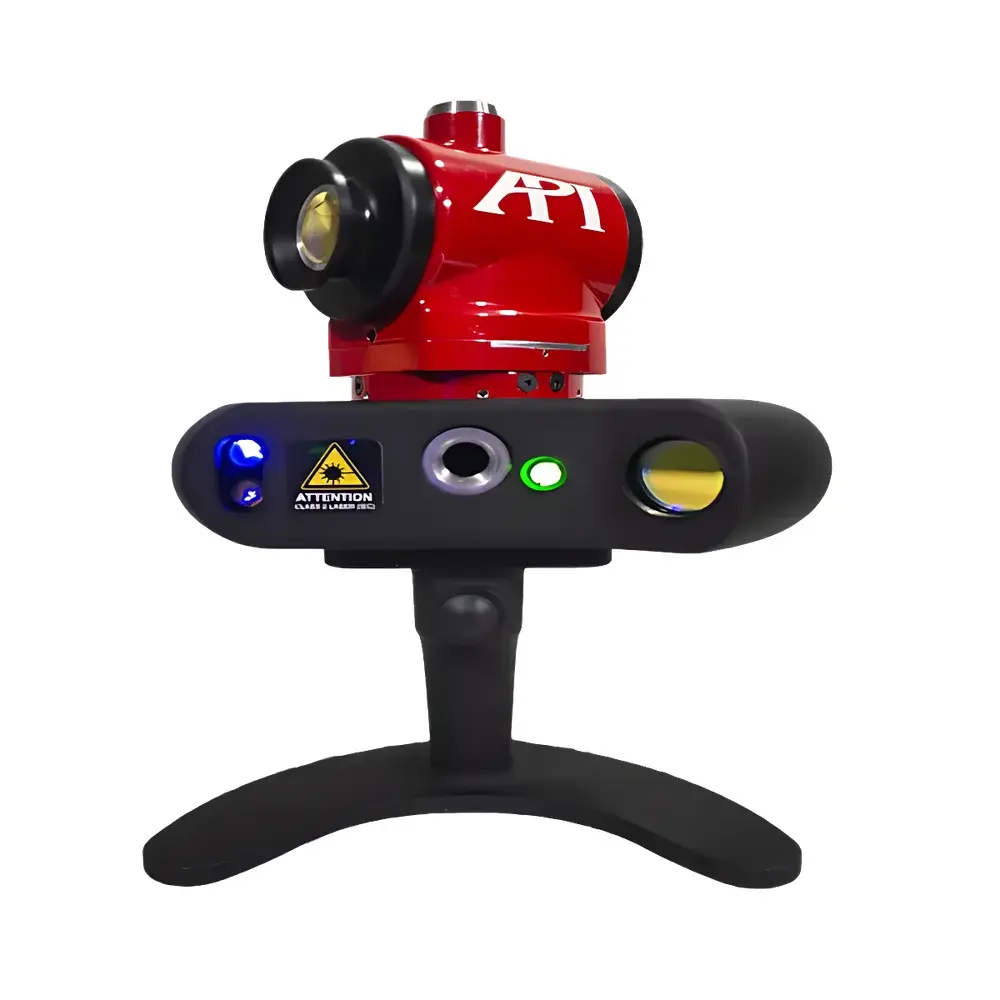
API iScan3D Smart Scanning Probe for Radian Laser Trackers
| Origin | USA |
|---|---|
| Manufacturer Type | Authorized Distributor |
| Origin Category | Imported |
| Model | iScan |
| Price Range | USD $14,000 – $72,000 (FOB) |
| Max Measurement Range | 160 m |
| Measurement Resolution | 0.08 µm |
| Measurement Accuracy | ±(10 µm + 5 µm/m) |
| Yaw Angle | Unlimited continuous rotation |
| Roll Angle | Unlimited continuous rotation |
| Pitch Angle | Unlimited continuous rotation |
| Laser Type | Dual-axis crossed blue laser (450 nm) |
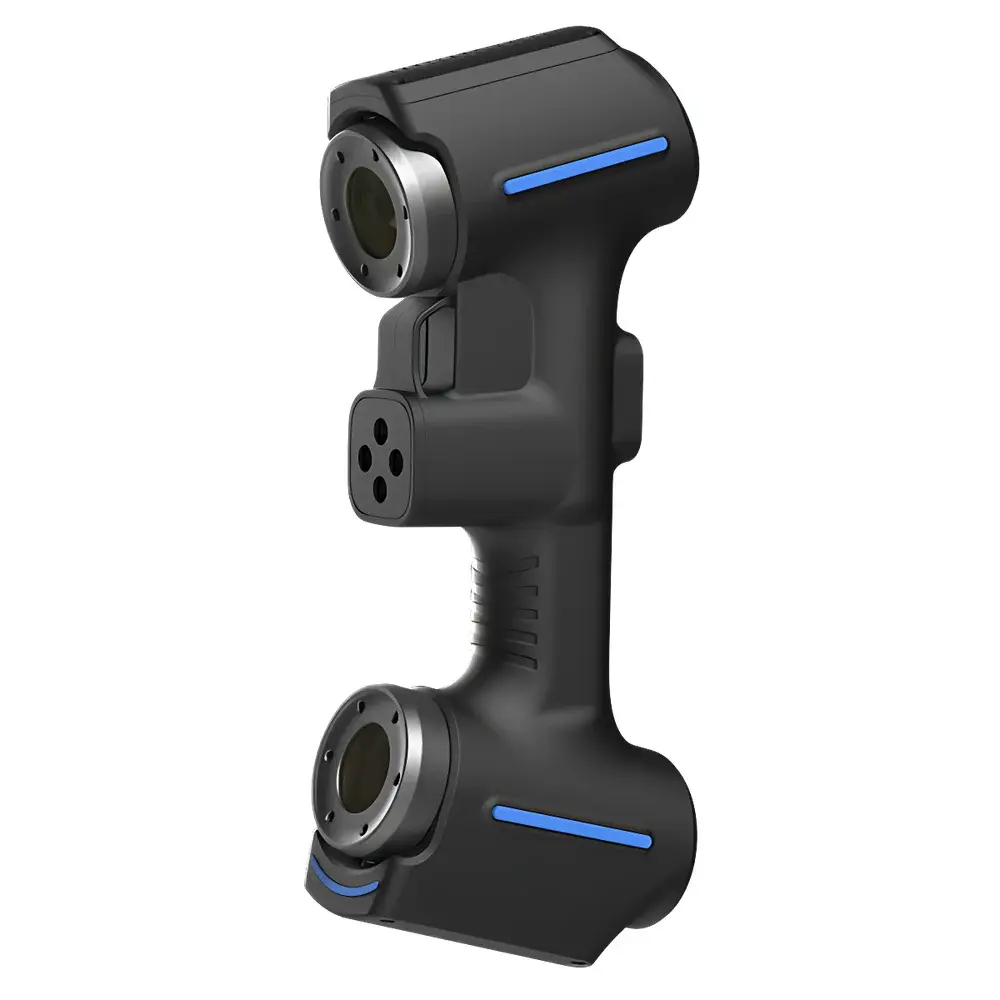
| Ergonomic Design | Handheld, single-hand operation |
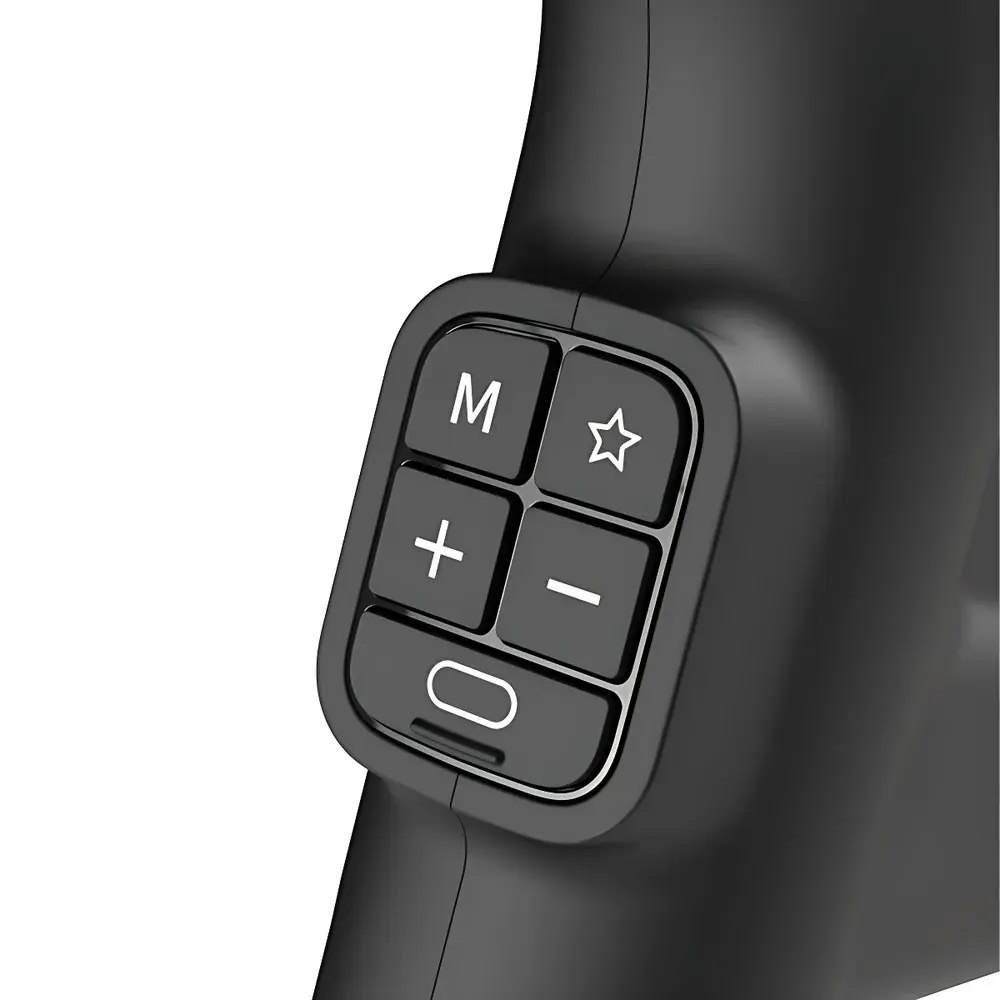
| Integrated Controls | Pre-programmed tactile function buttons |
| Compliance | ISO 10360-12, VDI/VDE 2634 Part 3, ASTM E2924-22 |
Overview
The API iScan3D Smart Scanning Probe is a high-precision, handheld active scanning sensor engineered exclusively for integration with API’s Radian series of laser trackers. It operates on the principle of triangulation-based laser line projection, utilizing dual-axis crossed blue lasers (450 nm) to generate real-time, high-density point cloud data directly referenced to the tracker’s absolute coordinate system. Unlike passive retroreflector-based measurement, the iScan3D actively projects and captures surface geometry via synchronized motion tracking—enabling dynamic, six-degree-of-freedom (6DoF) acquisition without requiring fixed mounting or repositioning. Its design targets applications where volumetric accuracy, portability, and adaptability to constrained or complex-access environments are critical—such as large-scale tooling verification, aerospace assembly alignment, and automotive body-in-white inspection. The probe’s metrological traceability is anchored in the Radian tracker’s interferometric distance measurement (IFM) and angular encoders, ensuring compliance with ISO 10360-12 for volumetric performance verification and VDI/VDE 2634 Part 3 for optical scanning systems.
Key Features
- Unrestricted 360° continuous yaw, pitch, and roll motion—eliminating cable wrap, joint singularity, and reorientation delays during scanning.
- Crossed blue laser line projection (dual-plane, 450 nm) for robust feature localization on reflective, dark, or high-contrast surfaces without spray coating.
- Sub-micron resolution capture: 0.08 µm effective spatial resolution at nominal stand-off distance (150–300 mm), optimized for fine surface texture and edge fidelity.
- Ergonomically balanced housing with integrated tactile function buttons—pre-programmed for scan start/stop, auto-calibration trigger, and coordinate system locking.
- Real-time point cloud streaming via Ethernet/IP to API’s SpatialAnalyzer® software, supporting live deviation mapping against CAD models.
- Thermally stable aluminum-magnesium alloy chassis with IP52-rated ingress protection for shop-floor durability.
Sample Compatibility & Compliance
The iScan3D demonstrates consistent performance across diverse material classes—including anodized aluminum, polished stainless steel, carbon fiber composites, painted sheet metal, and machined cast iron—without reliance on temporary surface treatments. Its blue laser wavelength minimizes specular interference and enhances contrast on low-diffuse surfaces, enabling reliable capture of chamfers, radii down to 0.3 mm, and thin-walled features. All measurement data generated by the iScan3D–Radian system adheres to ISO 10360-12 Annex D for scanning probe validation, and supports audit-ready reporting per FDA 21 CFR Part 11 when deployed with SpatialAnalyzer®’s electronic signature and change-log modules. System-level calibration is performed using NIST-traceable artifacts per ASTM E2924-22, and routine verification follows GLP-compliant checklists for production metrology labs.
Software & Data Management
The iScan3D is fully native to API’s SpatialAnalyzer® v2024.1 platform, which provides real-time visualization, adaptive mesh generation, GD&T evaluation (per ASME Y14.5–2018), and automated report generation in PDF, XML, and STEP AP242 formats. Raw point cloud data is stored in binary SA-PCD format with embedded metadata—including timestamp, probe pose quaternion, laser power level, and environmental temperature drift compensation flags. Data export supports third-party interoperability via ANSI/ISA-88-compliant OPC UA interfaces and direct import into PolyWorks®, Geomagic Control X®, and Siemens NX Metrology. Audit trails record all user actions, parameter modifications, and calibration events with SHA-256 hashing for integrity verification.
Applications
- Tooling and fixture validation: Gap, flush, and profile deviation analysis on jigs, weld fixtures, and composite layup molds.
- Automotive BIW inspection: Real-time comparison of stamped panels against Class-A surfacing CAD with pass/fail color mapping.
- Aerospace subassembly alignment: In-situ measurement of wing spar interfaces, engine mount brackets, and fuselage frame positioning.
- Reverse engineering of legacy parts: High-fidelity capture of worn or undocumented components for remanufacturing or digital twin creation.
- In-process verification: On-machine scanning of large CNC-machined structures prior to final heat treatment or assembly.
- Digital twin initialization: Generation of as-built reference models for predictive maintenance and tolerance stack-up simulation.
FAQ
Is the iScan3D compatible with non-API laser trackers?
No—the iScan3D requires proprietary hardware synchronization and firmware-level integration with Radian-series trackers; it is not interoperable with third-party trackers.
What is the recommended minimum feature size resolvable with the iScan3D?
Under optimal conditions (stable thermal environment, 200 mm stand-off, matte finish), features ≥0.15 mm in width or depth can be reliably segmented and dimensioned.
Does the system support automated path planning for repetitive scans?
Yes—SpatialAnalyzer® includes scripting (Python API) and teach-mode path recording for repeatable inspection routines across identical part families.
How often must the iScan3D undergo factory recalibration?
Annual calibration is recommended per ISO/IEC 17025-accredited laboratories; field verification using API’s Certified Calibration Artifact (CCA-3D) is advised before each high-accuracy campaign.
Can point cloud data be exported for use in finite element analysis (FEA)?
Yes—triangulated meshes exported in STL or PLY format retain geometric fidelity suitable for meshing in ANSYS Mechanical, Abaqus, and nCode DesignLife.