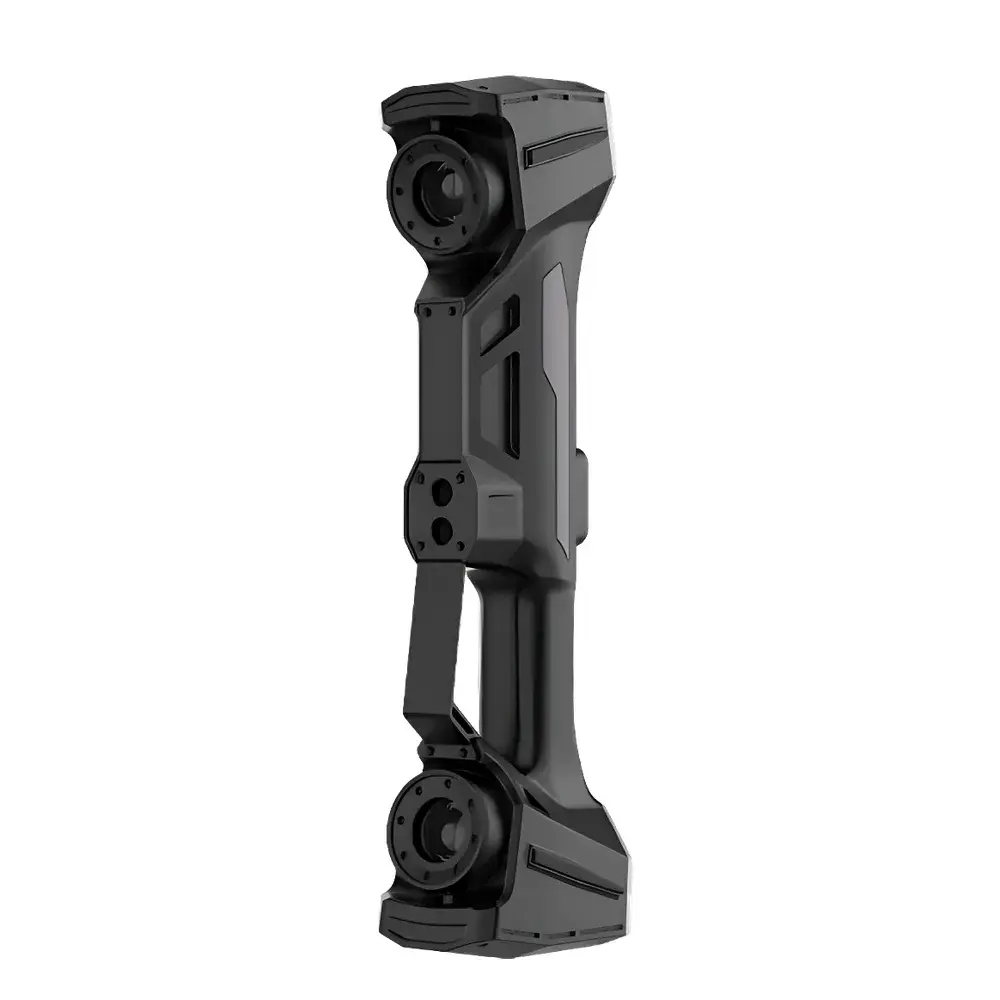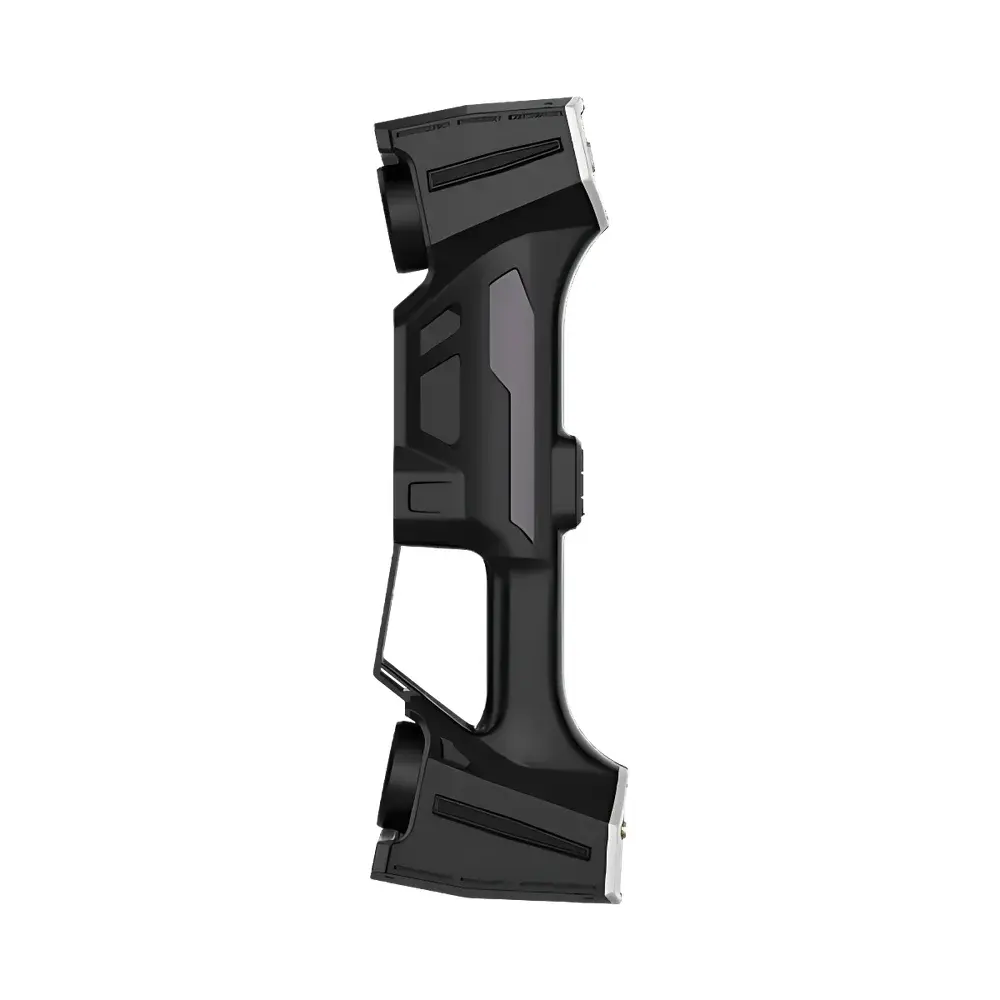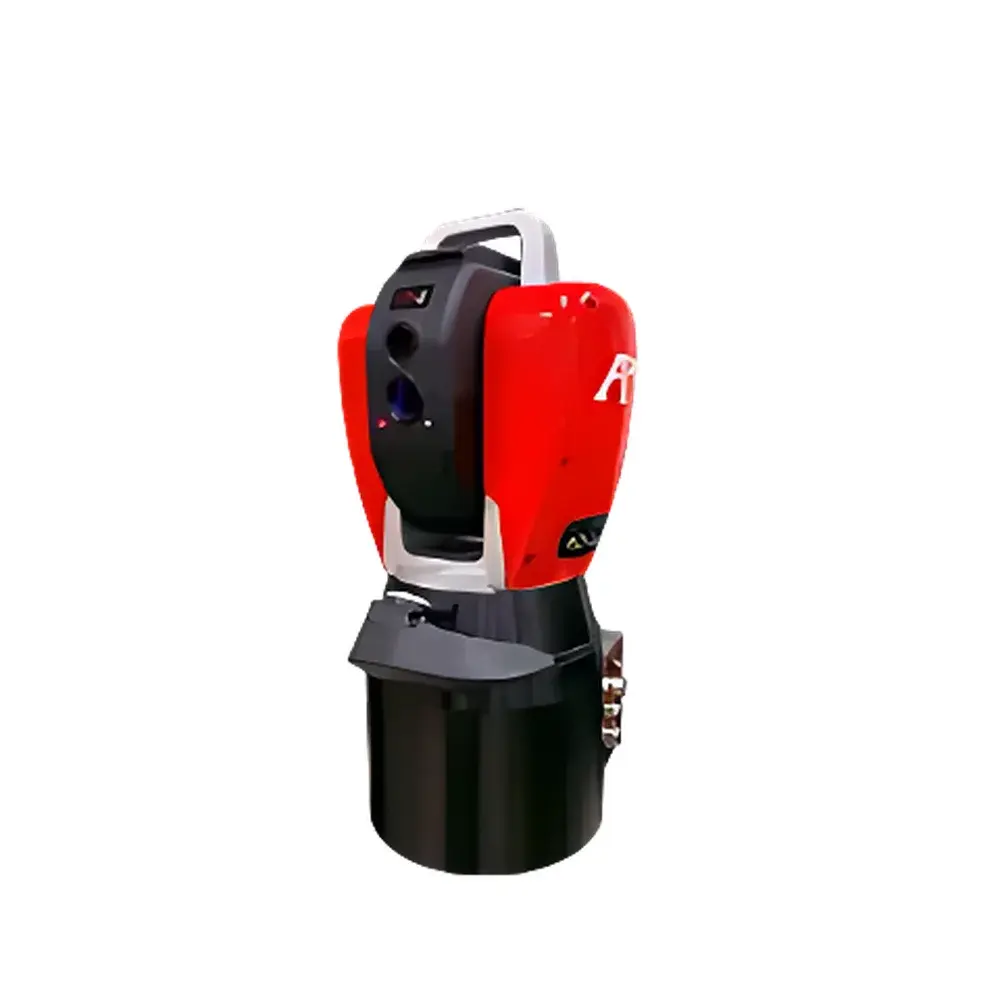
API LD-8/15/25 9D Laser Radar System
| Brand | API |
|---|---|
| Origin | USA |
| Manufacturer Type | Authorized Distributor |
| Import Status | Imported |
| Model | LD-8 / LD-15 / LD-25 |
| Measurement Speed | 180°/s |
| Linear Accuracy | 20 μm + 2 μm/m |
| 3D Accuracy | 25 μm + 6 μm/m |
| Spatial Resolution | 0.05 mm to 10 mm (horizontal point spacing) |
| Maximum Measurement Range | 25 m |
| Operating System | Windows 10 |
| Host Weight | 10.4 kg |
Overview
The API LD-8/15/25 9D Laser Radar System represents a paradigm shift in high-precision, non-contact geometric metrology for industrial and research applications. Engineered around Optical Frequency Chirping Interferometry (OFCI), this system transcends conventional time-of-flight or phase-shift laser scanning architectures by delivering sub-micron-level stability in dynamic environments. Unlike standard laser radars constrained by surface reflectivity, incidence angle limitations, and ambient light sensitivity, the 9D Laser Radar achieves robust measurement performance across matte, glossy, anodized, or thermally variable surfaces — without requiring target markers or surface preparation. Its core architecture integrates nine degrees of freedom (3 translational, 3 rotational, plus real-time beam steering and focus control), enabling full six-degree-of-freedom (6DOF) spatial referencing and adaptive volumetric compensation. Designed for deployment in production floors, calibration laboratories, aerospace assembly bays, and outdoor infrastructure verification sites, it meets the dimensional traceability requirements of ISO 10360, ASME B89.4.19, and VDI/VDE 2634 Part 2.
Key Features
- Optical Frequency Chirping Interferometry (OFCI) engine delivering 20 kHz raw data acquisition rate with intrinsic immunity to ambient temperature fluctuations and vibration-induced path-length drift
- 9-axis motion control architecture supporting simultaneous position, orientation, and beam parameter optimization for true 3D volumetric error mapping
- Linear accuracy of 20 μm + 2 μm/m and 3D vector accuracy of 25 μm + 6 μm/m — validated per ISO 10360-12 protocols using certified gauge blocks and sphere arrays
- 180°/s angular scanning speed with programmable dwell time per measurement point, enabling rapid inspection of large-scale components such as aircraft fuselage sections or wind turbine blades
- Compact form factor (10.4 kg host unit) with integrated Ethernet/IP and EtherCAT interfaces for seamless integration into robotic cells, gantry CMMs, or automated guided vehicle (AGV) platforms
- Adaptive optical path compensation correcting for atmospheric refraction gradients up to 0.5°C/m vertical thermal gradient — critical for outdoor or unconditioned shop-floor operation
Sample Compatibility & Compliance
The 9D Laser Radar is optimized for measuring metallic, composite, ceramic, and polymer-based components ranging from machined precision parts (10 m). It operates effectively on low-reflectivity surfaces (e.g., carbon fiber layups, shot-peened aluminum) without retroreflective targets, eliminating setup overhead associated with traditional photogrammetric or laser tracker workflows. All firmware and measurement algorithms comply with ISO/IEC 17025:2017 requirements for calibration laboratories, and system audit trails support FDA 21 CFR Part 11 electronic record integrity when deployed in regulated manufacturing environments. Calibration certificates are traceable to NIST standards via API’s A2LA-accredited metrology lab (Certificate No. 2321.01).
Software & Data Management
Bundled with API’s Metrology Software Suite (v6.2+), the system supports native import/export of ASME Y14.5 GD&T annotations, STEP AP242, and ISO 10303-21 formats. Real-time point cloud registration, iterative closest point (ICP) alignment, and statistical process control (SPC) charting are performed within a single GUI environment compliant with GLP/GMP documentation workflows. Data encryption (AES-256), role-based user access control, and immutable audit logs ensure regulatory readiness. Raw OFCI interferogram data is stored in HDF5 format for post-processing reproducibility and third-party algorithm validation.
Applications
- Aerospace: In-situ wing-to-fuselage alignment verification, tooling certification for composite layup molds, and thermal distortion monitoring during curing cycles
- Automotive: Body-in-white (BIW) dimensional stability assessment across production shifts, battery pack housing flatness validation under thermal load
- Energy: Blade profile inspection of hydroelectric turbine runners, foundation settlement tracking for offshore wind tower bases
- Research: High-speed deformation analysis of additively manufactured lattice structures under cyclic loading, micro-vibration characterization of optical benches
- Calibration Labs: Primary standard verification for articulated arm CMMs and laser trackers per ISO 10360-12 Annex D
FAQ
What distinguishes OFCI-based measurement from conventional laser radar technologies?
OFCI employs coherent frequency-swept laser sources with interferometric decoding, yielding orders-of-magnitude higher signal-to-noise ratio and immunity to speckle noise — enabling reliable measurements on diffuse surfaces where standard time-of-flight systems fail.
Can the system operate without environmental enclosures or climate control?
Yes. Built-in real-time atmospheric compensation algorithms correct for humidity, pressure, and vertical thermal gradients, permitting stable operation in ambient shop-floor conditions (15–35°C, 30–80% RH).
Is robot-mounted operation supported out-of-the-box?
The LD-series includes ROS 2 Foxy-compatible drivers and EtherCAT slave firmware, enabling direct synchronization with UR, KUKA, and ABB robotic controllers for path-following inspections.
How is traceability maintained across global installations?
Each unit ships with a NIST-traceable calibration certificate and quarterly remote verification routines using API’s Cloud Metrology Portal, ensuring inter-laboratory comparability per ILAC P10 guidelines.
Does the software support automated reporting for quality audits?
Yes — configurable PDF/Excel reports include measurement uncertainty budgets per GUM (JCGM 100:2008), GD&T deviation heatmaps, and revision-controlled digital signatures aligned with ISO 9001:2015 clause 8.5.2.