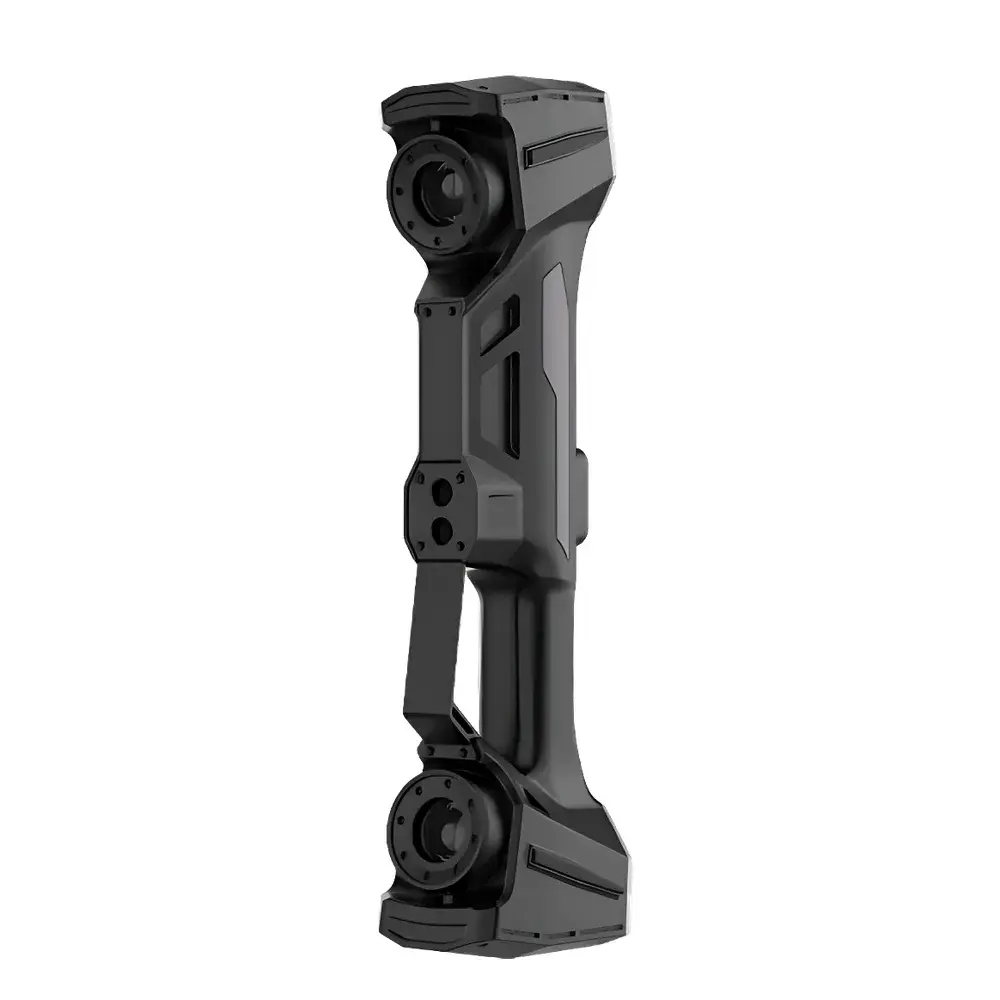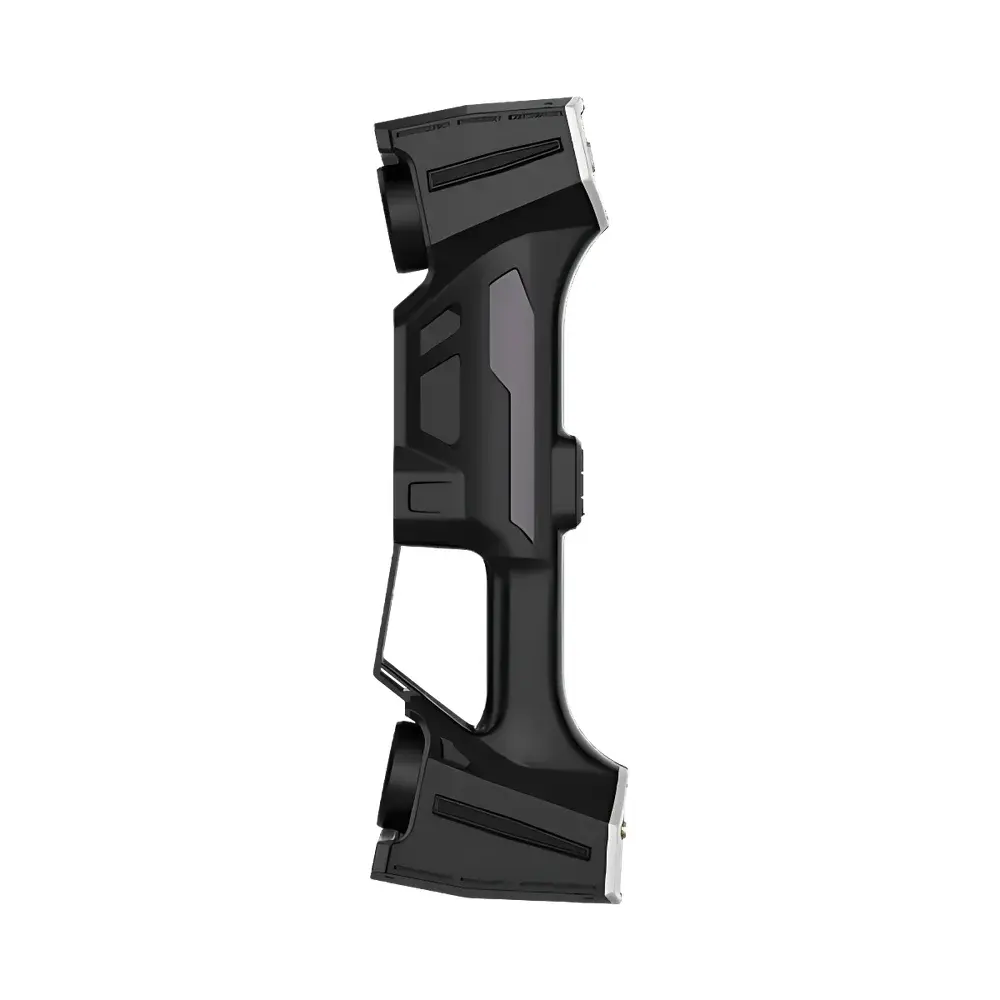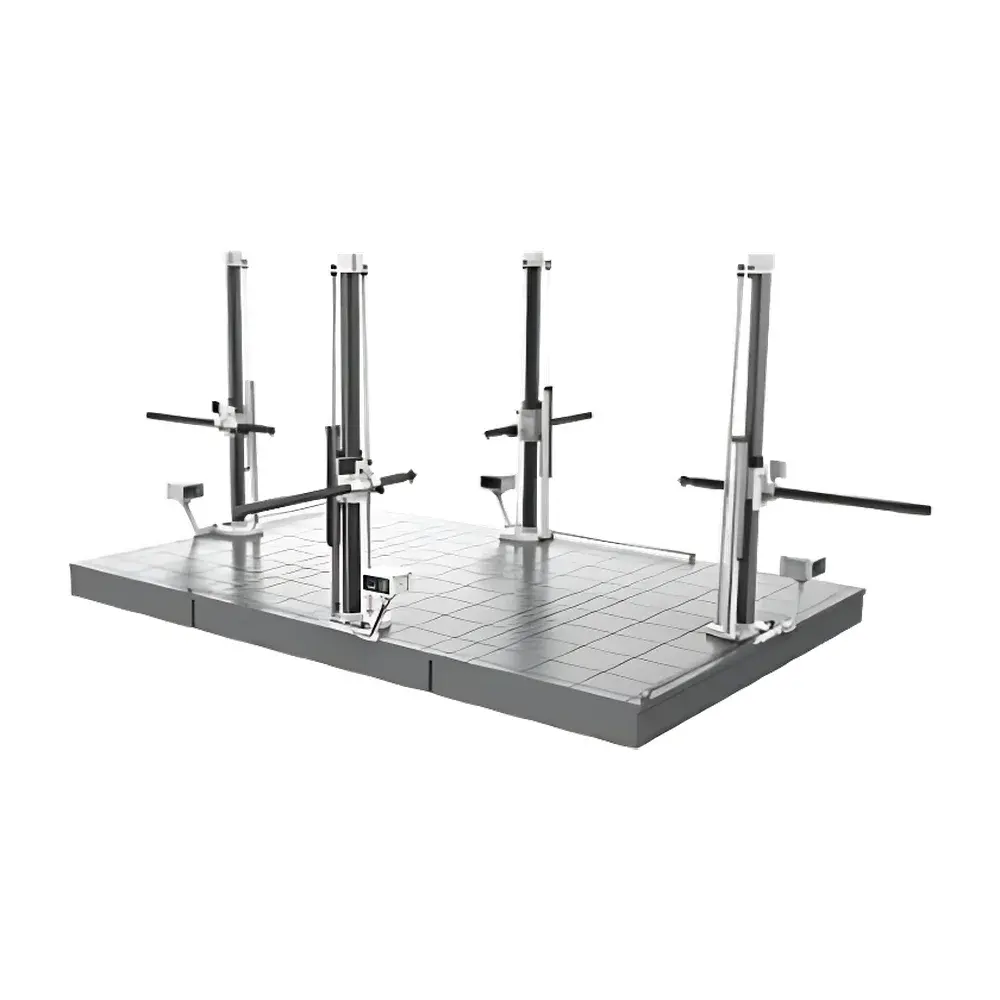
API Saturn Single-Arm 3D Scribing and Measurement Machine
| Brand | API |
|---|---|
| Origin | Sichuan, China |
| Manufacturer Type | Authorized Distributor |
| Country of Origin | China |
| Model | Saturn |
| Operation Mode | Manual |
| Instrument Type | Horizontal Configuration |
| Measurement Range | Custom-Engineered per On-Site Installation Requirements |
| Measurement Accuracy | Available upon Technical Consultation |
| Structural Frame | High-Strength Anodized Aluminum Alloy (Natural & Artificial Aging) |
| X-Axis Guidance | Low-Friction Precision Linear Bearing System with 90° Directional Flexibility |
| Y-Axis Support | Central Steel Reinforcement with Micrometer-Level Fine Adjustment |
| Sensor System | IP65-Rated Absolute Position Encoders Compatible with Magnetic Scale Technology |
| Display | Real-Time XYZ Coordinate Readout (Metric Units) |
| Standard Tooling | Interchangeable Scribing Probe Assembly for Marking and Contact Metrology |
Overview
The API Saturn Single-Arm 3D Scribing and Measurement Machine is a manually operated, horizontal-coordinate metrology platform engineered for precision layout, scribing, and dimensional verification of large-scale industrial components. Unlike conventional fixed-axis scribers, the Saturn system integrates a dynamically reconfigurable single-arm kinematic architecture with a modular slotted granite or steel worktable—enabling unrestricted two-dimensional translation (X and Y) of the probe head along pre-defined T-slots. This design eliminates the need for multiple setups or auxiliary positioning fixtures when marking complex, oversized parts such as aerospace wing ribs, ship hull segments, wind turbine blades, or heavy machinery frames. The machine operates on fundamental principles of Cartesian coordinate metrology: positional data from high-reliability magnetic linear encoders are processed in real time to resolve probe tip coordinates with traceable repeatability. Its structural integrity derives from thermally stable, artificially aged 6061-T6 aluminum alloy for the vertical column and horizontal arm—optimized for rigidity-to-weight ratio while ensuring compatibility with magnetic scale systems free from ferromagnetic interference.
Key Features
- Single-arm kinematic design with full X–Y planar mobility across a slotted reference table—supports complete four-face scribing of monolithic parts without repositioning.
- X-axis guidance mechanism featuring dual-bearing linear rails and pivot-assisted directional switching—enables smooth 90° transitions between longitudinal and transverse motion axes with minimal operator effort.
- Y-axis cantilever support reinforced by central hardened steel spine and calibrated micrometer adjustment—effectively suppresses deflection under probe loading, maintaining geometric fidelity across extended reach.
- IP65-rated absolute-position magnetic linear encoders—resistant to dust, coolant mist, and ambient shop-floor contaminants while delivering stable signal output over temperature fluctuations.
- Natural and artificial aging treatment of all primary aluminum structural members—reduces internal stress and improves long-term dimensional stability.
- Deep anodized surface finish (≥25 µm thickness) on load-bearing components—enhances wear resistance, corrosion protection, and electrical insulation for reliable sensor integration.
- Real-time three-axis digital coordinate display (mm/µm resolution)—synchronized with probe position for immediate verification during manual traversal.
Sample Compatibility & Compliance
The Saturn platform accommodates workpieces up to 15 m in length and 4 m in width when integrated with custom-engineered base tables—making it suitable for Class I and II large-part metrology applications per ISO 10360-2 and VDI/VDE 2617 Part 8. Its non-contact encoder system and non-magnetic aluminum construction ensure compliance with electromagnetic compatibility requirements in environments governed by IEC 61326-1. While not certified to ISO 17025 as a standalone calibration instrument, the Saturn serves as a validated layout tool within GLP-compliant manufacturing workflows where traceability is maintained through periodic verification against master artifacts (e.g., gauge blocks, step gauges, or laser interferometer references). It supports documentation alignment with ASME B89.1.12M and ANSI/ASQ Z1.4 sampling plans for incoming inspection and first-article verification.
Software & Data Management
The Saturn operates via embedded firmware with no external PC dependency—coordinates are displayed locally on a ruggedized LCD interface with backlighting for low-illumination conditions. Optional RS-232 or USB-C output enables export of XYZ point arrays to third-party CAD/CAM or statistical process control (SPC) platforms. All positional logs include timestamp, operator ID (manually entered), and environmental flagging (e.g., “ambient temp: 22.3°C”). Audit trail functionality complies with FDA 21 CFR Part 11 requirements when paired with validated enterprise software—supporting electronic signatures, change history, and read-only archival modes for quality records retention.
Applications
- Aerospace structural assembly: Layout of fastener hole patterns, rib flange cuts, and skin contour references on wing boxes and fuselage sections.
- Power generation: Scribing of blade root interfaces, turbine casing split-line markings, and generator stator core alignment features.
- Railway manufacturing: Dimensional verification and marking of bogie frames, carbody side panels, and coupler mounting surfaces.
- Heavy equipment fabrication: Layout of weld joint preparations, machining datums, and lifting lug placements on excavator booms and crane jibs.
- Tooling and fixture verification: Validation of CNC jig plate slot locations, drill bushing centers, and clamping element geometry prior to production release.
FAQ
Is the Saturn system compatible with automated data capture or CNC integration?
No—the Saturn is a manually operated system designed for human-guided scribing and measurement. It does not support servo-driven motion or G-code execution. However, its coordinate output can be logged externally for downstream automation workflows.
What is the typical lead time for site-specific customization?
Standard configurations ship within 6–8 weeks; custom table integration and environmental adaptation (e.g., cleanroom-rated enclosures or anti-vibration mounts) require 12–16 weeks from engineering sign-off.
Does API provide calibration services for the Saturn system?
Yes—API offers factory recalibration and on-site verification services aligned with ISO/IEC 17025-accredited procedures, including traceable certificate issuance and uncertainty budgeting per GUM guidelines.
Can the scribing probe be replaced with alternative metrology sensors?
The standard probe mount follows ISO 8015 M8 thread specification, allowing interchange with tactile styli, dial indicators, or capacitive displacement sensors—subject to mechanical clearance and weight limitations (<150 g).
What maintenance intervals are recommended for sustained accuracy?
Biannual inspection of encoder tape adhesion, rail lubrication (per ISO 6743-9 class L-XCBB), and structural bolt torque verification (per ASTM F2413) is advised. No routine recalibration is required unless physical impact or thermal shock is suspected.