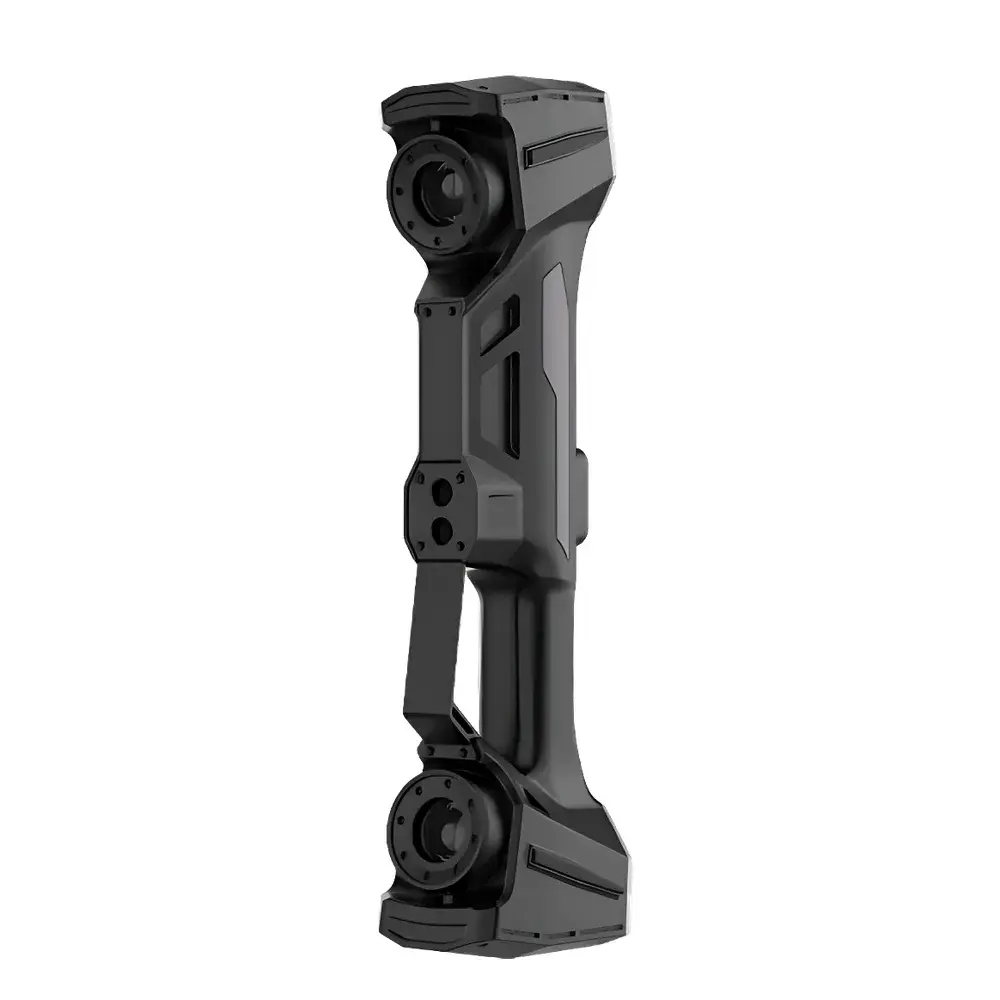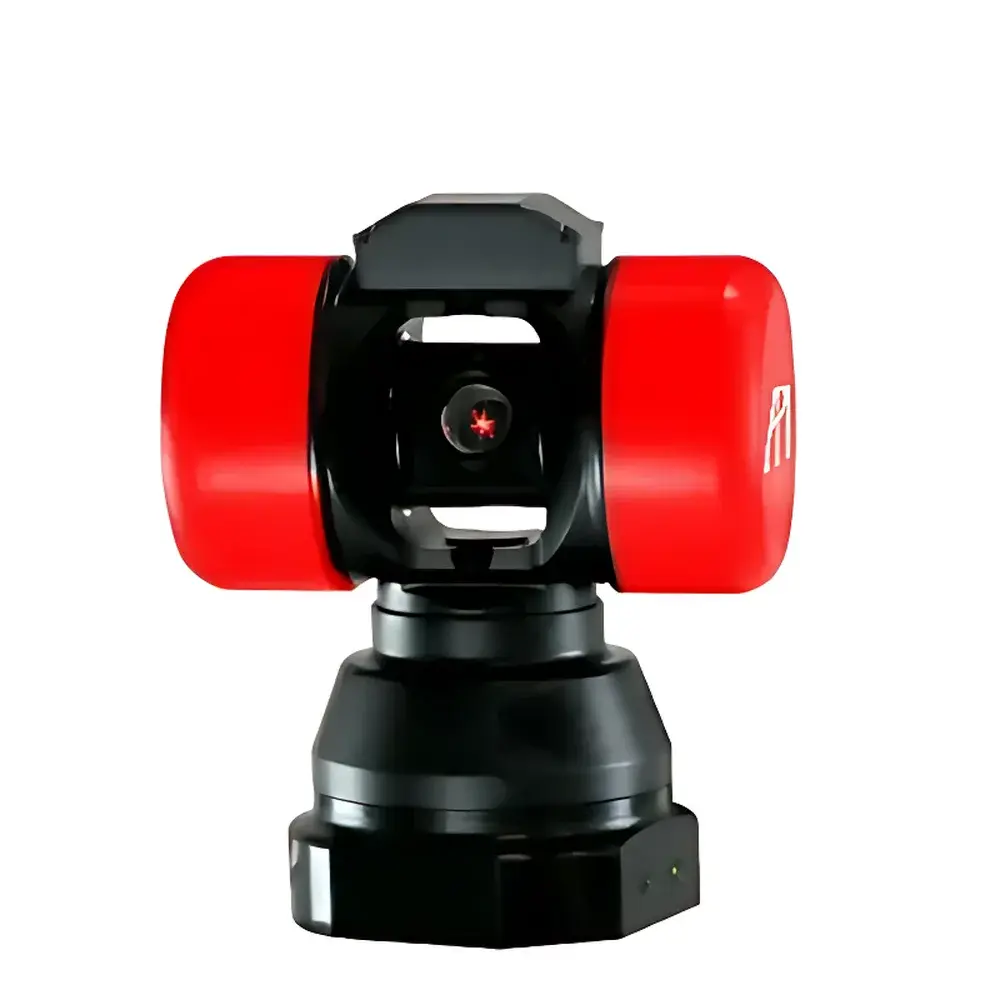
API SmartTRACK Sensor (STS) Six-Dimensional Metrology Probe
| Origin | USA |
|---|---|
| Manufacturer Type | Authorized Distributor |
| Origin Category | Imported |
| Model | STS |
| Price Range | USD 68,000 – 136,000 |
| Maximum Measurement Range | 160 m |
| Measurement Resolution | 0.08 µm |
| Volumetric Accuracy | 10 µm + 5 µm/m |
| Azimuth Rotation | ±360° |
| Elevation Pitch | ±55° |
| Roll Angle Range | Continuous (Unrestricted) |
Overview
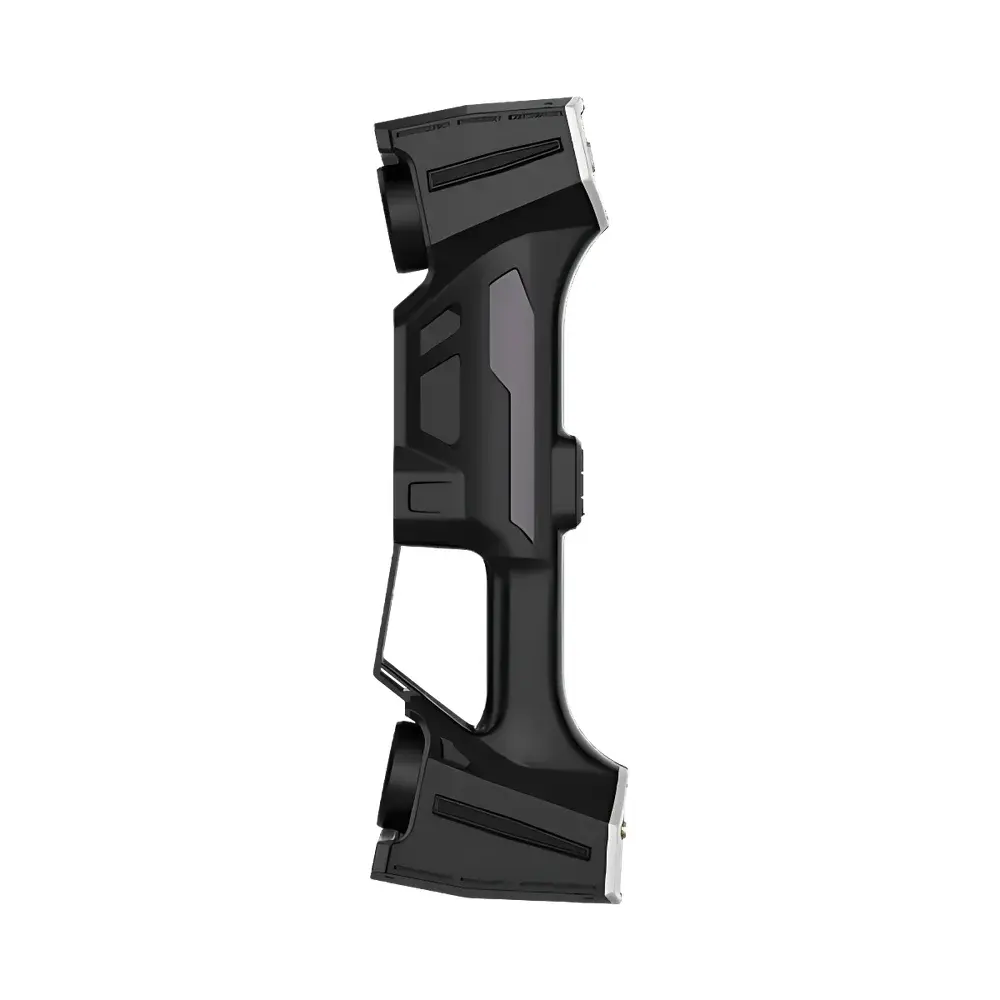
The API SmartTRACK Sensor (STS) Six-Dimensional Metrology Probe is a precision-engineered, lightweight accessory designed exclusively for integration with API laser trackers. Unlike conventional spherically mounted retroreflectors (SMRs), the STS operates on a six-degree-of-freedom (6DoF) measurement principle based on real-time interferometric distance measurement combined with high-stability inertial angular sensing and calibrated kinematic coupling geometry. This architecture enables simultaneous acquisition of three orthogonal position coordinates (X, Y, Z) and three orientation angles (pitch, yaw, roll) in a single, non-contact measurement event—without requiring repositioning, multi-station setups, or post-processing registration. The sensor’s core function is to extend the laser tracker’s native 3D point measurement capability into full spatial pose metrology, making it indispensable for applications demanding traceable, dynamic, and geometrically complete characterization of large-scale industrial assets.
Key Features
- True 6DoF output per measurement cycle: delivers X, Y, Z, pitch, yaw, and roll as a synchronized, time-stamped dataset
- Sub-micron resolution: 0.08 µm linear displacement resolution ensures detection of minute positional deviations in alignment-critical workflows
- Volumetric accuracy certified to ISO 10360-12 and ASME B89.4.19: specified as 10 µm + 5 µm/m, validated across the full 160 m spherical envelope
- Full azimuthal rotation (±360°) and wide elevation range (±55°) support unobstructed tracking in complex factory or aerospace assembly environments
- Continuous roll capability eliminates mechanical stop limitations—enabling uninterrupted measurement during rotational motion of targets such as robotic end-effectors or rotating spindles
- Integrated thermal compensation and vibration-dampened housing ensure stable performance under typical shop-floor ambient fluctuations (15–30 °C, <70% RH)
- Lightweight aluminum-magnesium alloy construction (≤1.2 kg) facilitates rapid mounting on fixtures, machine tools, or robotic platforms without introducing significant inertial loading
Sample Compatibility & Compliance
The STS is compatible with all API Radian series laser trackers equipped with ADM and/or IFM measurement engines and running firmware v4.2 or later. It interfaces via a shielded, industrial-grade USB-C link supporting real-time data streaming at up to 200 Hz. The sensor meets electromagnetic compatibility requirements per EN 61326-1:2013 and carries CE marking for use within EU regulatory frameworks. Its measurement methodology adheres to foundational principles outlined in ISO/IEC 17025:2017 for calibration laboratories and supports audit-ready documentation required under FDA 21 CFR Part 11 when deployed in regulated manufacturing (e.g., aerospace MRO, medical device production). Calibration certificates are issued traceable to NIST standards, with uncertainty budgets explicitly reporting contributions from angular sensor drift, thermal expansion of the kinematic mount, and interferometric path-length error.
Software & Data Management
STS operation is fully integrated into API’s Metrology Software Suite (v6.0+), including SpatialAnalyzer® and the dedicated STS Configuration Utility. All six degrees of freedom are exported in standard formats—including ASCII CSV, XML-based DMIS 10.1, and STEP AP242—for seamless import into CAD-based GD&T analysis tools (e.g., PolyWorks Inspector, Verisurf). The software provides real-time visualization of pose deviation vectors, supports multi-sensor network synchronization (up to 8 STS units per tracker), and logs full audit trails with operator ID, timestamp, environmental metadata, and raw sensor diagnostics. Optional modules enable automated report generation compliant with AS9102 First Article Inspection requirements and GLP/GMP-aligned electronic signatures.
Applications
- Real-time six-axis pose monitoring of large-scale structures during aircraft wing assembly or ship hull alignment
- Dynamic volumetric calibration of five-axis CNC machining centers, including simultaneous verification of rotary table positioning accuracy and tool center point (TCP) repeatability
- Reference-frame establishment and error mapping for large-volume coordinate measuring machines (CMMs) exceeding 10 m in span
- End-effector pose validation and kinematic model refinement for collaborative and industrial robots operating in shared workspaces
- Thermal deformation tracking of civil infrastructure components (e.g., bridge girders, wind turbine towers) under operational load conditions
- Alignment verification of particle accelerator beamlines and synchrotron optical benches where sub-arcsecond angular stability is mandatory
FAQ
Is the STS compatible with non-API laser trackers?
No—the STS is a proprietary hardware-software system designed exclusively for API Radian-series trackers. It relies on custom firmware-level communication protocols and synchronized timing signals not available on third-party platforms.
Does the STS require periodic recalibration?
Yes. API recommends annual recalibration at an ISO/IEC 17025-accredited service center. Field verification using the included reference artifact kit is advised before critical measurement campaigns.
Can the STS measure while moving?
It supports quasi-static and low-acceleration dynamic measurements (≤2 g peak acceleration). For high-speed robotic motion, synchronization with external encoder or motion controller data is required to resolve motion blur artifacts.
What environmental conditions limit STS performance?
Operation is rated for 15–30 °C and relative humidity ≤70% non-condensing. Air turbulence, particulate contamination, or strong magnetic fields (>10 mT) may degrade angular sensor stability and must be mitigated on-site.
How is traceability maintained across the 160 m range?
Traceability is preserved through NIST-traceable interferometer calibration, validated against stabilized HeNe laser wavelength standards, with residual errors modeled and compensated in real time using temperature and pressure inputs from the tracker’s environmental sensor suite.