
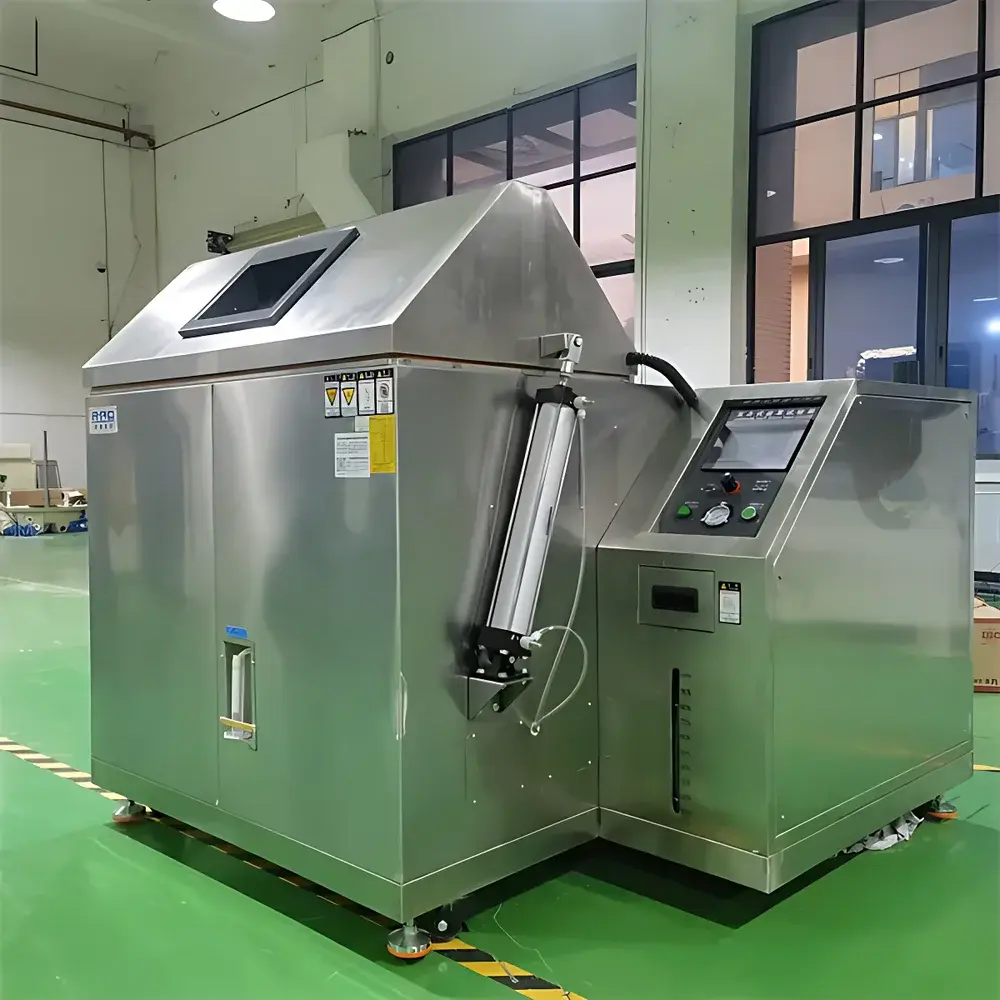
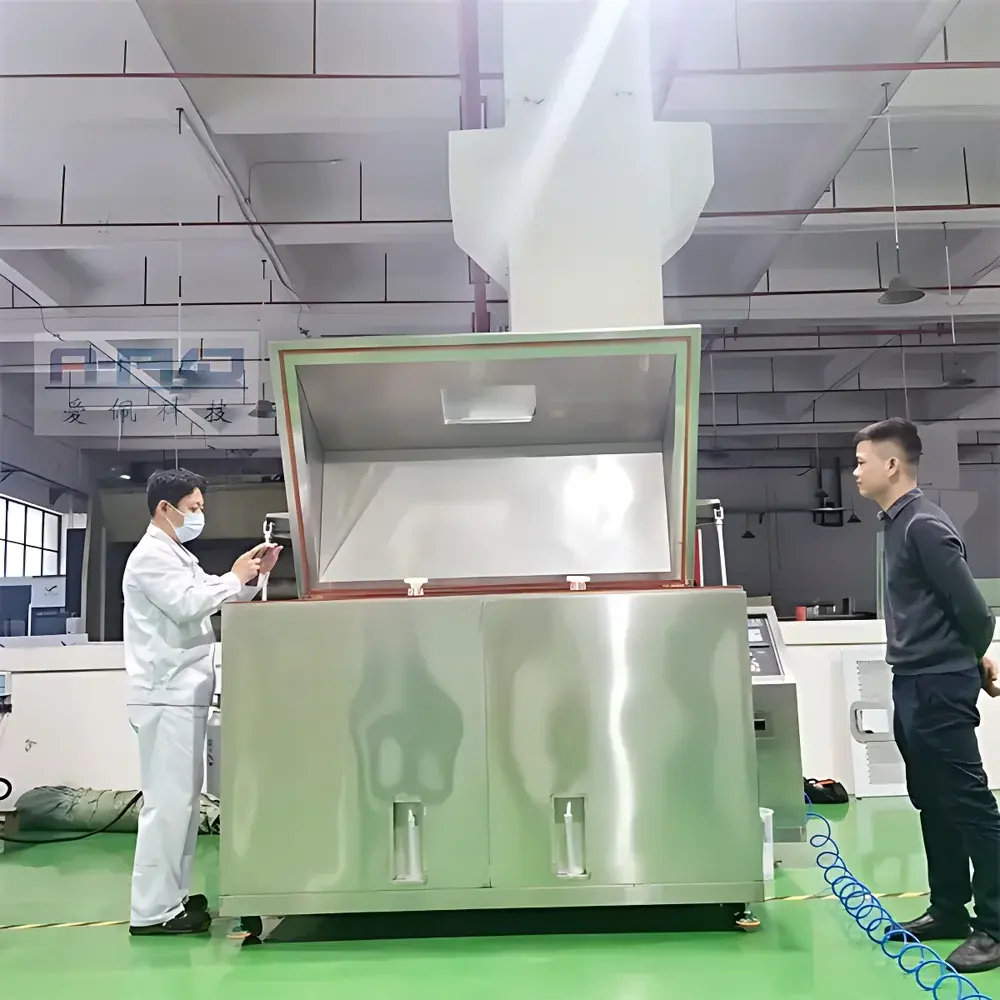
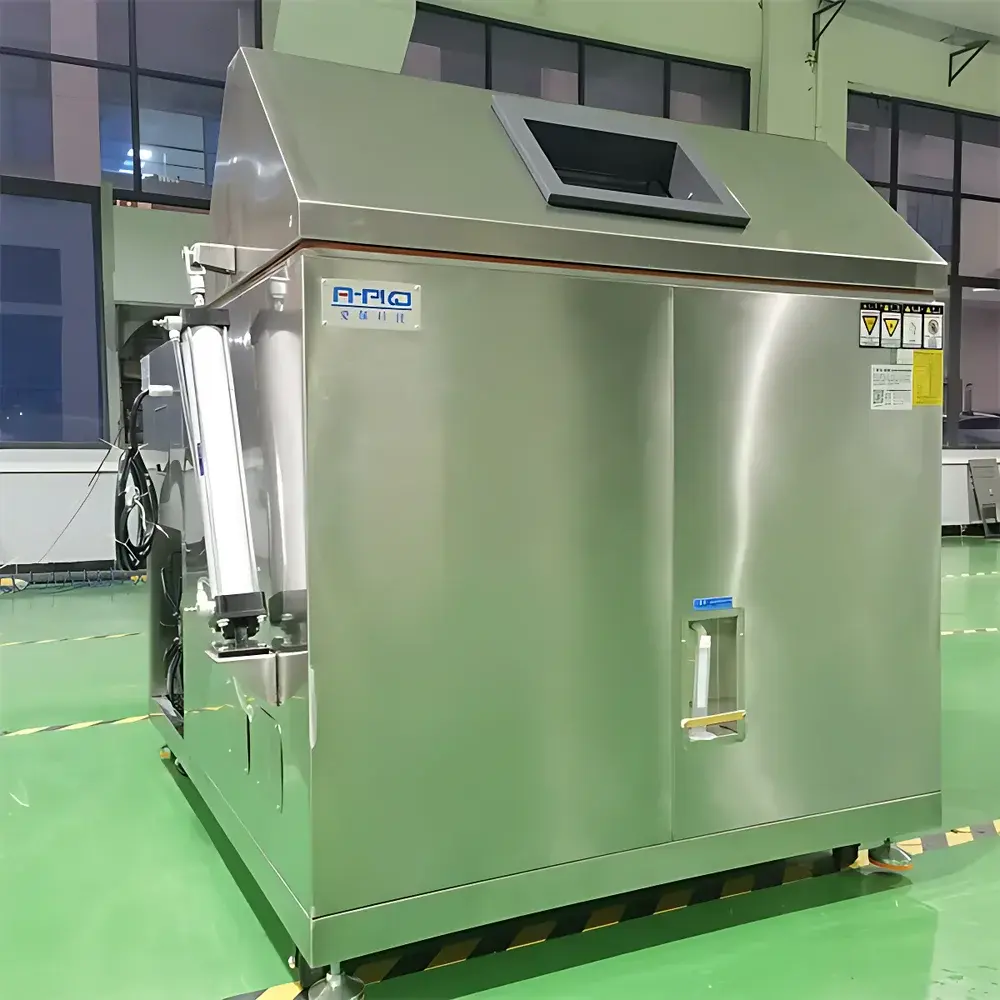
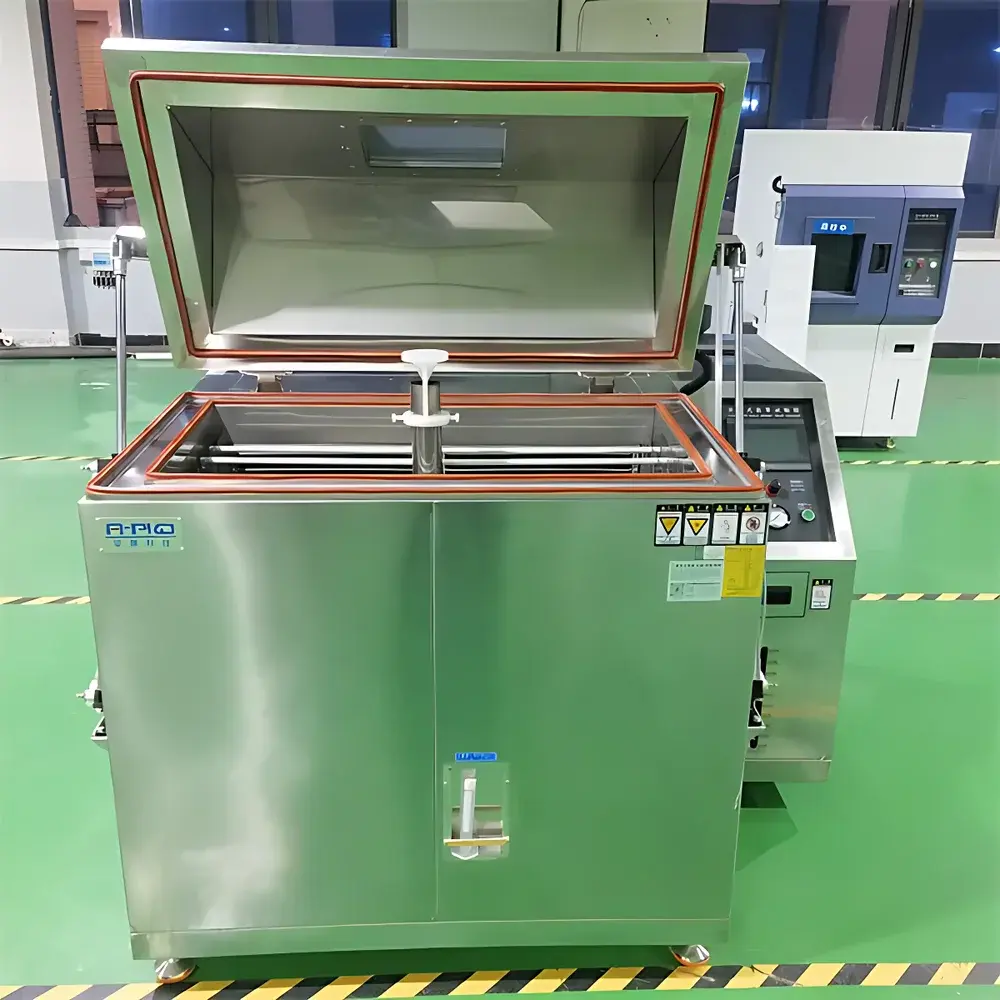
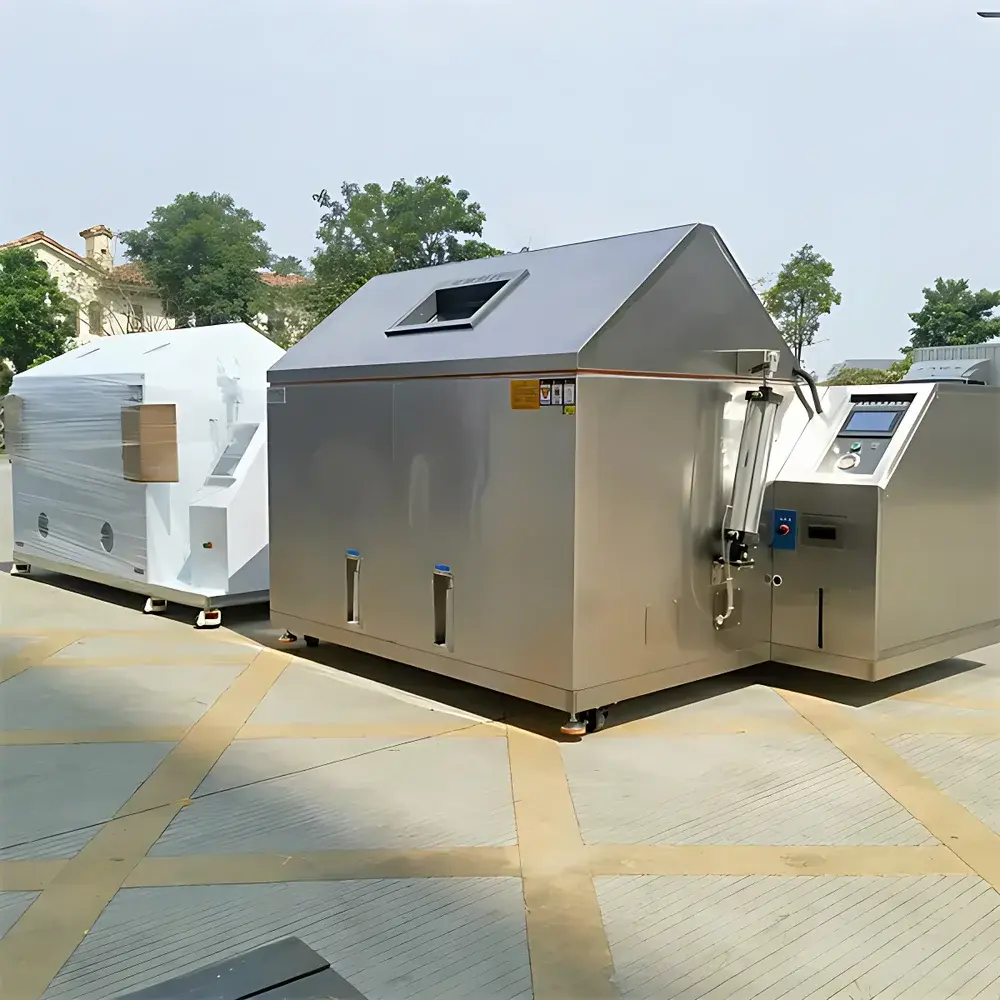
APKJ AP-YW-02 Advanced Composite Salt Spray Test Chamber
| Brand | APKJ |
|---|---|
| Origin | Guangdong, China |
| Manufacturer Type | Direct Manufacturer |
| Model | AP-YW-02 |
| Price Range | USD 7,000–14,000 (FOB) |
| Spray Mode | Continuous Spray Only |
| Spray Rate | 1–2 mL/80 cm²·h |
| Nozzle Pressure | 0.7–1.0 kg/cm² |
| Fog Removal Method | Air-Compression Exhaust |
| Salt Fog Deposition Rate | 1–2 mL/80 cm²·h |
| Temperature Range | −20°C to +70°C |
Overview
The APKJ AP-YW-02 Advanced Composite Salt Spray Test Chamber is an engineered environmental simulation system designed to evaluate the corrosion resistance of metallic materials, protective coatings, electronic enclosures, automotive components, and marine-grade hardware under accelerated salt-laden atmospheric conditions. Unlike basic salt spray chambers compliant solely with ASTM B117, this composite-grade chamber integrates precise thermal control (−20°C to +70°C) with high-fidelity fog generation—enabling sequential or combined testing protocols aligned with ISO 9227, JIS Z 2371, GB/T 10587, and cyclic corrosion standards such as ISO 16701 and ASTM G85 Annex A5. Its architecture supports both static salt fog exposure and multi-stage environmental cycling (e.g., salt spray → dry → humidity → freeze), making it suitable for R&D validation, QC release testing, and long-term durability assessment in aerospace, defense, and offshore industries.
Key Features
- Robust chamber construction using imported corrosion-resistant PVC for outer casing, high-strength PP for inner chamber walls, and optically clear, heat-stable polycarbonate (PC) for the hinged viewing lid—ensuring structural integrity and visual monitoring without degradation.
- Tower-type spray system equipped with non-crystallizing nozzles delivering uniform, sub-10 µm雾 droplets; integrated water filtration at suction inlet prevents nozzle clogging and ensures uninterrupted test continuity.
- Independent PID-controlled heating circuit with Pt100 platinum resistance sensors (±0.3°C accuracy) and nickel-chromium alloy heaters—guaranteeing temperature stability within ±0.5°C fluctuation and ±2°C uniformity across the working volume.
- Air-compression fog exhaust mechanism eliminates residual mist accumulation and prevents cross-contamination between test cycles; water-sealed chamber door design fully suppresses salt fog leakage (<0.1 mg/m³ ambient escape).
- Dual-mode operation capability: continuous salt fog generation (per ASTM B117) with programmable spray duration (1–9999 minutes/hours), plus optional integration-ready interfaces for future expansion into cyclic corrosion testing (CCT) configurations.
Sample Compatibility & Compliance
The AP-YW-02 accommodates test specimens up to 900 mm (D) × 2000 mm (W) × 600 mm (H), supporting standard sample racks (V-shaped and cylindrical rod fixtures), PCB trays, and custom mounting fixtures fabricated from titanium, PTFE-coated stainless steel, or ceramic. All internal fasteners, brackets, and fluid-handling components are either 316 stainless steel, brass, or fluoropolymer-lined—eliminating galvanic corrosion risks. The chamber meets mechanical and electrical safety requirements per IEC 61000-6-2/6-4 and complies with CE marking directives for laboratory equipment. While not pre-certified for FDA 21 CFR Part 11, its data logging architecture supports audit-ready traceability when paired with validated third-party software for GLP/GMP-regulated environments.
Software & Data Management
The chamber operates via a 7-inch full-color TFT touchscreen HMI with embedded microcontroller-based PID logic. The interface provides real-time display of chamber temperature, spray status, elapsed time, and system fault diagnostics—with bilingual (English/Chinese) menu navigation and password-protected parameter locking. RS232 serial output enables direct connection to host PCs for automated data capture using CSV-compatible SCADA tools. Optional Ethernet upgrade supports Modbus TCP communication for integration into centralized lab management systems (LIMS). All operational logs—including start/stop timestamps, setpoint deviations, and alarm events—are stored internally for ≥30 days and exportable via USB flash drive. Calibration records and sensor verification reports adhere to ISO/IEC 17025 documentation conventions.
Applications
This chamber serves critical roles in material qualification workflows across multiple sectors: validating zinc-nickel electroplated fasteners for automotive OEMs per VW PV1210; assessing anti-corrosion performance of aluminum alloy housings used in 5G base station enclosures; verifying conformal coating integrity on printed circuit assemblies per IPC-CC-830B; evaluating marine-grade stainless steels (e.g., UNS S32205) under simulated coastal exposure; and supporting MIL-STD-810H Method 509.5 (Salt Fog) compliance testing for defense electronics. Its extended low-temperature capability (−20°C) further permits hybrid testing sequences involving freeze-thaw transitions post-salt exposure—a key requirement in wind turbine blade coating validation.
FAQ
Does the AP-YW-02 support cyclic corrosion testing (CCT) out of the box?
No—it is configured for continuous salt spray operation per ASTM B117 and ISO 9227. Cyclic functionality requires hardware retrofitting (e.g., humidity module, refrigeration unit) and firmware upgrade, available as APKJ’s AP-YW-CCT Expansion Kit.
What is the recommended maintenance interval for the spray nozzles and filtration system?
Inspect and clean nozzles weekly; replace every 6 months under daily use. Replace inline water filters every 3 months or after 500 L of saline solution processed.
Can the chamber operate with alternative test solutions besides 5% NaCl?
Yes—compatible with CuCl₂-accelerated solutions (ASTM G85 Annex A2), acidic salt mists (ISO 9227 AASS), and neutral pH synthetic seawater formulations—provided solution pH and conductivity remain within pump and nozzle material compatibility limits.
Is third-party calibration certification included with shipment?
A factory-as-built temperature uniformity report and spray deposition verification certificate are provided. NIST-traceable calibration by an ILAC-accredited lab is available as an optional add-on service.
What power supply configuration is required for stable operation?
Dual-voltage input: AC 220 V ±10%, 50 Hz (single-phase) or AC 380 V ±10%, 50 Hz (three-phase), with dedicated 32 A circuit breaker and grounded TN-S earthing system.



