
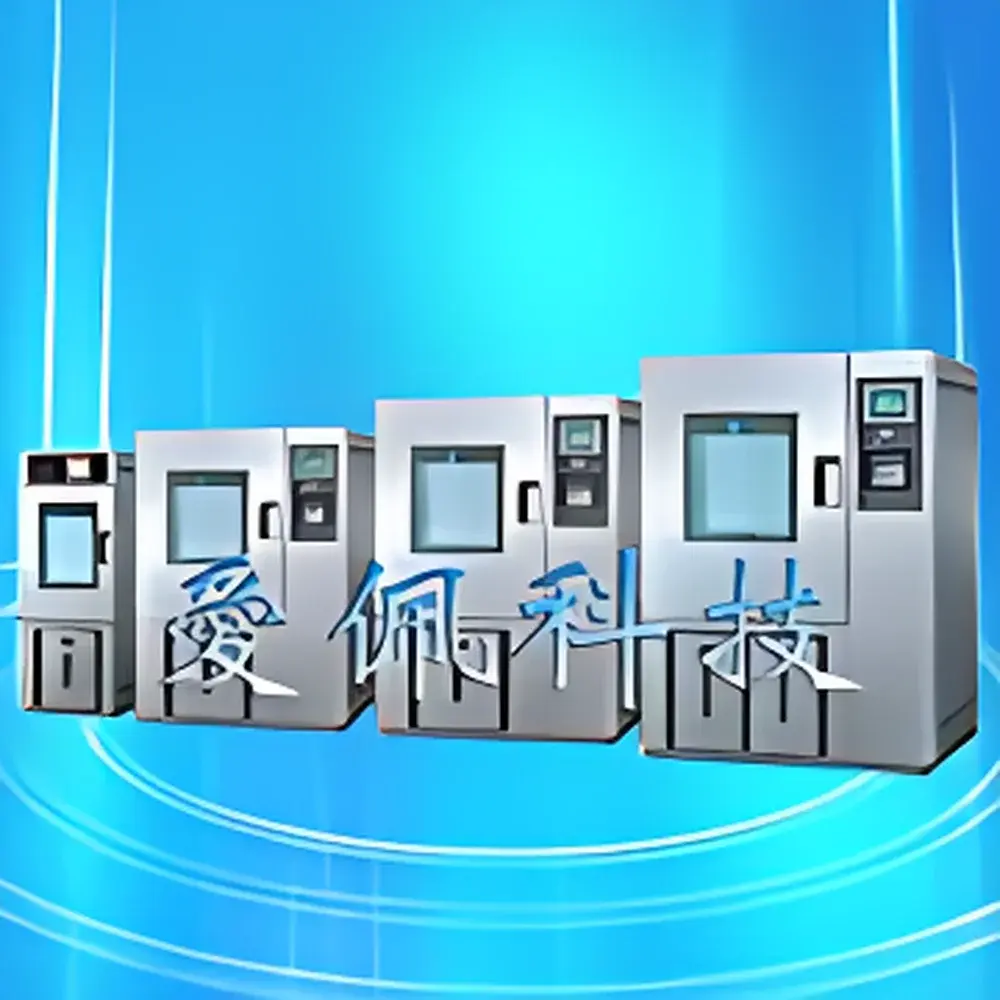
APKJ APHX Series Programmable Temperature and Humidity Environmental Test Chamber
| Brand | APKJ |
|---|---|
| Origin | Guangdong, China |
| Manufacturer Type | Direct Manufacturer |
| Country of Origin | China |
| Model | APHX |
| Pricing | Upon Request |
| Temperature Range | RT+10°C to 100°C (standard) |
| Humidity Range | 20–98% RH |
| Temperature Uniformity | ±2.0°C |
| Humidity Uniformity | ±3.0% RH |
| Temperature Stability | ±0.2°C |
| Humidity Stability | ±2.5% RH |
| Heating Rate | ~3°C/min (RT to +150°C in ~40 min) |
| Cooling Rate | ~1°C/min (RT to −70°C in ~100 min) |
| Internal Volume Options | 80 L to 1000 L |
| Construction | Interior – SUS304 stainless steel |
| Control System | Imported microprocessor-based temperature & humidity controller with direct %RH display, PT100 platinum resistance sensors, ±0.1°C/±0.1% RH setpoint & indication accuracy |
| Safety Features | Independent over-temperature cutoff, dry-run protection, water shortage detection, liquid level monitoring, compressor overpressure/overheat/overcurrent protection, emergency stop, no-fuse breakers |
| Power Supply | 1φ3w AC220V ±10%, 50/60 Hz or 3φ5w AC380/415V ±10%, 50/60 Hz |
| Standard Accessories | Φ50 mm cable port with cover, 2 adjustable stainless steel shelves, 5 pieces of humidity wick cloth, interior LED lighting, full operation manual |
Overview
The APKJ APHX Series Programmable Temperature and Humidity Environmental Test Chamber is an engineered solution for accelerated environmental stress testing under controlled thermal and hygroscopic conditions. Designed in accordance with international test standards—including IEC 60068-2-1 (cold), IEC 60068-2-2 (dry heat), IEC 60068-2-30 (damp heat, cyclic), and ISO 16750-4 (road vehicles)—this chamber enables precise simulation of real-world climatic exposure profiles. Its core function relies on dual-loop PID-controlled heating, refrigeration, and humidification subsystems operating in coordinated feedback with high-stability PT100 resistance temperature detectors and capacitive humidity sensors. The chamber’s forced-air circulation architecture—featuring a low-noise, high-torque centrifugal blower and wide-band airflow ducting—ensures uniform thermal distribution across the working volume, minimizing spatial gradients that could compromise test validity. Intended for use in aerospace component validation, automotive ECUs qualification, consumer electronics reliability screening, and materials aging studies, the APHX platform supports both steady-state and programmable ramp-soak-cycling profiles with reproducible repeatability.
Key Features
- Robust dual-wall construction: Interior chamber fabricated from mirror-finished SUS304 stainless steel; exterior housing available in either powder-coated A3 steel or optional full SUS304 for corrosion-prone environments.
- Precision climate control: Microprocessor-based integrated controller with independent temperature/humidity setpoints, real-time graphical trend logging, and user-defined multi-step cycling programs (up to 99 segments per profile).
- High-fidelity sensor suite: Class A PT100 platinum resistance thermometers (IEC 60751) and NIST-traceable capacitive RH sensors ensure measurement integrity across the full operational envelope.
- Thermally optimized insulation: 100–150 mm thick composite insulation layer comprising rigid polyurethane foam (λ ≤ 0.022 W/m·K) and glass wool minimizes thermal bridging and energy consumption.
- Fail-safe safety architecture: Redundant over-temperature cut-off (independent mechanical thermostat), anti-dry-run humidifier protection, automatic water-level monitoring, and compressor fault diagnostics compliant with IEC 61000-6-2 EMC immunity requirements.
- Ergonomic access & observation: Large double-glazed viewing window with internal LED illumination; smooth-operation door seal with non-reactive handle; optional Φ50 mm through-wall port with removable cap for external signal/power feedthrough.
Sample Compatibility & Compliance
The APHX chamber accommodates samples ranging from printed circuit assemblies and polymer enclosures to lithium-ion battery modules and optical sensor housings. Internal dimensions span 50×50×40 cm (80 L) to 100×100×100 cm (1000 L), supporting standard test specimens per ASTM D4332, ISO 4892-2, and MIL-STD-810H Method 502.2. All models meet CE marking requirements under the EU Machinery Directive 2006/42/EC and Electromagnetic Compatibility Directive 2014/30/EU. Optional configurations support GLP-compliant audit trails, electronic signature capability, and 21 CFR Part 11–ready data archiving when paired with APKJ’s optional validation package (IQ/OQ/PQ documentation, temperature mapping reports, and uncertainty budgets per ISO/IEC 17025).
Software & Data Management
The embedded controller provides local programming via a 7-inch TFT color touchscreen with intuitive icon-driven navigation. Full profile definition—including ramp rates, dwell durations, humidity modulation, and conditional branching—is supported without external software. Optional USB export enables CSV-formatted time-series data (temperature, humidity, alarm events, system status) for post-test analysis in MATLAB, Python, or JMP. For networked lab environments, the Ethernet-enabled variant supports Modbus TCP communication, enabling integration into centralized MES or LIMS platforms. Audit trail functionality logs all parameter changes, user logins, and system alarms with timestamp and operator ID—fully traceable for FDA or ISO 13485 quality system audits.
Applications
- Aerospace: Thermal cycling of avionics housings per DO-160 Section 4.2; condensation resistance evaluation of cockpit displays.
- Automotive: Validation of ADAS camera modules under combined high-humidity/high-temperature soak per ISO 16750-4; battery thermal runaway propagation studies.
- Electronics: Reliability assessment of conformal-coated PCBs using damp heat cyclic testing (IEC 60068-2-30); solder joint fatigue modeling via accelerated thermal cycling.
- Pharmaceutical packaging: Stability testing of blister packs and cold-chain containers under ICH Q1A(R2) recommended conditions (25°C/60% RH, 30°C/65% RH).
- Materials science: Hygrothermal aging of fiber-reinforced composites; moisture diffusion coefficient determination in polymer films.
FAQ
What temperature and humidity ranges are standard versus optional?
Standard configuration covers RT+10°C to 100°C and 20–98% RH. Extended low-temperature options include −20°C, −40°C, −60°C, and −70°C variants, all with corresponding humidity capability down to 20% RH.
Can the chamber be validated for GMP or ISO 17025 compliance?
Yes—APKJ provides IQ/OQ/PQ documentation packages, including as-installed temperature/humidity mapping reports, uncertainty analysis per GUM (JCGM 100), and calibration certificates traceable to NIM (China) or DKD (Germany).
Is remote monitoring and control supported?
Ethernet and RS485 interfaces are standard; optional cloud-based telemetry (via MQTT or HTTPS) enables real-time chamber status, alarm notifications, and historical data retrieval through secure web dashboard.
What maintenance intervals are recommended for long-term reliability?
Compressor oil and refrigerant checks every 24 months; humidifier tank cleaning weekly; air filter replacement every 3 months; annual verification of sensor calibration and door gasket integrity.
Are non-standard internal dimensions or custom test profiles available?
Yes—APKJ offers full engineering customization: bespoke chamber geometry, specialized airflow configurations, integrated vibration tables, and proprietary test sequence scripting upon request.



