
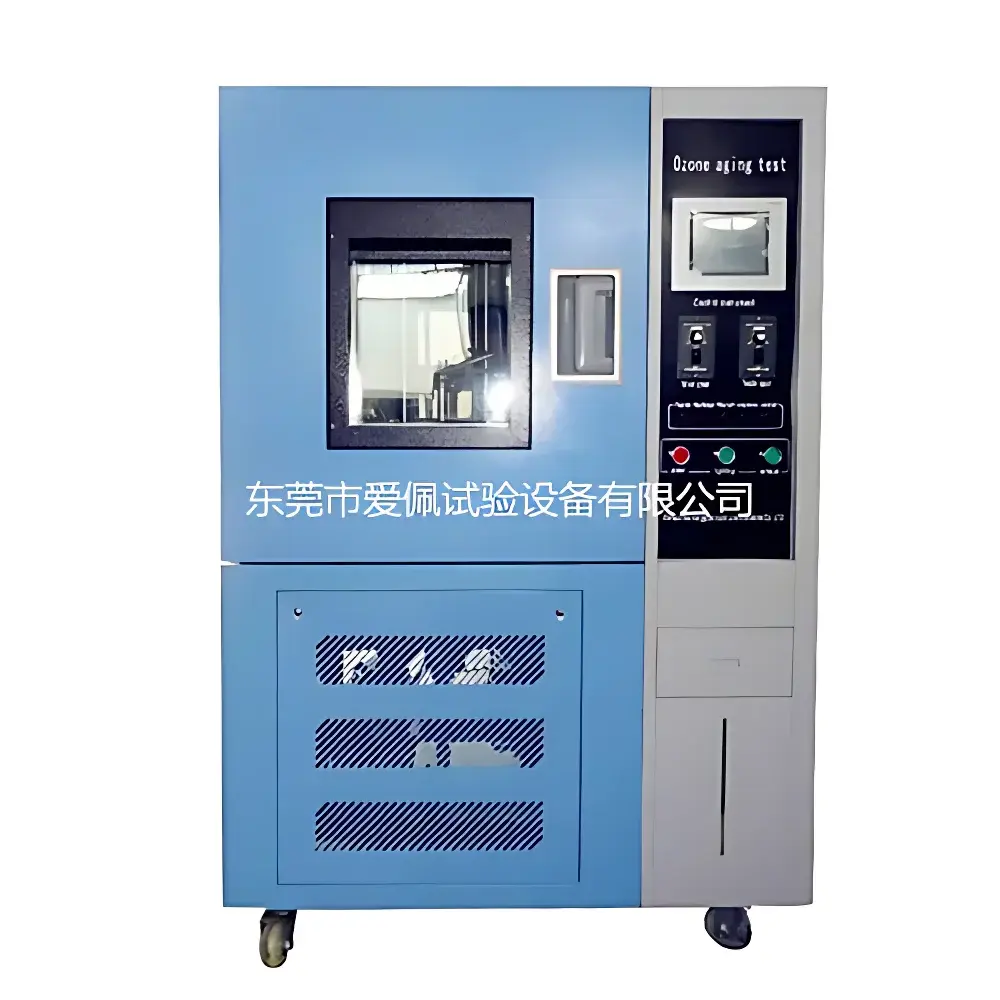
Apkji AP-GD-7 Programmable Environmental Test Chamber for Temperature & Humidity Cycling
| Key | Brand: Apkji |
|---|---|
| Origin | Guangdong, China |
| Manufacturer Type | OEM/ODM Manufacturer |
| Country of Origin | China |
| Model | AP-GD-7 |
| Pricing | Upon Request |
Overview
The Apkji AP-GD-7 Programmable Environmental Test Chamber is an engineered solution for accelerated environmental stress testing of materials, components, and finished products under precisely controlled temperature and humidity profiles. Designed to comply with international test standards—including IEC 60068-2-1 (cold), IEC 60068-2-2 (dry heat), IEC 60068-2-30 (damp heat, cyclic), and ISO 16750-4 (road vehicles)—this chamber implements a balanced temperature-humidity control (BTHC) methodology. It utilizes dual-loop PID regulation with independent control of refrigeration, electric heating, and steam/humidification subsystems to achieve stable, repeatable thermal and hygrothermal transitions. The chamber supports both steady-state conditioning and complex multi-step cycling protocols, enabling validation of product reliability across automotive, aerospace, electronics, and medical device supply chains.
Key Features
- Robust chamber construction with exterior panels in either brushed SUS304 stainless steel or electrostatically painted Baosteel cold-rolled steel, ensuring corrosion resistance and long-term structural integrity.
- Double-layer insulated walls filled with high-density ultra-fine glass wool (thermal conductivity ≤ 0.035 W/m·K), minimizing energy loss and improving temperature uniformity.
- Large observation window with integrated LED lighting, permitting real-time visual monitoring of test specimens without interrupting the environmental profile.
- Korean-made programmable touch-screen controller with LCD interface, supporting up to 100 programmable segments, 999 cycles, and user-defined ramp/soak sequences for temperature and relative humidity.
- Optimized refrigeration system featuring hermetically sealed Tecumseh (or equivalent) compressors, cascade low-temperature circuitry for sub-zero operation down to –80 °C, and automatic defrost management.
- Nichrome-sheathed stainless steel heating elements with over-temperature cut-off protection, delivering precise low-temperature rise rates (2–3 °C/min) and minimal overshoot.
- Integrated safety architecture including over-current, short-circuit, ground-fault, compressor high-pressure, and chamber over-temperature interlocks—all configured to de-energize critical systems and trigger audible alarms upon fault detection.
Sample Compatibility & Compliance
The AP-GD-7 accommodates a wide range of sample geometries and mass loads within its standardized internal workspace (e.g., 500 × 600 × 750 mm for model AP-HX-2251). Its airflow design ensures uniform distribution per IEC 60068-3-5, with temperature uniformity ≤ ±2.0 °C and stability maintained at ±0.5 °C across the working volume. Relative humidity control spans 20–98% RH (at +25 to +85 °C), verified per GB/T 5170.5–1996 and ISO 16750-4 Annex D. The chamber meets essential requirements of GB 10589–89, GB 10592–89, GB 11158–89, and GB 2423 series standards—making it suitable for qualification testing under GLP, ISO/IEC 17025-accredited laboratories, and supplier audit programs aligned with automotive OEM specifications (e.g., Ford WERS, GM GMW3172).
Software & Data Management
The embedded controller provides RS-485/RS-232 communication interfaces compatible with Modbus RTU protocol, enabling integration into centralized lab management systems (LIMS) or SCADA platforms. Optional PC-based software allows remote parameter setting, real-time data logging (timestamped temperature/humidity values at user-selectable intervals), and export to CSV or PDF report formats. Audit trail functionality records all operator actions—including program edits, start/stop commands, and alarm events—with time stamps and user IDs, satisfying traceability requirements under FDA 21 CFR Part 11 when deployed in regulated environments.
Applications
- Environmental stress screening (ESS) of printed circuit boards (PCBs) and electronic assemblies prior to burn-in.
- Validation of packaging integrity for pharmaceutical primary containers under ICH Q1A(R2) stability conditions.
- Thermal cycling fatigue assessment of adhesives, composites, and polymer-based structural components.
- Corrosion resistance evaluation of coated metals and fasteners per ASTM B117 and ISO 9227 supplementary protocols.
- Pre-compliance testing for MIL-STD-810H Method 502.7 (low temperature), Method 503.6 (temperature shock), and Method 507.6 (humidity).
FAQ
What temperature and humidity ranges does the AP-GD-7 support?
Standard configurations operate from –80 °C to +150 °C with humidity control from 20% to 98% RH. Specific range limits depend on selected model variant and optional accessories.
Is the chamber compliant with ISO/IEC 17025 calibration requirements?
Yes—the system’s temperature and humidity sensors are calibrated traceable to NIM (China National Institute of Metrology) standards; full calibration documentation and uncertainty budgets are provided upon request.
Can the controller store multiple test programs simultaneously?
Yes—the onboard memory retains up to 100 distinct multi-segment programs, each supporting up to 999 cycles and conditional branching logic for advanced test sequencing.
What power supply specifications are required for installation?
Three-phase AC 380 V ±10%, 50 Hz is standard; single-phase variants (220 V) are available for select models. Electrical service must include dedicated grounding per IEC 60364-5-54.
Does Apkji provide validation documentation (IQ/OQ/PQ)?
Yes—factory-verified Installation Qualification (IQ) and Operational Qualification (OQ) protocols are included. Performance Qualification (PQ) support is available through on-site execution by certified field engineers.



