
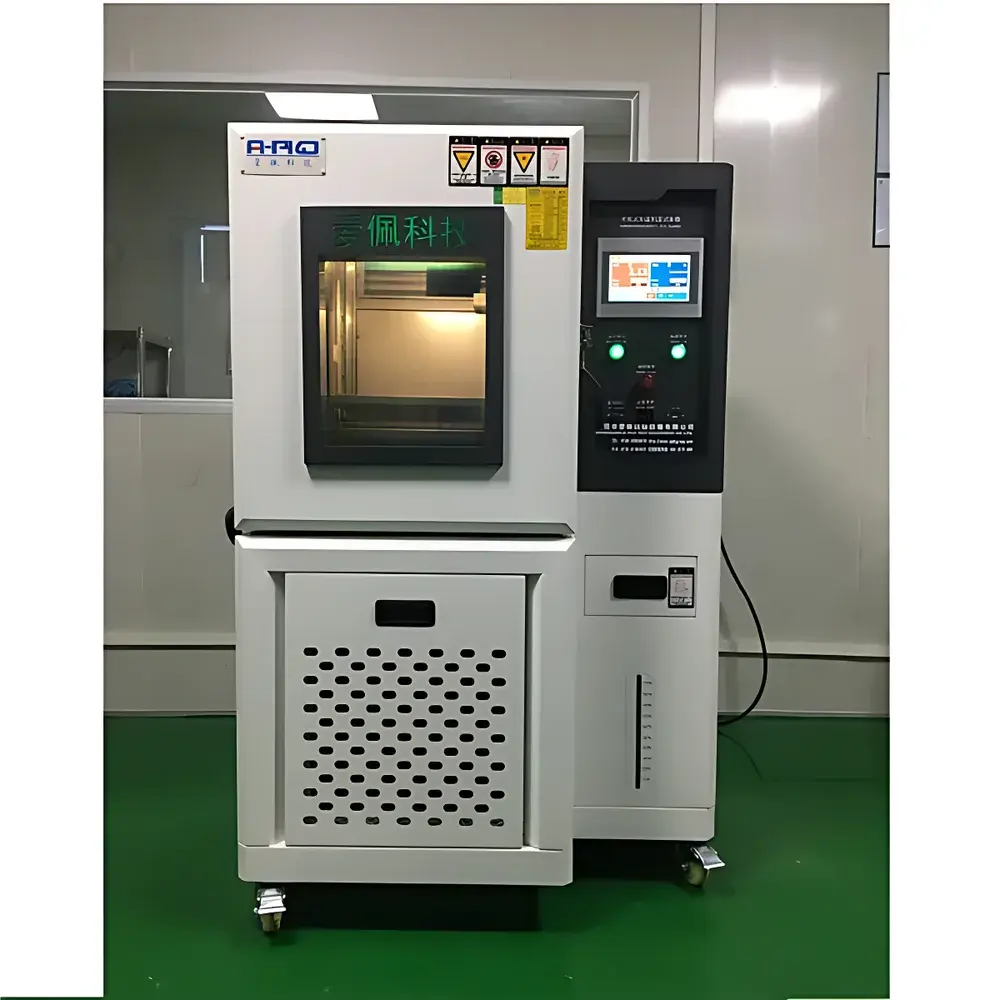
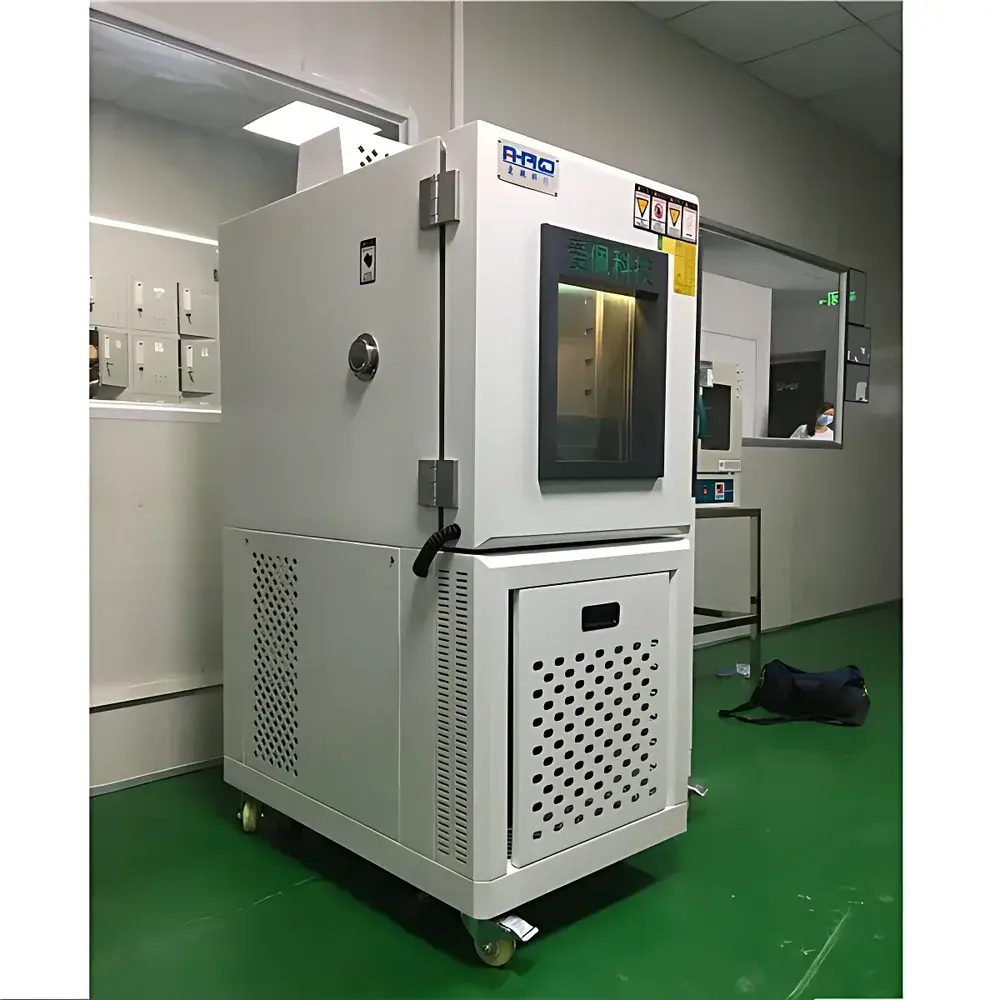
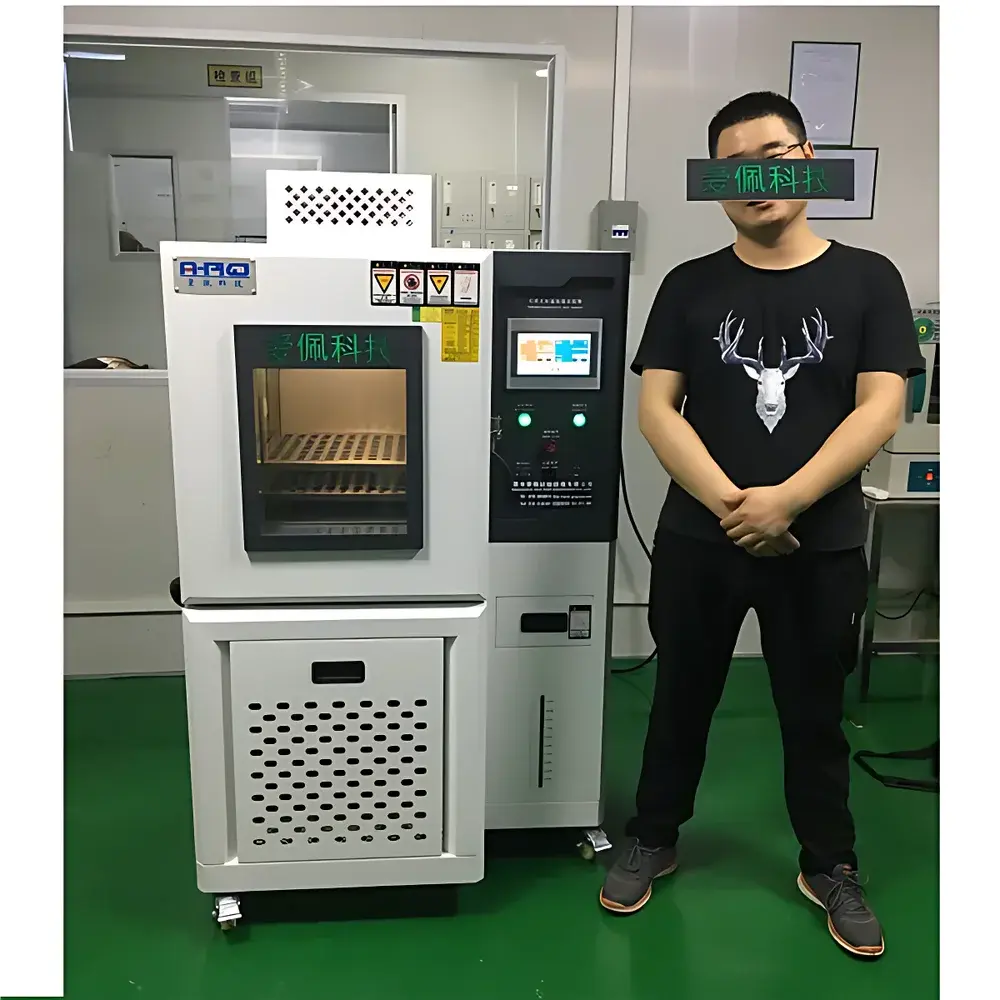
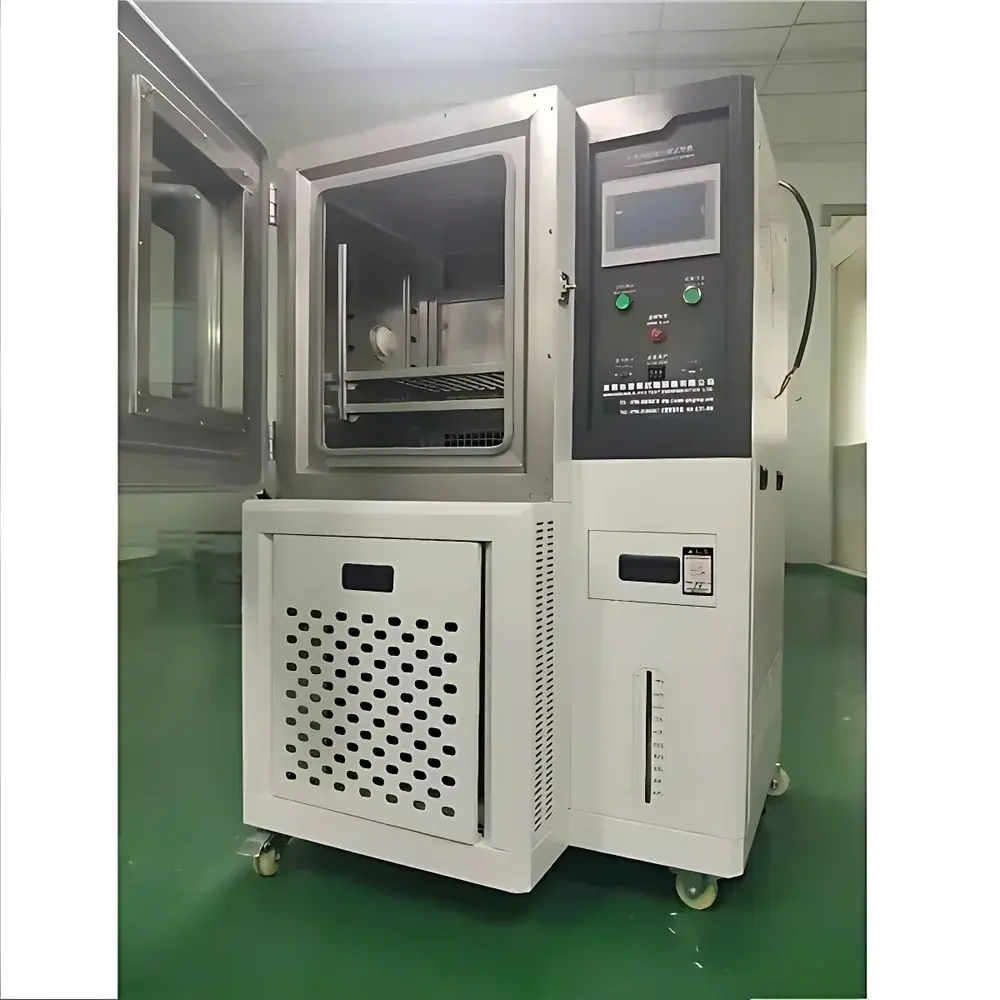
Apkji AP-HX-150A Benchtop Temperature and Humidity Controlled Environmental Test Chamber
| Brand | Apkji |
|---|---|
| Origin | Guangdong, China |
| Manufacturer Type | Direct Manufacturer |
| Region of Origin | Domestic (China) |
| Model | AP-HX-150A |
| Instrument Type | Benchtop |
| Condensation Method | Air-Cooled |
| Temperature Range | 0°C to 150°C |
| Humidity Range | 20%–98% RH |
| Temperature Uniformity | ≤ ±2°C |
| Temperature Fluctuation | ≤ ±0.5°C |
| Humidity Uniformity | ≤ ±2% RH |
| Humidity Fluctuation | ±3% RH |
| Heating Rate | 1.0–3.0°C/min |
| Internal Chamber Dimensions | 500 × 600 × 500 mm (W × D × H) |
Overview
The Apkji AP-HX-150A is a benchtop temperature and humidity controlled environmental test chamber engineered for precision simulation of thermal and hygrothermal stress conditions during product development, quality assurance, and reliability validation. It operates on a dual-refrigeration cascade system—featuring a high-temperature stage using R404A or R507 refrigerant and a low-temperature stage utilizing R23 or R508B—to achieve stable, repeatable control across its full operational envelope. Though the standard configuration supports 0°C to 150°C temperature range and 20%–98% RH humidity range, optional configurations extend low-temperature capability down to –40°C (as validated per GB/T 10592–1989 and MIL-STD-810D Method 502.2). The chamber’s air-cooled condensation architecture eliminates dependency on external water supply, enhancing installation flexibility in laboratories with limited infrastructure. Its robust stainless-steel interior, double-layer insulated walls, and PID-controlled heating/cooling loops ensure high reproducibility in thermal cycling, humidity soak, and combined environmental profiles—critical for accelerated life testing and failure mode analysis.
Key Features
- Benchtop form factor with compact internal volume (150 L) and footprint optimized for space-constrained QC labs and R&D workstations
- Integrated safety architecture: over-temperature cutoff, compressor high-pressure protection, motor overload detection, grounding fault monitoring, and automatic power disconnection upon alarm activation
- PID-based digital temperature and humidity controllers with real-time deviation compensation and programmable ramp/soak profiles
- Stainless-steel inner chamber with seamless welding and corrosion-resistant epoxy-coated outer casing
- High-efficiency axial fans with adjustable airflow distribution to minimize spatial gradient (validated ≤ ±2°C temperature uniformity per GB/T 10589–1989)
- Compliance-ready design supporting audit trails, parameter lockout, and event logging—aligned with GLP and GMP documentation expectations
Sample Compatibility & Compliance
The AP-HX-150A accommodates diverse sample geometries up to 500 × 600 × 500 mm, including PCB assemblies, polymer specimens, battery cells, elastomeric seals, and packaged consumer electronics. Its chamber layout permits unobstructed sensor access and integration with external data acquisition systems via analog voltage outputs (0–5 V or 4–20 mA). The unit conforms to multiple international and national standards: GB/T 10589–1989 (low-temperature test chamber specifications), GB/T 10592–1989 (climatic test chamber performance requirements), GB/T 2423.1–1989 (cold testing), GB/T 2423.4–1993 (damp heat, cyclic), and MIL-STD-810D Method 507.2 (humidity exposure). All calibration points are traceable to NIM (National Institute of Metrology, China) standards; optional third-party ISO/IEC 17025 calibration certificates are available upon request.
Software & Data Management
The chamber interfaces with Apkji’s proprietary LabControl Suite v3.2—a Windows-based application enabling multi-segment profile programming, real-time graphical monitoring, and automated report generation in PDF or CSV formats. Software features include user-level access control (administrator/operator modes), electronic signature support, and configurable alarm escalation (email/SMS notification via optional gateway module). Audit trail functionality records all parameter changes, start/stop events, and fault logs with timestamps and operator IDs—meeting baseline requirements for FDA 21 CFR Part 11 compliance when deployed in regulated environments. Raw sensor data is logged at 1-second intervals and exportable for post-test statistical process analysis (SPC) or Weibull reliability modeling.
Applications
This chamber serves as a core tool in thermal validation workflows across electronics manufacturing (e.g., solder joint integrity under thermal cycling), polymer aging studies (ASTM D3045), battery thermal runaway screening (UN 38.3 thermal test simulation), and automotive component qualification (ISO 16750-4). It is routinely employed for: (1) preconditioning samples prior to mechanical or electrical testing; (2) verifying packaging integrity under humid storage conditions; (3) conducting accelerated corrosion tests on metallic substrates; (4) evaluating adhesive bond strength retention after humidity exposure; and (5) supporting IEC 60068-2-30 damp heat cyclic testing protocols. Its stability and repeatability make it suitable for inter-laboratory comparison studies requiring cross-site measurement equivalence.
FAQ
What is the maximum allowable ambient temperature for safe operation?
The chamber must be installed in an environment with ambient temperature between 15°C and 35°C and relative humidity ≤85% RH.
Does the unit support remote monitoring via Ethernet or RS485?
Yes—standard RS485 Modbus RTU interface is provided; optional Ethernet-to-Modbus gateway enables TCP/IP integration with SCADA or MES platforms.
Can the chamber perform sub-zero temperature testing?
The base model AP-HX-150A is rated for 0°C to 150°C; however, optional low-temperature variants (e.g., AP-HX-150L) extend range to –40°C using enhanced cascade refrigeration.
Is calibration documentation included with shipment?
A factory calibration report (covering temperature and humidity sensors at three points across the operating range) is supplied; ISO/IEC 17025-accredited calibration is available as a value-added service.
What maintenance intervals are recommended for long-term reliability?
Compressor oil inspection every 24 months, condenser coil cleaning quarterly, and verification of door gasket integrity before each high-humidity test cycle.



