
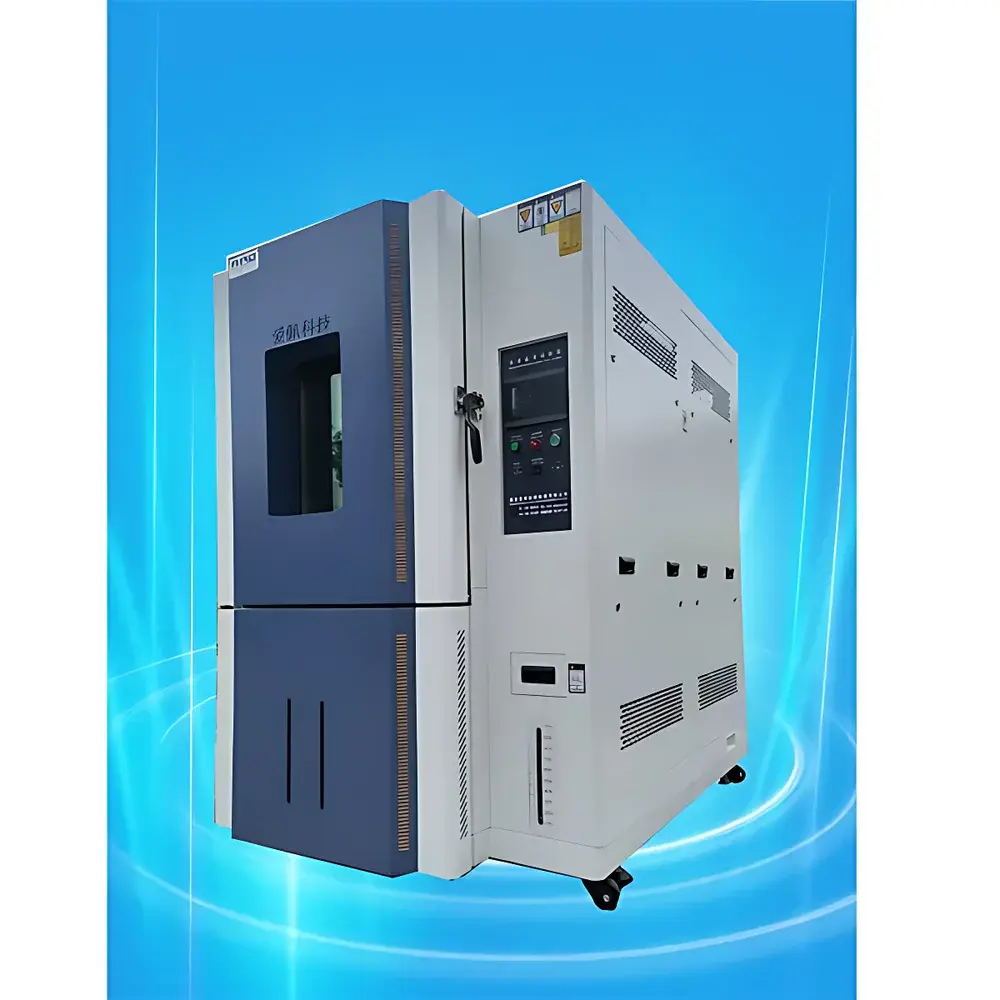
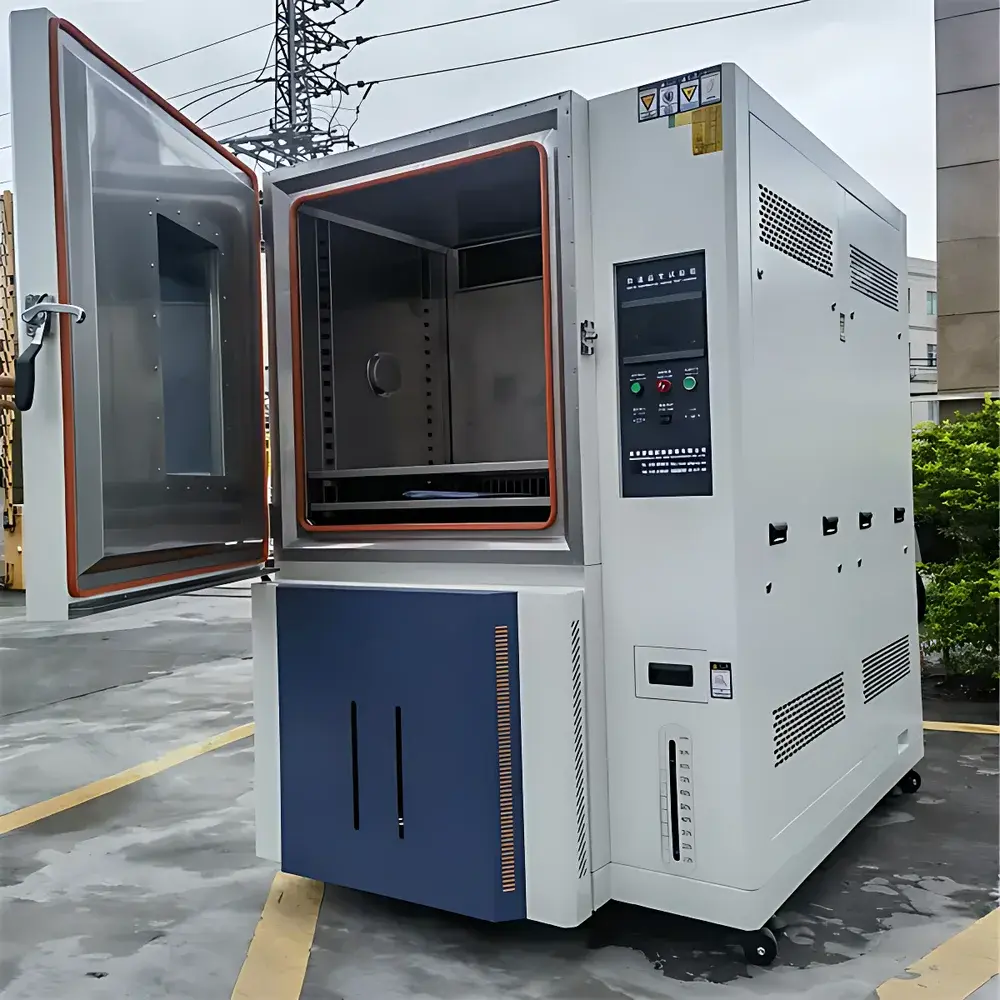
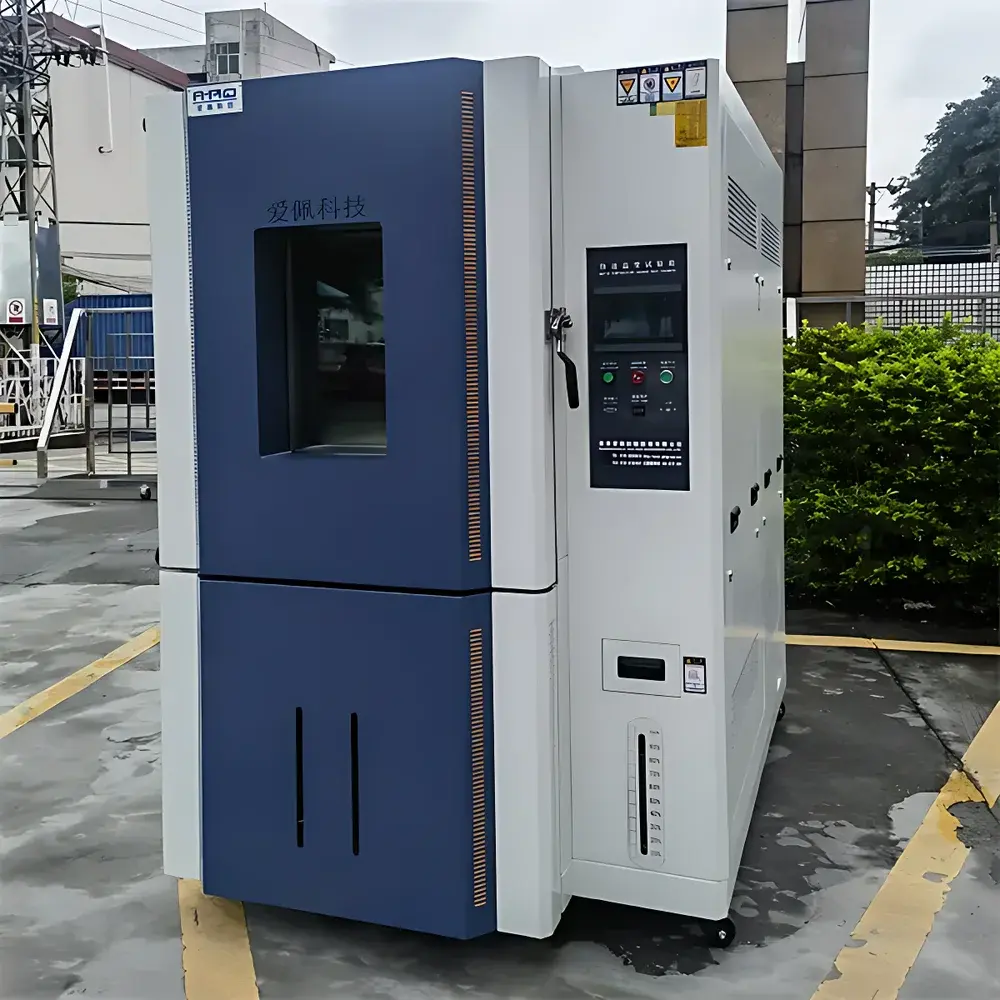
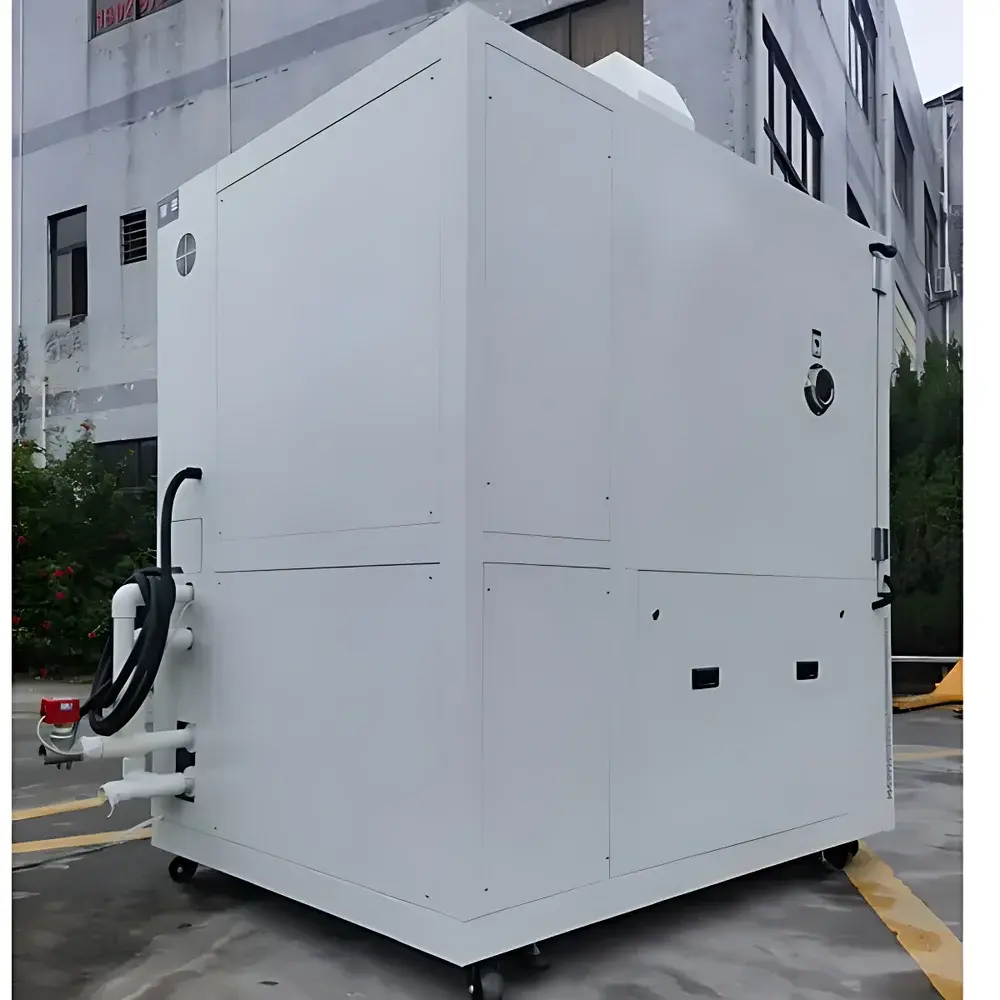
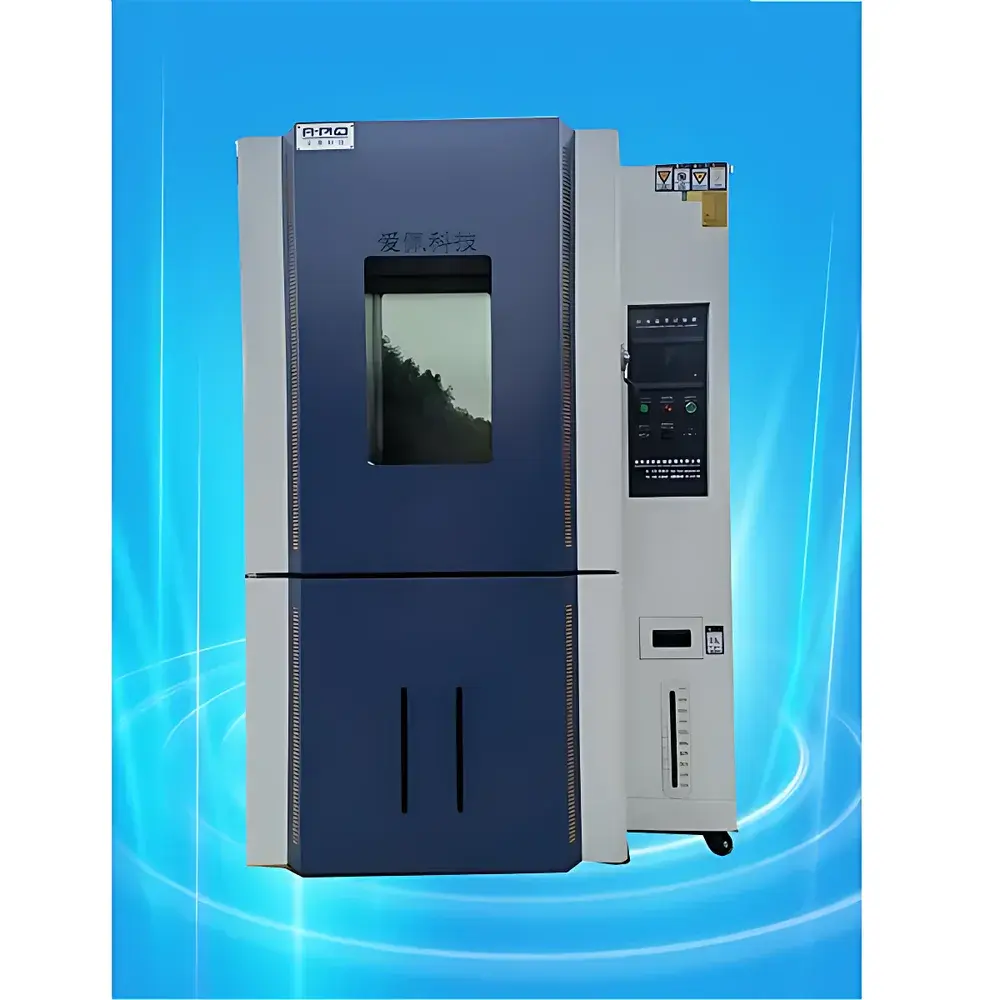
Apkji AP-KS-255-5/10 Rapid Temperature Change Chamber
| Brand | Apkji |
|---|---|
| Origin | Guangdong, China |
| Manufacturer Type | Direct Manufacturer |
| Country of Origin | China |
| Model | AP-KS-255-5/10 |
| Temperature Range | –70 °C to +150 °C |
| Humidity Range | 30–98 % RH |
| Temperature Ramp Rate | 5–15 °C/min (linear) |
| Temperature Uniformity | ±0.5 °C |
| Temperature Fluctuation | ±0.5 °C |
| Humidity Deviation | +2 / –3 % RH |
| Control Accuracy | ±0.1 °C (temp), ±1 % RH (humidity) |
| Sensor | PT100 Platinum Resistance Thermometer |
| Controller | Programmable Touchscreen PLC with Chinese/English UI |
| Compliance | GB/T 2423.22–2001 (Test N: Temperature Change), GB/T 10592–1989 (Environmental Testing Chambers) |
Overview
The Apkji AP-KS-255-5/10 Rapid Temperature Change Chamber is an engineered environmental stress screening (ESS) system designed for accelerated thermal cycling validation of electronic components, PCB assemblies, automotive modules, aerospace subsystems, and advanced materials. It operates on a forced-air convection principle with dual-stage refrigeration and precision electric heating, enabling programmable linear ramp rates between –70 °C and +150 °C at sustained rates of 5–15 °C per minute. Unlike conventional thermal chambers relying on stepwise dwell-and-soak protocols, this chamber delivers continuous, repeatable, and traceable temperature transitions—critical for identifying latent defects in solder joints, interconnects, encapsulants, and die-attach interfaces during HALT (Highly Accelerated Life Testing) or HASS (Highly Accelerated Stress Screening) workflows. Its structural design incorporates insulated double-wall construction with low-thermal-mass internal chamber linings, minimizing thermal lag and ensuring high fidelity to setpoint profiles across the entire working volume (500 × 600 × 750 mm).
Key Features
- Linear ramp control architecture with real-time feedback compensation, maintaining ±0.5 °C uniformity and ±0.1 °C setpoint accuracy throughout the full temperature range.
- Imported semi-hermetic cascade refrigeration unit with environmentally compliant R404A/R23 refrigerant blend and oil-level monitoring, supported by international-brand expansion valves, solenoid valves, and high-efficiency evaporator coils.
- Variable-frequency centrifugal air circulation system (0–100 % adjustable) ensures consistent airflow distribution without turbulence-induced thermal stratification.
- Integrated safety architecture includes compressor high/low pressure cut-off, phase loss detection, motor overcurrent protection, chamber overtemperature interlock, oil pressure monitoring, and timed compressor restart delay.
- Programmable touchscreen controller with multi-segment profile programming, data logging (internal SD card + optional USB export), alarm history with timestamps, and password-protected parameter editing.
- Optional Ethernet-enabled remote monitoring interface compliant with Modbus TCP/IP protocol; supports integration into centralized lab management systems and SCADA environments.
Sample Compatibility & Compliance
The AP-KS-255-5/10 accommodates standard test specimens up to 45 kg (distributed load), including printed circuit boards (PCBs), IC packages (QFP, BGA, CSP), sensors, connectors, battery modules, and polymer-based enclosures. Internal chamber dimensions (D×W×H: 500 × 600 × 750 mm) conform to IEC 60068-2-14 and MIL-STD-810H Method 503.5 requirements for thermal shock testing. The chamber meets GB/T 2423.22–2001 (Test N: Temperature Change), GB/T 10592–1989 (Technical Specifications for Environmental Test Chambers), and ISO 16750-4 (Road Vehicles – Environmental Conditions). Calibration traceability follows ISO/IEC 17025 guidelines using NIST-traceable PT100 sensors. Optional validation packages include IQ/OQ documentation aligned with GMP/GLP audit requirements.
Software & Data Management
The embedded controller firmware supports up to 99 programmable test profiles, each containing 99 segments with independent ramp rate, dwell time, and humidity setpoints. Real-time data—including chamber temperature, relative humidity, compressor status, fan speed, and alarm events—is logged at user-selectable intervals (1 s to 60 min) and stored locally with timestamped CSV export capability. An optional Windows-based PC software suite provides graphical profile editing, live multi-channel trending, statistical process analysis (SPC), deviation reporting, and PDF report generation with digital signature support. For regulated environments, the system can be configured to comply with FDA 21 CFR Part 11 requirements—including electronic signatures, audit trail logging, and role-based access control—when deployed with validated software and procedural controls.
Applications
- Thermal cycling qualification per JEDEC JESD22-A104 (Temperature Cycling) and A110 (Highly Accelerated Temperature and Humidity Stress Test).
- Electrical component burn-in and early-life failure screening for automotive ECUs, ADAS sensors, and power electronics.
- Material compatibility testing of adhesives, conformal coatings, potting compounds, and thermal interface materials (TIMs) under cyclic thermal stress.
- Reliability assessment of lithium-ion battery cells and modules under dynamic thermal loads simulating real-world charge/discharge cycles.
- Validation of packaging integrity for medical devices subjected to cold chain transport and ambient storage transitions.
FAQ
What is the standard temperature ramp rate specification for the AP-KS-255-5/10?
Standard configuration supports linear ramp rates from 5 °C/min to 15 °C/min across the full operating range (–70 °C to +150 °C), verified per GB/T 2423.22–2001 Annex B procedures.
Can the chamber operate in combined temperature/humidity cycling mode?
Yes—the system supports simultaneous temperature and humidity profiling within 30–98 % RH, with humidity recovery times optimized via dedicated steam humidifier and dehumidification bypass control.
Is calibration certification included with delivery?
A factory calibration certificate with measurement uncertainty statements is provided. On-site IQ/OQ/CSV validation services and annual recalibration are available upon request.
What maintenance intervals are recommended for long-term reliability?
Compressor oil and filter replacement every 24 months; refrigerant leak inspection quarterly; sensor verification annually; air filter cleaning biweekly under continuous operation.
Does the controller support third-party automation integration?
Yes—RS485 (Modbus RTU) and Ethernet (Modbus TCP/IP) interfaces enable seamless integration with MES, LabVIEW, or custom SCADA platforms using standard protocol drivers.



