
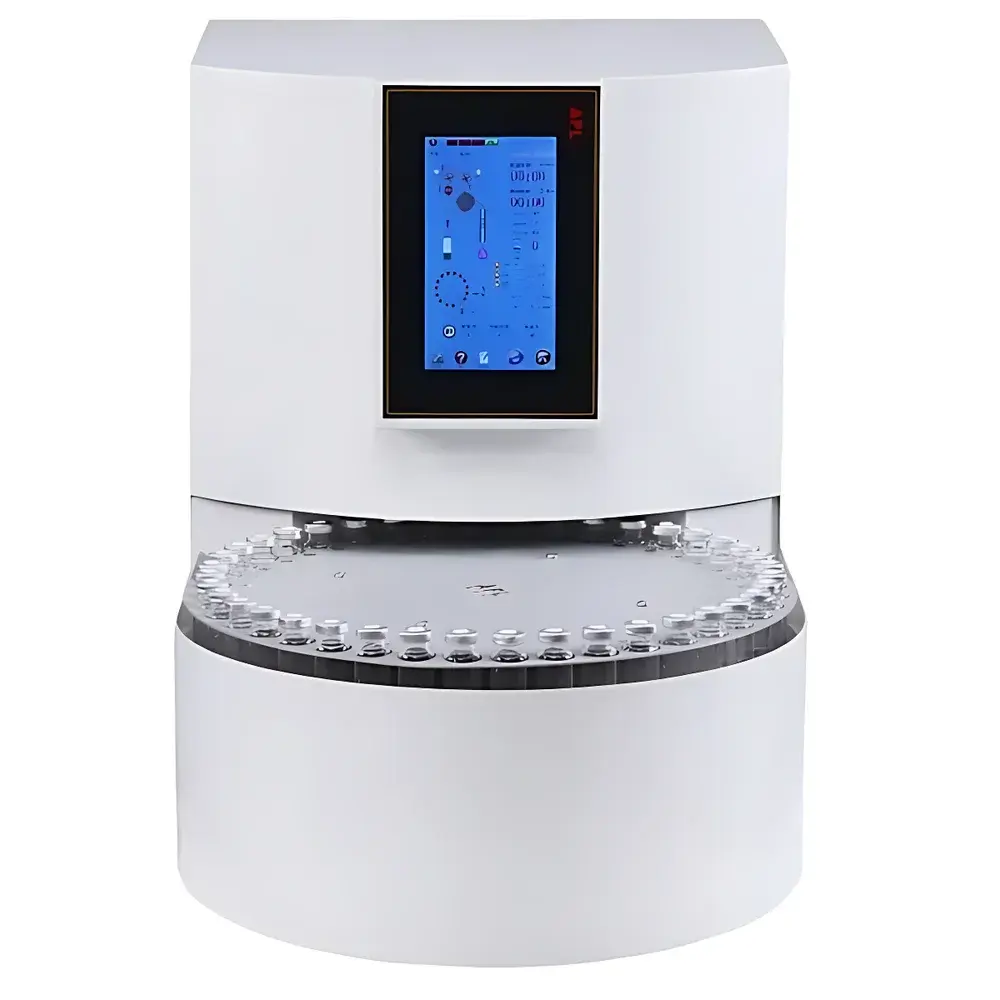
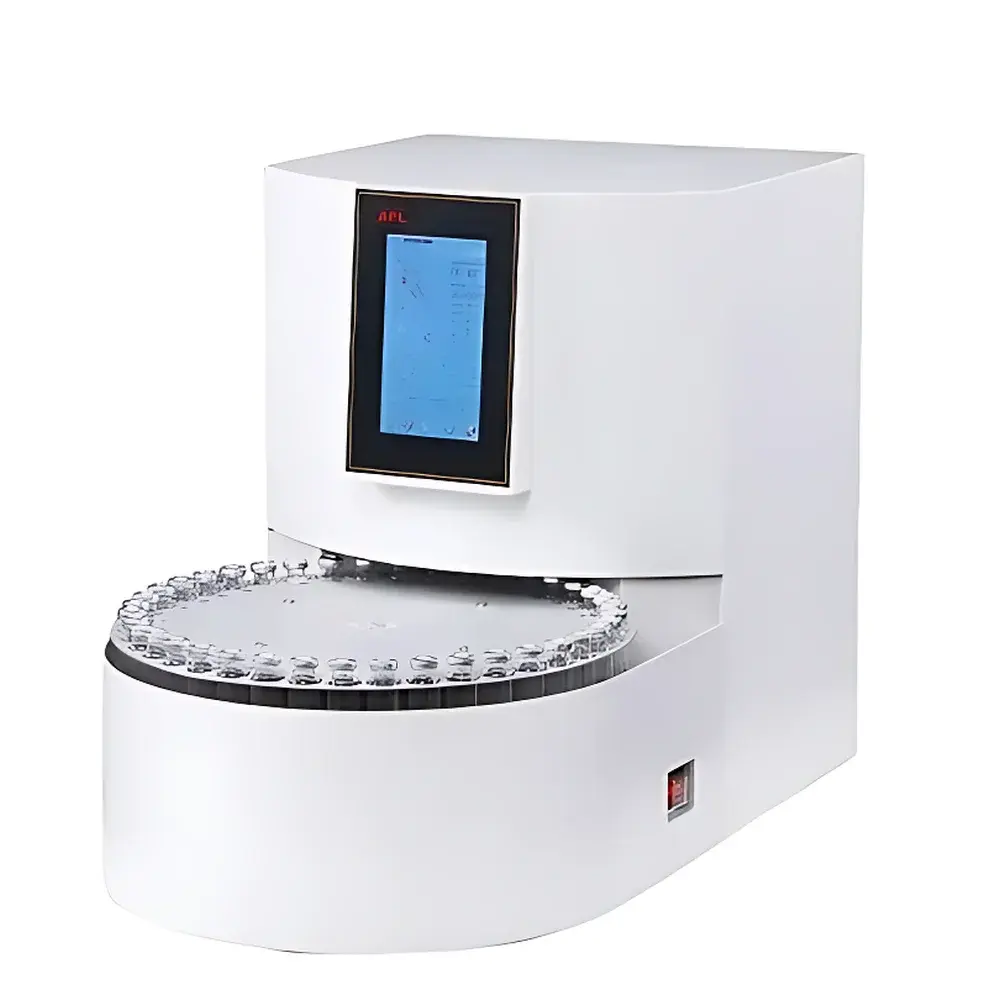
APL APL-HS-Auto60 Fully Automated Static Headspace Sampler
| Brand | APL |
|---|---|
| Origin | Sichuan, China |
| Manufacturer Type | Direct Manufacturer |
| Instrument Type | Static Headspace Sampler |
| Automation Level | Fully Automated |
| Sample Tray Capacity | 60 positions (15 heated positions) |
| Backup Positions | 20 |
| Vial Size Compatibility | 10 mL and 20 mL (standard) |
| Oven Temperature Range | Ambient to 260 °C (1 °C increment) |
| Valve & Transfer Line Temperature Range | Ambient to 220 °C (1 °C increment) |
| Temperature Accuracy | ±0.1 °C |
| Pressure-Controlled Injection | 0–0.4 MPa (adjustable) |
| Purge Flow Rate | 0–400 mL/min (adjustable) |
| Precision | RSD ≤1% (200 ppm ethanol in water, n=5) |
| Injection Volume Control | Pressurization time + regulated pressure |
Overview
The APL APL-HS-Auto60 Fully Automated Static Headspace Sampler is an engineered solution for high-throughput, reproducible volatile compound analysis in gas chromatography (GC) workflows. Based on the static headspace principle—where analytes partition between a liquid or solid sample matrix and its equilibrated vapor phase—the instrument precisely controls thermal equilibrium, pressurized transfer, and timed injection to deliver quantitative, matrix-independent results. Designed for laboratories performing routine environmental testing, pharmaceutical residual solvent analysis (per USP , ICH Q3C), food flavor profiling, forensic toxicology, and polymer outgassing studies, the APL-HS-Auto60 integrates seamlessly into regulated and research-grade GC environments. Its robust architecture supports unattended operation across full shifts, minimizing manual intervention while maintaining strict thermal stability and pressure fidelity required for GLP/GMP-compliant data generation.
Key Features
- Fully automated 60-position sample carousel with 15 independently heated vial positions—enabling staggered equilibration and continuous throughput without thermal cross-talk.
- Three-zone independent temperature control: sample oven (ambient to 260 °C), valve assembly (ambient to 220 °C), and transfer line (ambient to 220 °C), each adjustable in 1 °C increments and stabilized to ±0.1 °C accuracy per ASTM E29-23 calibration guidelines.
- Pressure-regulated injection system with 0–0.4 MPa continuous adjustment and programmable pressurization time—ensuring precise, repeatable sample transfer volume without mechanical syringes or fixed loops.
- Integrated purge-and-trap functionality: post-injection carrier gas flow (0–400 mL/min) cleans the valve and transfer path, eliminating carryover and supporting >500 consecutive injections without maintenance.
- Universal GC interface compatible with all major gas chromatographs—including Agilent, Thermo Fisher, Shimadzu, PerkinElmer, and国产 GC systems—via standard septum-piercing inlet connection and TTL/RS-232 trigger synchronization.
- Self-diagnostic startup sequence, real-time fault logging, and positional encoder feedback ensure traceable system readiness and alignment integrity prior to run initiation.
Sample Compatibility & Compliance
The APL-HS-Auto60 accommodates standard 10 mL and 20 mL crimp-top or screw-cap headspace vials, supporting both aqueous and non-aqueous matrices—including viscous polymers, suspensions, and semi-solids when paired with optimized equilibration protocols. It meets essential performance criteria outlined in ISO 15197:2013 (for method validation), USP (residual solvents), and EPA Method 502.2 (volatile halocarbons). Temperature ramping profiles, hold times, and pressurization parameters are fully programmable and stored with audit trail metadata—supporting 21 CFR Part 11 compliance when deployed with validated LIMS or chromatography data systems (CDS) that enforce electronic signatures and change control.
Software & Data Management
Instrument control and method development are managed via APL’s HSControl software (Windows-based, English UI), offering intuitive graphical workflow configuration, multi-method queuing, and real-time monitoring of temperature/pressure status. All method parameters—including vial position mapping, equilibration duration, agitation (if external shaker used), and injection sequence—are saved as encrypted .hsm files. Raw event logs (start time, error codes, thermal deviations >±0.15 °C) are timestamped and exportable in CSV format. The software supports integration with OpenLab CDS, Chromeleon, and Empower via ASCII command protocol, enabling centralized scheduling and result correlation without proprietary middleware.
Applications
- Pharmaceutical QC: Quantification of Class 1–3 residual solvents (e.g., methanol, acetone, dichloromethane) in active pharmaceutical ingredients (APIs) and final drug products per ICH Q3C thresholds.
- Environmental labs: Detection of BTEX (benzene, toluene, ethylbenzene, xylenes), chlorinated ethenes, and trihalomethanes in drinking water per EPA 524.2 and 502.2.
- Food & beverage: Ethanol, acetaldehyde, and ester profiling in wines, spirits, dairy, and fermented products—supporting authenticity and spoilage assessment.
- Forensics: Blood alcohol concentration (BAC) determination using headspace-GC-FID, validated per SWGTOX guidelines.
- Materials science: Monitoring VOC emissions from adhesives, coatings, and packaging films under controlled thermal aging conditions (ISO 16000-9).
FAQ
What sample vial formats does the APL-HS-Auto60 support?
Standard 10 mL and 20 mL crimp-seal headspace vials; custom adapters available for 22 mL vials upon request.
Can the instrument perform agitated headspace sampling?
No—this is a static headspace system. Agitation requires external orbital shakers synchronized via TTL signal; method optimization for heterogeneous samples must account for diffusion kinetics.
Is remote monitoring or network connectivity supported?
Yes—HSControl software supports LAN-based remote desktop access and scheduled email alerts for run completion or critical faults (e.g., temperature deviation, vial jam).
How is calibration verified and documented?
Built-in PT100 sensors are factory-calibrated against NIST-traceable references; users may perform verification using certified ethanol-in-water standards (e.g., 100–500 ppm) and log results in accordance with ISO/IEC 17025 internal audit requirements.
What maintenance intervals are recommended for long-term reliability?
Valve seals and septa should be replaced every 3,000 injections; transfer line cleaning recommended quarterly; full thermal sensor verification annually or after 10,000 cycles.




