
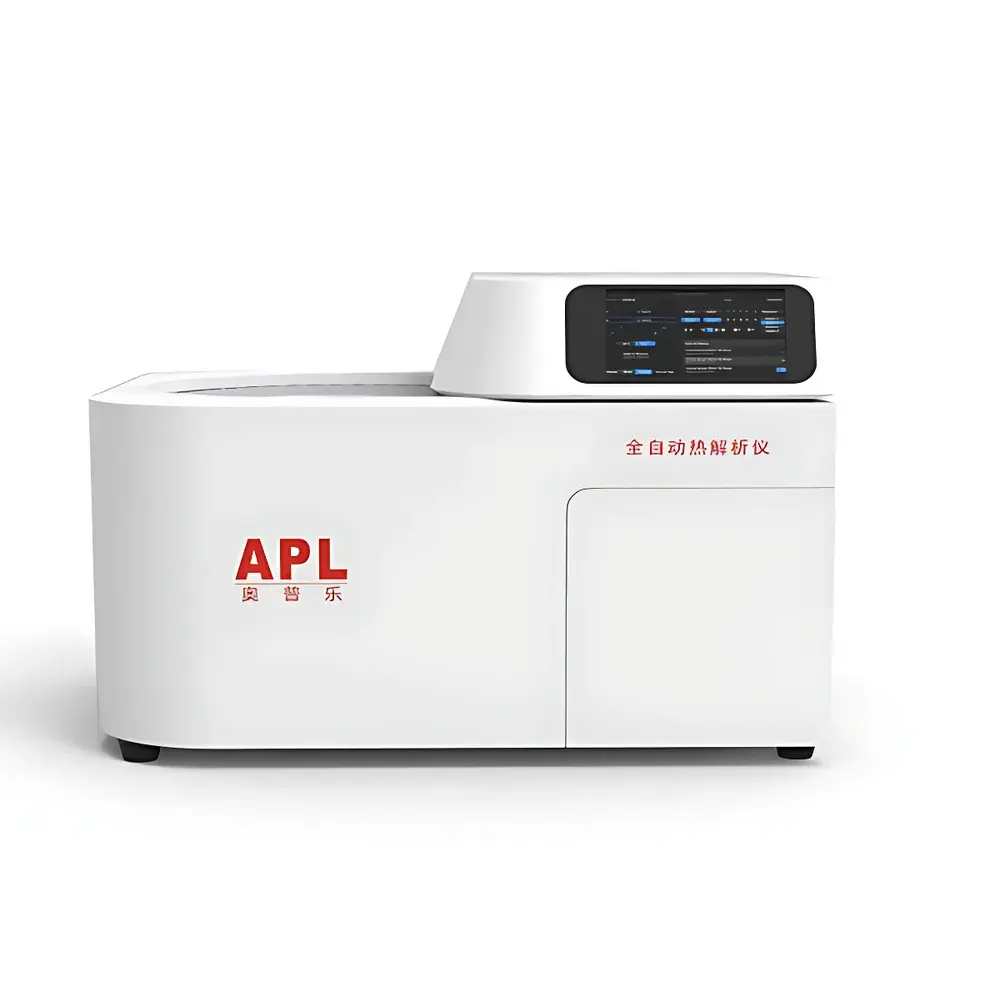
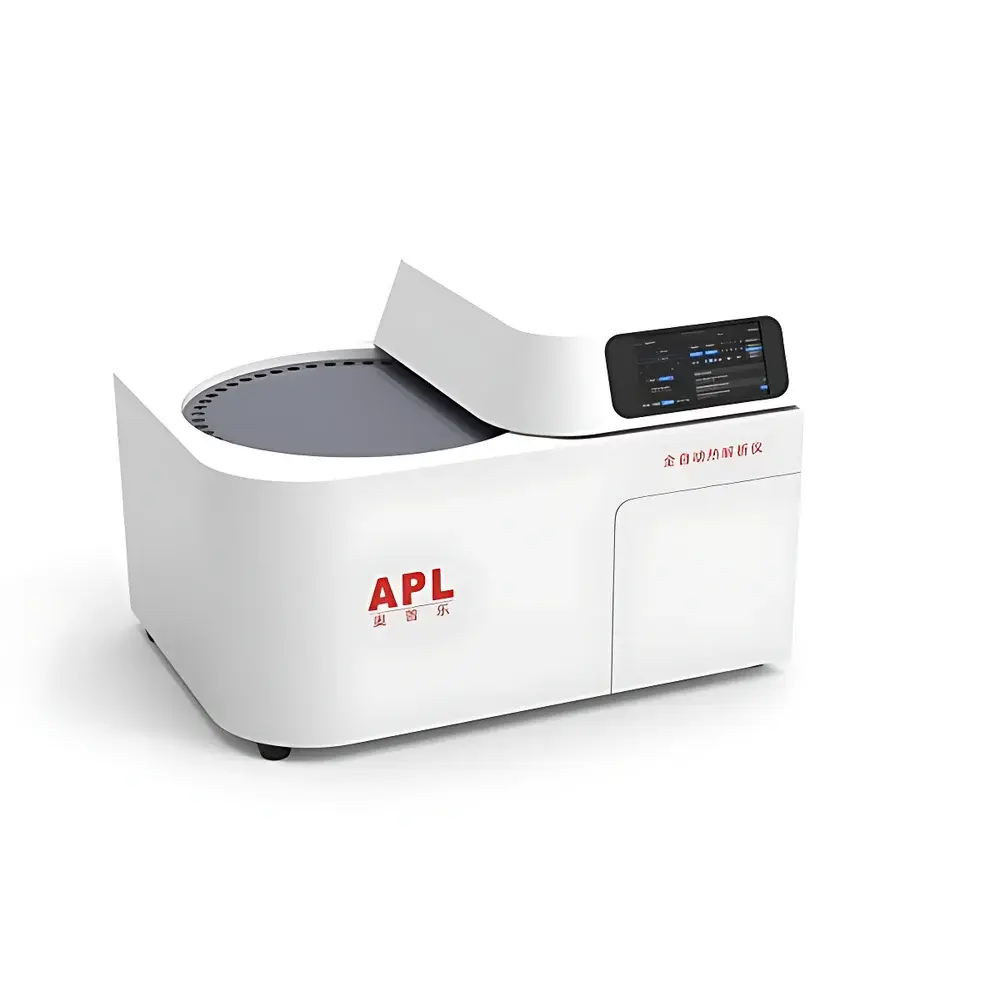
APL APL-TD-100 Fully Automated Two-Stage Thermal Desorber
| Brand | APL |
|---|---|
| Origin | Sichuan, China |
| Manufacturer Type | Direct Manufacturer |
| Product Category | Domestic |
| Model | APL-TD-100 |
| Instrument Type | Two-Stage Thermal Desorber / Thermal Desorption Unit |
| Automation Level | Fully Automated |
| Primary Desorption Temperature Range | Ambient to 400 °C (±1 °C) |
| Secondary Desorption Temperature Range | −35 °C to 400 °C (±1 °C) |
| Secondary Flash Heating Rate | ≥3000 °C/min |
| Valve Oven Temperature Range | Ambient to 300 °C (±1 °C) |
| Transfer Line Temperature Range | Ambient to 300 °C (±1 °C) |
| Cold Trap Temperature Range | −35 °C (±0.5 °C) |
| Temperature Control Accuracy | ±1 °C |
| Desorption Recovery Efficiency | >98% |
| Sample Capacity | 100 positions |
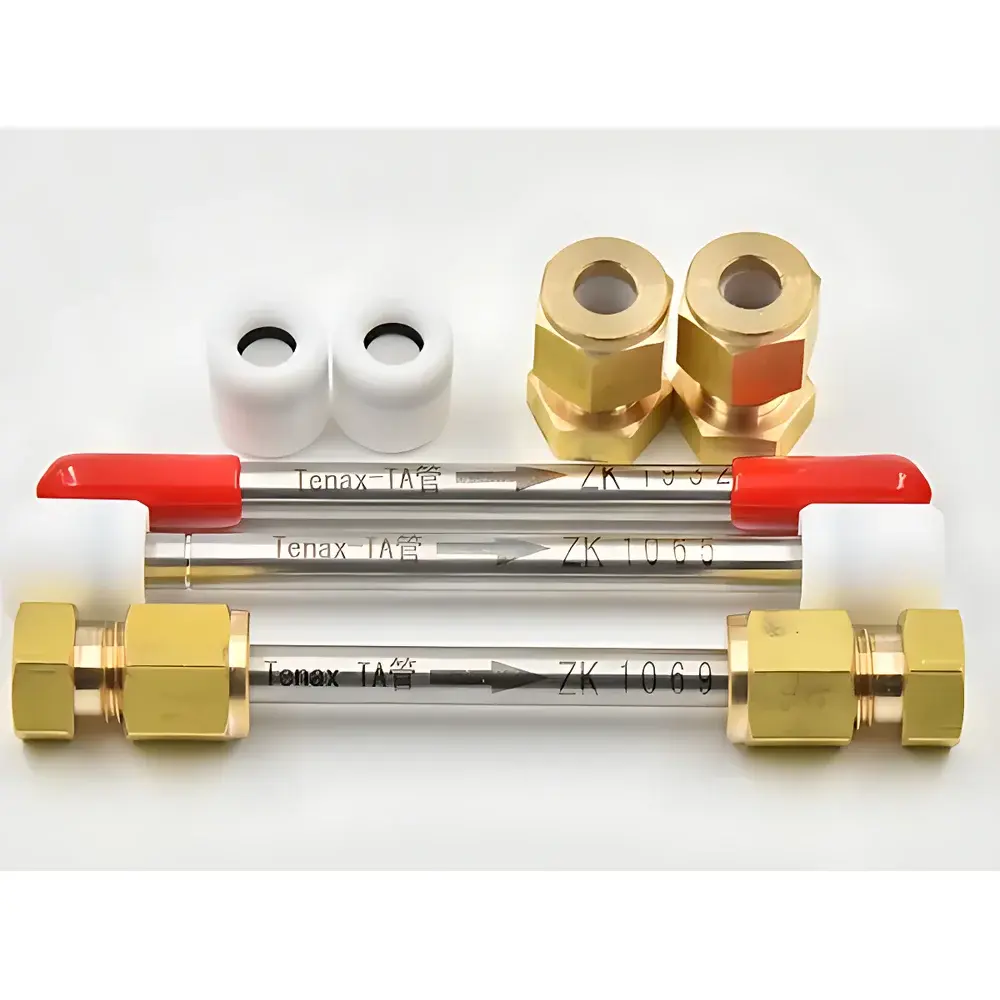
| Tube Standard | ASTM D6196-22 / ISO 16017-1 compliant 89 mm × 6.4 mm (3.5″ × 1/4″) adsorption tubes |
Overview
The APL APL-TD-100 Fully Automated Two-Stage Thermal Desorber is an engineered solution for quantitative trace volatile organic compound (VOC) and semi-volatile organic compound (SVOC) analysis in environmental, occupational hygiene, and materials testing laboratories. It operates on the principle of two-stage thermal desorption: first, analytes are thermally released from sorbent-packed tubes under controlled inert gas flow (primary desorption); second, the evolved vapors are cryogenically focused in a low-temperature cold trap (−35 °C), followed by rapid flash-heating (>3000 °C/min) and transfer to the GC inlet (secondary desorption). This dual-stage approach enhances sensitivity by pre-concentrating analytes while minimizing breakthrough and thermal degradation—critical for compounds with wide boiling point ranges (C2–C20). Designed for seamless integration with all major gas chromatography systems—including those from Agilent, Thermo Fisher, Shimadzu, PerkinElmer, and Markes—the APL-TD-100 meets the operational requirements of ISO 16017-1, ASTM D6196-22, and EPA TO-17 methodologies.
Key Features
- Fully automated 100-position sample carousel with barcode-readable tube trays, enabling unattended overnight operation and high-throughput batch processing.
- Precision temperature control across all thermal zones: primary furnace (±1 °C), secondary flash heater (±1 °C), valve oven (±1 °C), transfer line (±1 °C), and cryogenic cold trap (±0.5 °C).
- High-efficiency cold trapping using electronically controlled Peltier cooling to −35 °C—no liquid nitrogen or external cryogens required.
- Secondary flash heating rate ≥3000 °C/min ensures narrow bandwidth injection (<50 ms), preserving chromatographic resolution and peak shape for early-eluting compounds.
- Integrated inert gas management system with mass flow-controlled purge, bake, and desorption flows; configurable carrier gas (He, N2) and split/splitless transfer modes.
- Modular architecture with field-replaceable thermal modules and standardized electrical interfaces for simplified maintenance and long-term serviceability.
Sample Compatibility & Compliance
The APL-TD-100 accepts standard 89 mm × 6.4 mm (3.5″ × 1/4″) sorbent tubes conforming to ASTM D6196-22 and ISO 16017-1 dimensional and performance specifications. It is compatible with multi-bed sorbents (e.g., Tenax TA, Carbopack B/C, Carboxen 1000) and supports both single- and multi-sorbent tube configurations. The system accommodates tubes from APL, PerkinElmer, Markes International, Shimadzu, Dani Instruments, and other OEMs without mechanical or software adaptation. All thermal protocols are programmable per sample position, supporting method-specific ramp rates, hold times, and cooling cycles. Data integrity complies with GLP and GMP-aligned workflows, including full audit trail logging, user access levels, and electronic signature support (aligned with FDA 21 CFR Part 11 principles).
Software & Data Management
Controlled via APL TD-Studio v3.x—a Windows-based application supporting method development, sequence scheduling, real-time monitoring, and diagnostic logging. The software provides intuitive graphical setup for multi-step thermal programs, automatic calibration curve import (via CSV), and direct export of peak area/intensity data to LIMS or third-party chromatography data systems (CDS) such as OpenLab CDS or Chromeleon. All instrument events—including temperature deviations, valve actuation timestamps, pressure transients, and cold trap status—are timestamped and archived with SHA-256 hash integrity verification. Remote diagnostics and firmware updates are supported over secure TLS 1.2 connections.
Applications
- Environmental air monitoring: ambient, indoor, and stack emissions testing per EPA Method TO-17 and ISO 16017-1.
- Occupational health and safety: workplace air sampling for OSHA- and NIOSH-listed VOCs (e.g., benzene, formaldehyde, styrene, xylene).
- Materials emission testing: VOC screening of automotive interiors, building products, packaging, and consumer goods (ASTM D5116, ISO 16000-6).
- Forensic and failure analysis: off-gassing profiling of polymers, adhesives, and composites.
- Method validation studies requiring high recovery (>98%), low carryover (<0.1%), and inter-laboratory reproducibility.
FAQ
Does the APL-TD-100 support EPA Method TO-17 compliance?
Yes—its thermal programming flexibility, cold trap performance, and tube compatibility meet all instrumental requirements specified in TO-17 for both single- and dual-stage operation.
Is liquid nitrogen required for cold trapping?
No—cryogenic focusing is achieved exclusively via solid-state Peltier cooling to −35 °C, eliminating consumables and associated handling hazards.
Can the system be integrated with third-party GC autosamplers?
Yes—standard 1/4″ Swagelok fittings and TTL/RS-232 trigger interfaces enable synchronization with Agilent PAL, CTC Analytics COMBI-PAL, and Gerstel MPS systems.
What is the typical carryover between samples?
Less than 0.1% for target analytes when using recommended bake-out parameters (350 °C for 10 min post-desorption).
Is remote monitoring and control supported?
Yes—TD-Studio includes secure web-based remote viewing and limited control functions via authenticated HTTPS access.





