
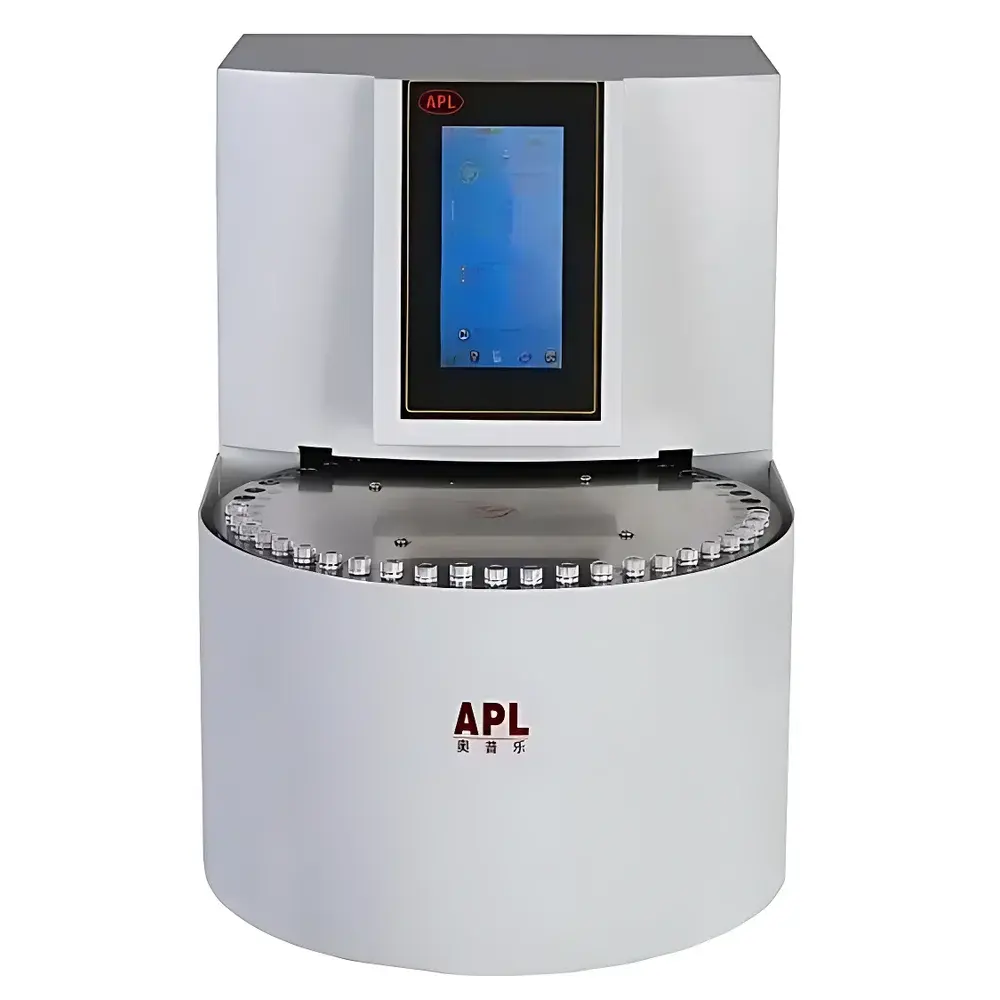
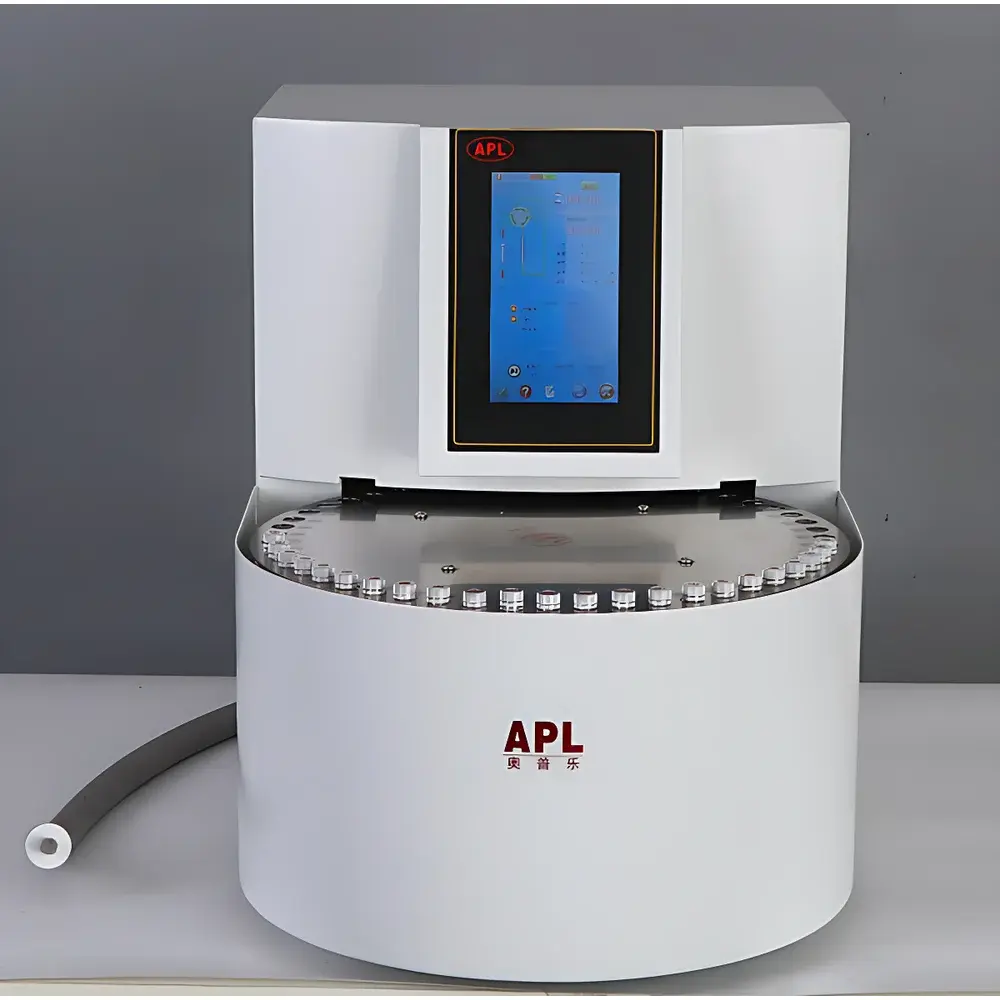
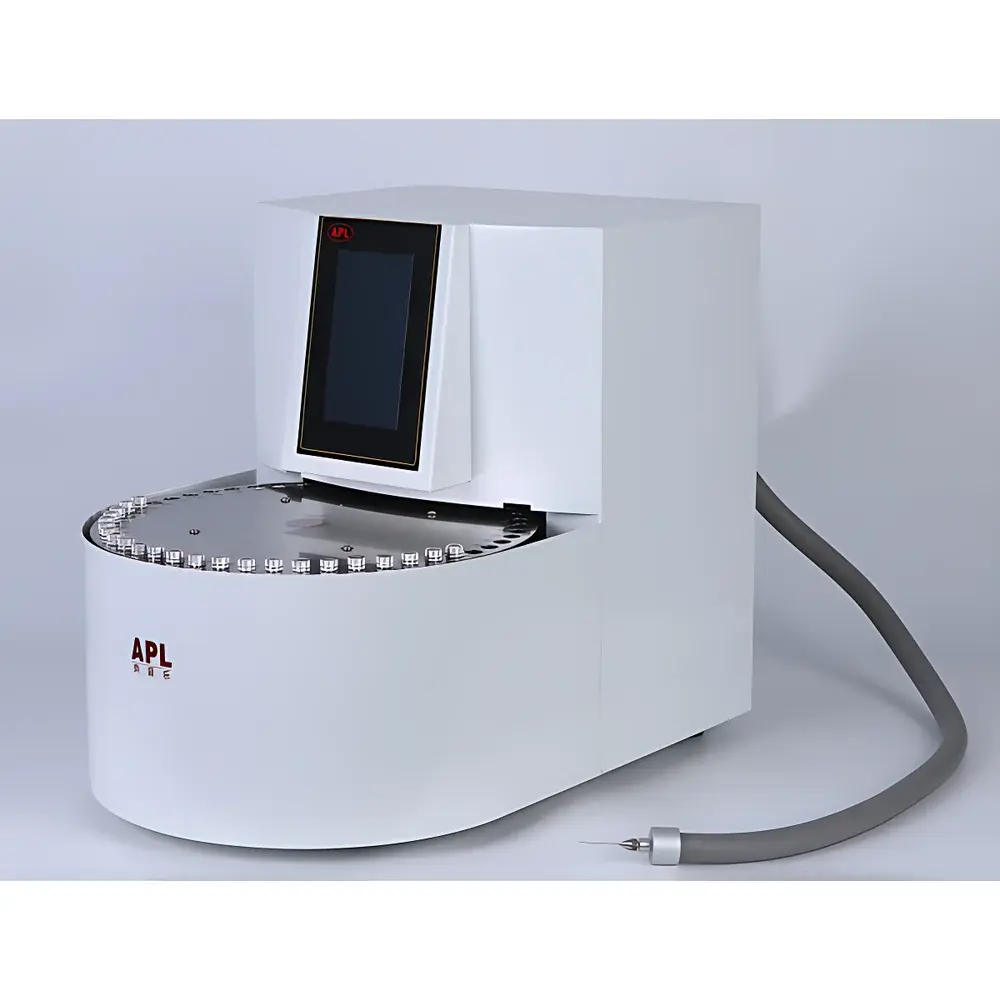
APL APL-TD-50 Fully Automated Thermal Desorber with Dual-Stage Desorption
| Brand | APL |
|---|---|
| Origin | Sichuan, China |
| Manufacturer Type | Direct Manufacturer |
| Instrument Type | Dual-Stage Thermal Desorber |
| Automation Level | Fully Automated |
| Desorption Temperature Range | Ambient to 400 °C |
| Valve & Injection Port Temperature Range | Ambient to 220 °C |
| Transfer Line Temperature Range | Ambient to 260 °C |
| Cold Trap Temperature | −35 °C |
| Temperature Control Accuracy | ±1 °C |
| Analyte Recovery Rate | >98% (compound-dependent) |
| Sample Capacity | 50 Adsorption Tubes |
Overview
The APL APL-TD-50 Fully Automated Thermal Desorber with Dual-Stage Desorption is an engineered solution for quantitative trace-level volatile organic compound (VOC) and semi-volatile organic compound (SVOC) analysis in environmental, occupational health, indoor air quality, and industrial emissions monitoring. It operates on the principle of thermal desorption coupled with gas chromatography–mass spectrometry (GC–MS) or GC–FID detection. The instrument performs two-stage desorption: primary thermal desorption from the sorbent tube under controlled inert gas flow, followed by cryo-focused trapping and rapid secondary flash desorption into the GC inlet. This architecture ensures high analyte transfer efficiency, minimal band broadening, and superior sensitivity—critical for compliance with low-concentration regulatory thresholds defined in international ambient and indoor air standards.
Key Features
- Fully automated 50-position carousel with robotic tube handling, enabling unattended batch processing for high-throughput laboratories.
- Dual independent temperature zones: desorption oven (ambient to 400 °C), valve/injection module (ambient to 220 °C), and transfer line (ambient to 260 °C), each regulated with ±1 °C precision via PID-controlled heating elements.
- Integrated Peltier-based cold trap capable of stable operation at −35 °C without external coolant or liquid nitrogen, minimizing operational overhead and footprint.
- Electrically actuated 6-port switching valve combined with solenoid valves for precise, reproducible sequence control of desorption, carrier gas purge, back-flush cleaning, and GC injection synchronization.
- Touchscreen HMI with intuitive method editor: users define time-programmed sequences—including pre-desorption bake-out, desorption duration, trap focusing time, flash rate (>3000 °C/min), and post-run tube reconditioning—all stored as reusable protocols.
- Simple-Lock™ mechanical interface ensures rapid, leak-tight coupling of standard 89 mm × 6.4 mm OD sorbent tubes (e.g., Tenax TA, Carbopack, Carboxen series) with <2-second insertion/removal—reducing downtime and operator variability.
- Onboard simulated sampling function (100 mL/min calibrated flow) supports direct calibration curve generation without external gas dilution systems.
- Universal GC interface: compatible with all major GC inlets (split/splitless, PTV, cold on-column) via standardized needle geometry and pressure-tolerant sealing design.
Sample Compatibility & Compliance
The APL-TD-50 is validated for use with ASTM D6196-22 (selection of sorbents), ISO 16017-1:2000 (indoor air VOC analysis), and multiple Chinese national standards including HJ 644–2013, HJ 583–2010, HJ 734–2014, and GB/T 18883–2002. Its design meets functional requirements for GLP-compliant laboratories conducting regulatory testing under EPA TO-17 and EU EN 16705:2016 frameworks. Sorbent tubes are rated to 420 °C and sealed with PTFE-lined caps to ensure sample integrity during storage up to 30 days at ambient conditions. All fluidic pathways employ deactivated silico-steel and fused silica components to prevent adsorption or catalytic degradation of reactive analytes (e.g., aldehydes, terpenes, sulfur compounds).
Software & Data Management
The system operates via embedded firmware with audit-trail-enabled method management. Each run logs timestamped event records—including temperature setpoints, valve actuation timing, pressure profiles, and cold trap status—for full traceability. Exportable CSV reports include desorption efficiency metrics, peak area integrations (when interfaced with third-party GC data systems), and QC flagging for out-of-spec recovery (<98%). While the TD-50 does not include proprietary acquisition software, it provides TTL and RS-232/485 triggers fully compatible with Thermo Chromeleon, Agilent OpenLab CDS, and Shimadzu GCMSsolution for synchronized start/stop and metadata tagging. All configuration files adhere to ICH M7 and FDA 21 CFR Part 11 principles when deployed within validated networked environments.
Applications
- Environmental monitoring: ambient air, stack emissions, landfill gas, and fugitive VOC screening per HJ 734–2014 and EPA Method TO-17.
- Indoor air quality assessment: formaldehyde, benzene, toluene, xylenes (BTX), and C2–C12 aliphatics in residential/commercial buildings (GB/T 18883–2002, HJ/T 400–2007).
- Automotive cabin air testing: odorant profiling, polymer off-gassing, and interior material emission studies.
- Pharmaceutical cleanroom verification: residual solvent monitoring in packaging materials and manufacturing environments.
- Forensic and food aroma analysis: trace-level flavor compound identification using multi-bed sorbent tubes and cryofocusing.
FAQ
What sorbent tube formats are supported?
Standard 89 mm × 6.4 mm OD stainless steel or glass tubes with fritted ends; compatible with single- and multi-bed configurations (e.g., Tenax TA + Carbograph 1TD + Carboxen 1000).
Does the system support EPA TO-17 compliance?
Yes—the dual-stage desorption architecture, temperature stability (±1 °C), cold trap performance (−35 °C), and programmable back-flush functionality meet all instrumental criteria specified in TO-17 for method validation.
Can the APL-TD-50 be integrated into a LIMS environment?
Via optional Ethernet-to-RS485 gateway and custom API scripting, raw event logs and QC summaries can be exported in structured JSON or XML format for ingestion into laboratory information management systems.
Is method validation documentation provided?
APL supplies a comprehensive Instrument Qualification Package (IQ/OQ) template aligned with ISO/IEC 17025 and GMP Annex 15, including temperature mapping reports, recovery studies across 10+ target VOCs, and carryover testing protocols.
What maintenance intervals are recommended?
Valve actuation cycles are rated for ≥500,000 operations; cold trap thermoelectric modules require no scheduled replacement; annual calibration of all temperature sensors against NIST-traceable references is advised.





