
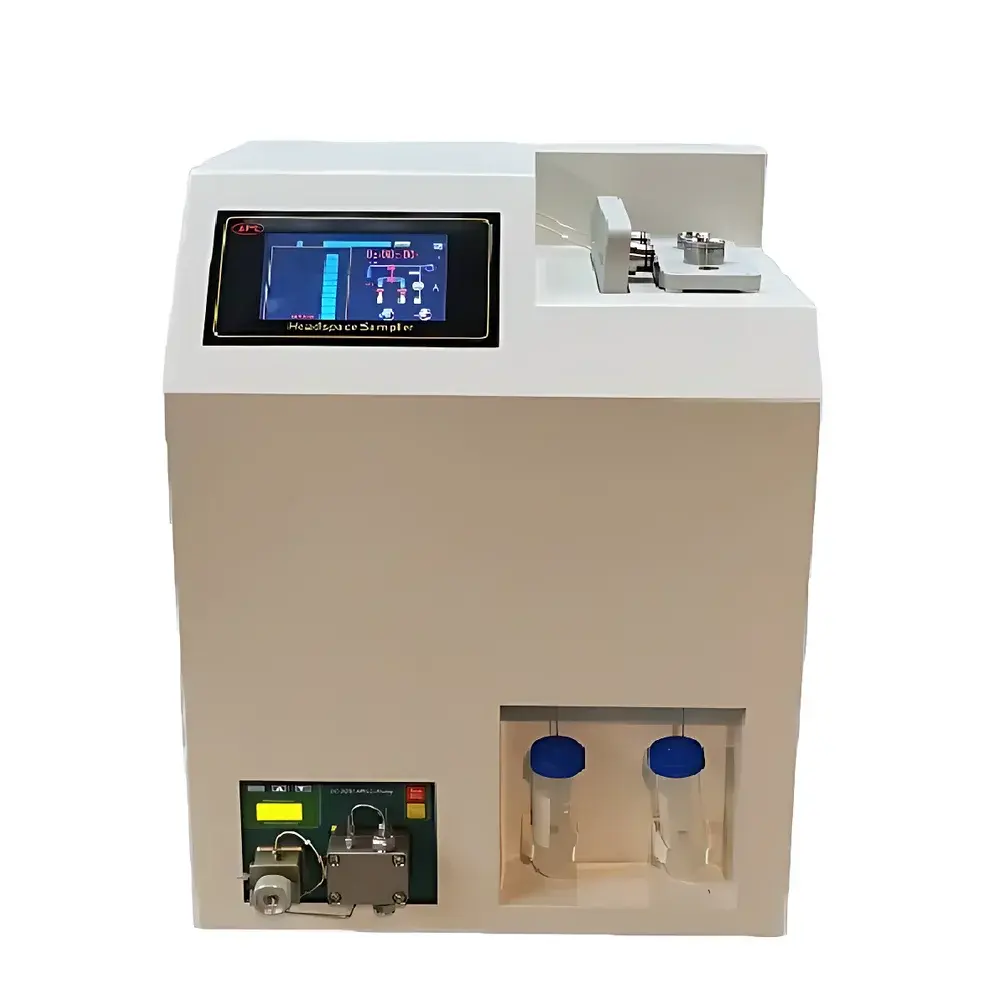
APL ASE200 Accelerated Solvent Extractor
| Brand | APL |
|---|---|
| Origin | Sichuan, China |
| Manufacturer Type | Direct Manufacturer |
| Region Classification | Domestic (China) |
| Model | APL-ASE200 |
| Instrument Type | Solid-Liquid Extraction |
| Temperature Range | Ambient to 200 °C |
| Pressure Range | 0–20 MPa |
| Extraction Cell Volume | 40 mL (standard) |
| optional volumes | 1, 5, 10, 22, 66, and 100 mL |
| Typical Extraction Time | 8–20 min per sample |
| Dimensions | 600 × 600 × 700 mm |
| Compliance | HJ 782–2016, HJ 783–2016, GB/T 23200.9–2016, ASTM D7567–2009 |
Overview
The APL ASE200 Accelerated Solvent Extractor is an engineered solid-liquid extraction platform that leverages pressurized fluid extraction (PFE) — also known as accelerated solvent extraction — to isolate analytes from solid or semi-solid matrices under controlled elevated temperature and pressure. Operating on the principle of enhanced solvation power at temperatures above solvent boiling points (achieved via pressurization), the ASE200 enables rapid, reproducible, and quantitative recovery of target compounds—including pesticides, PAHs, PCBs, dioxins, pharmaceutical residues, and natural product constituents—without thermal degradation. Unlike conventional techniques such as Soxhlet extraction (which requires hours), ultrasonic-assisted extraction (limited mass transfer efficiency), or microwave-assisted extraction (risk of uneven heating), the ASE200 delivers consistent fluid penetration and analyte desorption through precise control of thermodynamic parameters. Its dual-position heated oven architecture supports parallel processing of two samples per run, improving throughput without compromising method robustness.
Key Features
- Dual-zone heated oven with independent temperature control for simultaneous extraction of two samples, reducing batch processing time by up to 50% versus single-cell systems
- Full-range pressure regulation from 0 to 20 MPa using high-purity nitrogen gas, ensuring stable system pressurization and eliminating solvent vapor lock during static extraction cycles
- Modular stainless-steel extraction cells (standard 40 mL; optional 1–100 mL) compatible with glass fiber filters and pre-packed sorbent beds for matrix cleanup integration
- Automated sequential protocol execution: solvent delivery → preheating → static extraction → collection → solvent rinse → cell purge → system flush — all programmable and repeatable
- Embedded real-time monitoring of temperature and pressure with hardware-based overpressure cutoff (set point adjustable), meeting IEC 61000-6-2 electromagnetic compatibility and functional safety requirements
- User-configurable extraction parameters including static time (1–30 min), flush volume (0–100 mL), number of static cycles (1–6), and post-extraction purge duration
Sample Compatibility & Compliance
The ASE200 is validated for use across environmental, food safety, agricultural, polymer, and pharmaceutical laboratories where regulatory compliance governs analytical workflows. It fully supports U.S. EPA Method 3545A (PFE for organic compounds in solids), Chinese national standards HJ 782–2016 (Solid Waste — Organic Compound Extraction by Pressurized Fluid Extraction), HJ 783–2016 (Soil and Sediment — Organic Compound Extraction), and GB/T 23200.9–2016 (Multiresidue Pesticide Analysis in Cereals). Its design aligns with GLP documentation requirements: each extraction run generates a timestamped audit trail containing method ID, operator ID, cell ID, temperature/pressure profiles, solvent lot numbers, and collection vessel identifiers. The instrument’s sealed fluid path minimizes operator exposure to volatile organic compounds and complies with OSHA 29 CFR 1910.1200 (Hazard Communication Standard) and ISO 15190:2020 (Laboratory Safety Management).
Software & Data Management
The ASE200 operates via an embedded Linux-based controller with a 7-inch capacitive touchscreen interface supporting multilingual UI (English, Chinese, Spanish). Method templates are stored locally with version control and exportable via USB 2.0 to CSV or PDF. All run logs—including raw sensor data (temperature vs. time, pressure vs. time)—are retained for ≥12 months and support traceability per FDA 21 CFR Part 11 when paired with networked laboratory information management systems (LIMS). No proprietary software installation is required for routine operation; however, optional PC-based APL-ExtracLink™ software provides advanced scheduling, remote diagnostics, and automated report generation compliant with ISO/IEC 17025:2017 clause 7.8.2 (Reporting of Results).
Applications
- Environmental analysis: extraction of PAHs, organochlorine pesticides, dioxins/furans (per HJ 77 series), and petroleum hydrocarbons from soil, sediment, and sludge
- Food testing: multi-residue pesticide screening in grains, fruits, vegetables, and tea per GB/T 23376–2009 and GB 23200.9–2016
- Agricultural research: lipid extraction from oilseeds, mycotoxin recovery from feedstuffs, and phytochemical isolation from plant tissues
- Pharmaceutical QC: active pharmaceutical ingredient (API) recovery from excipient blends and residual solvent analysis in solid dosage forms
- Polymer characterization: gel content determination in crosslinked polyethylene (per ASTM D7567–2009) and additive leaching studies
FAQ
What safety certifications does the ASE200 hold?
The ASE200 conforms to CE marking requirements under the Machinery Directive 2006/42/EC and Electromagnetic Compatibility Directive 2014/30/EU. It carries third-party verification for IP20 ingress protection and meets UL 61010-1:2012 (Safety Requirements for Electrical Equipment for Measurement, Control, and Laboratory Use).
Can the ASE200 be integrated into an automated sample preparation line?
Yes — the instrument features RS-232 and Ethernet (TCP/IP) ports for bidirectional communication with robotic sample handlers and LIMS. Optional dry-run mode allows synchronization with autosamplers for unattended 24/7 operation.
Is method validation support available for regulatory submissions?
APL provides application notes aligned with EPA, ISO, and Chinese standard methods, including full validation reports (precision, accuracy, LOD/LOQ, matrix effects) for representative analyte classes upon request.
How often does the system require maintenance?
Routine maintenance includes quarterly inspection of O-rings and filter cartridges, annual calibration of pressure transducers and PT100 temperature sensors, and biannual replacement of nitrogen gas regulators — all documented in the onboard maintenance log.
Does the ASE200 support gradient solvent programming?
No — the ASE200 uses fixed-composition solvents per run. However, users may manually switch solvent reservoirs between runs; for true gradient capability, integration with an external HPLC-grade binary pump is supported via analog voltage input.



