
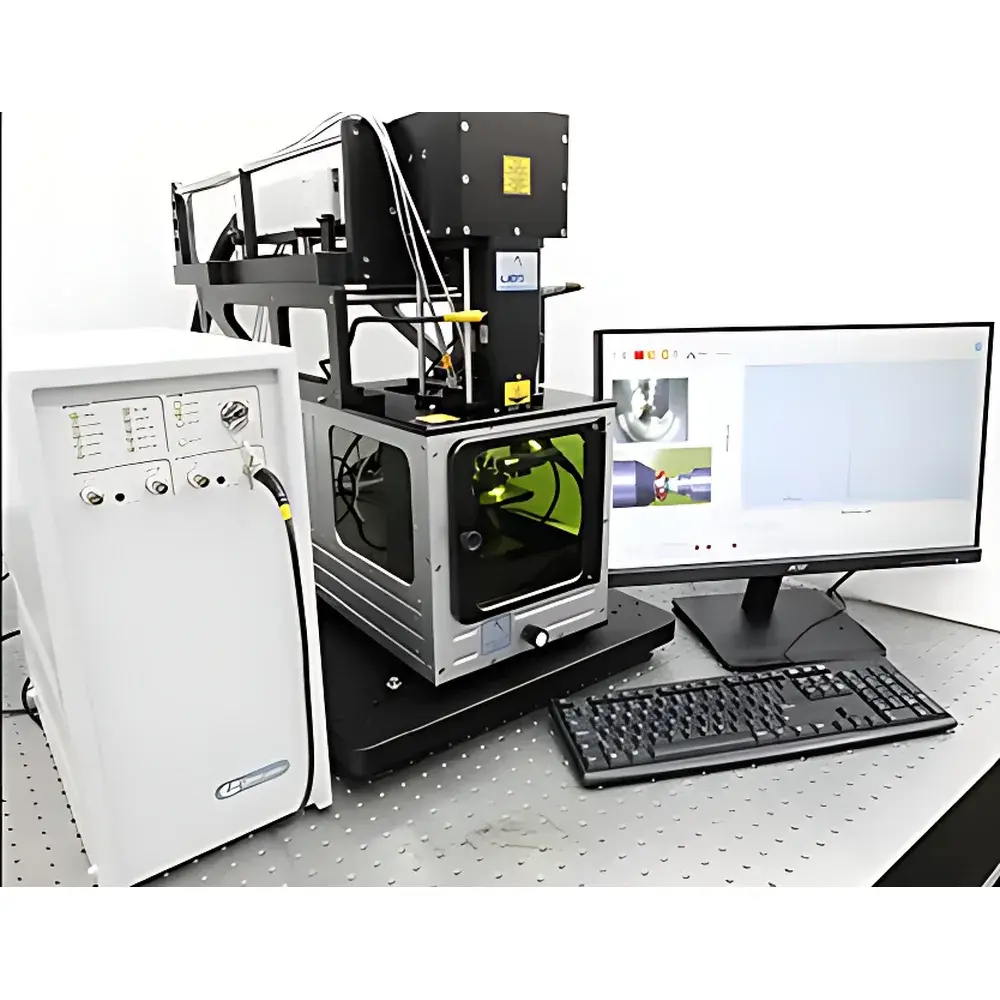
APL Gemmology Laser-Induced Breakdown Spectroscopy (LIBS) System
| Brand | APL / Applied Photonics Ltd |
|---|---|
| Origin | United Kingdom |
| Distributor Type | Authorized Distributor |
| Origin Category | Imported |
| Model | Gemmology |
| Instrument Type | Benchtop |
| Integration | Integrated |
| Laser Wavelength | 266 nm |
| Pulse Energy | >20 mJ per pulse |
| Repetition Rate | Up to 10 Hz |
| Spectral Range (configurable) | 185–1000 nm |
| Number of Spectrometer Channels | Up to 8 |
| Imaging | Dual high-resolution color cameras (top-view + side-view, orthogonal to laser axis) |
| Sample Chamber | Modular — SC-2L manual chamber standard |
| Gas Purge | External inert gas interface (Ar, N₂, He, air) |
| Software | LIBSoft™ v5.x (2-year free upgrade included) |
Overview
The APL Gemmology Laser-Induced Breakdown Spectroscopy (LIBS) System is a purpose-engineered benchtop analytical platform designed for non-destructive elemental characterization of gemstones—particularly critical for detecting trace beryllium (Be) in sapphire, a key indicator of heat treatment. Operating on the fundamental principle of laser-induced plasma spectroscopy, the system delivers a focused 266 nm ultraviolet (UV) nanosecond pulse onto the sample surface, generating a transient microplasma (<1 µs duration). Emitted atomic and ionic line spectra from the plasma are collected and resolved via high-throughput spectrometers, enabling quantitative and semi-quantitative identification of elements across the deep UV to near-infrared range (185–1000 nm). The use of 266 nm excitation—rather than conventional 1064 nm IR lasers—is essential for gemological applications: UV photons are strongly absorbed within the top 100–500 nm of transparent/semi-transparent materials like corundum, minimizing thermal diffusion, subsurface cracking, and mass ablation. This ensures high spatial fidelity, minimal surface modification, and repeatable spectral signatures suitable for forensic-grade provenance and treatment assessment.
Key Features
- Optimized UV-LIBS architecture: 266 nm Q-switched Nd:YAG laser delivering >20 mJ per pulse at up to 10 Hz repetition rate—engineered specifically for low-damage analysis of optically transparent minerals.
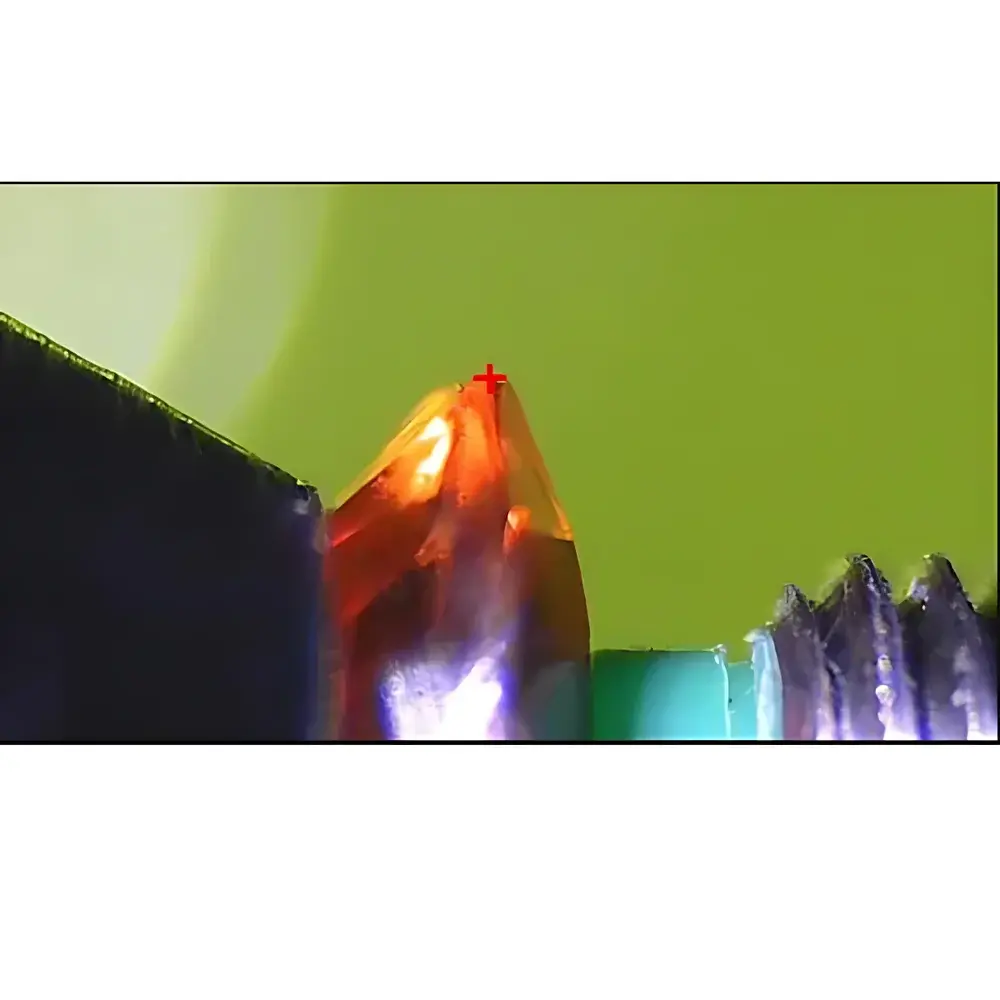
- Dual-axis real-time imaging: Two synchronized high-resolution color CMOS cameras—one mounted vertically (top-view), one orthogonally aligned (side-view)—enable precise laser targeting, focal plane verification, and dynamic monitoring of plasma initiation and ablation morphology.
- Modular spectrometer configuration: Supports up to eight independent spectrometer channels; standard Be detection uses a dedicated 313 nm-centered grating, while full-range expansion (185–1000 nm) enables simultaneous multi-element screening (e.g., Fe, Cr, Ti, Mg, V, Ga).
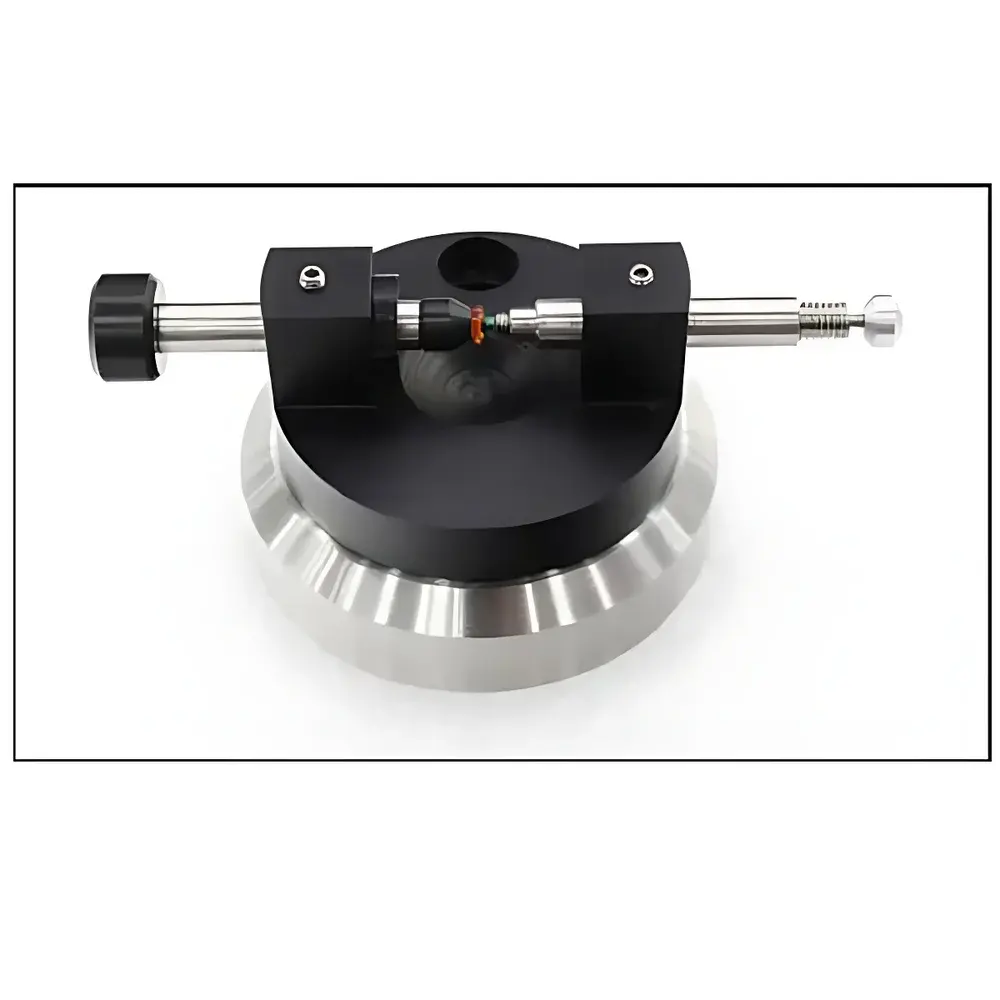
- Interchangeable sample chambers: Includes SC-2L manual chamber with transparent nozzle aperture and side-view optical access; fully compatible with automated XYZ-750 motorized stage chamber for high-throughput or mapping applications.
- Controlled ambient environment: Integrated gas purge port supports connection to external inert gas supplies (Ar, N₂, He, or dry air), enhancing signal-to-noise ratio and stabilizing plasma emission—especially critical for low-Z element detection (e.g., Be, B, Li).
- LIBSoft™ v5.x software suite: Provides real-time spectral acquisition, spectral library matching, peak integration, background subtraction, and calibration curve management; includes audit-trail logging compliant with GLP documentation requirements.
Sample Compatibility & Compliance
The Gemmology system is validated for analysis of faceted and rough gemstone specimens—including sapphire, ruby, spinel, topaz, and quartz—with diameters from 1 mm to 25 mm and thicknesses up to 12 mm. Sample mounting uses custom-designed, non-contact SC-2L holders fabricated from inert fused silica and PTFE, eliminating contamination risk and mechanical stress. All optical paths comply with IEC 60825-1:2014 Class 4 laser safety standards; interlocked chamber design prevents exposure during operation. Data integrity protocols align with ISO/IEC 17025:2017 requirements for testing laboratories, and LIBSoft™ supports optional 21 CFR Part 11-compliant electronic signatures and user-access controls when deployed in regulated environments.
Software & Data Management
LIBSoft™ serves as the central control and analysis hub, offering intuitive workflow-driven interfaces for instrument setup, spectral acquisition, and post-processing. It supports batch acquisition mode for multi-spot analysis, automatic spectral normalization against internal reference lines (e.g., Al I 308.22 nm in corundum), and export of calibrated intensity ratios for statistical comparison. Raw spectral data is saved in vendor-neutral HDF5 format, ensuring long-term archival compatibility. Version-controlled updates (included for two years) incorporate improvements in plasma self-absorption correction algorithms and expanded NIST-based spectral libraries. The software runs on Windows 10/11 (64-bit) and requires a minimum of Intel Core i5-8400, 16 GB RAM, and discrete GPU (NVIDIA GTX 1050 or equivalent) for real-time dual-camera rendering and spectral visualization.
Applications
- Detection and quantification of beryllium (Be I 313.04 nm) in natural vs. heat-treated sapphires—critical for compliance with GIA, SSEF, and Gubelin reporting standards.
- Multi-element fingerprinting of geographic origin: Discrimination of Burmese ruby (Cr-rich, low Fe) versus Mozambican ruby (higher Fe/V) using normalized line intensities.
- Identification of synthetic vs. natural emerald via trace alkali (Li, Na) and halogen (Cl, F) signatures not reproducible in hydrothermal growth.
- Surface contamination screening of mounted stones prior to grading—detecting polishing residues (Ce, La) or plating metals (Rh, Ni).
- Research-grade plasma diagnostics: Time-resolved spectral acquisition (via external trigger sync) for plasma temperature and electron density estimation using Boltzmann plot and Stark broadening methods.
FAQ
Is the Gemmology system capable of quantitative analysis?
Yes—when coupled with matrix-matched certified reference materials (CRMs) and internal standardization (e.g., Al line intensity), the system achieves relative standard deviations <5% for Be concentrations ≥10 ppm under optimized Ar purge conditions.
Can the system analyze mounted or foil-wrapped stones?
Mounted stones may be analyzed if the setting allows unobstructed optical access to the girdle or pavilion; foil-backed stones require removal due to spectral interference from metallic reflectors and potential plasma shielding.
What maintenance does the laser require?
The diode-pumped Nd:YAG laser has a rated lifetime of ≥1 × 10⁸ pulses; routine maintenance is limited to periodic alignment verification and optics cleaning—no consumables or gas refills required.
Is remote operation supported?
Yes—LIBSoft™ includes TCP/IP API support for integration into laboratory information management systems (LIMS) and allows secure remote monitoring and control via VPN-configured networks.
Does APL provide application support and method development assistance?
All Gemmology systems include one day of on-site or virtual application training; extended method validation services—including CRM selection, calibration protocol development, and ISO 17025 gap analysis—are available upon request.
Related Products





