
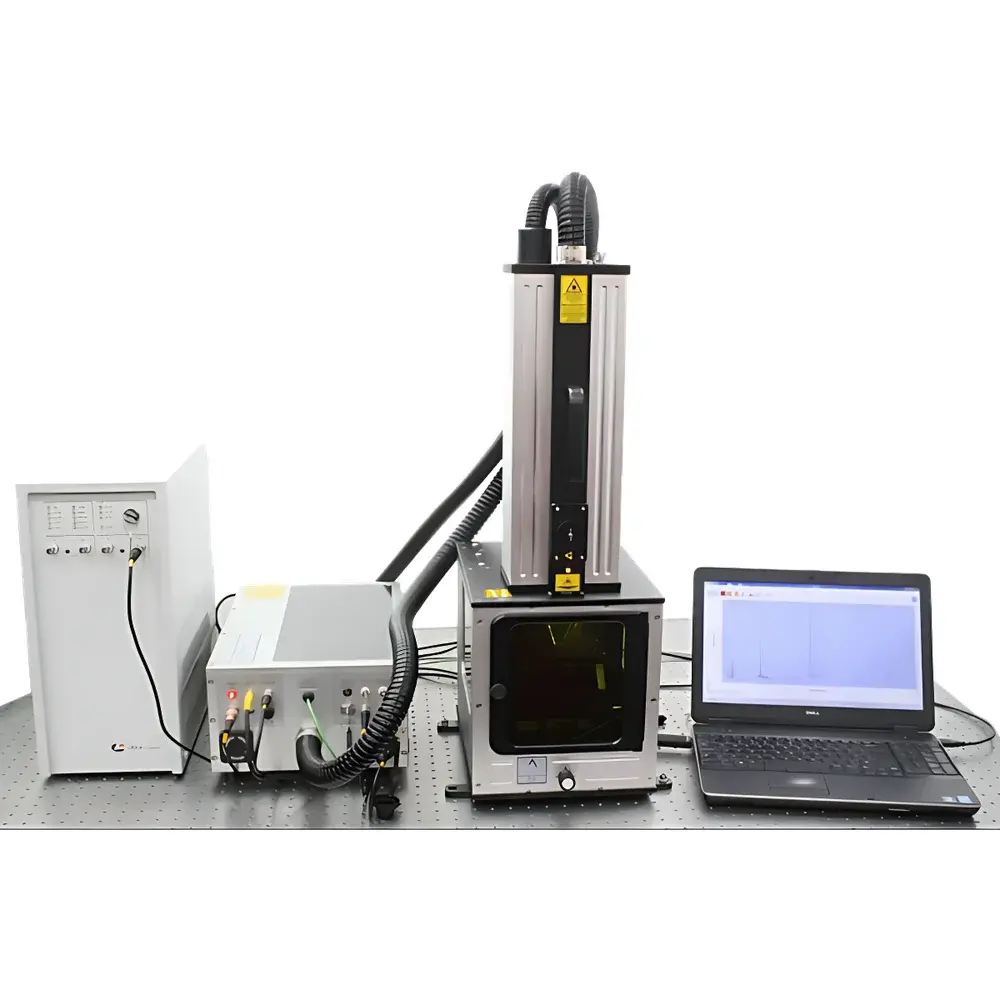
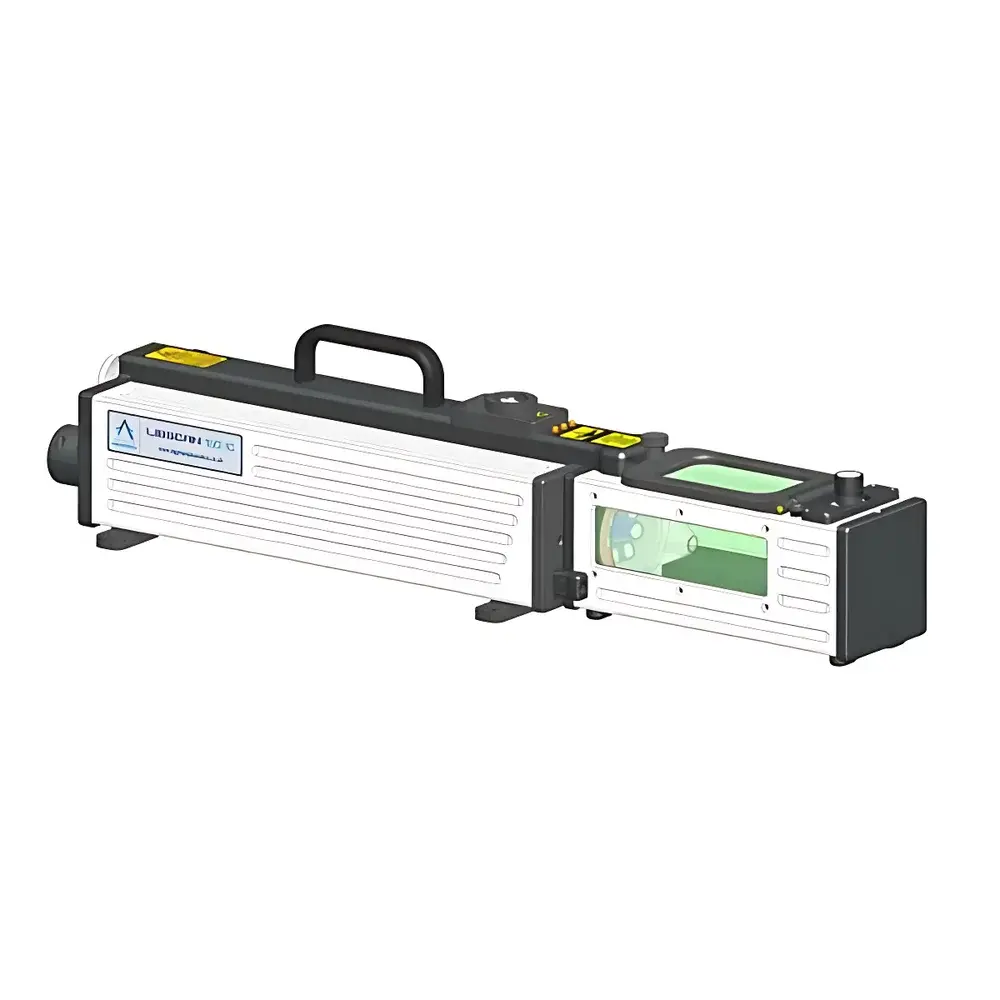
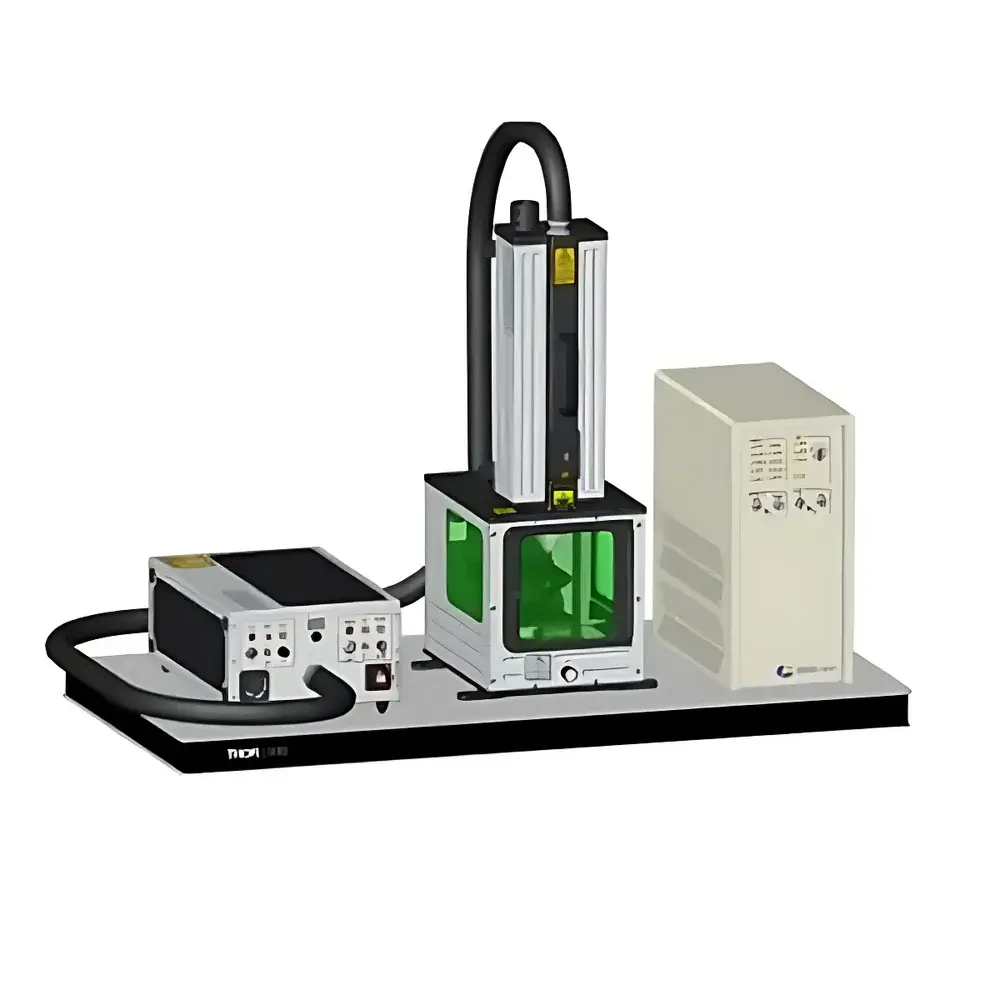
APL LIBSCAN 150-10 Laser Induced Breakdown Spectroscopy (LIBS) System
| Brand | APL/Applied Photonics Ltd |
|---|---|
| Origin | United Kingdom |
| Manufacturer Type | Authorized Distributor |
| Origin Category | Imported |
| Model | 150-10 |
| Instrument Type | Benchtop |
| Integration | Integrated |
| Laser Energy | >20 mJ |
| Laser Wavelength | 1064 nm |
| Repetition Rate | 10 Hz (150 mJ) or 20 Hz (120 mJ) |
| Plasma Light Collection Channels | 6 or 8 |
| Spectrometer Support | Up to 8 independent spectrometers |
| Spectral Range | ~182–1016 nm |
| Sample Chamber Options | Modular, motorized multi-axis stage, open-beam configuration |
| Gas Purge | Compatible with Ar, N₂, He, or air supply |
| Optional Imaging Kit | IMG-HR (2.5 MP color imaging) |
| Software | LIBSoft™ (free updates for 2 years) |
| Host Computer | External laptop or desktop required (specifications available upon request) |
Overview
The APL LIBSCAN 150-10 is a benchtop, integrated Laser-Induced Breakdown Spectroscopy (LIBS) system engineered for high-fidelity elemental analysis across research laboratories, industrial R&D facilities, and field-deployable applications. Operating on the fundamental principle of laser ablation—where a pulsed Nd:YAG laser (1064 nm) generates transient microplasmas on sample surfaces—the system captures time-resolved atomic and ionic emission spectra to enable quantitative and semi-quantitative compositional mapping. Its modular architecture supports both controlled laboratory environments and ruggedized field use, including integration into process monitoring workflows. Unlike fixed-configuration LIBS platforms, the LIBSCAN 150-10 allows users to configure optical pathways, detection geometry, and sample handling independently—making it particularly suited for method development, calibration transfer studies, and validation against reference standards (e.g., certified reference materials per ISO/IEC 17025).
Key Features
- Modular optical design with configurable plasma light collection: 6-channel or 8-channel optimized optics delivering high solid-angle collection efficiency and signal-to-noise ratio across UV-VIS-NIR spectral regions.
- High-energy pulsed laser source: 150 mJ at 10 Hz (or 120 mJ at 20 Hz), enabling robust ablation on conductive, non-conductive, and heterogeneous materials—including metals, ceramics, soils, polymers, and biological tissues.
- Flexible sample interface options: Interchangeable sample chambers—including motorized XYZ-θφ stages with programmable positioning, vacuum-compatible variants, and open-beam configurations for in-situ or large-part analysis without enclosure constraints.
- Inert gas purging capability: Integrated gas manifold compatible with argon, nitrogen, helium, or compressed air to suppress atmospheric nitrogen/oxygen spectral interferences and enhance line intensity and reproducibility—critical for trace element detection (e.g., C, P, S, Li).
- Optional high-resolution imaging module (IMG-HR): 2.5 MP color camera co-aligned with the LIBS focal point, enabling precise spatial registration of spectra to surface morphology, crater location, and heterogeneity assessment.
- Scalable spectroscopic detection: Supports up to eight synchronized, high-resolution spectrometers (e.g., CCD or CMOS-based) covering a combined spectral range from ~182 nm to 1016 nm—ensuring full coverage of key analytical lines (e.g., Fe I 371.99 nm, Al I 396.15 nm, Mg II 279.55 nm).
Sample Compatibility & Compliance
The LIBSCAN 150-10 accommodates solid, powdered, and pressed pellet samples without mandatory pre-treatment. Its modular stage system enables automated rastering, depth profiling, and line scans—facilitating compliance with ASTM E2926-22 (Standard Test Method for Determination of Elements in Solid Samples by LIBS) and supporting GLP/GMP-aligned workflows when paired with audit-trail-enabled software configurations. While the base system does not include built-in 21 CFR Part 11 compliance features, LIBSoft™ can be deployed in validated environments with external electronic signature and access control systems. All optical components meet RoHS and CE directives; laser safety conforms to IEC 60825-1:2014 Class 4 requirements, with interlocked enclosures available as optional accessories.
Software & Data Management
LIBSoft™ is a dedicated, Windows-based application providing real-time spectral acquisition, pulse synchronization, stage control, and multivariate data processing. It includes baseline correction, peak identification (NIST Atomic Spectra Database-integrated), spectral averaging, and PCA-driven clustering. Raw spectral data are saved in HDF5 format for long-term archival and third-party analysis (e.g., Python SciPy, MATLAB, Unscrambler®). Two years of complimentary software updates ensure compatibility with evolving operating systems and spectral libraries. For regulated environments, customers may implement supplementary documentation packages—including IQ/OQ protocols, URS templates, and change control logs—to support internal validation processes.
Applications
- Metallurgical QC/QA: Rapid alloy grade verification, inclusion analysis, and coating thickness estimation via layer-by-layer ablation.
- Geoscience & Mining: In-field ore characterization, rare earth element screening, and soil contamination mapping (e.g., Pb, As, Cd).
- Environmental Forensics: Identification of heavy metal speciation in fly ash, sludge, and particulate matter collected on filters.
- Pharmaceutical Development: Elemental impurity screening per ICH Q3D guidelines—particularly for catalyst residues (Pd, Pt, Ni) in active pharmaceutical ingredients.
- Academic Research: Fundamental plasma diagnostics, calibration-free LIBS (CF-LIBS) algorithm development, and hybrid LIBS–Raman coupling experiments.
FAQ
Is the LIBSCAN 150-10 suitable for regulatory submissions?
Yes—when deployed with documented procedures, calibrated standards, and appropriate software controls, it supports data generation aligned with ASTM, ISO, and ICH frameworks. Full 21 CFR Part 11 compliance requires customer-specific IT infrastructure integration.
Can the system operate in ambient air without inert gas?
Yes, though detection limits for light elements (e.g., C, N, O, H) improve significantly under argon or helium purge due to reduced continuum background and enhanced line-to-background ratios.
What spectrometer brands/models are compatible?
Standard integration is provided for Ocean Insight, Avantes, and Horiba spectrometers with USB3 or Ethernet interfaces and SDK support for LIBSoft™ synchronization.
Does the system include calibration standards?
No—certified reference materials (CRMs) must be selected based on application requirements (e.g., NIST SRMs, BAM standards); APL provides application notes and calibration protocol templates.
Is remote operation supported?
Yes—LIBSoft™ supports networked control via TCP/IP; secure remote desktop access is enabled through standard IT policies, with no proprietary remote-control software required.
Related Products





