
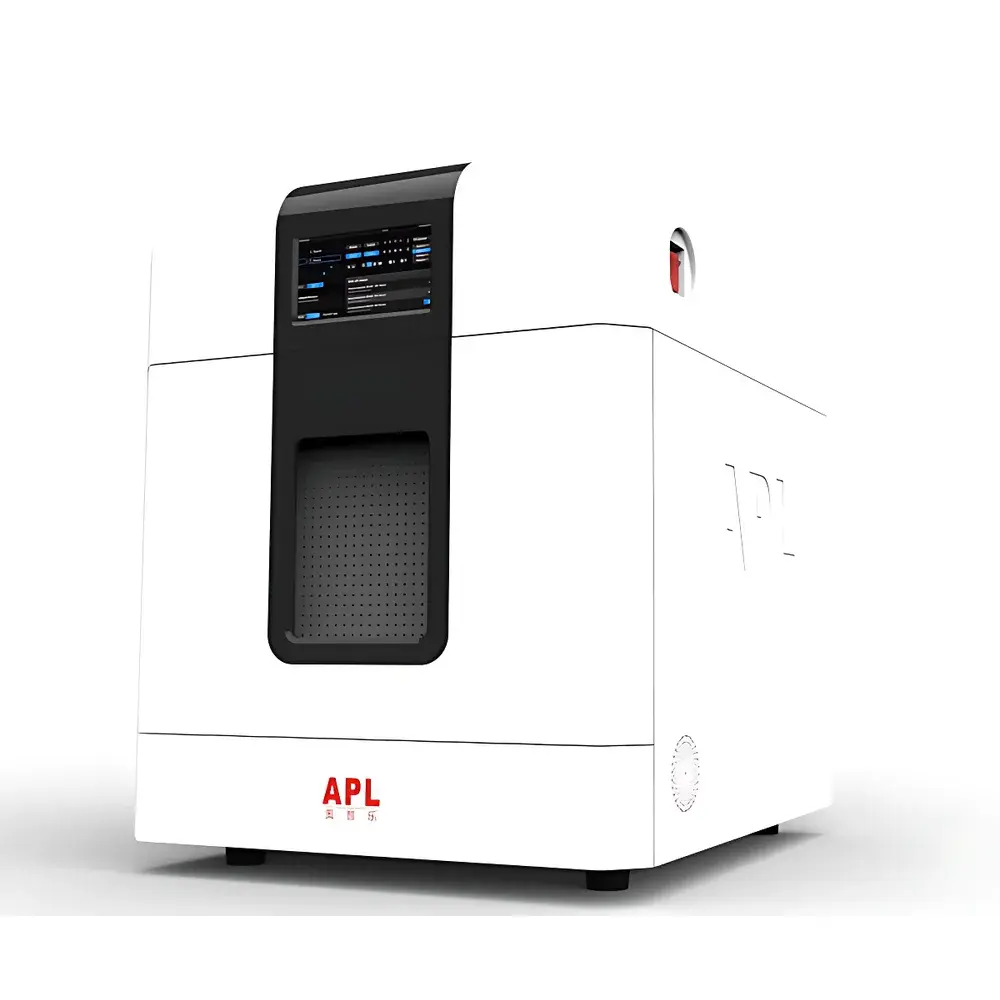
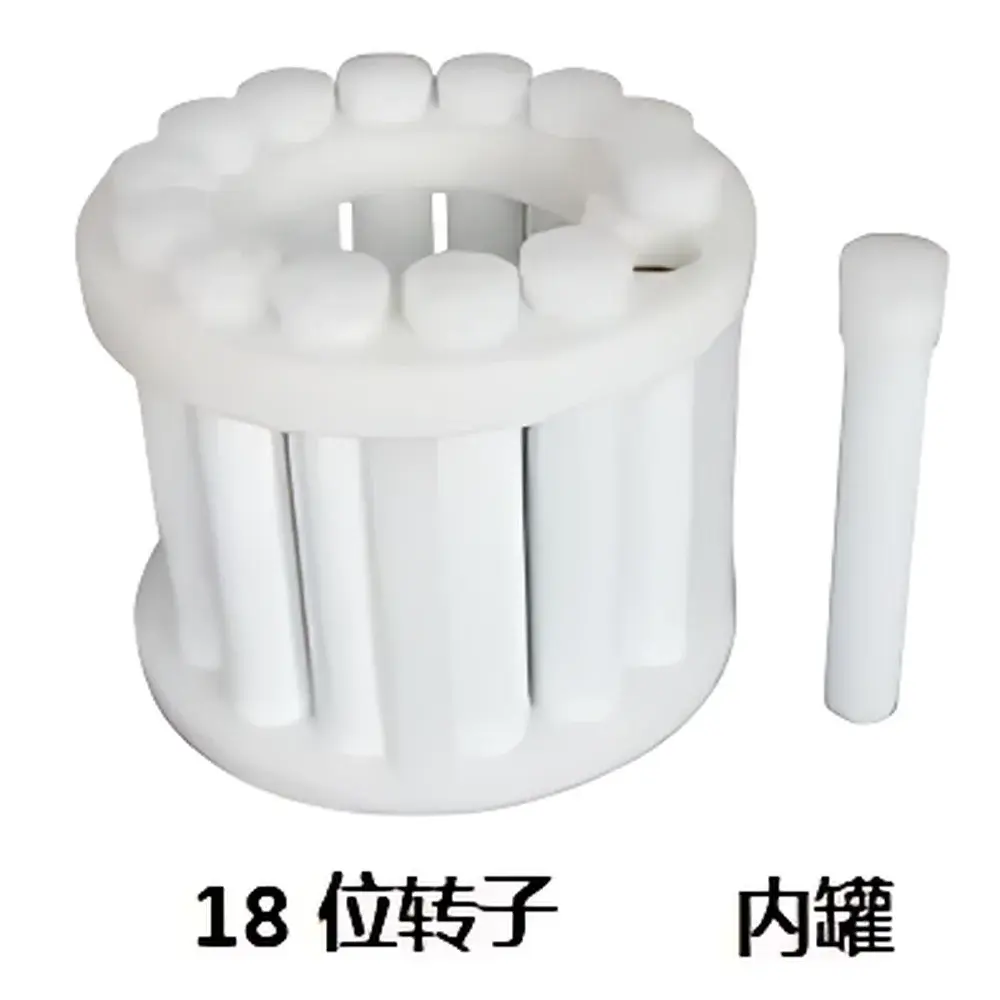
APL Optimum Touchwin2.0 18-Position High-Throughput Microwave Digestion System
| Brand | APL |
|---|---|
| Origin | Sichuan, China |
| Manufacturer Type | Direct Manufacturer |
| Origin Category | Domestic (China) |
| Model | Touchwin2.0 (18-Position) |
| Cavity Class | Industrial-Grade |
| Sample Capacity | 18 |
| Microwave Source | High-Power Magnetron |
| Max Temperature | 300 °C |
| Temp Measurement Accuracy | ±0.01 °C |
| Temp Control Stability | ±1 °C |
| Temp Uniformity | ±0.01 °C |
| Max Pressure | 15 MPa |
Overview
The APL Optimum Touchwin2.0 18-Position High-Throughput Microwave Digestion System is an industrial-grade microwave sample preparation platform engineered for precision, safety, and reproducibility in regulated analytical laboratories. It operates on the principle of controlled microwave energy absorption by polar molecules—primarily water and acids—in sealed quartz or fluoropolymer vessels, enabling rapid, uniform, and complete decomposition of organic matrices under elevated temperature and pressure. Designed to meet the stringent demands of elemental analysis workflows, this system supports closed-vessel digestion protocols compliant with ASTM D5687, ISO 11885, USP , and EPA Methods 3051A, 3052, and 3015A. Its robust 316L stainless steel resonant cavity—reinforced with thickened structural walls and internally coated with multi-layer PFA (perfluoroalkoxy alkane)—ensures long-term resistance to aggressive reagents including concentrated HNO₃, HF, HCl, and aqua regia, even during extended high-pressure cycles.
Key Features
- Industrial-class 316L stainless steel microwave cavity with PFA-lined interior for exceptional corrosion resistance and thermal stability
- Simultaneous real-time monitoring of temperature and pressure across all 18 vessels via non-contact infrared scanning and individual pressure transducers—no wiring, no cross-talk, no calibration drift
- Continuous-wave (non-pulsed) high-power magnetron output with dynamic power modulation, enabling precise kinetic control over digestion ramping, hold, and cooling phases
- Touchscreen HMI running Touchwin2.0 software: intuitive method programming, live graphical display of temperature/time/power profiles, and embedded library of validated digestion methods for food, pharmaceuticals, environmental, and geological matrices
- Modular rotor compatibility: supports both 18-position × 60 mL high-throughput rotors and 16-position × 110 mL high-capacity rotors, each fitted with TFM-1700 (3M) modified PTFE liners featuring laser-etched traceability identifiers
- Integrated safety architecture including dual independent pressure relief mechanisms, cavity interlock sensors, and real-time fault diagnostics with automatic shutdown
Sample Compatibility & Compliance
The Touchwin2.0 accommodates a wide range of solid and semi-solid samples—including biological tissues, plant matter, soils, sediments, polymers, and pharmaceutical tablets—when processed in certified microwave-transparent digestion vessels. All vessel assemblies comply with CE EN 61000-6-4 (EMC) and EN 61000-6-2 (immunity), and are rated for sustained operation up to 15 MPa and 300 °C. The system’s dual-sensor architecture satisfies GLP/GMP documentation requirements for audit trails: every run logs timestamped temperature and pressure values per vessel, along with operator ID, method name, and instrument status flags. Data integrity is further ensured through optional 21 CFR Part 11-compliant electronic signatures and role-based access control when connected to networked LIMS environments.
Software & Data Management
Touchwin2.0 firmware provides native USB export of CSV-formatted raw data (time-stamped T/P curves, power history, error logs) and supports optional Ethernet/Wi-Fi connectivity for remote monitoring via secure web interface or mobile apps (iOS/Android). When interfaced with a laboratory PC, the system enables advanced post-run analysis using APL’s Digestion Analytics Suite—featuring automated peak detection for exothermic events, comparative method validation reports, and statistical process control (SPC) charts for batch-to-batch consistency. All software modules adhere to ICH Q9 principles for analytical method lifecycle management and support IQ/OQ/PQ documentation templates aligned with ISO/IEC 17025 accreditation requirements.
Applications
This system serves as a critical front-end solution for elemental quantification workflows requiring high digestion efficiency and low blank levels. It is routinely deployed prior to ICP-MS, ICP-OES, GF-AAS, and HR-CS AAS analyses for determination of trace metals (e.g., As, Cd, Cr, Pb, Hg, Ni, Co) in complex matrices. Validated applications include: heavy metal screening in infant formula per EU Commission Regulation (EU) No 1881/2006; leachable metal testing in pharmaceutical excipients per USP /; total recoverable metals in wastewater sludge per EPA Method 3050B; and speciation-ready digests for Hg and Se in seafood per AOAC 2013.06. The platform also supports non-digestion microwave-assisted reactions such as closed-vessel solvent extraction (MAE), hydrothermal synthesis, and catalytic organic transformations requiring inert atmosphere control.
FAQ
What types of digestion vessels are compatible with the Touchwin2.0 system?
Standard configurations include rotors with 18 × 60 mL TFM-1700 liners or 16 × 110 mL high-capacity liners—all manufactured to ISO 14001-certified cleanroom standards and supplied with full lot traceability.
Does the system support regulatory compliance for pharmaceutical QC labs?
Yes. With optional 21 CFR Part 11 add-on module, it delivers electronic signatures, audit trail logging, and user permission tiers required for FDA-submitted analytical data packages.
Can temperature and pressure data be exported for third-party statistical analysis?
Yes. Raw time-series data exports in CSV format are fully compatible with JMP, Minitab, and Python pandas for multivariate regression, outlier detection, and SPC charting.
Is remote monitoring available without installing proprietary software?
Yes. The built-in web server allows browser-based access to real-time cavity video feed (via optional IR camera), vessel status dashboard, and historical run logs—no client installation required.
How does the system ensure uniform heating across all 18 positions?
Through a combination of cavity mode-stirring design, rotational sample movement, and per-vessel infrared thermometry that dynamically adjusts magnetron output to compensate for positional variance in field distribution.
Related Products



