
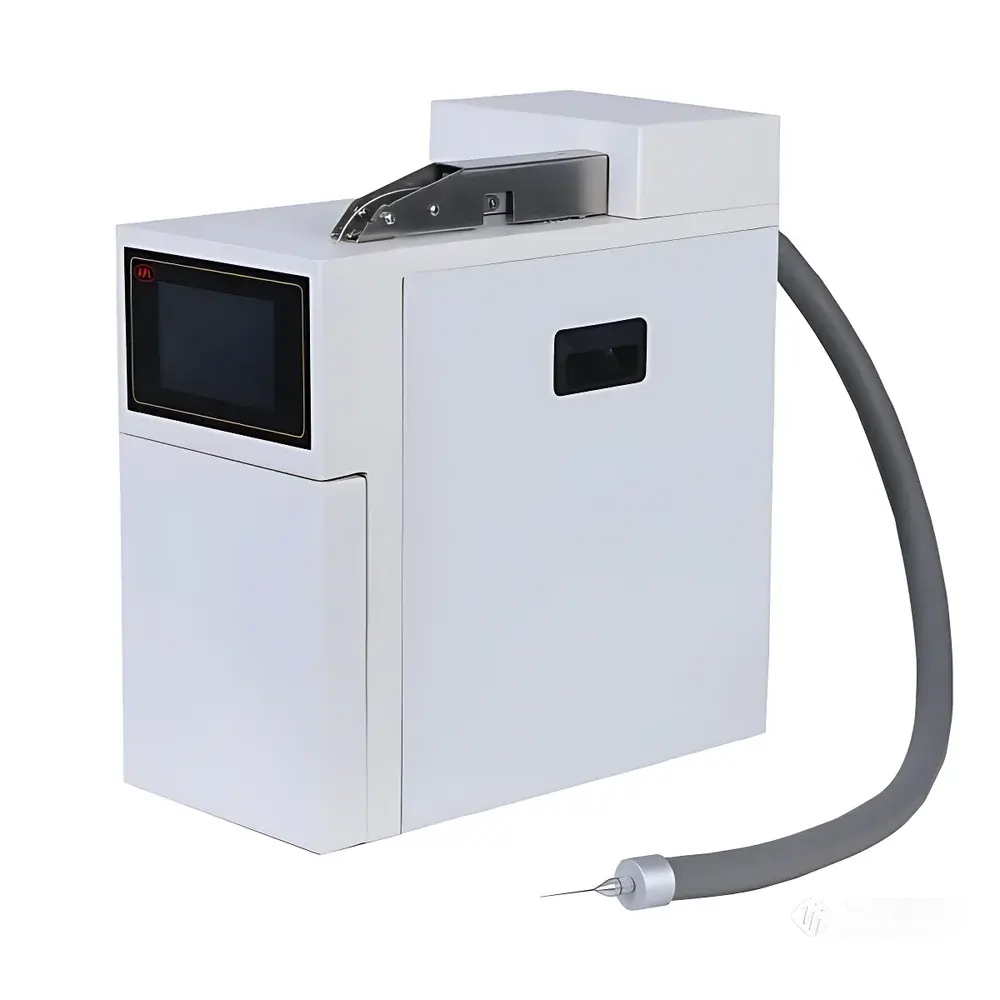
APL Optolong TD-2D Dual-Stage Thermal Desorber
| Brand | APL Optolong |
|---|---|
| Model | APL-TD-2D |
| Origin | Sichuan, China |
| Manufacturer Type | Direct Manufacturer |
| Instrument Type | Dual-Stage Thermal Desorber |
| Desorption Temperature Range | Ambient to 400 °C |
| Cryo-Focusing Trap Temperature | −20 °C (Peltier-cooled) |
| Analyte Recovery Rate | >98% |
| Sample Position Capacity | 1 tube per run |
| Valve System | Motorized 6-Port Rotary Valve + Solenoid Valves |
| Sample Tube Standard | 89 mm length × 6.4 mm OD, max. 420 °C tolerance |
| Flash Heating Rate (2nd Stage) | >3000 °C/min |
| Transfer Line Temp Control | Ambient to 260 °C, ±1 °C |
| GC Trigger Output | TTL-compatible synchronous pulse |
Overview
The APL Optolong TD-2D is a dual-stage thermal desorber engineered for high-fidelity, quantitative analysis of volatile and semi-volatile organic compounds (VOCs and SVOCs) in environmental, industrial hygiene, and indoor air quality applications. It operates on the principle of sequential thermal desorption: first-stage desorption releases analytes from the sorbent tube under controlled heating and inert gas flow; second-stage cryofocusing traps and refocuses volatiles at −20 °C using Peltier-based cooling, followed by rapid flash desorption (>3000 °C/min) directly into the gas chromatograph (GC) inlet. This two-step process minimizes band broadening, maximizes peak resolution, and ensures reproducible transfer efficiency—critical for trace-level quantitation in compliance-driven workflows. Designed and manufactured in Sichuan, China, the TD-2D meets the stringent thermal stability, timing accuracy, and system integrity requirements specified in multiple Chinese national and environmental standards—including HJ 644–2013, HJ 583–2010, HJ 734–2014, and GB/T 18883–2002.
Key Features
- Motorized 6-port rotary valve integrated with solenoid valves enables fully automated, programmable sequence control of desorption, GC injection, and trap/line purging—eliminating manual intervention and inter-run variability.
- Independent temperature zoning: desorption oven (ambient–400 °C), valve manifold (ambient–220 °C), and transfer line (ambient–260 °C), each with ±1 °C stability and real-time digital feedback.
- Peltier-cooled cryotrap maintains −20 °C without external chillers or liquid nitrogen—reducing operational cost, footprint, and maintenance overhead while ensuring consistent focusing performance.
- Simple-Lock™ mechanical interface secures standard 89 mm × 6.4 mm adsorption tubes in <2 seconds with leak-tight sealing; tubes rated to 420 °C and capped with PTFE-lined septa for extended sample integrity.
- Onboard calibration mode supports simulated sampling at 100 mL/min, enabling direct generation of multi-point calibration curves without external gas dilution systems.
- TTL-level GC trigger output synchronizes desorption events with GC oven start and data acquisition—ensuring temporal alignment essential for retention time locking and method transfer.
- Touchscreen HMI with intuitive workflow navigation allows method creation, storage, recall, and real-time status monitoring of all thermal zones, valve positions, and gas flows.
Sample Compatibility & Compliance
The TD-2D accommodates industry-standard stainless-steel or glass sorbent tubes packed with single- or multi-bed media (e.g., Tenax TA, Carbopack B/X, Carboxen 1000), supporting both passive and active sampling configurations. Its thermal architecture and timing precision are validated against the procedural requirements of HJ 644–2013 (VOCs in ambient air via TD-GC/MS), HJ 734–2014 (VOCs in stack emissions), and GB 50325–2020 (indoor air contaminants in civil construction). All temperature ramps, hold times, and purge flows are programmable per ISO/IEC 17025-aligned validation protocols. The system supports audit-ready operation when paired with GLP-compliant GC data systems—retaining full parameter logs, method versions, and user timestamps.
Software & Data Management
Method files are stored locally on the embedded controller with password-protected access levels (operator, supervisor, administrator). Each method includes editable sequences for primary desorption, cryofocusing dwell, flash desorption, post-injection bake-out, and tube regeneration. All temperature setpoints, flow rates (0–600 mL/min adjustable), and timing parameters are logged with UTC timestamps and exportable as CSV. While the TD-2D does not include proprietary chromatography software, its hardware-level GC synchronization and deterministic valve actuation ensure seamless integration with third-party platforms—including OpenLab CDS, Chromeleon, and Empower—enabling full 21 CFR Part 11 compliance when deployed within validated laboratory IT infrastructures.
Applications
- Regulatory monitoring of ambient and indoor air VOCs (benzene, toluene, xylenes, formaldehyde precursors, aldehydes, and halogenated compounds).
- Workplace exposure assessment per OSHA and NIOSH methods adapted to Chinese occupational health standards.
- Testing of building materials, furniture, and automotive interiors for off-gassing emissions (aligned with HJ/T 400–2007).
- Method development and validation for solid-phase microextraction (SPME) support and sorbent tube performance benchmarking.
- Quality control of activated carbon filters, air purification systems, and emission control catalysts via breakthrough curve analysis.
FAQ
Does the TD-2D support multi-tube batch processing?
No—the TD-2D is a single-sample-position instrument optimized for method development, high-precision calibration, and low-throughput regulatory submissions. For high-throughput labs, APL offers the TD-20 series with 20-tube autosamplers.
Can I use non-standard tube dimensions?
The Simple-Lock™ interface is mechanically designed for 89 mm × 6.4 mm tubes only. Use of non-conforming tubes may compromise seal integrity and thermal uniformity.
Is the −20 °C trap temperature adjustable?
The Peltier module is fixed at −20 °C to ensure optimal focusing of C2–C12 hydrocarbons and oxygenates; no user adjustment is provided.
What GC interfaces are compatible?
The system delivers a standard 1/16″ stainless-steel transfer line terminating in a universal ferrule; it connects directly to split/splitless inlets, PTV injectors, and cold on-column modules across Agilent, Thermo, Shimadzu, and PerkinElmer platforms.
How is system performance verified?
APL provides a certified verification kit containing certified VOC standards on pre-packed tubes; recovery testing at ≥98% across 10–500 ng levels satisfies HJ 644–2013 acceptance criteria.
Related Products





