Apogee SI-Series Infrared Radiometers (SI-111, SI-121, SI-131, SI-1H1, SI-411)
| Brand | Apogee |
|---|---|
| Origin | USA |
| Model Variants | SI-111, SI-121, SI-131, SI-1H1, SI-411 |
| Output Type | Analog Voltage (SI-1xx) / SDI-12 Digital (SI-4xx) |
| Field of View | 22.5° (SI-111/SI-411), 5° (SI-121/SI-421), 1° (SI-131/SI-431), 180° horizontal (SI-1H1/SI-4H1) |
| Spectral Range | 8–14 µm |
| Measurement Range | –60 °C to +110 °C |
| Calibration Uncertainty | ±0.2 °C (–20 °C to +65 °C), ±0.5 °C (–40 °C to +80 °C) |
| Response Time (95%) | 0.6 s |
| Sensitivity | 60 µV/°C |
| Operating Environment | –55 °C to +80 °C, 0–100% RH (non-condensing) |
| IP Rating | IP68 connector |
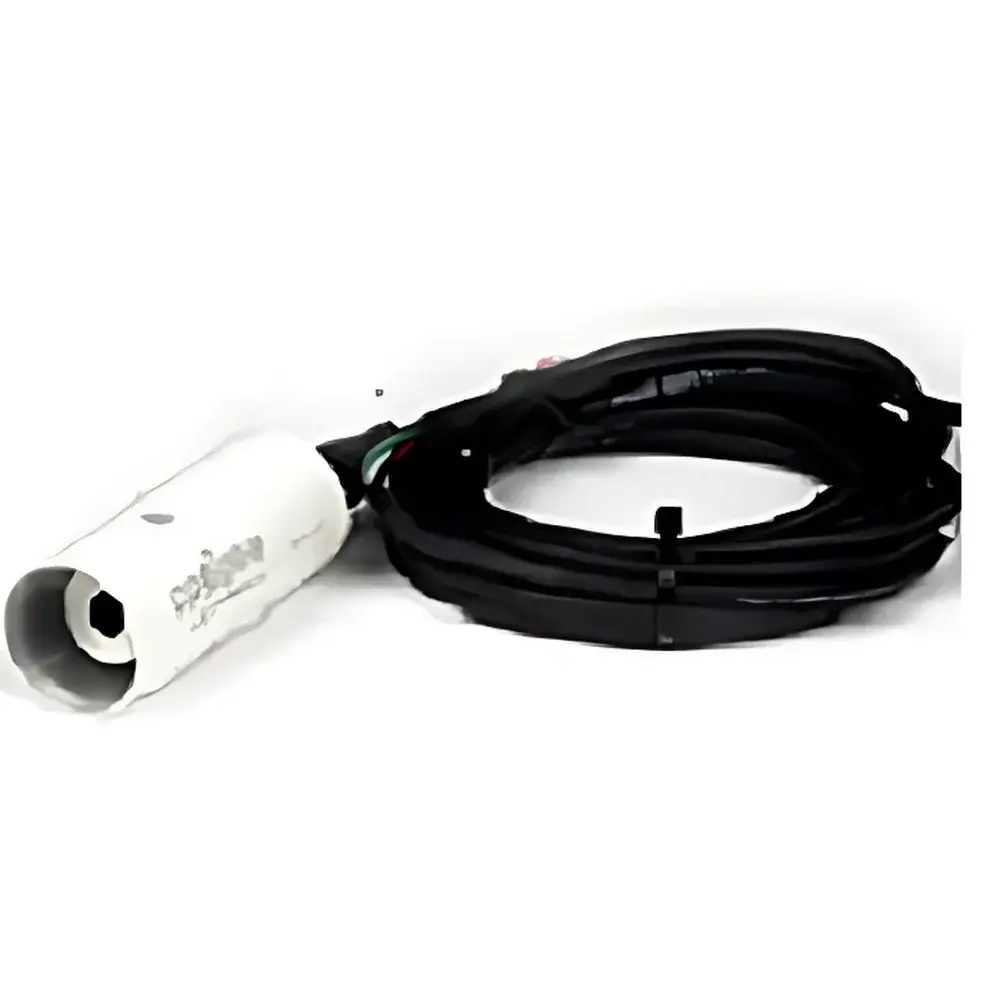
| Cable | 5 m, 4-conductor shielded twisted-pair, TPR jacket |
| Mass | 190 g (incl. cable) |
| Warranty | 4 years |
Overview
The Apogee SI-Series infrared radiometers are precision non-contact temperature measurement instruments engineered for long-term field deployment in environmental, agricultural, and industrial monitoring applications. Based on thermopile detector technology with a germanium optical filter, each model operates within the atmospheric transmission window (8–14 µm), enabling accurate surface temperature quantification without physical contact. Unlike contact-based sensors, these radiometers measure emitted infrared energy from surfaces—soil, vegetation canopies, road pavements, snowpacks, or water bodies—and convert it into calibrated voltage or digital output proportional to target temperature. The SI-1xx series delivers analog voltage output (–3.3 mV to +3.3 mV over –55 °C to +55 °C detector temperature range), while the SI-4xx variants integrate SDI-12 communication protocol for direct compatibility with dataloggers compliant with ANSI/TIA-568 and ISO/IEC 11801 standards. All models feature a robust marine-grade stainless-steel IP68 connector located at the sensor head, facilitating rapid field replacement and minimizing downtime during recalibration or maintenance cycles.
Key Features
- Thermopile-based detection with high-stability germanium interference filter ensuring spectral selectivity within the 8–14 µm band
- Multiple field-of-view (FOV) options: standard (22.5°), narrow (5°), ultra-narrow (1°), and hemispherical/horizontal (180°) configurations to match spatial resolution requirements
- IP68-rated stainless-steel connector mounted at sensor head—enabling tool-free disconnection and reducing mechanical stress on internal wiring
- Low-drift performance: <2% annual slope change under clean-filter conditions, verified per ASTM E1256-22 Annex A4 for long-term radiometric stability
- Fast thermal response: 0.6 s time constant (95% signal rise), optimized for dynamic surface temperature tracking in rapidly changing microclimates
- Ruggedized construction: 23 mm diameter × 60 mm length aluminum housing; TPR-jacketed 5 m shielded twisted-pair cable rated for UV exposure, sub-zero flexibility, and high moisture resistance
- Extended operational envelope: –55 °C to +80 °C ambient, 0–100% relative humidity (non-condensing), validated per IEC 60068-2 environmental testing protocols
Sample Compatibility & Compliance
The SI-Series is designed for emissivity-corrected measurements across heterogeneous natural and engineered surfaces. Typical emissivity settings (0.90–0.98) are applicable for vegetative canopies, bare soil, asphalt, concrete, and freshwater ice—making it suitable for USDA ARS field trials, NOAA climate monitoring networks, and DOT pavement condition assessment programs. Calibration traceability follows NIST-traceable blackbody reference standards (SRM 1900 series), with uncertainty budgets documented per ISO/IEC 17025:2017 Clause 7.6.3. Each unit ships with individual calibration certificate indicating correction coefficients for detector temperature compensation and FOV-dependent solid-angle corrections. The analog output models comply with IEC 61000-6-2 (immunity) and IEC 61000-6-4 (emissions); SDI-12 variants meet ANSI/ISA-50.00.01-2015 electrical interface specifications. No FDA or GLP regulatory claims apply, as the devices are not intended for clinical or pharmaceutical process monitoring.
Software & Data Management
While the SI-Series operates as a standalone analog or SDI-12 sensor, integration with third-party data acquisition systems—including Campbell Scientific CR-series, Onset HOBO RX3000, and Decagon EM50G—is fully supported via published pinout schematics and protocol documentation. Apogee provides free Excel-based conversion tools for voltage-to-temperature transformation using factory-determined sensitivity (60 µV/°C) and thermistor bridge equations. For SDI-12 models, command syntax adheres to SDI-12 v1.4 specification, supporting multi-sensor addressing, asynchronous polling, and burst-mode sampling. Raw output requires application of detector temperature compensation using the integrated thermistor (0–2500 mV output, excitation = 2500 mV typical). No proprietary software or cloud platform is required; all calibration parameters and correction algorithms are transparent and reproducible in MATLAB, Python (NumPy/SciPy), or LabVIEW environments. Audit trails for field recalibrations may be maintained externally in accordance with ISO 9001:2015 Clause 8.5.2.
Applications
- Plant ecophysiology: Canopy temperature mapping for stomatal conductance estimation and drought stress monitoring (aligned with FAO-56 dual-source evapotranspiration modeling)
- Transportation infrastructure: Pavement surface temperature profiling to predict freeze-thaw cycles and optimize de-icing operations (used in MnDOT and WSDOT winter maintenance protocols)
- Land surface energy balance studies: Partitioning net radiation into sensible and latent heat flux components using dual-sensor (upwelling/downwelling) configurations
- Hydrological monitoring: Snow surface temperature trends correlated with melt onset timing and albedo feedback mechanisms
- Greenhouse and controlled-environment agriculture: Spatial thermal uniformity assessment across cultivation zones without airflow disturbance
- Urban heat island research: High-resolution thermal mapping of impervious surfaces versus vegetated corridors using UAV-mounted SI-131 arrays
FAQ
What is the difference between SI-111 and SI-411?
The SI-111 outputs an analog voltage signal (–3.3 mV to +3.3 mV), requiring external signal conditioning and analog-to-digital conversion. The SI-411 uses SDI-12 digital communication, enabling direct connection to compatible dataloggers without additional hardware.
Can the SI-Series measure air temperature?
No. These are infrared radiometers designed exclusively for surface temperature measurement. Air temperature requires a ventilated, shielded thermistor or RTD sensor.
Is emissivity adjustment possible in-field?
Emissivity correction must be applied during post-processing using known surface emissivity values (e.g., 0.96 for green leaves, 0.93 for dry soil). No onboard emissivity setting exists.
How often does recalibration require?
Apogee recommends recalibration every 2 years for critical applications or after mechanical shock, but long-term drift remains <2% annually under proper maintenance per ISO/IEC 17025 guidance.
Does the sensor require power supply regulation?
Yes. Stable excitation voltage (2500 mV ±1%) is required for thermistor-based detector temperature compensation. Unregulated sources may introduce systematic error exceeding ±0.3 °C.