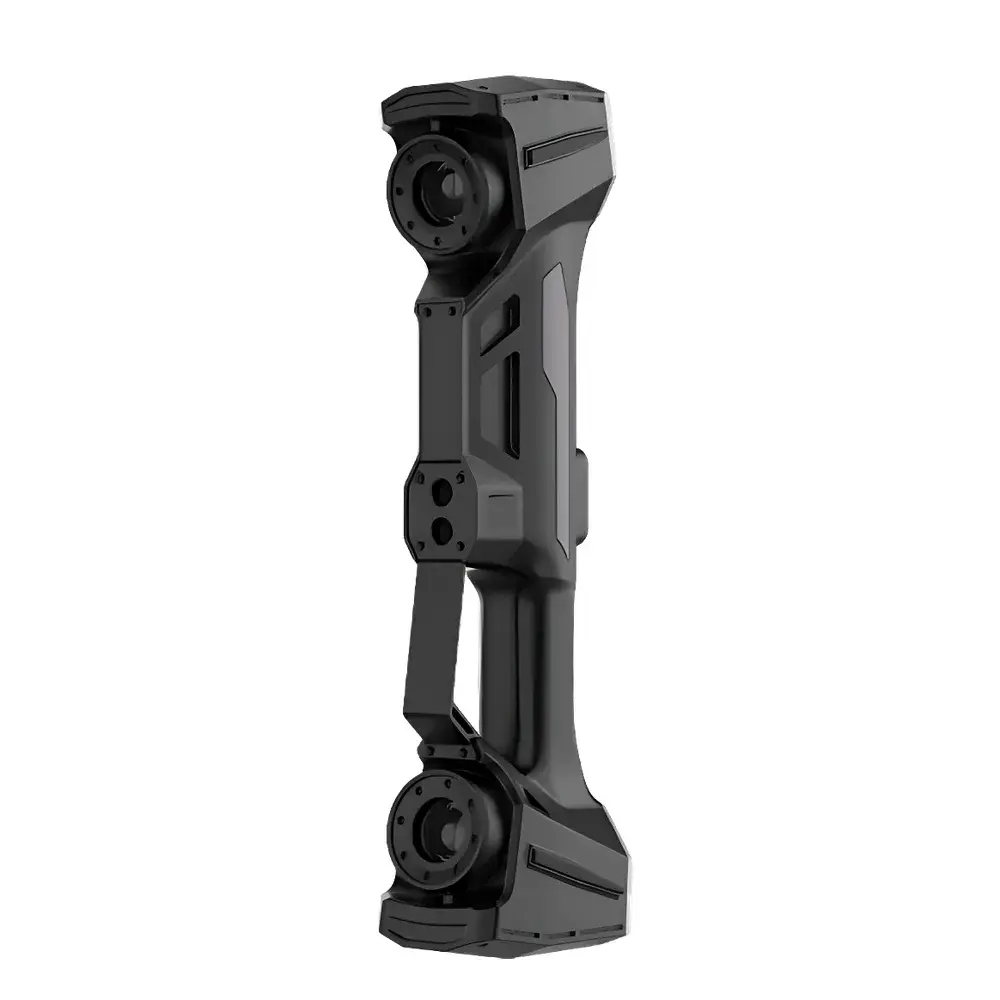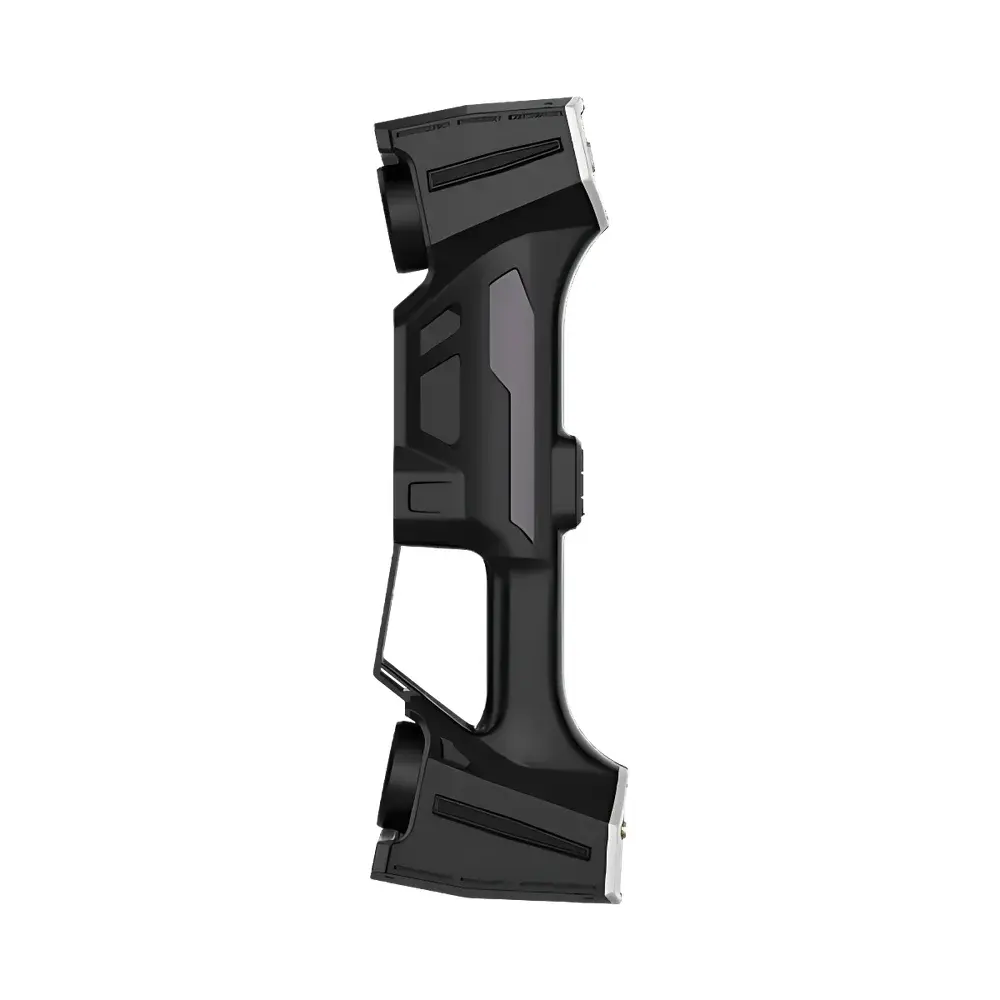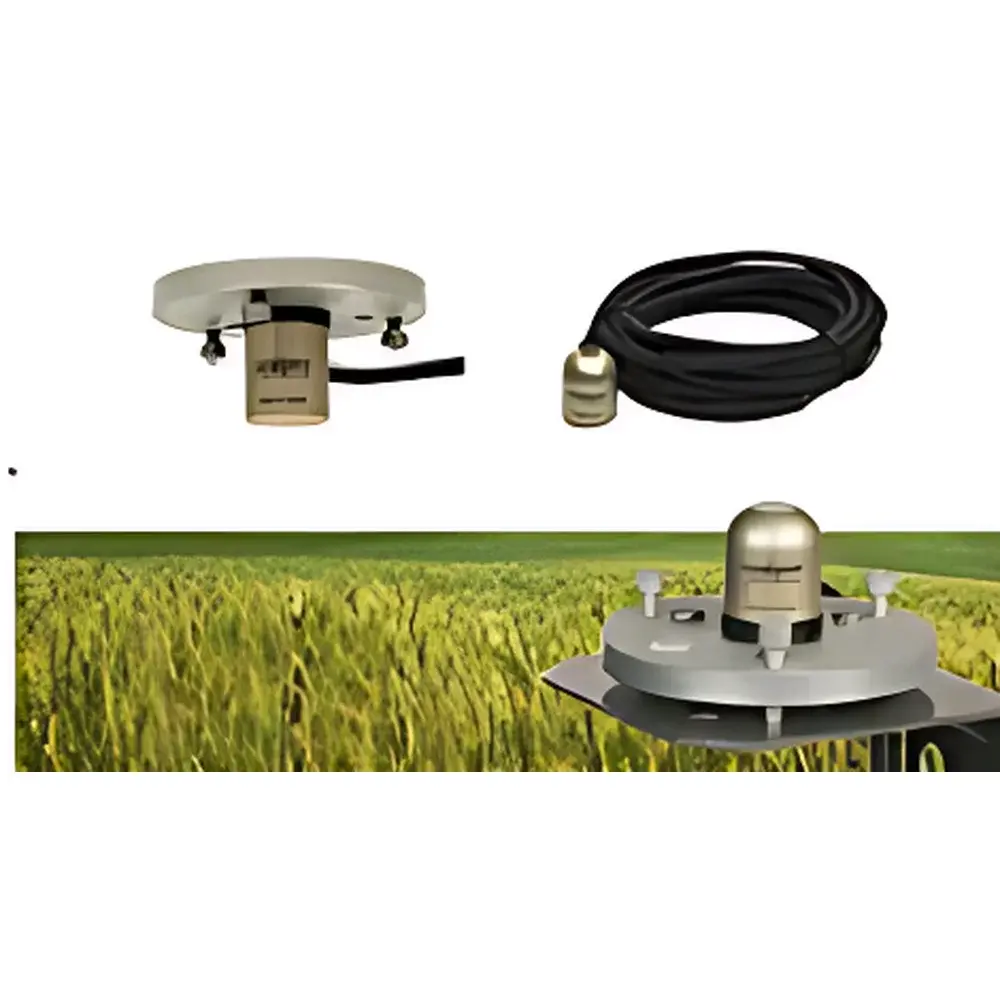
Apogee SL-510-SS and SL-610-SS Upward & Downward Longwave Infrared Radiometers
| Brand | Apogee |
|---|---|
| Origin | USA |
| Model | SL-510-SS (Upward), SL-610-SS (Downward) |
| Sensitivity | 0.12 mV per W/m² |
| Calibration Factor | 8.5 W/m² per mV |
| Measurement Range | −200 to +200 W/m² (net longwave) |
| Uncertainty | ±5% (k=2) |
| Spectral Range | 5–30 µm |
| Field of View | 150° (hemispherical) |
| Response Time | <0.5 s |
| Zero Offset Drift | <5 W/m² |
| Tilt Error | <0.5% |
| Nonlinearity | <1% |
| Long-Term Drift | <2% per year |
| Repeatability | <1% |
| Temperature Response | <5% (−15 to +45 °C) |
| Thermistor | 30 kΩ @ 25 °C, ±1 °C accuracy |
| Thermistor Output | 0–2500 mV (with 2500 mV excitation) |
| Heater Power | 185 mW @ 12 V DC (780 Ω, 15.4 mA) |
| Housing | Anodized aluminum, IP67 (SL-510-SS) / IP68 (SL-610-SS) |
| Cable Connector | Marine-grade stainless steel, 30 cm pigtail |
| Dimensions | Ø23.5 mm × 27.5 mm height |
| Mass | 90 g (SL-510-SS), 100 g (SL-610-SS) |
| Warranty | 4 years |
Overview
The Apogee SL-510-SS and SL-610-SS are precision thermopile-based longwave infrared (LWIR) radiometers engineered for continuous, high-fidelity measurement of terrestrial downward and upward longwave radiation fluxes, respectively. These instruments operate on the principle of thermal detection: incident infrared radiation in the 5–30 µm spectral band is absorbed by a blackened thermopile detector, generating a proportional voltage output (0.12 mV per W/m²). A built-in thermistor monitors detector temperature to support thermal offset correction, while an integrated low-power heater (185 mW at 12 V DC) mitigates dew, frost, rain, and snow accumulation—critical for maintaining optical path integrity in unattended field deployments. Designed for net radiation assessment, the SL-510-SS (upward-facing) and SL-610-SS (downward-facing) are commonly deployed in tandem with shortwave pyranometers or silicon photodiodes to compute surface albedo and energy balance components in accordance with ISO 9060:2018 (Class C specification) and ASTM E892 standards.
Key Features
- Thermopile detector with blackbody absorber and precision spectral filtering (5–30 µm), ensuring spectrally appropriate response to atmospheric and surface-emitted longwave radiation.
- Integrated self-heating element (0.185 W) with controlled thermal dissipation (<10 W/m² radiative impact), minimizing moisture-induced signal artifacts without compromising thermal stability.
- Self-cleaning anodized aluminum housing with hydrophobic surface finish and optimized geometry to reduce dust adhesion and facilitate natural runoff.
- IP67-rated (SL-510-SS) and IP68-rated (SL-610-SS) marine-grade stainless-steel cable connectors with 30 cm integrated pigtail—enabling rapid sensor replacement and field recalibration without cable termination.
- Compact form factor (Ø23.5 mm × 27.5 mm) and low mass (90–100 g) suitable for mast-mounted, drone-deployable, or networked microclimate stations.
- Factory-calibrated traceability to NIST-traceable blackbody sources; calibration certificate provided with each unit.
Sample Compatibility & Compliance
The SL series is compatible with standard data loggers supporting millivolt analog input (e.g., Campbell Scientific CR1000X, HOBO U30-NRC, Onset H21-001) and requires no external signal conditioning. Each sensor meets IEC 60529 ingress protection requirements (IP67/IP68), and its mechanical design conforms to WMO No. 8 guidelines for radiation instrument mounting and exposure. The thermistor output (0–2500 mV, excited at 2500 mV) enables simultaneous detector temperature logging for post-acquisition thermal compensation. While not certified for GLP/GMP environments, the instruments support audit-ready data collection when paired with loggers compliant with FDA 21 CFR Part 11 (via secure timestamping and user-access controls). Long-term stability (<2% drift/year) aligns with ISO/IEC 17025 recommendations for environmental monitoring instrumentation used in accredited meteorological networks.
Software & Data Management
Apogee provides free, open-source calibration coefficients and linearization equations via its official documentation portal. Raw mV outputs are converted to irradiance (W/m²) using the factory-determined calibration factor (8.5 W/m² per mV) and optional thermistor-based temperature correction. Users may implement correction algorithms in Python (NumPy/SciPy), MATLAB, or R—code examples are published in Apogee’s Application Notes #AN-12 and #AN-15. For integration into SCADA or IoT platforms, the analog output supports Modbus RTU via optional signal converters (e.g., Advantech ADAM-4017+). All units ship with a NIST-traceable calibration report, including serial-numbered uncertainty budgets (k=2, ±5%) and temperature-dependent zero-offset characterization.
Applications
- Surface energy balance modeling in eddy covariance flux towers (e.g., AmeriFlux, ICOS networks), where net longwave (L* = L↓ − L↑) is a required input for Bowen ratio and latent heat flux derivation.
- Agricultural micrometeorology: canopy temperature estimation, frost prediction, and irrigation scheduling via real-time longwave divergence analysis.
- Hydrological modeling: snowpack melt forecasting using downwelling longwave as a dominant energy source during nocturnal/cloudy conditions.
- Photovoltaic system performance monitoring: quantifying thermal losses and module backsheet heating under varying sky conditions.
- Ecosystem carbon cycling studies: coupling with CO₂/H₂O eddy covariance systems to partition radiative drivers of photosynthetic efficiency.
- Urban climate monitoring: longwave emission profiling from impervious surfaces to assess anthropogenic heat island intensity.
FAQ
What is the difference between SL-510-SS and SL-610-SS?
The SL-510-SS is configured for upward-looking measurement (emitted longwave from the surface), while the SL-610-SS is downward-looking (atmospheric longwave irradiance). Both share identical spectral response, sensitivity, and thermal compensation architecture.
Can these sensors be used for net radiation measurement?
Yes—when installed as a matched pair (one SL-510-SS and one SL-610-SS) with co-located shortwave sensors, they enable full net radiation (Rn = K↓ − K↑ + L↓ − L↑) computation per ASCE-EWRI and FAO-56 guidelines.
Is heater activation mandatory?
No—the heater is optional and should be powered only in humid, cold, or high-precipitation environments. Unheated operation is valid in arid or indoor applications, though zero-offset drift may increase slightly.
How often does recalibration require?
Apogee recommends laboratory recalibration every two years for research-grade applications, or annually for compliance-critical deployments. Field verification using a portable blackbody source (e.g., CI Systems IR-200) is advised quarterly.
Do these sensors comply with BSRN or Baseline Surface Radiation Network standards?
While not classified as BSRN “primary” instruments, the SL series meets BSRN secondary station requirements for longwave components when deployed with proper shading, leveling, and maintenance protocols per BSRN Handbook v2.2.