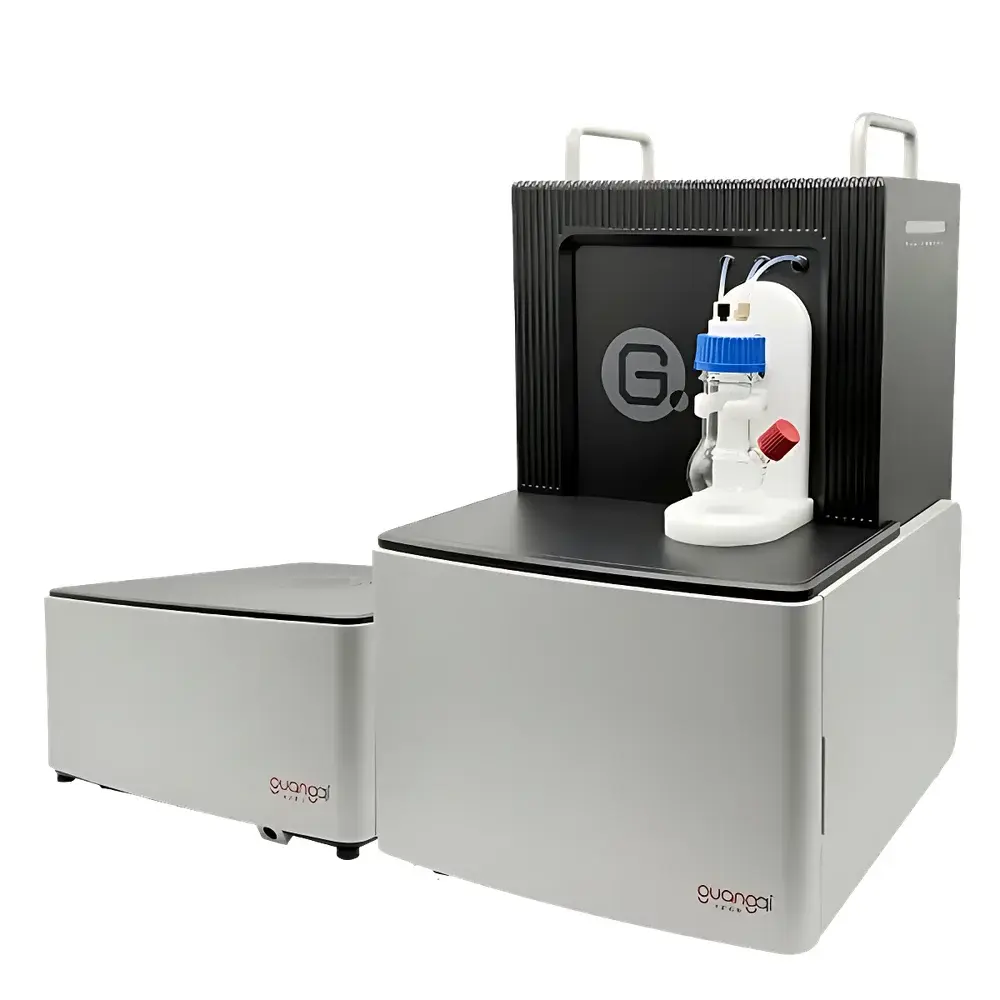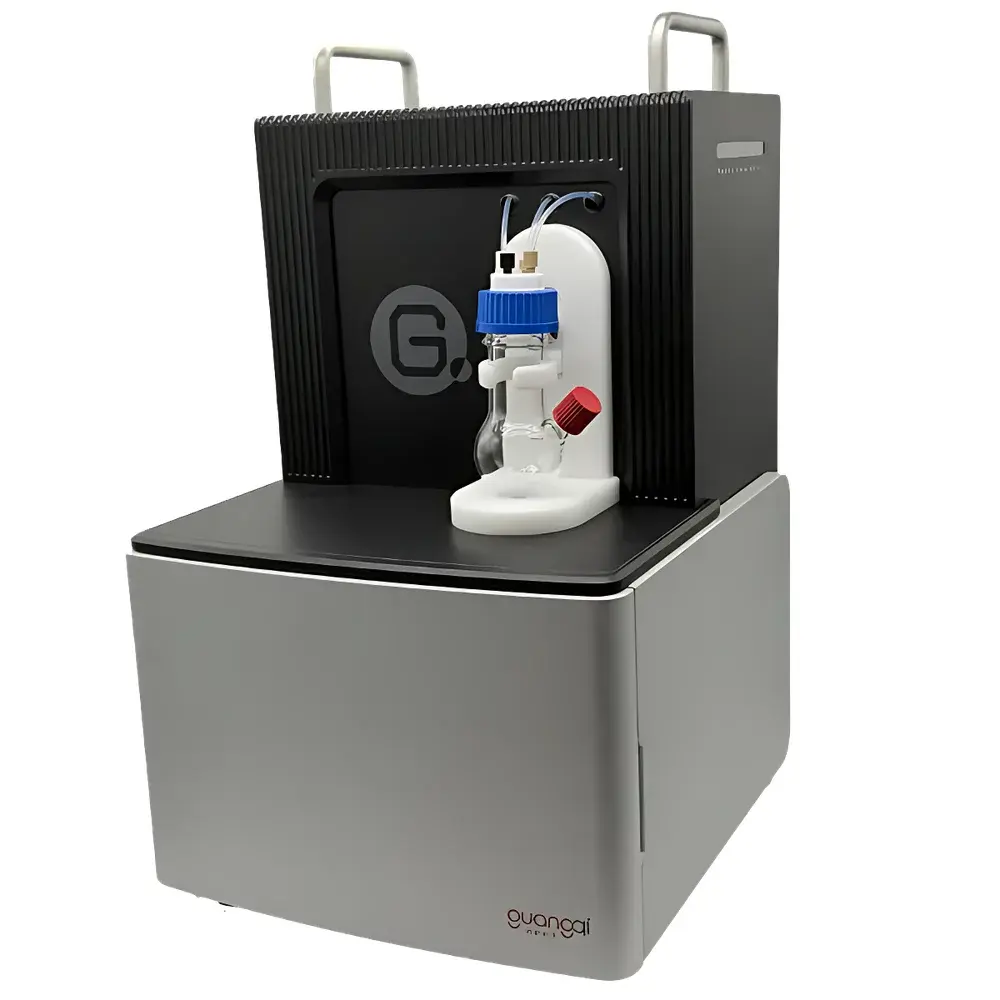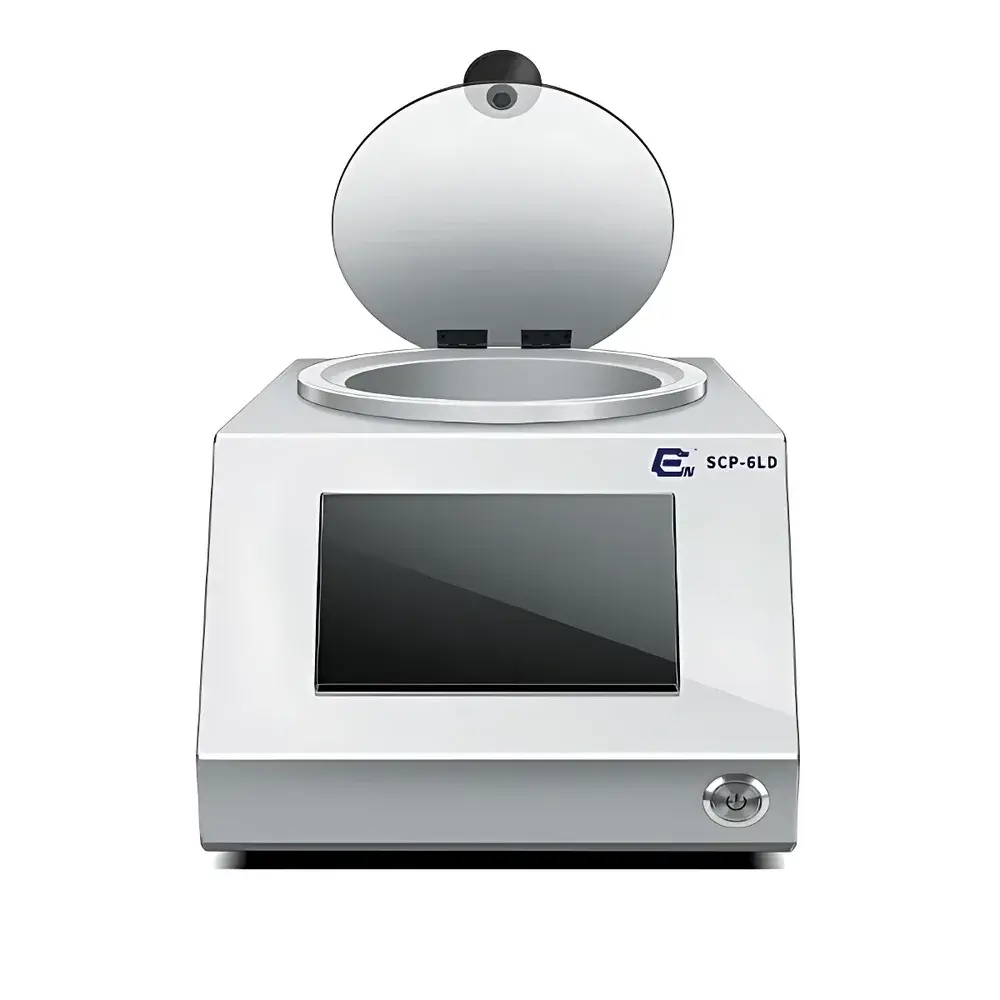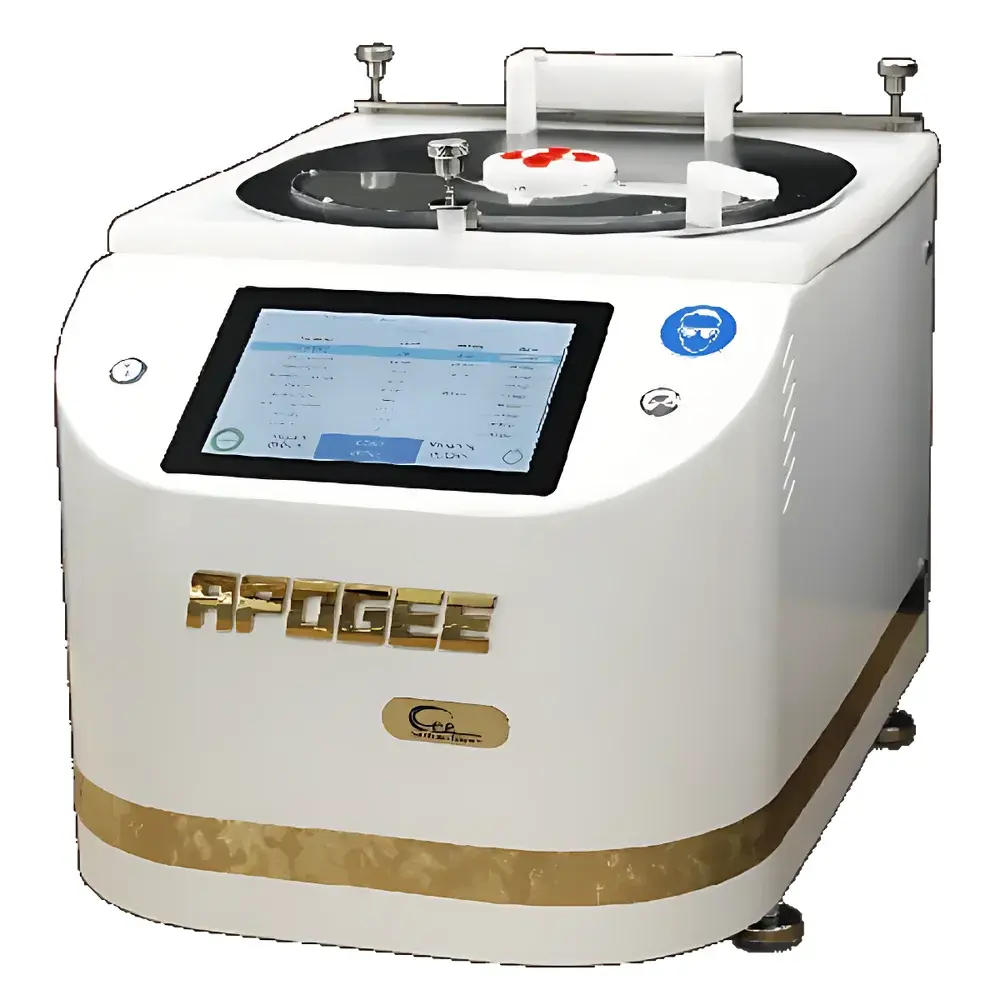
Apogee200 Spin Coater by Apogee (USA)
| Brand | Apogee |
|---|---|
| Origin | USA |
| Manufacturer | Apogee Instruments, Inc. |
| Model | Apogee200 |
| Rotation Speed Range | 0–30,000 rpm (no-load) |
| Speed Accuracy | ±0.2 rpm |
| Acceleration | 0–30,000 rpm/s (no-load) |
| Step Time Resolution | 0.1 s (max step duration: 9999.9 s) |
| Substrate Compatibility | Ø1 mm to Ø200 mm circular |
| Chamber Material | HDPE (High-Density Polyethylene) |
| Power Input | 100–125 VAC / 208–240 VAC, 50/60 Hz |
| Max Power Consumption | 655 W |
| Vacuum Range | 20–25 inHg |
| Exhaust Flow | 20–50 CFM at 0.2″ H₂O |
| N₂/CDA Supply | 70 psi |
| Dimensions (W×D×H) | 13.25″×19″×12″ (33.65×48.26×30.48 cm) |
| Net Weight | 40 lb (18.14 kg) |
| Shipping Weight | 100 lb (45.36 kg) |
Overview
The Apogee200 Spin Coater is a high-precision, benchtop semiconductor processing instrument engineered for reproducible photoresist and functional thin-film deposition across R&D, pilot-line, and low-volume production environments. Utilizing controlled rotational fluid dynamics—governed by centrifugal force, viscous drag, and solvent evaporation kinetics—the system delivers uniform film thickness with sub-nanometer repeatability on substrates ranging from micro-scale test chips (Ø1 mm) to full 200 mm wafers. Designed and manufactured in the United States by Apogee Instruments, Inc., the Apogee200 integrates direct-drive-free indirect motor architecture to isolate the drive mechanism from process chemicals, thereby eliminating contamination pathways and extending mean time between failures (MTBF). Its compact footprint (under 0.05 m²), modular mounting options (deck- or flange-mountable), and seamless integration with X-Pro II workstations make it ideal for cleanroom-limited labs and multi-instrument process clusters.
Key Features
- Full-color 7-inch capacitive touchscreen interface with intuitive graphical user interface (GUI), supporting alphanumeric labels, real-time parameter visualization, and touch-responsive navigation
- HDPE (high-density polyethylene) process chamber—chemically inert to common solvents (e.g., acetone, PGMEA, IPA, HMDS), acids (dilute HF, BOE), and developer formulations (TMAH-based)
- DataStream™ standard communication protocol enabling bidirectional parameter exchange via USB or Ethernet; supports remote firmware updates and audit-trail-enabled recipe synchronization
- Synchronized dual auto-dispense nozzles with programmable dispense timing, volume ramping, and dynamic speed/acceleration modulation during spin-up and spin-down phases
- Step-based process programming with unlimited recipe steps; each step configurable for speed, acceleration, dwell time (0.1–9999.9 s resolution), and environmental conditions (N₂ purge activation, vacuum sequencing)
- Vacuum lid interlock and pressure-sensing safety circuitry compliant with IEC 61000-6-2/6-4 and SEMI S2-0215 requirements
- Indirect drive system with magnetic coupling—ensures zero exposure of motor windings or bearings to solvent vapors or particulate debris
Sample Compatibility & Compliance
The Apogee200 accommodates substrates from Ø1 mm micro-dies to Ø200 mm silicon wafers, as well as square formats up to 7″×7″ (178 mm × 178 mm), including quartz masks, glass slides, flexible polymer films, and ceramic substrates. Optional disposable HDPE liners eliminate cross-contamination between dissimilar chemistries (e.g., metal-organic precursors vs. aqueous developers). The system supports nitrogen purging to establish an inert atmosphere (<10 ppm O₂/H₂O), critical for moisture-sensitive resists (e.g., EUV CARs) and air-sensitive metal oxide sol-gels. All electrical, mechanical, and exhaust interfaces conform to SEMI F47 (voltage sag immunity), UL 61010-1, and CE marking directives. Vacuum and exhaust connections meet ISO 8573-1 Class 4 purity standards when paired with appropriate filtration and scrubbing systems.
Software & Data Management
Embedded firmware supports full GLP/GMP-aligned data integrity per FDA 21 CFR Part 11: electronic signatures, role-based access control (admin/operator), immutable audit logs (timestamped parameter changes, login events, error codes), and encrypted recipe export/import. Process data—including real-time RPM, torque, vacuum level, and dispense status—is timestamped at 10 Hz and stored locally (SD card) or streamed to networked LIMS or MES platforms via TCP/IP. Software tools include ApogeeProcess Manager™ (Windows-based desktop application) for offline recipe development, statistical process control (SPC) charting, and comparative run analysis. Remote diagnostics and firmware patches are delivered over secure HTTPS channels, with version history maintained for regulatory traceability.
Applications
- Photolithography: Uniform spin-coating of g-line, i-line, KrF, ArF, and EUV photoresists (e.g., AZ® series, TOK® PFR, JSR® ARF)
- Functional thin films: Metal-organic decomposition (MOD) coatings (e.g., SrTiO₃, PZT), perovskite precursors (MAPbI₃), conductive polymers (PEDOT:PSS), and anti-reflective layers (SiO₂, TiO₂ sol-gels)
- MEMS & packaging: BCB, polyimide, and SU-8 encapsulation layers; under-bump metallization (UBM) seed layers
- Research & education: Nanomaterial dispersion (graphene oxide, quantum dots), biosensor matrix formation (chitosan, collagen), and 2D material transfer support layers
- Quality assurance: In-house validation of coating uniformity (±1.5% CV across 200 mm wafer) per ASTM D7263 and ISO 13820 standards
FAQ
What substrate sizes does the Apogee200 support?
The system accepts circular substrates from Ø1 mm to Ø200 mm and square substrates up to 7″×7″ (178 mm × 178 mm), including masks, wafers, and rigid/flexible non-standard geometries.
Is the Apogee200 compatible with aggressive etchants like hot phosphoric acid or concentrated TMAH?
Yes—the HDPE chamber and optional disposable liners provide proven resistance to >95% of semiconductor-grade wet chemistries, including 85% phosphoric acid at 165°C and 2.38% TMAH at 80°C, per ASTM D543 immersion testing.
Can process data be exported in CSV or XML format for integration with our lab’s LIMS?
Yes—via USB or Ethernet, raw time-series data and summary reports are exportable in UTF-8 CSV, XML, and PDF formats, with configurable metadata fields (operator ID, lot number, equipment ID, timestamp).
Does the system meet FDA 21 CFR Part 11 requirements for electronic records?
Yes—full electronic signature capability, audit trail generation, and role-based access control are embedded in firmware v3.2+ and validated per IQ/OQ protocols supplied with the instrument.
What maintenance is required beyond routine cleaning?
No scheduled preventive maintenance is required within the first 12 months. Annual calibration verification (speed, vacuum, timer accuracy) is recommended and supported remotely by Apogee’s application engineers.