
Applied Biosystems VeritiPro Gradient PCR System
| Brand | Applied Biosystems |
|---|---|
| Origin | Singapore |
| Model | VeritiPro |
| Instrument Type | Gradient PCR System |
| Sample Capacity | 96-well (0.2 mL) and 384-well (0.02 mL) blocks |
| Heating Rate | 6.0°C/s |
| Temperature Accuracy | ±0.25°C (35–99.9°C) |
| Well-to-Well Temperature Uniformity | <0.25°C (at 95°C, measured 30 s after target reached) |
| VeriFlex™ Block | 6 independently controlled thermal zones |
| Thermal Lid | 30–110°C, pressure-adjustable, auto-lift |
| Operating Voltage | 100–240 V, 50–60 Hz |
| Power Consumption | ≤700 W |
| Dimensions (H×W×D) | 21.7 × 24.5 × 46.5 cm |
| Weight | 12.0 kg |
| Environmental Requirements | 15–30°C, 15–80% RH (non-condensing) |
Overview
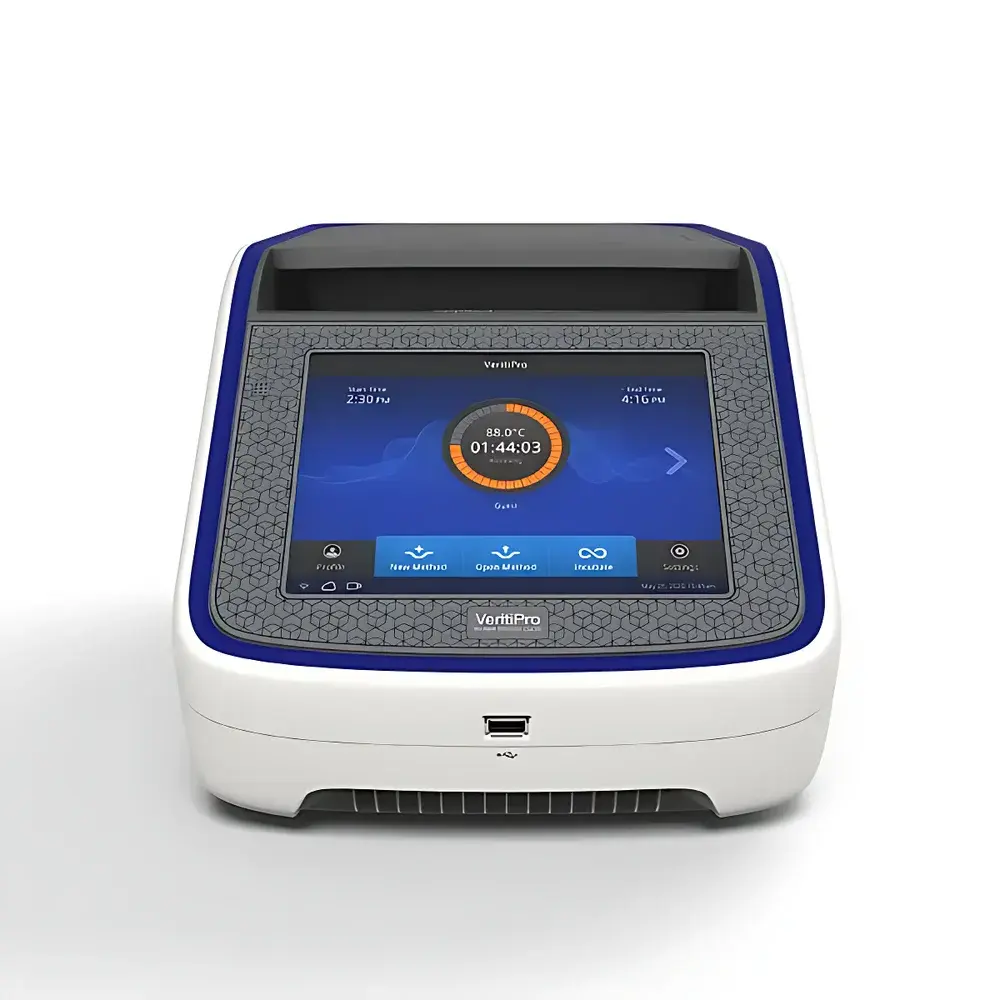
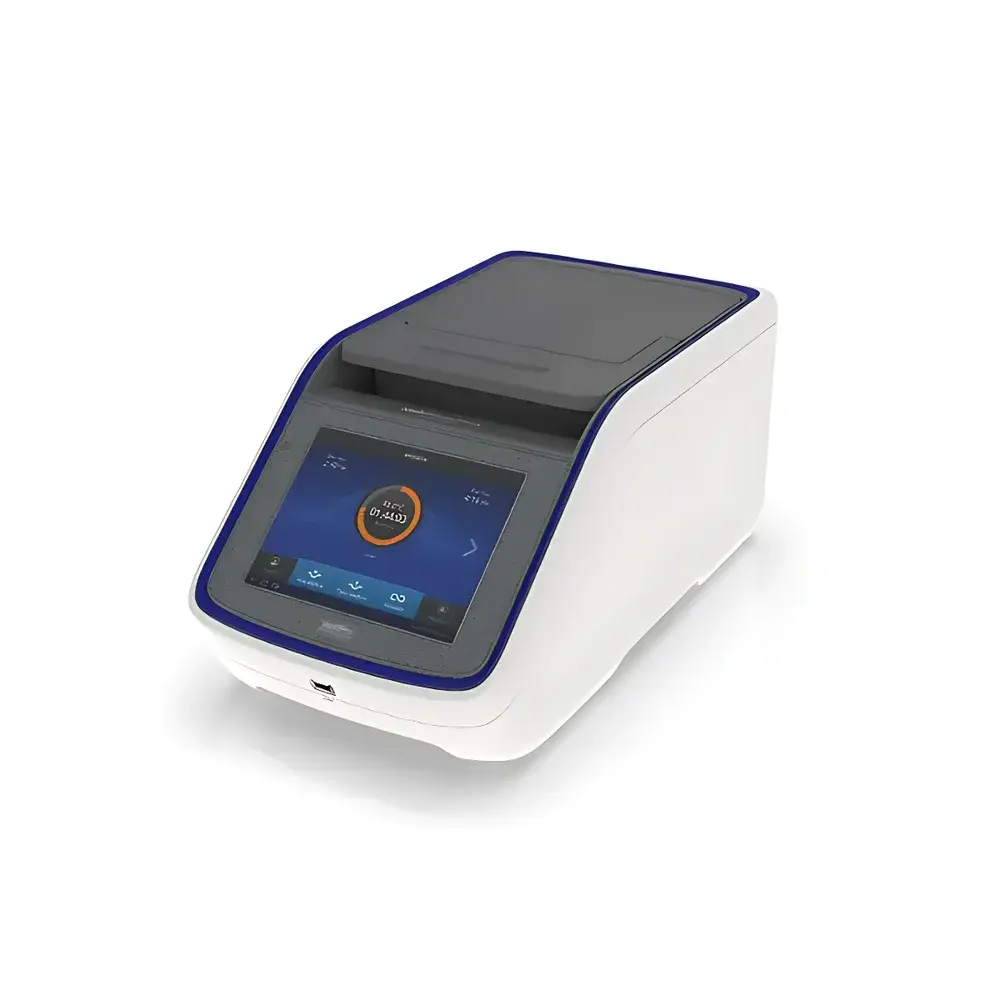
The Applied Biosystems VeritiPro Gradient PCR System is a high-performance, network-enabled thermal cycler engineered for precision, reproducibility, and workflow flexibility in molecular biology laboratories. Built upon the proven Veriti platform and upgraded in 2020, the VeritiPro employs advanced Peltier-based thermoelectric control with proprietary VeriFlex™ block architecture to deliver rapid, uniform, and highly accurate thermal cycling across all well positions. Unlike conventional gradient systems—where heating/cooling kinetics differ between gradient and uniform-temperature modes—the VeritiPro maintains identical ramp rates in both configurations, ensuring that optimized annealing temperatures determined during gradient screening are directly transferable to routine runs without revalidation. This eliminates empirical recalibration and supports robust method transfer across instruments and users. The system supports dual-block configurations (96-well and 384-well), enabling seamless scaling from assay development to high-throughput genotyping or qPCR pre-amplification.
Key Features
- VeriFlex™ 6-Zone Independent Temperature Control: Enables simultaneous optimization of six distinct annealing temperatures across the same block—ideal for multiplex PCR, primer pair screening, and reaction condition refinement.
- High-Speed Thermal Cycling: Achieves up to 6.0°C/s heating rate and 4.4°C/s sample-equivalent cooling rate, reducing cycle times without compromising specificity or yield.
- Enhanced Thermal Uniformity: Delivers <0.25°C well-to-well variation at 95°C (measured 30 seconds post-target attainment), exceeding ISO 13485 and CLSI EP05-A3 recommendations for thermal homogeneity in diagnostic PCR instrumentation.
- Low-Noise Operation: Engineered acoustic dampening reduces operational noise to <48 dB(A), supporting use in open-lab environments and shared core facilities.
- Integrated Connectivity: Equipped with dual Ethernet and Wi-Fi interfaces for secure instrument remote monitoring, firmware updates, and centralized management via Thermo Fisher Connect cloud platform (compliant with FDA 21 CFR Part 11 audit trail requirements).
- Intuitive Human-Machine Interface: 8-inch color TFT LCD touchscreen with context-sensitive navigation, multi-user role-based access control, and on-device storage of >1,000 protocols (16 GB internal memory + USB export capability).
Sample Compatibility & Compliance
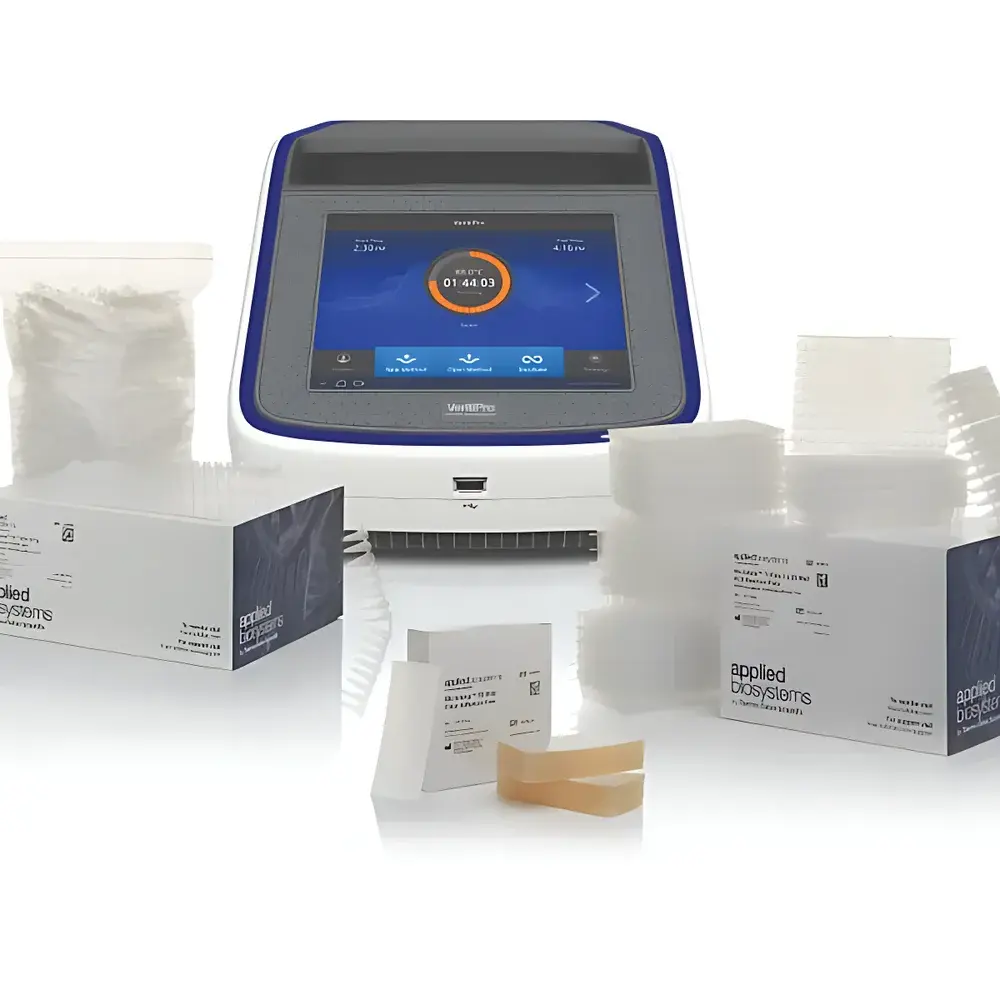
The VeritiPro accommodates standard microplate formats including 96-well (0.2 mL skirted/unskirted) and 384-well (0.02 mL) PCR plates and tubes. Its programmable thermal lid (30–110°C) features automatic pressure adjustment and lift mechanism to ensure consistent contact across variable plate heights and prevent evaporation during extended cycling. The system meets IEC 61010-1 safety standards and is designed to support GLP/GMP-compliant workflows through built-in instrument self-test routines, electronic logbook with timestamped run history, and exportable CSV-formatted audit trails. It is validated for use with common master mixes, hot-start polymerases, and probe-based chemistries per manufacturer specifications (e.g., TaqMan®, SYBR® Green). No regulatory claims are made for clinical diagnostics unless used within an FDA-cleared or CE-IVD–validated assay protocol.
Software & Data Management
Instrument control and protocol design are supported by the standalone VeritiPro Software (v3.x+), which provides drag-and-drop step editing, real-time temperature profiling, and gradient map visualization. All run data—including thermal profiles, error logs, user actions, and environmental metadata—are automatically archived with cryptographic time-stamping. Data export complies with MIAME and MIAPE reporting guidelines and integrates with LIMS via HL7 or RESTful API endpoints. Cloud synchronization enables cross-site protocol sharing while maintaining local data sovereignty. Audit trail functionality satisfies 21 CFR Part 11 requirements for electronic records and signatures, including operator authentication, change tracking, and immutable log retention.
Applications
- Optimization of primer annealing temperatures in endpoint and quantitative PCR
- Multiplex amplification of multiple targets in a single reaction
- High-fidelity amplification for NGS library preparation
- RT-PCR and one-step/two-step cDNA synthesis
- Cloning, mutagenesis, and site-directed variant screening
- Quality control testing of nucleic acid extraction kits and reagents
- Academic and industrial research requiring traceable, reproducible thermal cycling
FAQ
Does the VeritiPro support both 96-well and 384-well formats simultaneously?
No—users must install either the 96-well or 384-well VeriFlex block; swapping requires manual module replacement and recalibration.
Is the VeriFlex gradient function compatible with all PCR chemistries?
Yes, provided the chemistry is validated for use with aluminum-based thermal blocks and operates within the specified temperature range (0–100.0°C).
Can the instrument be operated without network connectivity?
Yes—full local operation is supported via touchscreen interface; network features (remote monitoring, cloud sync, audit trail export) require Ethernet or Wi-Fi configuration.
What is the maximum recommended reaction volume per well?
For optimal thermal transfer and evaporation control, 10–100 µL is recommended; volumes as low as 1 µL may be used with appropriate plate sealing and humidity control.
How often does the system require calibration verification?
Thermo Fisher recommends annual verification using NIST-traceable thermocouples per ISO/IEC 17025 guidelines; built-in self-test reports provide daily functional confirmation.





