
Applied Spectroscopy TranSpec Lite MC-UVNIR-H White Light Interferometric Coating Thickness Analyzer
| Brand | Applied Spectroscopy |
|---|---|
| Origin | Germany |
| Manufacturer Type | Authorized Distributor |
| Product Origin | Imported |
| Model | TranSpec Lite MC-UVNIR-H |
| Wavelength Range | 190–1020 nm |
| Measurement Range | 0.8–100 µm |
| Accuracy | ±0.005 µm |
| Repeatability | ±0.002 µm (per standard WEG test) |
Overview
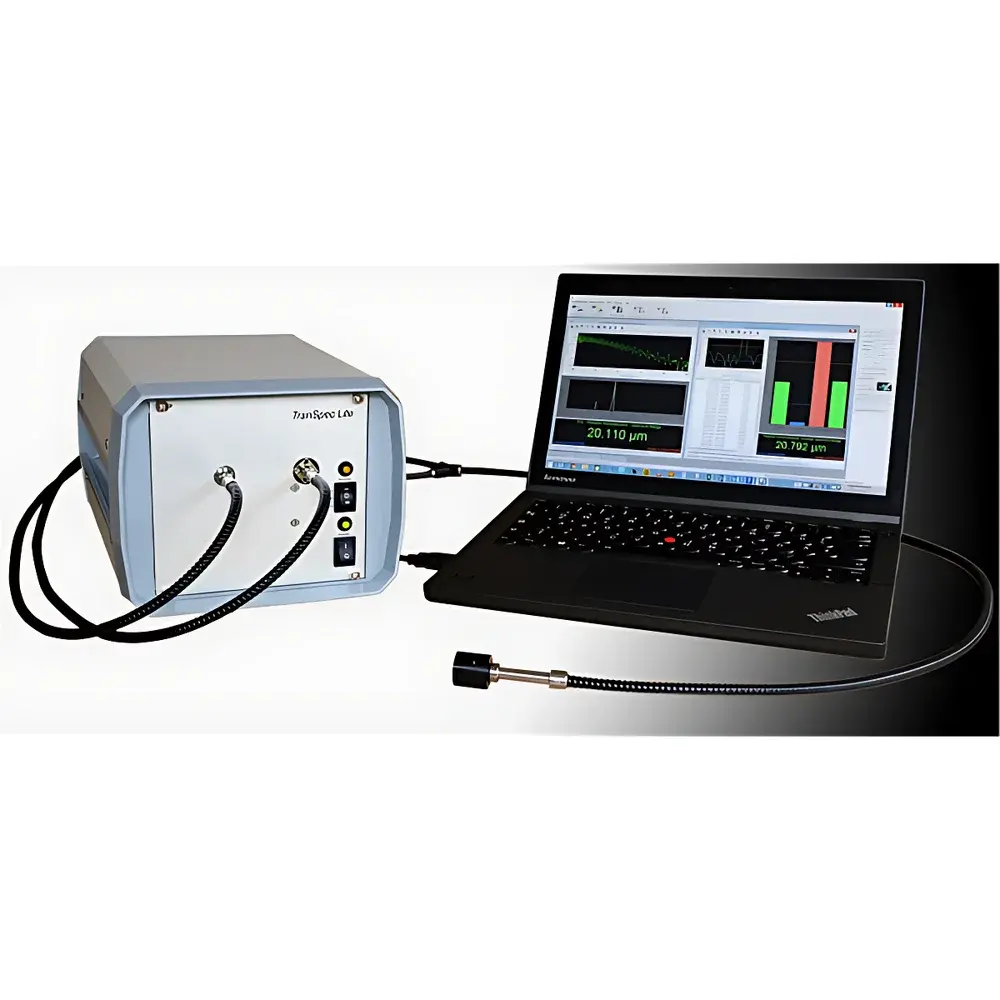
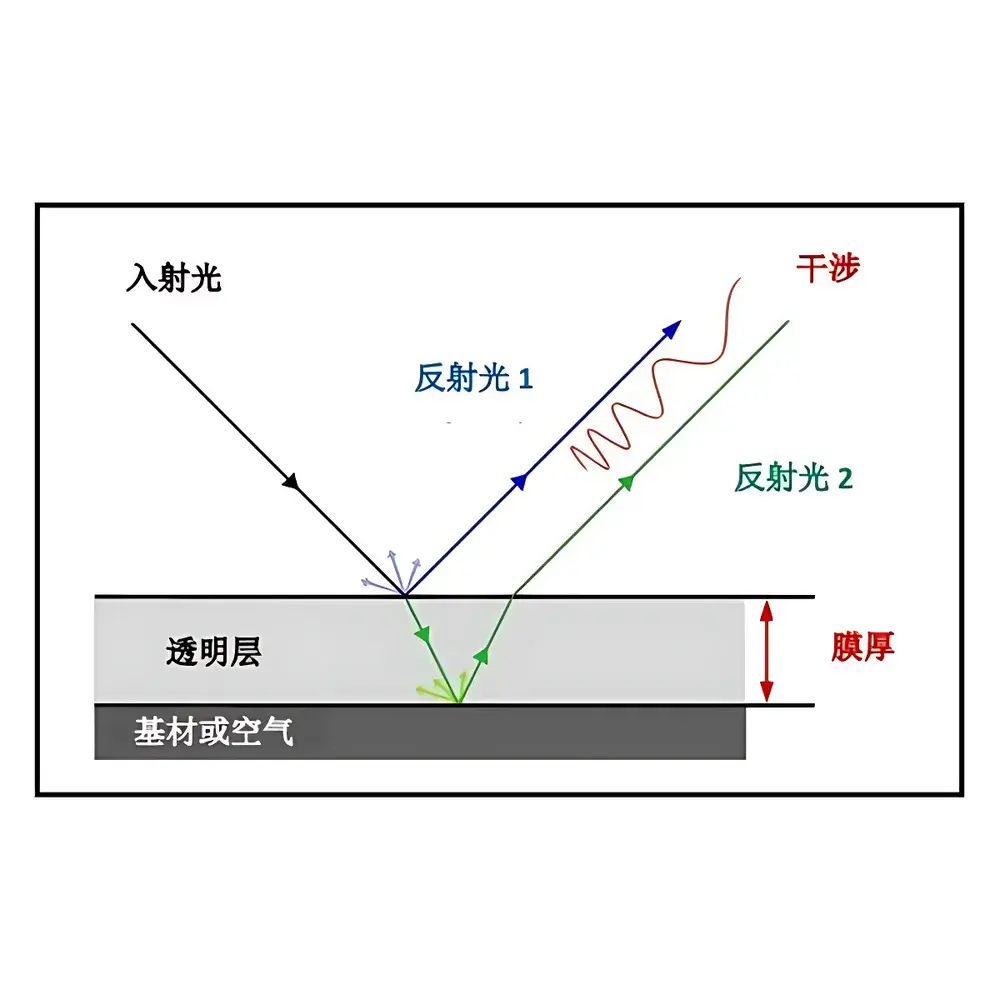
The Applied Spectroscopy TranSpec Lite MC-UVNIR-H is a high-precision, non-contact white light interferometric (WLI) coating thickness analyzer engineered for metrology-grade characterization of multi-layer optical coatings on transparent and semi-transparent substrates. Operating on the principle of spectral-domain white light interferometry, the instrument analyzes interference fringes generated by broadband light (190–1020 nm) reflected from air-coating and coating-substrate interfaces. This enables absolute thickness determination without calibration standards—relying instead on first-principles optical modeling and rigorous phase-resolved fringe analysis. Designed specifically for demanding automotive lighting applications, the system delivers traceable, sub-nanometer resolution in measuring complex thin-film stacks—including hard coatings (HC), intermediate penetration layers (IPL), and anti-fog layers (AFL) on polycarbonate (PC) and PMMA lamp lenses. Its UV-NIR extended spectral coverage ensures accurate dispersion modeling across the full optical band, critical for resolving thin films with strong wavelength-dependent refractive index behavior.
Key Features
- Full-spectrum UV-NIR illumination (190–1020 nm) enabling precise optical constant extraction and dispersion-aware thickness modeling
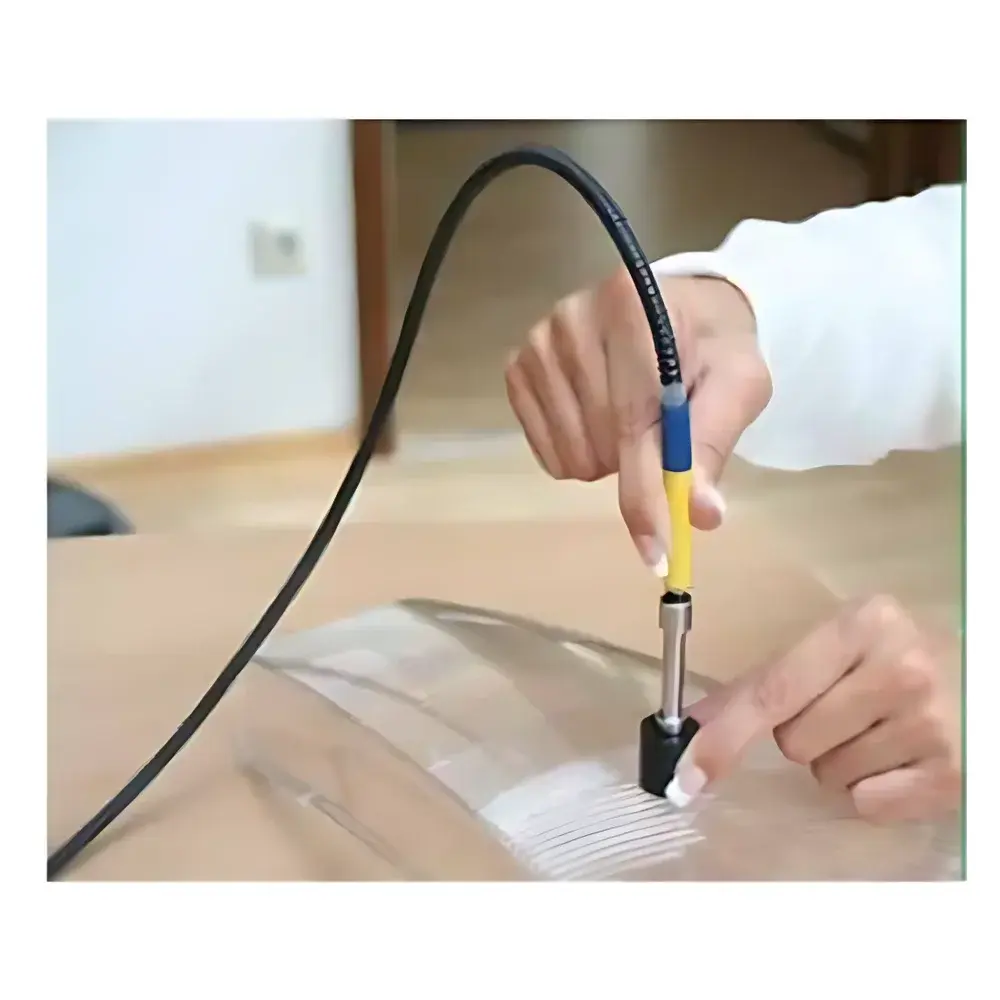
- Non-destructive, non-contact measurement—no sample preparation or vacuum required
- Sub-5 nm thickness accuracy (±0.005 µm) and exceptional repeatability (±0.002 µm per WEG-standardized test protocol)
- Dedicated optical path design optimized for low-reflectivity, curved, and textured lamp lens surfaces
- Integrated motorized XYZ stage with autofocus and tilt compensation for automated multi-point mapping
- Rugged, vibration-damped optical bench architecture compliant with ISO 10110-7 and ASTM E2374 for industrial metrology environments
Sample Compatibility & Compliance
The TranSpec Lite MC-UVNIR-H supports measurement of single- and multi-layer thin films on optically transparent or semi-transparent substrates including polycarbonate, acrylic (PMMA), glass, and fused silica. It is validated for use with industry-standard automotive lamp coatings such as SiO₂-based hard coats, hybrid organic-inorganic IPLs, and hydrophilic AFL formulations. All measurements adhere to ISO 21254 (laser-induced damage threshold testing framework for optical coatings), ASTM D7329 (standard practice for optical thickness measurement of transparent films), and EU Directive 2007/46/EC Annex XV requirements for automotive component optical performance verification. The system’s measurement uncertainty budget is fully documented per ISO/IEC 17025:2017 and supports GLP/GMP audit readiness with configurable user access levels and electronic signature support.
Software & Data Management
The instrument is operated via SpectraControl™ v4.2 software—a Windows-based platform supporting both real-time acquisition and offline spectral modeling. Key capabilities include multi-layer optical stack fitting using Cauchy or Sellmeier dispersion models, automatic interface detection with confidence scoring, batch processing of up to 999 measurement points per map, and export of raw interferograms in HDF5 format. Data integrity is ensured through built-in 21 CFR Part 11 compliance features: audit trail logging (with timestamped operator ID, parameter changes, and result modifications), electronic signatures, and role-based permissions. Reports are exportable in PDF/A-2b and CSV formats, with optional integration into LIMS via RESTful API.
Applications
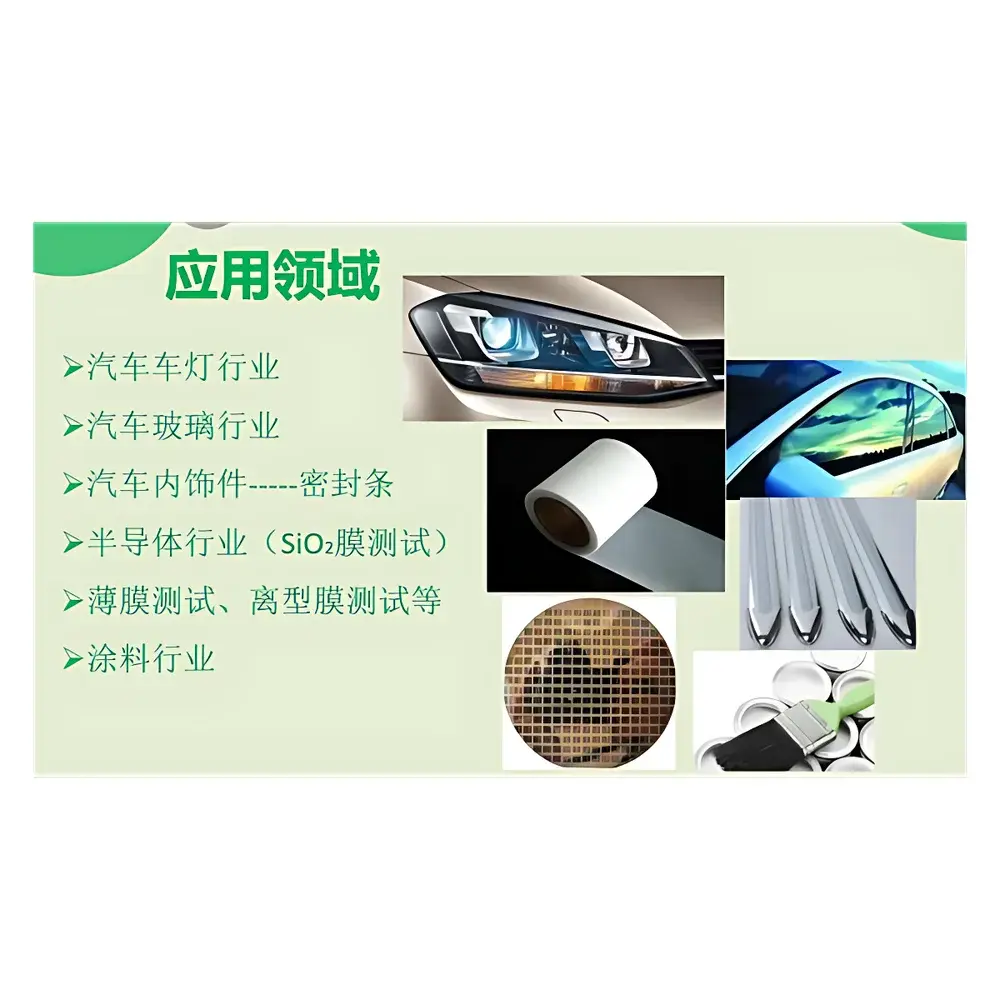
- Quality control of hard coat thickness (typically 2–8 µm) on automotive headlamp and taillamp lenses to ensure abrasion resistance and UV stability
- Quantification of IPL depth (0.8–3 µm) to verify adhesion promotion and stress relief between substrate and topcoat
- Verification of AFL uniformity (3–15 µm) across curved lens surfaces to meet OEM fogging performance specifications (e.g., SAE J2187)
- R&D validation of novel nanocomposite coatings during formulation development and process transfer
- Failure analysis of delamination, blistering, or thickness gradients linked to curing inconsistencies or environmental aging
FAQ
Does the TranSpec Lite MC-UVNIR-H require reference standards for calibration?
No—thickness values are derived directly from spectral interferogram analysis and optical modeling; no physical thickness standards are needed for routine operation.
Can it measure coatings on highly curved or freeform lamp lenses?
Yes—the system includes dynamic focus tracking and surface-normal alignment algorithms optimized for radii of curvature down to 25 mm.
Is the instrument compatible with automated production line integration?
Yes—support for Ethernet/IP, Modbus TCP, and digital I/O enables seamless integration with PLC-controlled inspection stations and MES systems.
What is the typical measurement time per point?
Single-point acquisition and analysis takes ≤1.2 seconds under standard settings; full-field mapping (10×10 grid) completes in under 2 minutes.
How is traceability maintained for regulatory submissions?
Each measurement file embeds full metadata—including spectrometer calibration certificate ID, environmental sensor readings (T, RH), and software version—with NIST-traceable wavelength calibration performed at factory and optionally annually onsite.



