
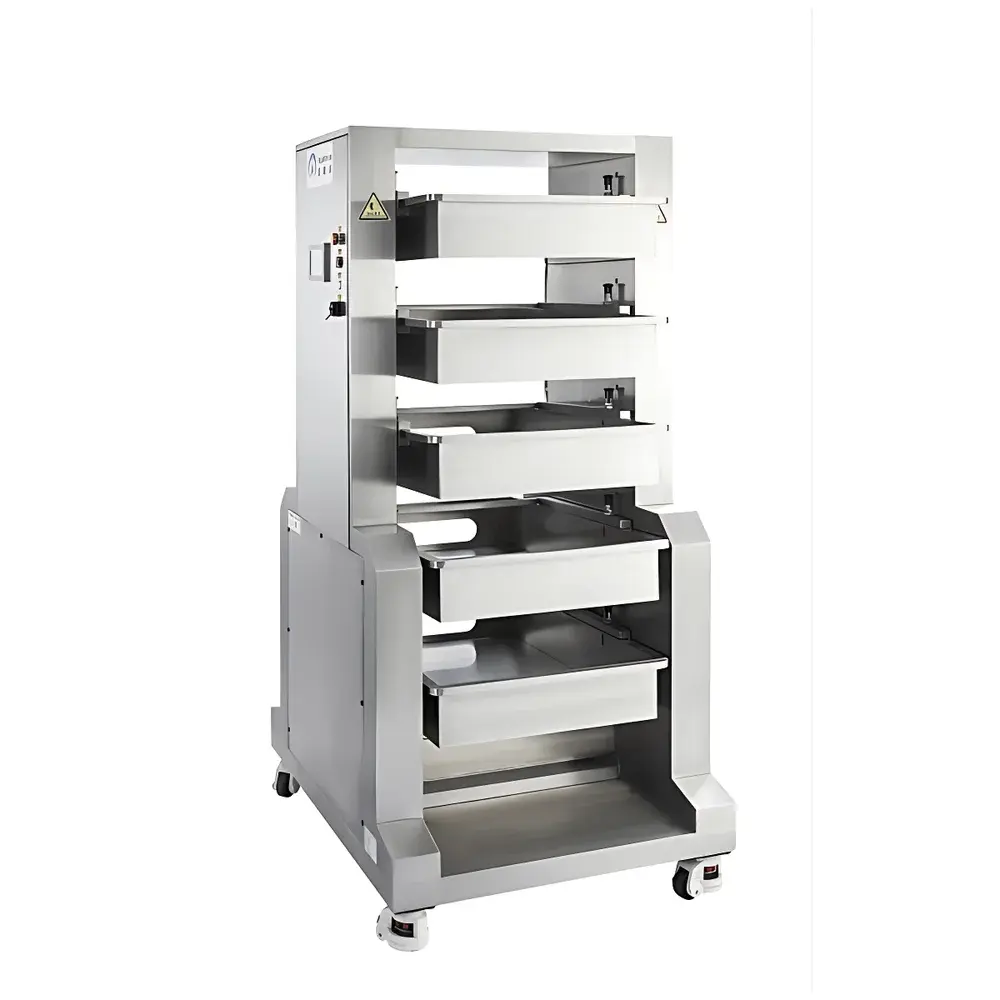
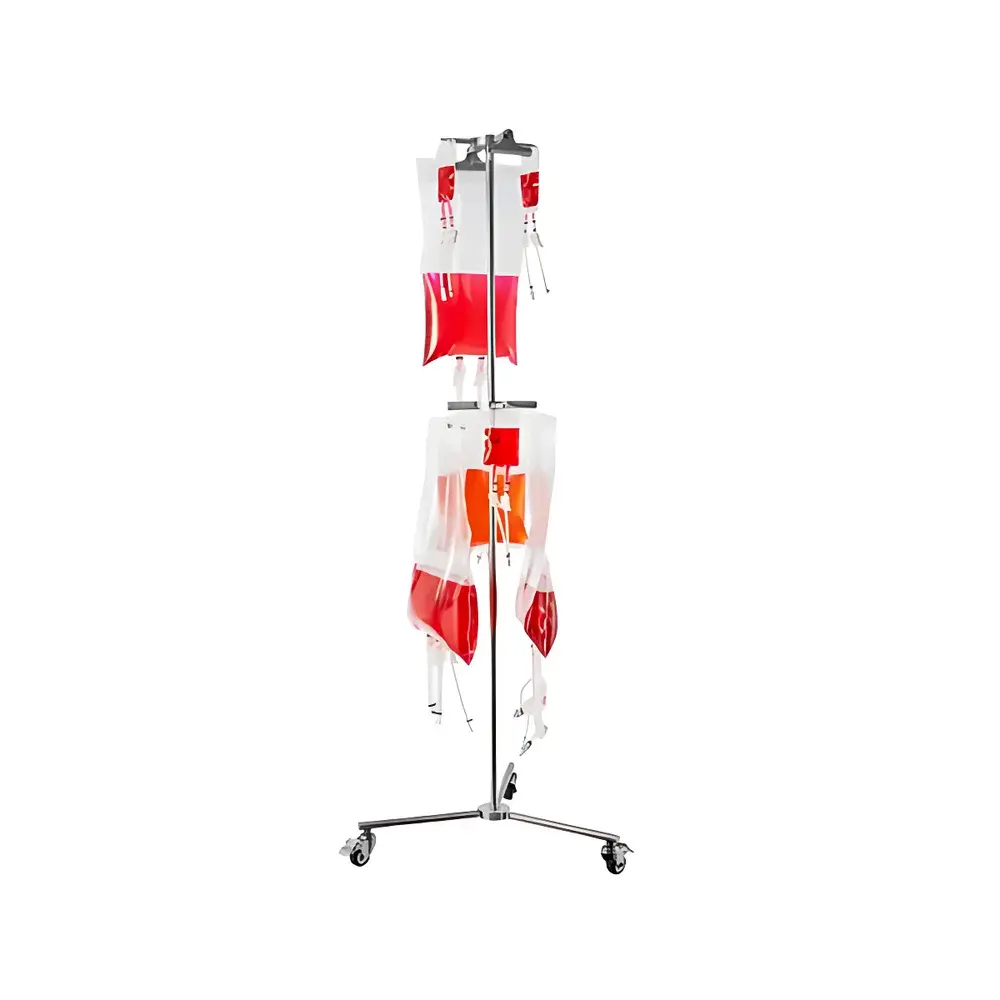
Applitech Stainless Steel Multi-Tier Transfer Trolley / Hanging Rack
| Brand | Applitech |
|---|---|
| Origin | Guangdong, China |
| Manufacturer Type | OEM/ODM Producer |
| Country of Origin | China |
| Model | Stainless Steel Multi-Tier Transfer Trolley / Hanging Rack |
| Pricing | Available Upon Request |
| Material | AISI 304 Stainless Steel |
| Customization | Fully Configurable (Dimensions, Tier Count, Hook Type, Casters, Braking Options) |
| Compliance | Designed for ISO 13485-aligned cleanroom-adjacent environments and GMP-compliant manufacturing support |
Overview
The Applitech Stainless Steel Multi-Tier Transfer Trolley / Hanging Rack is an engineered utility solution designed for controlled movement and organized suspension of sensitive components, tools, or process-critical items within pharmaceutical, biotechnology, medical device, and laboratory manufacturing environments. Unlike generic utility carts, this trolley operates on a dual-function principle: horizontal transport via precision-mounted casters and vertical organization via integrated hanging rails or hook arrays. Its structural integrity derives from fully welded AISI 304 stainless steel construction—selected for corrosion resistance against repeated exposure to 70–90% isopropyl alcohol (IPA), ethanol, hydrogen peroxide vapor (HPV) wipe-downs, and alkaline cleaning agents common in CIP/SIP workflows. The design adheres to ergonomic load-distribution principles, with tier spacing optimized for standard tray dimensions (e.g., ISO 9001-compliant 300 × 400 mm or 400 × 600 mm trays) and hanging clearance sufficient for pipette racks, tubing assemblies, or sterilized instrument sets.
Key Features
- Fully welded AISI 304 stainless steel frame with electropolished finish (Ra ≤ 0.8 µm) to minimize particle retention and enhance cleanability
- Modular tier configuration: 3–6 adjustable or fixed-height shelves (standard 500 mm depth × 900 mm width); optional perforated or solid tray surfaces
- Hanging subsystem options: continuous top rail with removable S-hooks, spaced pegboard-style mounting holes (M6 thread), or custom-engineered cradles for cylindrical or irregularly shaped hardware
- Four-swivel heavy-duty casters (two with total-lock braking), rated for 80 kg static load per caster; non-marking polyurethane tread compatible with epoxy, vinyl, and VCT flooring
- Integrated labeling zones (laser-etched or replaceable stainless nameplates) for asset tracking and segregation of materials by process stage (e.g., “Pre-Cleaning”, “Post-Sterilization”, “QC-Hold”)
- OEM/ODM capability includes dimensional adaptation (height ≤ 1800 mm for door clearance), caster type selection (stainless vs. phenolic), and integration of RFID/NFC tags or QR-coded asset IDs
Sample Compatibility & Compliance
This trolley supports the safe transit and staging of a broad range of regulated items—including stainless steel autoclave baskets, silicone tubing reels, pre-assembled filter housings, and nested plastic component trays—without risk of deformation, cross-contamination, or particulate generation. It is routinely deployed in ISO Class 7 and Class 8 cleanrooms, adjacent to Grade A/B filling lines, and within warehouse staging zones operating under EU GMP Annex 1 and US FDA 21 CFR Part 211 requirements. While not a sterile device itself, its surface finish and weld integrity meet ASME BPE 2023 criteria for hygienic equipment design. Documentation packages include material traceability certificates (EN 10204 3.1), weld procedure specifications (WPS), and cleanroom compatibility test reports (per ISO 14644-1 particle challenge).
Software & Data Management
As a passive mechanical system, the trolley requires no embedded electronics or firmware. However, it integrates seamlessly into digital manufacturing ecosystems through standardized physical identifiers: laser-etched serial numbers conforming to ISO/IEC 15415 data matrix symbology enable direct scanning into MES (Manufacturing Execution Systems) such as Siemens Opcenter, Werum PAS-X, or Rockwell FactoryTalk. Optional NFC-enabled nameplates support tap-to-log functionality in validated electronic batch record (EBR) systems compliant with 21 CFR Part 11 audit trail requirements. All customization documentation—including CAD drawings, load-testing reports, and cleaning validation support files—is delivered in PDF/A-1b format with embedded metadata for long-term archival.
Applications
- Transport of sterilized component kits between depyrogenation tunnels and aseptic assembly stations
- Staging of filled vial trays prior to lyophilization loading, minimizing manual handling and vibration exposure
- Controlled movement of reusable process filters between cleaning, integrity testing, and installation points
- Secure hanging storage of flexible connectors, hoses, and single-use bioreactor manifolds during turnaround cycles
- Material flow management in cell therapy facilities where segregation of patient-specific batches is mandated by HTA or EMA guidelines
FAQ
Can the trolley be validated for use in Grade A environments?
No—this unit is intended for Grade C/D or cleanroom-adjacent support areas. Its design meets hygienic standards but lacks laminar airflow integration or HEPA-filtered enclosures required for Grade A operation.
Is electropolishing included as standard?
Yes—electropolishing is applied to all exposed surfaces as part of the base manufacturing process, with surface roughness verified via profilometry per ASTM B967.
What is the maximum distributed load capacity per tier?
Standard configuration supports 30 kg per shelf (evenly distributed); reinforced variants (with gusseted supports) accommodate up to 50 kg—certified via third-party static load testing.
Do you provide IQ/OQ documentation templates?
Yes—Applitech supplies configurable qualification protocol templates aligned with ISPE GAMP 5, including risk-based URS mapping, functional testing checklists, and calibration traceability tables.
Can casters be replaced onsite without welding or special tools?
Yes—all casters mount via M12 stainless steel bolts with captive washers; replacement can be completed using only a 17 mm hex key and torque wrench set to 45 N·m.



