
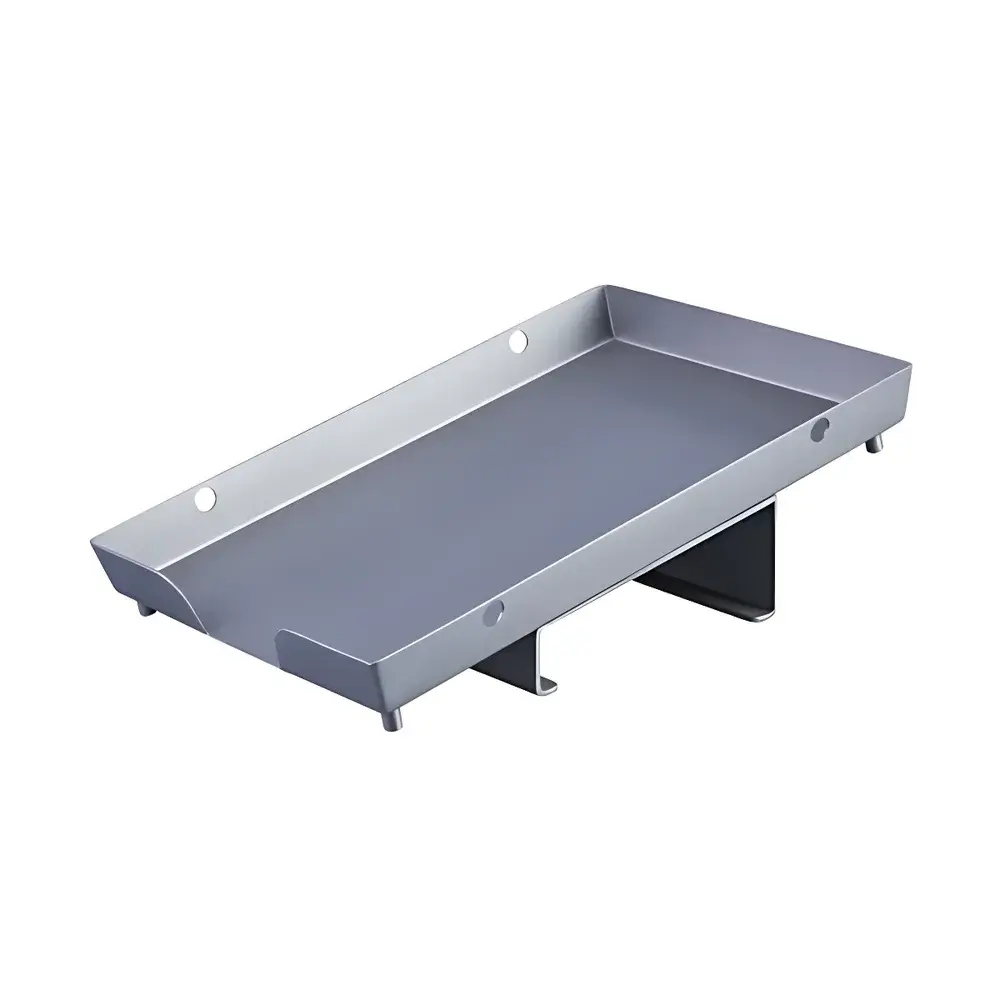
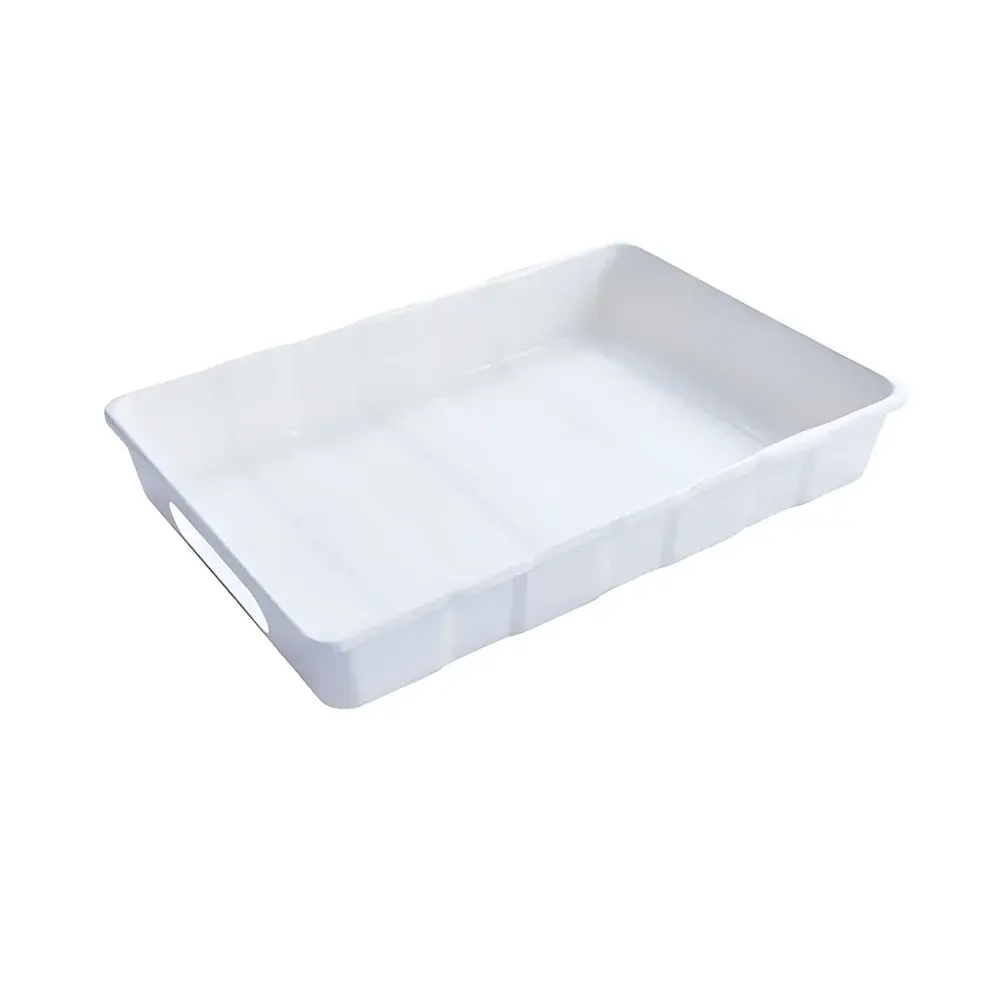
Applitech Stainless Steel & Polypropylene 2D Fluid Bag Support Tray
| Brand | Applitech |
|---|---|
| Origin | Guangdong, China |
| Manufacturer Type | OEM/ODM Manufacturer |
| Country of Origin | China |
| Model | Support Tray for 2D Fluid Bags |
| Pricing | Upon Request |
| Material Options | 316L Stainless Steel |
| Customizable Tilt Angle | Yes |
| Cleanability | Autoclavable / CIP-Compatible |
| Compliance | Designed for ISO 13485-aligned bioprocessing environments |
Overview
The Applitech Support Tray is an engineered handling solution designed specifically for the secure storage, orientation, and transport of single-use 2D fluid bags—widely deployed in biopharmaceutical upstream and downstream processing. Unlike generic lab trays, this support tray integrates functional ergonomics with process-critical design parameters, including controlled bag tilt geometry, structural rigidity under load, and material compatibility with cleaning-in-place (CIP) and sterilization-in-place (SIP) protocols. It operates on a passive mechanical principle: by providing stable, low-friction contact surfaces and adjustable inclination angles, it ensures consistent gravitational drainage during bag emptying while minimizing residual hold-up volume and preventing creasing or deformation of the bag’s weld seams. The tray does not incorporate sensors, actuators, or power sources; its value lies in reproducible physical interface design that supports GMP-compliant fluid management workflows.
Key Features
- Two certified material variants: Electropolished 316L stainless steel (ASME BPE-compliant surface finish, Ra ≤ 0.4 µm) and medical-grade polypropylene (USP Class VI, FDA 21 CFR 177.1520 compliant)
- Modular base structure with integrated anti-slip feet and standardized mounting interfaces (M6 threaded inserts) for integration into existing rack systems or automated handling platforms
- Adjustable tilt-angle mechanism (range: 0°–15° in 2.5° increments) enables optimization of fluid evacuation kinetics per bag volume and viscosity profile
- Edge-reinforced perimeter and central support ribs distribute load evenly across 2D bag footprint (compatible with standard bag sizes from 5 L to 100 L)
- Non-marking, non-abrasive contact surfaces prevent damage to bag film layers (e.g., EVOH, PE, or multi-layer co-extruded films)
- Designed for repeatable cleaning validation: full traceability of surface area, absence of dead-leg zones, and compatibility with common CIP agents (e.g., NaOH 0.5–1.0 N, phosphoric acid 1–2% v/v)
Sample Compatibility & Compliance
The tray accommodates all commercially available 2D fluid bags—including those from Sartorius, Thermo Fisher Scientific, Pall, and GE Healthcare—provided nominal dimensions fall within ±5 mm tolerance of defined footprint envelopes. It has been validated for use with bags containing cell culture media, buffers, monoclonal antibody harvests, and purified protein solutions. From a regulatory standpoint, the stainless steel variant meets ASME BPE-2022 surface finish requirements and supports IQ/OQ/PQ documentation packages. Both materials comply with ISO 10993-5 (cytotoxicity) and ISO 10993-10 (irritation/sensitization) testing standards. The design aligns with Annex 1 (2022) principles for contamination control in sterile manufacturing, particularly regarding ease of inspection and absence of particulate-trapping features.
Software & Data Management
This is a purely mechanical support device with no embedded electronics, firmware, or data connectivity. However, it is fully compatible with digital bioprocess workflows: tray identification (via engraved serial number or optional QR code etching), configuration logs (tilt angle, material grade, calibration date), and maintenance history can be recorded in enterprise quality management systems (QMS) such as Veeva Vault QMS or MasterControl. Traceability documentation—including material certificates of conformance (CoC), surface roughness test reports, and cleaning validation summaries—is provided upon delivery and archived per 21 CFR Part 11 requirements where electronic records are maintained.
Applications
- Intermediate storage of harvested cell culture fluid prior to clarification or chromatography
- Orientation-controlled transfer of buffer solutions between preparation tanks and filling lines
- Staged deployment of media bags in multi-bioreactor campaigns to minimize cross-contamination risk
- Integration into automated cold chain logistics modules for temperature-sensitive therapeutics
- Use in GLP-compliant analytical sample staging areas where bag integrity and positional repeatability are critical
FAQ
Can the tray be autoclaved?
Yes—the stainless steel version withstands standard autoclave cycles (121°C, 20 min, saturated steam); PP trays are limited to ≤110°C dry-heat or chemical sterilization only.
Is tilt-angle calibration traceable?
Each unit includes a factory-verified inclinometer certificate (NIST-traceable angular measurement, ±0.2° uncertainty).
Do you provide installation support for integration into existing racks?
Yes—mechanical interface drawings (STEP/IGES), torque specifications, and mounting hardware kits are supplied with OEM orders.
Are custom footprints supported beyond standard bag sizes?
Yes—custom cavity geometries, dual-bag configurations, and reinforced load-bearing variants are available under Applitech’s ODM engineering service agreement.
What documentation accompanies shipment?
Material CoCs, surface finish verification reports, cleaning validation templates, and a Declaration of Conformity per EU Machinery Directive 2006/42/EC (for steel variant).
Related Products



