
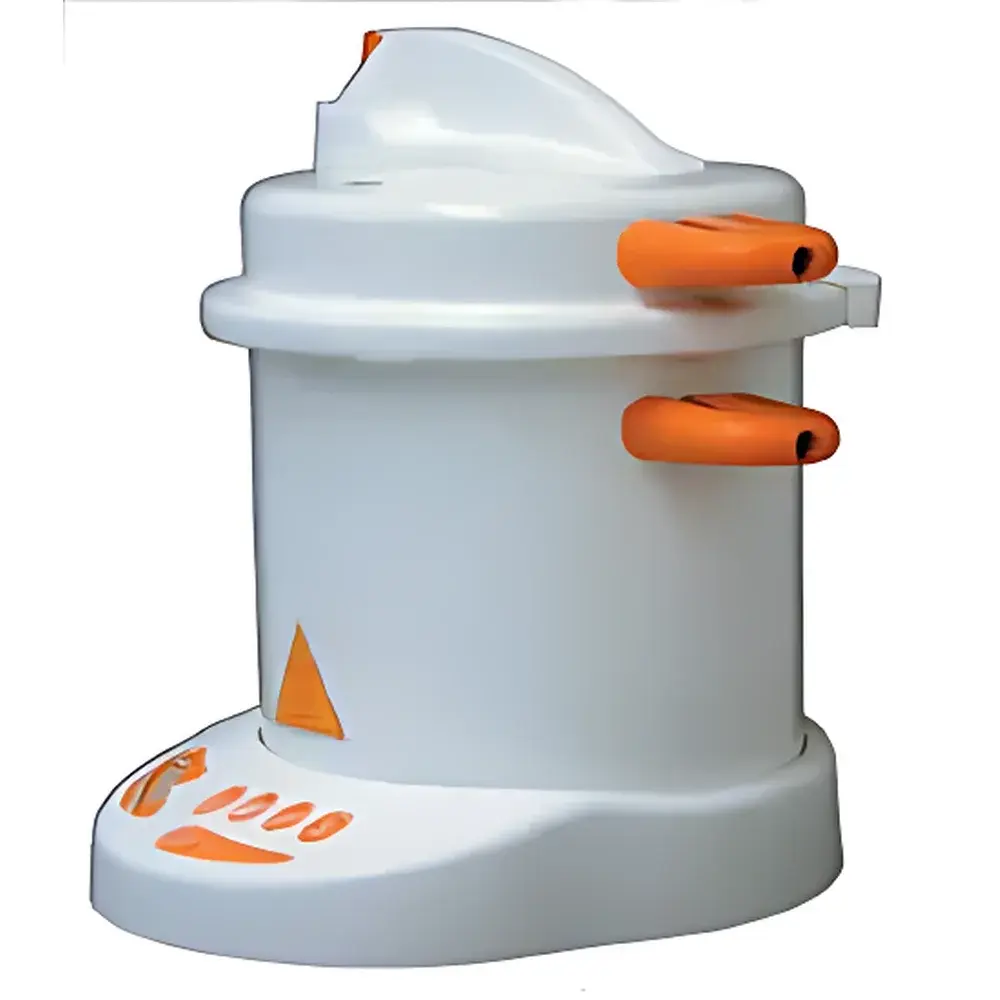
APTUM Antigen Retriever 2100 High-Pressure Steam-Based Antigen Retrieval System
| Brand | APTUM |
|---|---|
| Origin | United Kingdom |
| Model | 2100 |
| Bath Capacity | 9 L |
| Temperature Range | Ambient to 110 °C |
| Temperature Stability | ±0.2 °C |
| Chamber Dimensions (D×H) | 210 × 230 mm |
| Overall Height | 335 mm |
| Width | 340 mm |
| Depth | 228 mm |
| Net Weight | 4.5 kg |
| Max Load Weight | 3.0 kg |
| Max Fault Temperature | 133.3 °C |
| Power Supply | 220 V |
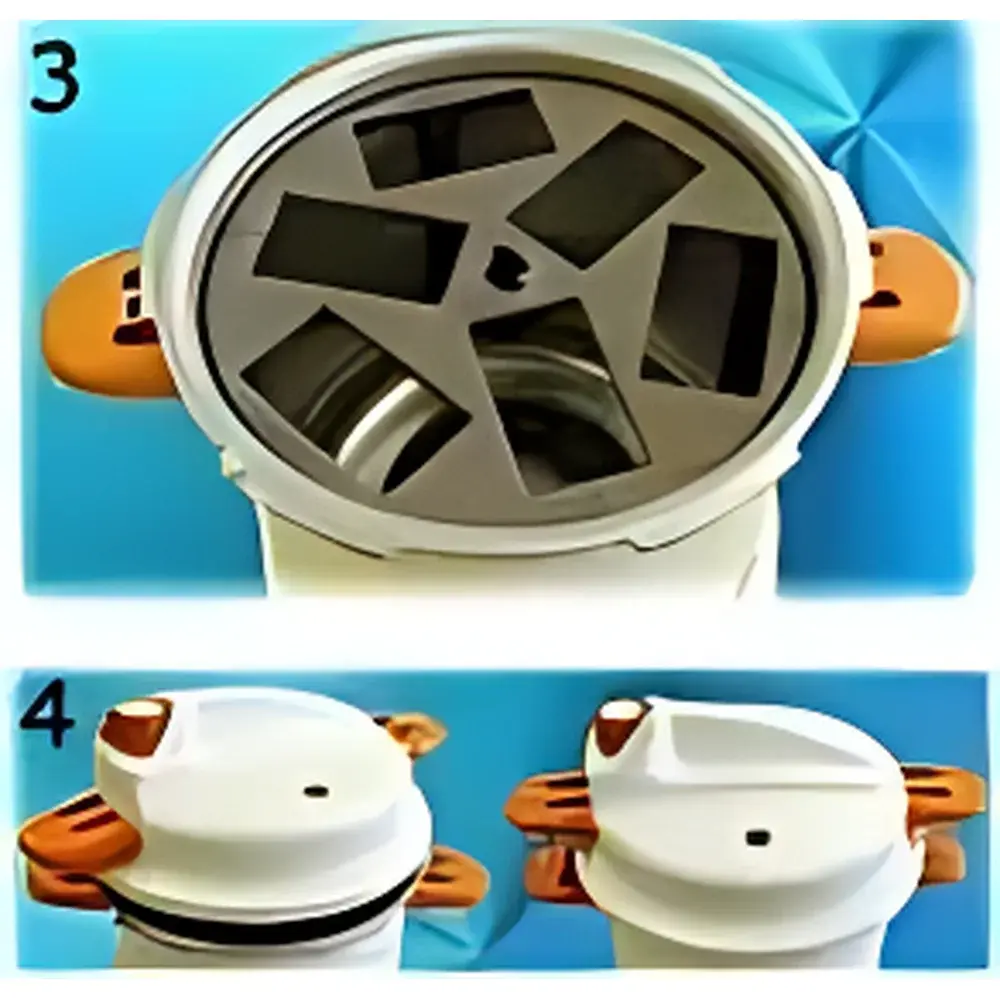
| Chamber Configuration | Single-unit steam chamber with modular slide racks (3-chamber kit available separately) |
Overview
The APTUM Antigen Retriever 2100 is a precision-engineered, high-pressure steam-based antigen retrieval system designed for consistent and reproducible epitope unmasking in formalin-fixed, paraffin-embedded (FFPE) tissue sections. Unlike conventional water baths or microwave ovens, the 2100 operates on a controlled steam-saturated environment, enabling rapid thermal equilibration and uniform pressure buildup—typically reaching >120 °C at elevated vapor pressure within sealed chambers. This principle leverages the hydrolytic cleavage of methylene bridges formed during formalin fixation, thereby restoring conformational and linear antigenic determinants without compromising tissue morphology. The system is engineered for compliance with standard immunohistochemistry (IHC) workflow requirements under GLP-aligned laboratory practices and supports method validation per CAP/CLIA and ISO 15189–referenced protocols.
Key Features
- Steam-saturated high-pressure chamber architecture delivering precise thermal ramping and dwell control—optimized for reproducible epitope exposure across heterogeneous FFPE samples.
- Modular slide chamber design accommodates up to three independent processing environments simultaneously, enabling parallel optimization of buffer conditions (e.g., pH 6.0 citrate vs. pH 8.1 Tris-EDTA).
- Integrated temperature-sensing feedback loop maintains ±0.2 °C stability throughout the heating phase; fault-tolerant safety cutoff triggers at 133.3 °C to prevent over-pressurization.
- Dedicated cooling profile management: post-retrieval passive cooldown over ≥2 hours ensures gradual thermal relaxation, minimizing nuclear fragmentation and cytoplasmic shrinkage.
- Compact footprint (340 × 228 × 335 mm) and lightweight construction (4.5 kg) facilitate integration into space-constrained histology labs or core pathology facilities.
- No external circulation pump required—eliminates maintenance points associated with fluid recirculation systems while ensuring uniform heat transfer via saturated steam convection.
Sample Compatibility & Compliance
The Antigen Retriever 2100 is validated for use with standard 1–4 µm FFPE tissue sections mounted on charged or APES-coated glass slides. It supports all major IHC-compatible mounting media and is compatible with automated stainers (Leica Bond, Ventana Benchmark, Dako Omnis). The device meets CE marking requirements for medical laboratory equipment (Class I, Annex II), conforms to IEC 61010-1:2010 for electrical safety, and incorporates mechanical pressure relief mechanisms aligned with EN 285:2015 (sterilization steam systems). While not a medical device per FDA 21 CFR Part 820, its operational parameters are documented to support audit readiness under CAP-accredited IHC validation frameworks and ISO/IEC 17025 traceability requirements.
Software & Data Management
The APTUM 2100 is a hardware-only platform with no embedded microprocessor or digital interface—deliberately designed to minimize software validation burden in regulated environments. All operating parameters (time, temperature setpoint, cooldown duration) are manually configured via calibrated analog dials and mechanical timers. This architecture eliminates need for 21 CFR Part 11-compliant electronic records, audit trails, or user-access controls—making it suitable for labs prioritizing simplicity, long-term reliability, and minimal IT dependency. Protocol documentation—including chamber loading configuration, buffer lot numbers, and operator initials—is maintained externally in paper-based or LIMS-integrated logbooks per GLP Annex 15 guidance.
Applications
- Routine antigen retrieval for nuclear markers (e.g., Ki-67, p53, ER/PR) using R-Buffer A (pH 8.1) or AG variants.
- Membrane-associated antigens (e.g., CD3, CD8, HER2) processed with R-Buffer C (pH 6.0) under standardized steam dwell cycles.
- Challenging targets in over-fixed tissues (e.g., autopsy specimens, archival blocks >5 years old) utilizing U-series buffers with extended dwell or dual-cycle protocols.
- Tissue microarrays (TMAs) requiring uniform epitope exposure across hundreds of cores—enabled by consistent chamber-to-chamber thermal homogeneity.
- Method development workflows where buffer screening (A/B/C/U and corresponding G-series mild variants) must be conducted under identical thermal kinetics.
FAQ
Is the Antigen Retriever 2100 compatible with automated staining platforms?
Yes—slides processed in the 2100 meet standard IHC preprocessing criteria for downstream compatibility with Leica Bond RX, Ventana Ultra, and Dako Link 48 systems.
Can I use my existing microwave-validated buffers in the 2100?
In most cases, yes. Buffers optimized for microwave retrieval (e.g., citrate pH 6.0, EDTA pH 8.0) demonstrate strong cross-platform transferability due to shared hydrolytic mechanism—though dwell time and peak temperature differ.
What is the maximum number of slides per run?
Each chamber holds up to 30 standard 1″ × 3″ slides. With the optional 3-chamber kit (Cat. No. 62705-01), up to 90 slides may be processed in parallel under identical or divergent buffer conditions.
Does the unit require water quality conditioning?
Deionized or distilled water is recommended to prevent mineral scale accumulation in the steam generator reservoir and extend service intervals.
How is temperature calibration verified?
APTUM provides NIST-traceable calibration certificates upon request. Users may perform field verification using Class AA platinum resistance thermometers inserted into designated port openings during idle thermal soak cycles.



