
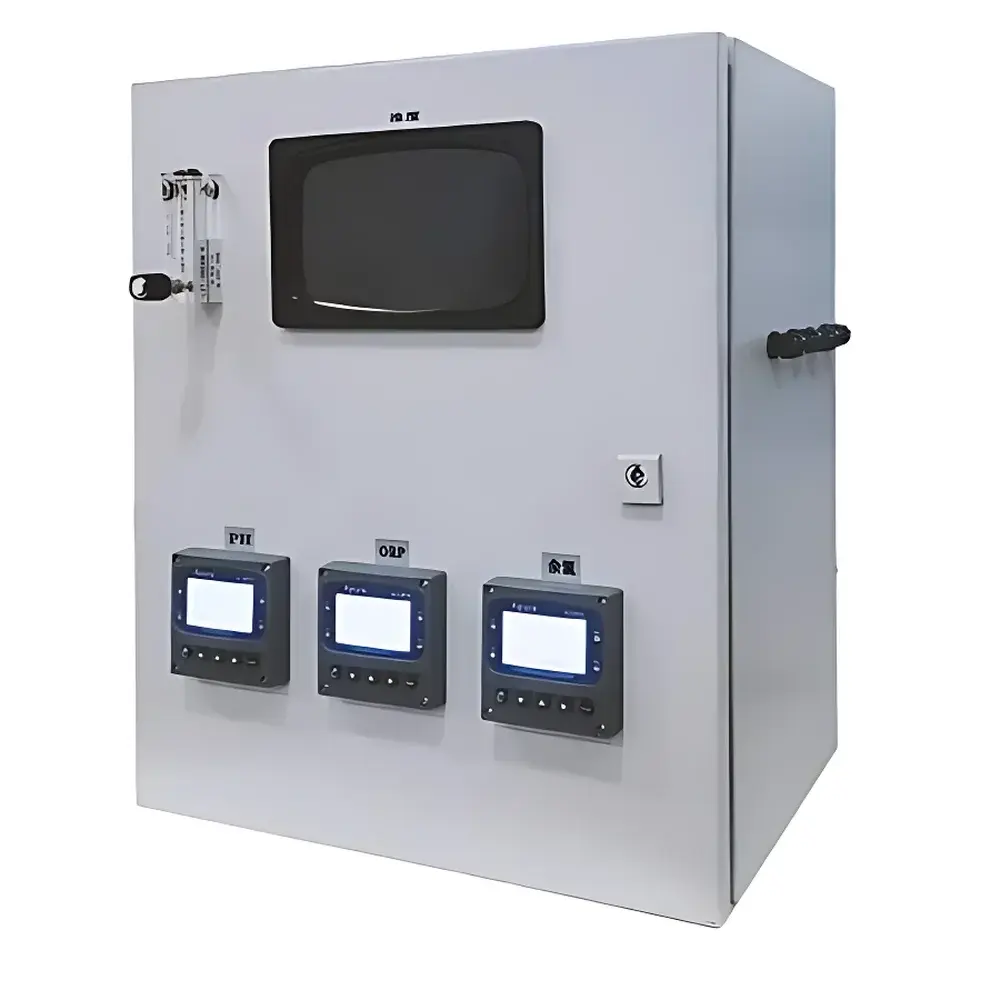
Apure KS-600 Cabinet-Mounted Online Water Quality 5-Parameter Analyzer
| Brand | Apure |
|---|---|
| Origin | Shanghai, China |
| Manufacturer Type | Direct Manufacturer |
| Product Category | Domestic (China-Made) |
| Model | KS-600 |
| Instrument Type | Online Water Quality Analyzer |
| Measurable Parameters | pH, ORP, Free Chlorine, Turbidity, Temperature |
| Application Scope | Swimming Pools, Secondary Water Supply in Residential Communities, Municipal Water Distribution Networks, Water Treatment Plants, Cooling Water Systems |
| Connectivity | RS485/Modbus RTU, Optional 4G LTE or Ethernet for Cloud Data Upload |
| Compliance Framework | Designed to support GLP-aligned operational logging |
Overview
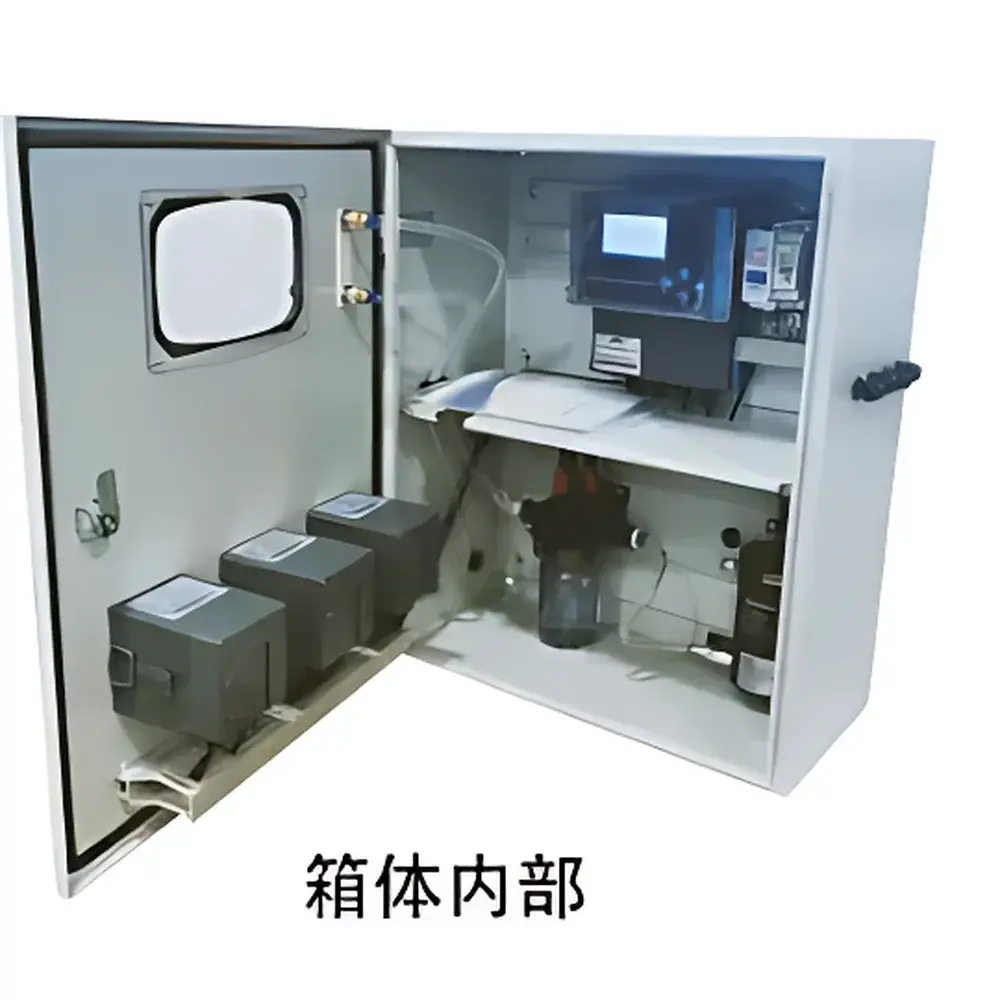
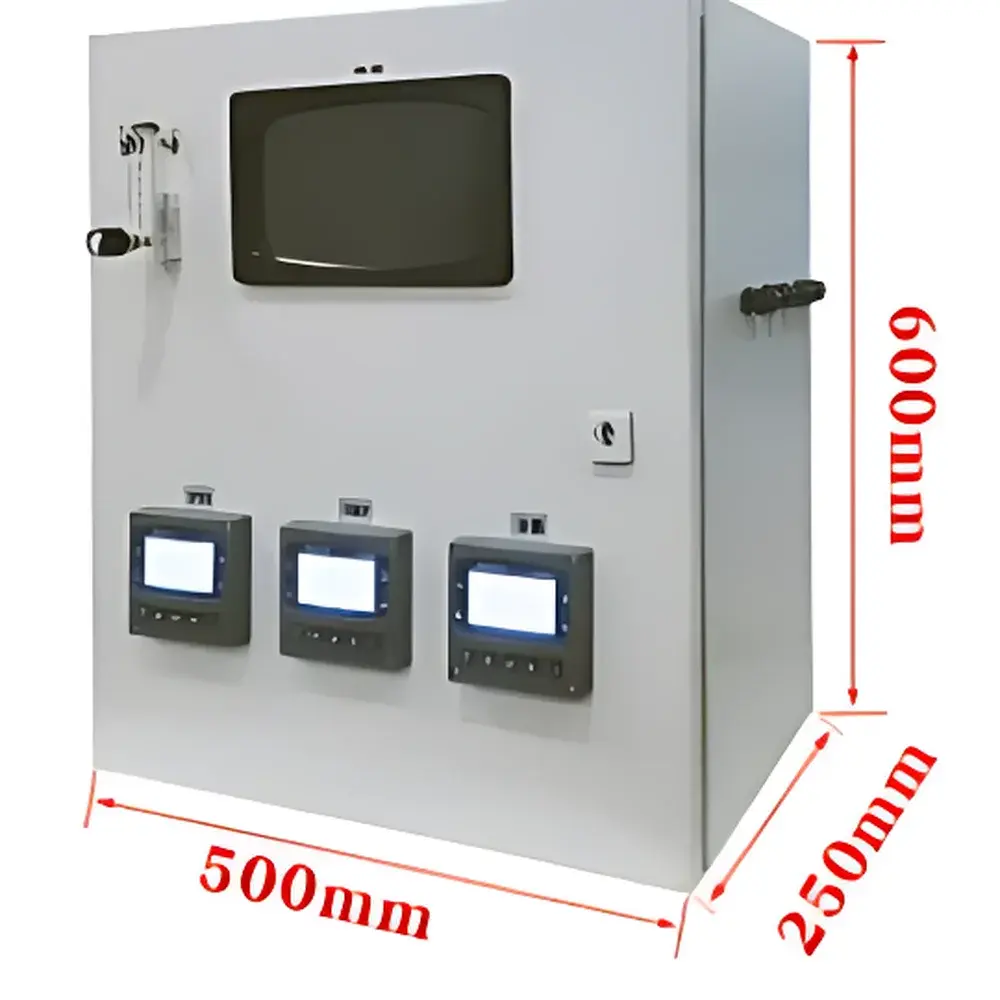
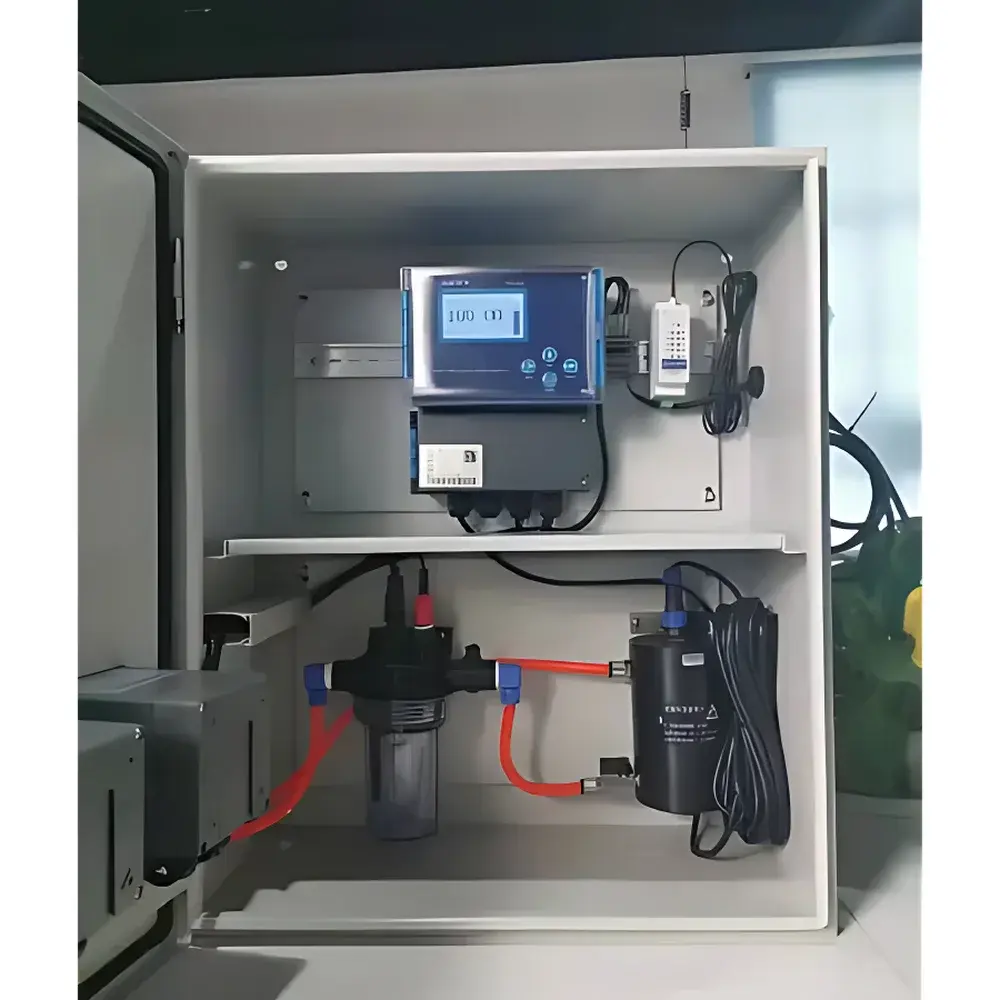
The Apure KS-600 Cabinet-Mounted Online Water Quality 5-Parameter Analyzer is an integrated, rack-installable monitoring system engineered for continuous, real-time assessment of critical water quality indicators in recirculating and distribution systems. It operates on a multi-sensor fusion architecture—housing independently calibrated, maintenance-optimized probes for pH (glass electrode with temperature compensation), oxidation-reduction potential (ORP, platinum/reference electrode), free chlorine (amperometric membrane sensor), turbidity (nephelometric measurement at 90° using 850 nm LED source), and Pt1000-grade temperature sensing. All sensors are housed within a single IP65-rated stainless steel cabinet, enabling deployment in humid, chlorinated environments typical of indoor aquatic facilities and utility pump stations. Unlike portable or benchtop analyzers, the KS-600 is designed for unattended 24/7 operation with automatic zero/span verification cycles, drift compensation algorithms, and configurable alarm thresholds per parameter—ensuring sustained metrological integrity without daily manual intervention.
Key Features
- Modular cabinet design with front-access probe bays and tool-less sensor replacement—reducing mean time to repair (MTTR) to under 8 minutes.
- Dual-channel analog outputs (4–20 mA) assignable to any measured parameter, plus isolated digital output for relay-based control of dosing pumps.
- Integrated programmable logic controller (PLC)-grade control module supporting up to four external peristaltic or diaphragm metering pumps (e.g., coagulant, acid, sodium hypochlorite, algaecide) with proportional-integral (PI) dosing logic.
- Onboard data logger with 32 MB non-volatile memory—storing 12 months of 5-minute interval readings (timestamped, with checksum validation).
- Communication interfaces include RS485 (Modbus RTU slave), optional embedded 4G LTE module (with SIM slot and APN configuration), and Ethernet port supporting HTTP/HTTPS RESTful API endpoints for integration into SCADA or cloud-based dashboards.
- Self-diagnostics including sensor cable continuity check, electrolyte level detection (for chlorine and pH modules), and temperature-compensated calibration status flagging.
Sample Compatibility & Compliance
The KS-600 is validated for use with potable water, treated recreational water (per WHO Guidelines for Safe Recreational Water Environments and GB/T 35446–2017), and low-conductivity cooling water (conductivity range: 50–2000 µS/cm). Its sensor suite meets ISO 7027 for turbidity (NTU traceability to NIST SRM 2000 series), ASTM D1293 for pH, and ASTM D3370 for chlorine amperometry. While not FDA 21 CFR Part 11 certified out-of-the-box, its audit trail functionality—including user login logs, parameter change history with timestamps, and electronic signature fields (via optional password-protected admin mode)—supports alignment with GLP and municipal public health surveillance requirements, including direct data forwarding to regional hygiene supervision platforms per Shanghai Local Standard DB31/T 1249–2020.
Software & Data Management
The analyzer ships with Apure AquaLink™ Configuration Suite (Windows-based, USB/RS232 setup utility) for initial commissioning, sensor calibration, and alarm logic programming. Operational data is accessible via three pathways: (1) local HMI with 5.7″ TFT LCD touchscreen (graphical trend display, historical query, manual override); (2) Modbus TCP polling by third-party SCADA systems (e.g., Ignition, Siemens Desigo); and (3) secure HTTPS POST uploads to customer-hosted or Apure-managed cloud servers—with TLS 1.2 encryption and configurable upload intervals (1–60 min). All transmitted datasets include ISO 8601 timestamps, sensor serial numbers, and QC flags (e.g., “Turbidity_Signal_Noise_High”). Raw CSV exports support statistical process control (SPC) analysis in JMP or Minitab.
Applications
Primary deployment contexts include large-scale commercial swimming pools (>500 m³ volume), indoor aquatic centers with automated filtration-dosing loops, municipal secondary water supply tanks serving high-rise residential complexes, and HVAC cooling tower networks requiring corrosion and biofouling mitigation. The system’s dual-pump control logic enables closed-loop pH stabilization (acid dosing) concurrent with residual disinfectant maintenance (chlorine dosing), while turbidity feedback triggers coagulant injection—reducing operator dependency and improving compliance consistency across shift changes. It is also deployed at water utility gate stations for early warning of distribution system anomalies (e.g., sudden ORP drop indicating organic intrusion).
FAQ
What calibration frequency is recommended for field operation?
Weekly two-point pH calibration (4.01 & 7.00 buffers) and daily ORP verification using Zobell’s solution (225 mV ±5 mV) are advised; chlorine and turbidity sensors require monthly factory-traceable verification.
Can the KS-600 interface with existing building management systems (BMS)?
Yes—via Modbus RTU over RS485 or Modbus TCP over Ethernet; register maps and BACnet/IP gateway compatibility documentation are provided upon request.
Is remote firmware update supported?
Firmware updates are delivered via signed .bin files through AquaLink™ Suite or HTTPS-initiated download with SHA-256 hash validation.
How is sensor fouling mitigated in high-turbidity pool environments?
The turbidity sensor features ultrasonic probe cleaning activation (configurable interval), while pH and chlorine electrodes incorporate automatic wiper mechanisms synchronized with flow detection.
Does the system meet cybersecurity requirements for municipal infrastructure?
It supports role-based access control (admin/operator/guest), disabled default credentials, TLS 1.2 encrypted cloud comms, and optional hardware write-protection toggle for configuration EEPROM.







