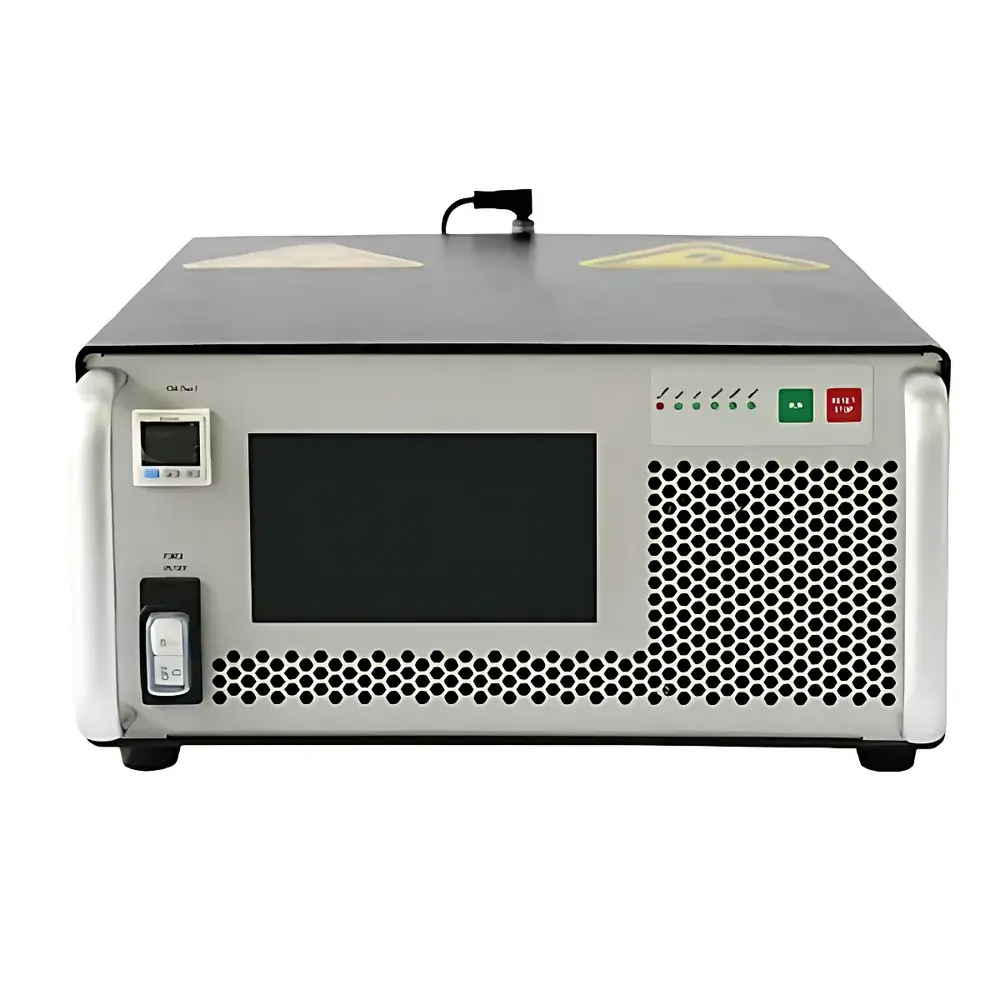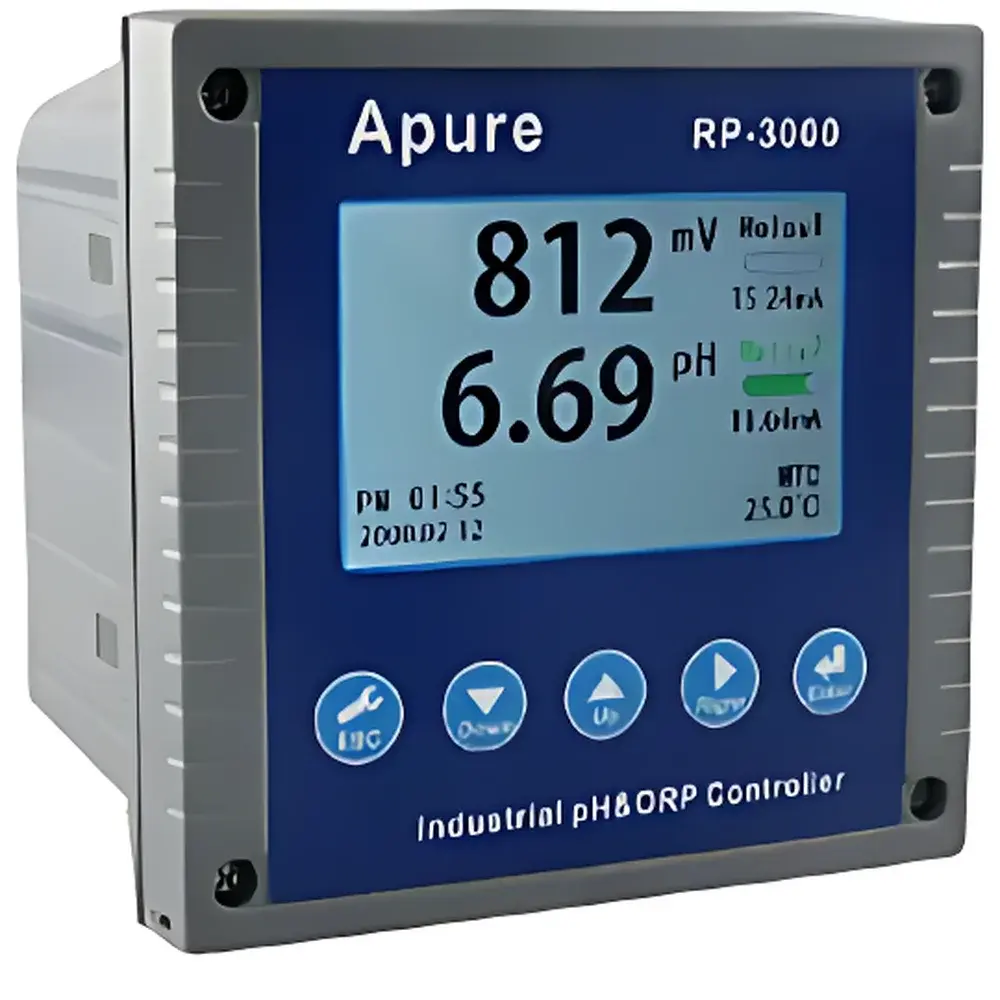
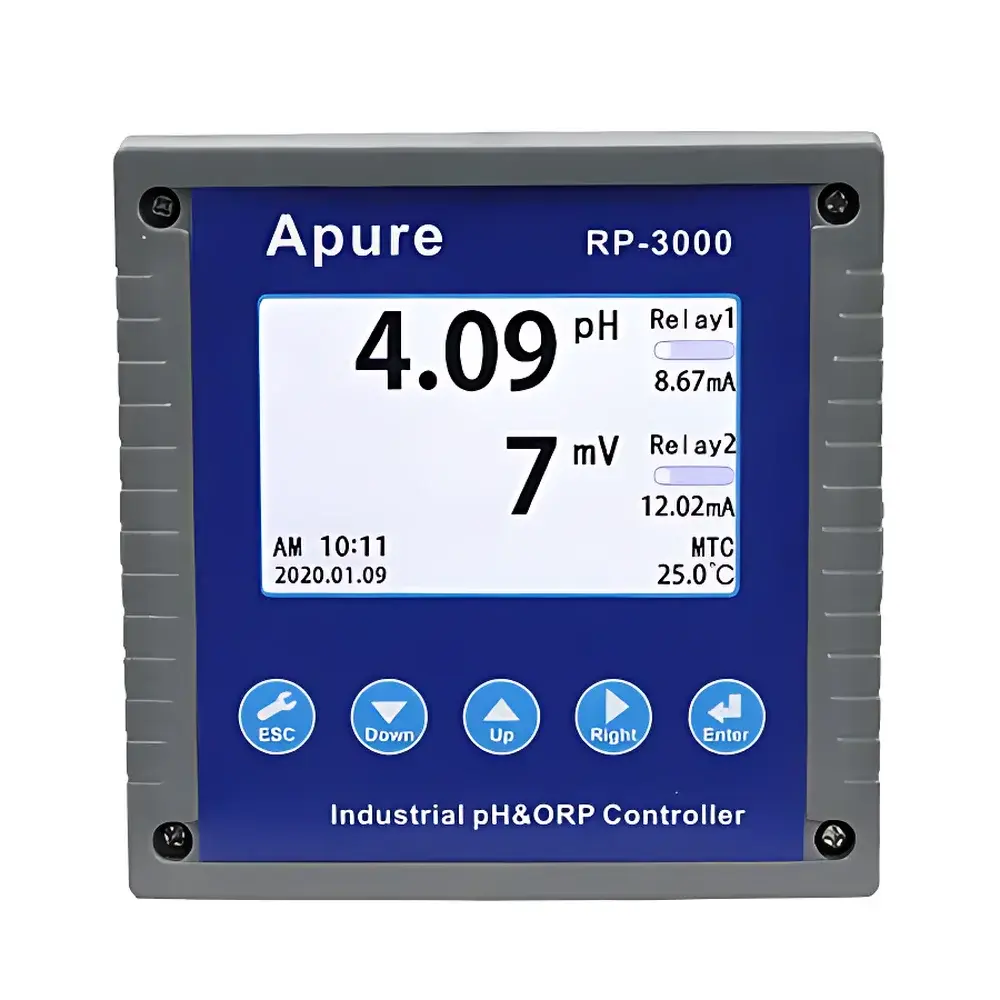
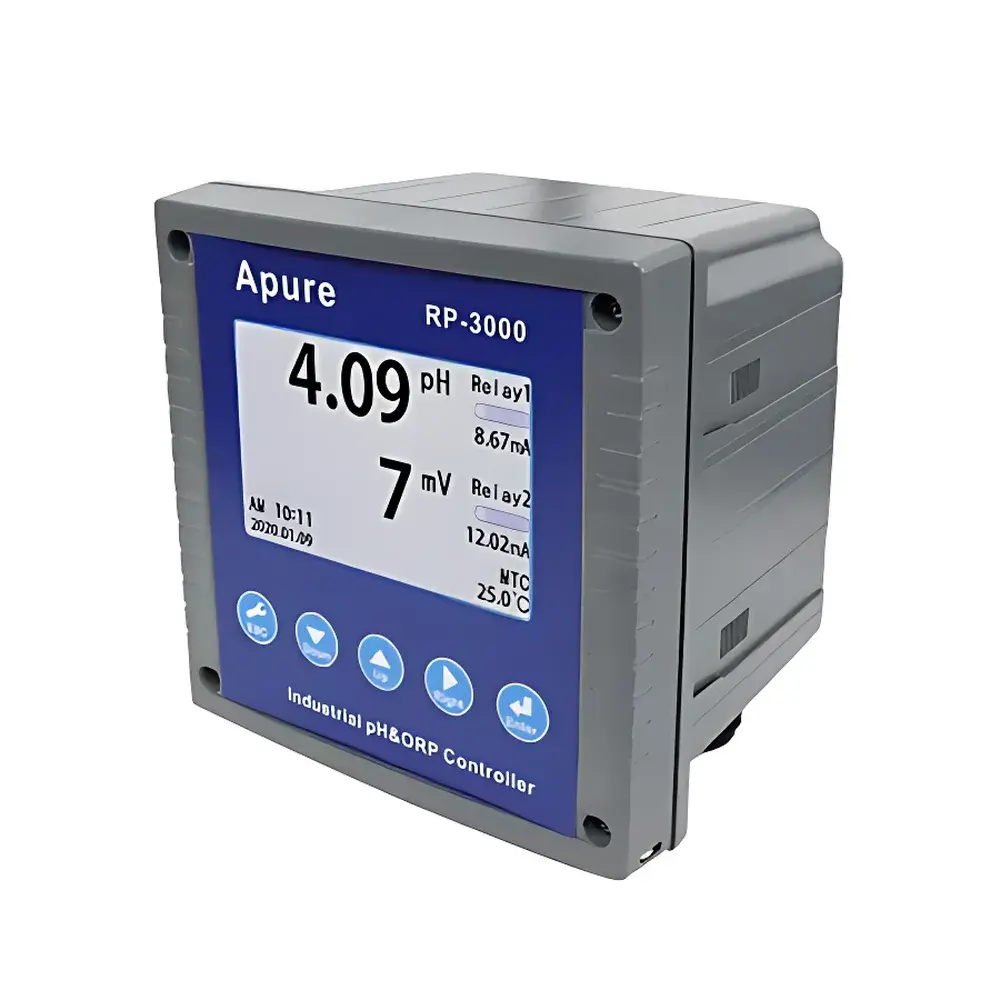
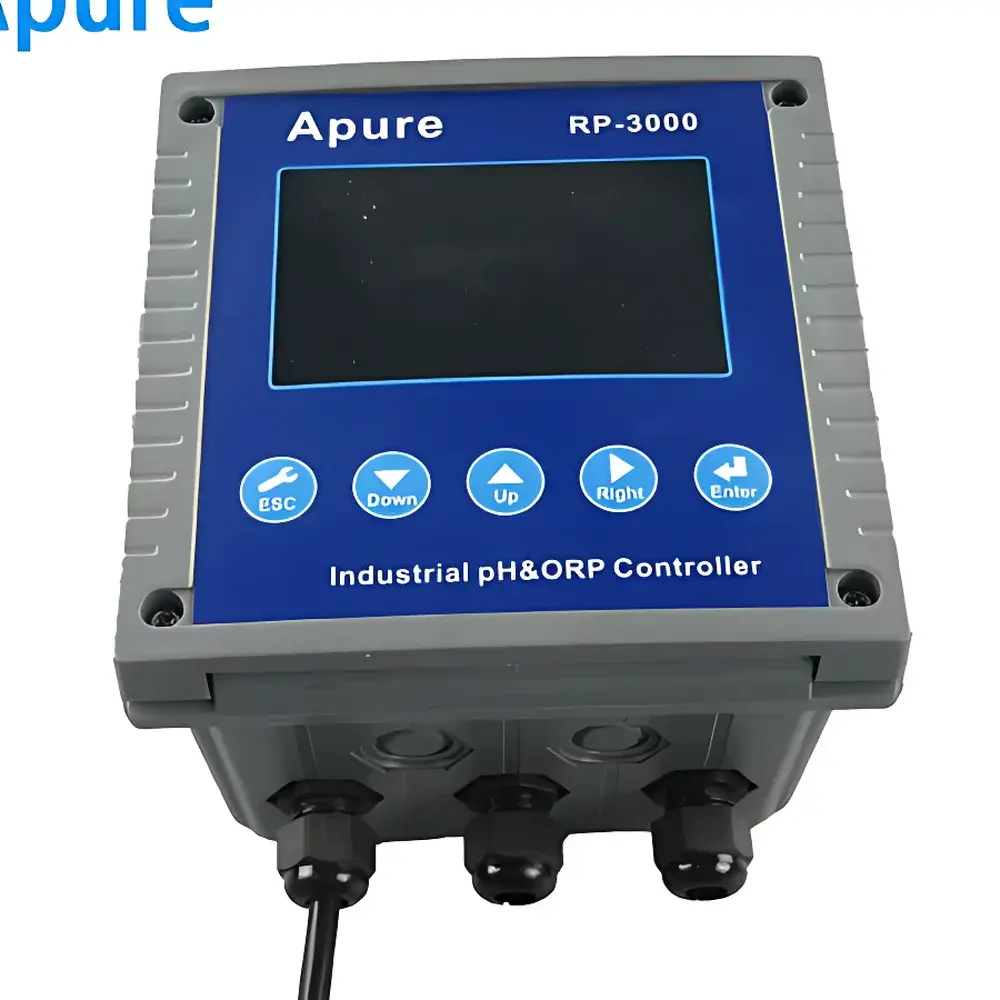
Apure RP-3000 Dual-Channel Online pH and ORP Transmitter
| Brand | Apure |
|---|---|
| Model | RP-3000 |
| Measurement Range | pH 0–14, ORP −1999 to +1999 mV |
| Resolution | 0.01 pH, 1 mV |
| Accuracy | ±0.01 pH, ±1 mV |
| Temperature Compensation | 0–100 °C (manual/automatic with PT1000 sensor) |
| Output | Dual isolated 4–20 mA (pH and ORP configurable) |
| Relay Outputs | 2 SPDT relays (configurable high/low alarm for pH or ORP) |
| Display | 800×480 IPS color LCD |
| Enclosure Rating | IP65 |
| Dimensions | 144×144×115 mm (H×W×D) |
| Power Supply | AC 100–240 V, ≤5 W |
| Operating Environment | 0–60 °C, ≤85% RH |
| Calibration | Manual 2- or 3-point using standard buffers (pH 4.00, 6.86, 7.00, 9.18, 10.00) |
| Stability | ≤0.02 pH/24 h, ≤3 mV/24 h |
Overview
The Apure RP-3000 Dual-Channel Online pH and ORP Transmitter is an industrial-grade process analyzer engineered for continuous, real-time monitoring and control of aqueous acidity and redox potential in demanding operational environments. Based on potentiometric measurement principles—employing glass electrode assemblies for pH and noble-metal (typically platinum or gold) reference electrodes for ORP—the RP-3000 delivers stable, traceable electrochemical readings under dynamic flow conditions. Its dual-channel architecture enables simultaneous, independent acquisition of pH and ORP values without cross-interference, supporting coordinated process decisions in applications where both parameters serve as critical quality indicators—such as chlorine residual management in disinfection stages or redox-driven chemical dosing in electroplating baths. Designed for permanent installation in control panels or wall-mounted enclosures, the unit complies with IEC 61000-6-2 (immunity) and IEC 61000-6-4 (emission) standards, ensuring electromagnetic compatibility in electrically noisy plant settings.
Key Features
- Dual independent measurement channels: One dedicated to pH (0–14), one to ORP (−1999 to +1999 mV), each with configurable scaling and output assignment
- High-resolution 800×480 IPS color display with intuitive bilingual interface (English/Chinese), supporting clear visualization of real-time trends, calibration status, and alarm states
- IP65-rated front panel enclosure—dust-tight and protected against low-pressure water jets—enabling reliable operation in humid or splash-prone areas including wastewater pump stations and chemical dosing rooms
- Two fully programmable SPDT relays (3 A / 250 V AC), assignable to pH or ORP high/low limits with hysteresis adjustment for stable switching behavior
- Dual isolated 4–20 mA analog outputs, galvanically separated to prevent ground-loop interference; each output can be scaled independently to match controller or DCS input requirements
- PT1000-based automatic temperature compensation (ATC) across 0–100 °C, with optional manual override for fixed-point calibration verification
- Secure parameter access via multi-level password protection (operator/engineer/administrator tiers), supporting audit-ready configuration control per GLP and internal SOPs
Sample Compatibility & Compliance
The RP-3000 is intended for use with aqueous liquid streams exhibiting conductivity ≥50 µS/cm and minimal suspended solids or oil content. It supports standard pH electrode configurations (e.g., combination glass electrodes with Ag/AgCl reference systems) and ORP electrodes compatible with DIN or BNC connectors. The transmitter meets CE marking requirements under the EU Electromagnetic Compatibility Directive 2014/30/EU and Low Voltage Directive 2014/35/EU. While not certified to SIL or ATEX standards, its robust design aligns with general-purpose industrial safety expectations per IEC 61010-1 for measurement/control equipment. Calibration traceability follows NIST-traceable pH buffer standards (e.g., DIN 19266, ASTM D1293), and routine verification protocols may be documented to satisfy ISO/IEC 17025 or FDA 21 CFR Part 11 data integrity expectations when paired with compliant data loggers.
Software & Data Management
The RP-3000 operates autonomously without embedded firmware requiring external software for basic functionality. However, configuration and diagnostic data—including calibration history, relay event logs, and output diagnostics—can be reviewed directly on the display or exported via optional RS485 Modbus RTU communication (not included by default). When integrated into SCADA or DCS platforms supporting Modbus, time-stamped process variables and status flags (e.g., “electrode fault”, “calibration due”) are accessible for centralized trending and alarm correlation. All user-modifiable parameters—including setpoints, hysteresis, output scaling, and password levels—are stored in non-volatile memory with write-cycle endurance exceeding 100,000 operations. No proprietary drivers or cloud services are required; configuration remains local and deterministic—critical for facilities operating under air-gapped network policies or GxP-regulated environments.
Applications
- Wastewater treatment: Monitoring influent/effluent pH and ORP during neutralization, coagulation, and disinfection (e.g., chlorine or ozone dosing control)
- Boiler and cooling water systems: Preventing corrosion and scale formation through alkalinity and redox potential feedback loops
- Pharmaceutical water systems (PW, WFI): Ensuring compliance with USP and EP 2.2.42 specifications for conductivity and oxidation-reduction state
- Electroplating and anodizing lines: Controlling bath chemistry stability via ORP-guided additive replenishment and pH-dependent metal ion solubility
- Food and beverage processing: Verifying sanitizer concentration (e.g., hypochlorite solutions) and rinse water neutrality prior to packaging
- Swimming pool and spa management: Automating acid/base and oxidant dosing based on concurrent pH and ORP thresholds
FAQ
Does the RP-3000 support automatic calibration?
No—it requires manual 2- or 3-point calibration using certified buffer solutions. Automatic calibration is not implemented to maintain measurement integrity and avoid drift artifacts associated with unattended electrode conditioning.
Can the 4–20 mA outputs be assigned to different physical electrodes?
Yes—each output channel is independently assignable to either the pH or ORP input, allowing flexible integration with distributed control systems where separate signal paths are required.
Is temperature compensation mandatory for accurate pH measurement?
Yes—pH electrode response is inherently temperature-dependent. The RP-3000 applies Nernstian correction using measured temperature; omission of ATC or inaccurate temperature input introduces systematic error exceeding ±0.1 pH outside 25 °C.
What maintenance intervals are recommended for long-term reliability?
Electrode cleaning and calibration verification should occur at least weekly in continuous service; full electrode replacement is typically required every 6–12 months depending on process fouling and chemical exposure.
Does the unit comply with FDA 21 CFR Part 11 for electronic records?
The RP-3000 itself does not provide electronic signature capability or audit trail generation. However, when connected to a validated Modbus-enabled historian or LIMS system that implements Part 11 controls, its raw data may be incorporated into compliant workflows.
Related Products