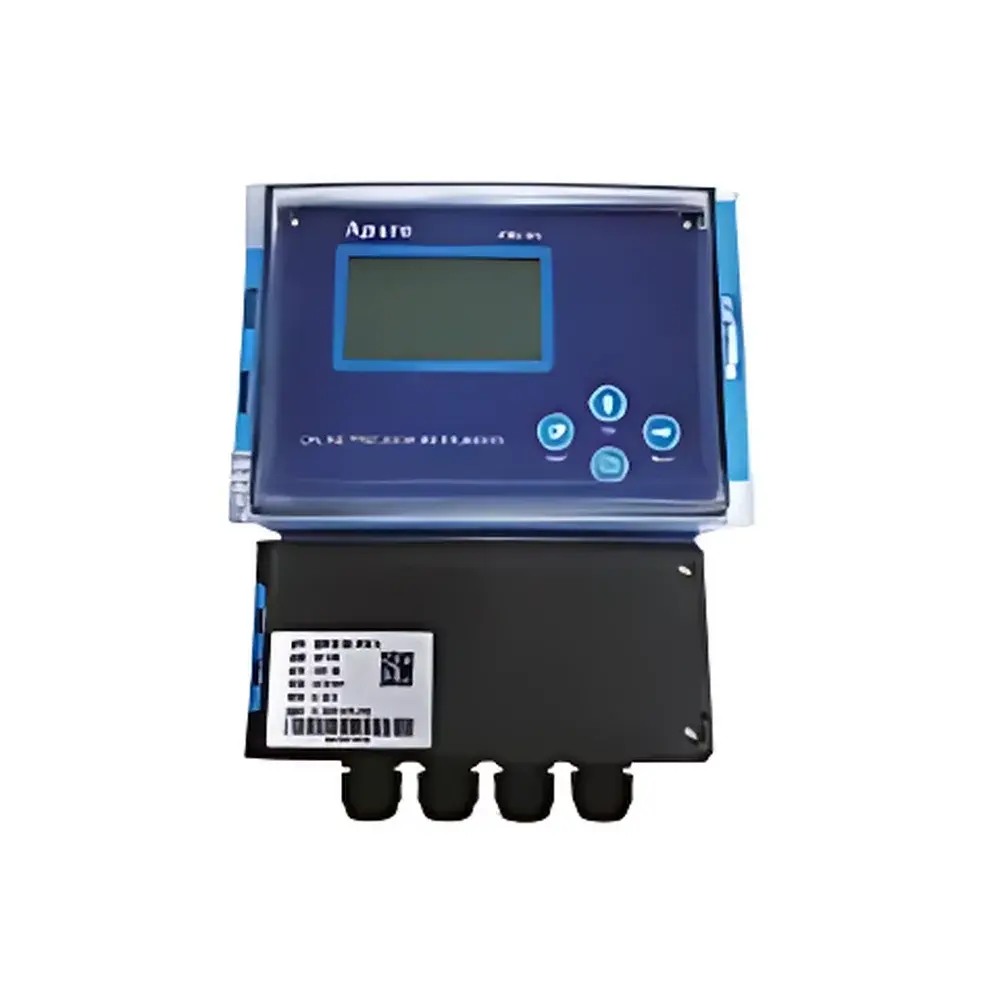
APURE RW-60 Ultrasonic Sludge Blanket Level Monitor
| Brand | APURE |
|---|---|
| Origin | Shanghai, China |
| Manufacturer Type | Original Equipment Manufacturer (OEM) |
| Product Category | Domestic |
| Model | RW-60 |
| Output Signal | 4–20 mA analog + RS485 Modbus RTU digital |
| Display | Backlit LCD with bilingual (English/Chinese) UI |
| Power Supply | 24 VDC ±15% |
| Environmental Rating | IP66 |
| Operating Temperature | –10 to 60 °C |
| Temperature Compensation | Automatic, high-precision thermistor-based |
| Relay Outputs | 2 configurable SPDT relays (max. 5 A @ 250 VAC) |
| Measurement Principle | Time-of-Flight (ToF) ultrasonic echo detection |
| Typical Range | 0.3 to 6.0 m (adjustable via software) |
| Repeatability | ±1 mm |
| Response Time | < 2 s (configurable) |
Overview
The APURE RW-60 Ultrasonic Sludge Blanket Level Monitor is an industrial-grade, wall-mounted level sensing instrument engineered for continuous, non-contact measurement of sludge blanket depth in primary and secondary clarifiers, thickeners, and pre-concentration tanks. It operates on the time-of-flight (ToF) principle: a high-frequency ultrasonic transducer emits short-duration pulses downward into the liquid column; the elapsed time between pulse transmission and echo return from the sludge–liquid interface is precisely measured. Using calibrated sound velocity profiles—adjusted in real time by an integrated high-accuracy thermistor—the device computes sludge blanket height and thickness with millimeter-level repeatability. Unlike optical or conductivity-based alternatives, the RW-60 is immune to suspended solids interference, foam, turbidity, or surface scum, making it suitable for harsh municipal and industrial wastewater environments where long-term stability and zero drift are critical.
Key Features
- True maintenance-free operation: no moving parts, no consumables, no mechanical wear—designed for >10-year field service life under continuous duty.
- Dual-output architecture: isolated 4–20 mA analog output (HART-compatible wiring) plus RS485 serial interface supporting Modbus RTU protocol for integration into DCS, SCADA, or PLC systems.
- Two programmable SPDT relays rated at 5 A / 250 VAC, configurable as high/low level alarms, fault indicators, or process interlocks per user-defined thresholds.
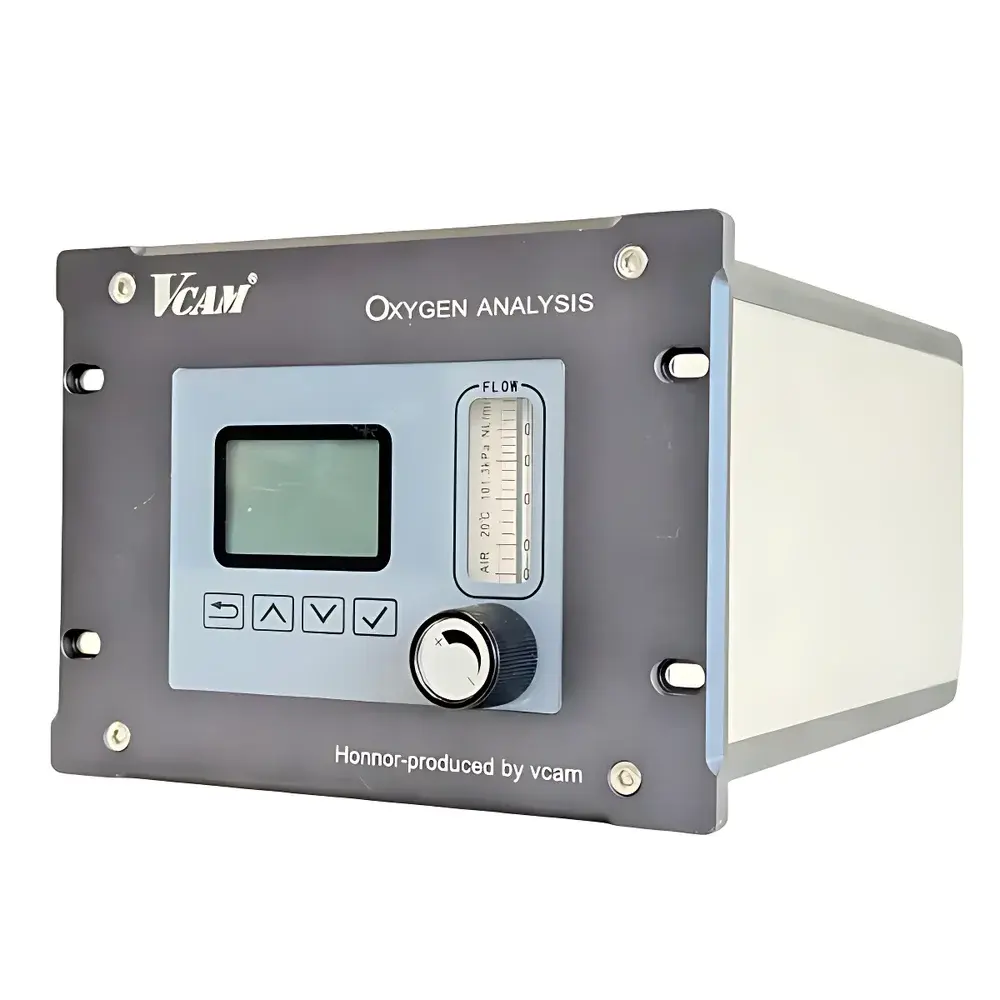
- Backlit monochrome LCD display with intuitive bilingual (English/Chinese) menu navigation—supports real-time visualization of sludge height, temperature, signal strength, and diagnostic status.
- Embedded automatic temperature compensation system using NTC thermistors with ±0.1 °C resolution ensures consistent ToF correction across ambient variations from –10 to 60 °C.
- Robust IP66-rated aluminum alloy housing with corrosion-resistant coating, suitable for outdoor mounting or humid indoor installations without additional enclosures.
Sample Compatibility & Compliance
The RW-60 is validated for use in activated sludge systems, anaerobic digesters, dissolved air flotation (DAF) units, and gravity thickeners handling municipal sewage, food processing effluent, pulp and paper mill wastewater, and pharmaceutical plant discharges. It complies with IEC 61000-6-2 (EMC immunity) and IEC 61000-6-4 (EMC emissions) standards. Its analog and digital outputs meet ISA-50.00.01 (4–20 mA) and EIA/TIA-485-A (RS485) specifications. While not certified for SIL or ATEX environments, its design supports integration into safety-instrumented systems (SIS) when deployed with appropriate external barriers and logic solvers. The device adheres to ISO 9001 manufacturing controls and supports GLP-compliant data traceability when paired with APURE’s optional audit-log-enabled firmware.
Software & Data Management
Configuration and calibration are performed locally via the front-panel interface or remotely using APURE’s PC-based RW-Config Utility (Windows), which provides full access to all parameters—including damping filters, echo gain profiles, blanking distance, relay hysteresis, and Modbus slave ID assignment. All configuration changes are timestamped and stored in non-volatile memory. The device logs internal diagnostics (transducer health, temperature drift, signal-to-noise ratio) every 15 minutes, exportable via USB or Modbus register polling. When connected to supervisory systems compliant with FDA 21 CFR Part 11, the RW-60 supports electronic signatures and audit trails through middleware integration—enabling regulatory readiness for wastewater treatment facilities operating under EPA NPDES permit conditions or ISO 14001 environmental management frameworks.
Applications
- Real-time optimization of return activated sludge (RAS) flow rates based on dynamic sludge blanket elevation.
- Early detection of sludge bulking or rising sludge events through trend analysis of interface velocity and thickness variation.
- Feed-forward control of polymer dosing systems in thickener feed wells using sludge concentration gradient estimates.
- Monitoring separation layer formation in lamella settlers and inclined plate clarifiers during wet-weather flow surges.
- Supporting asset performance management (APM) programs by correlating blanket behavior with influent BOD/COD load, MLSS concentration, and SRT adjustments.
FAQ
What measurement principle does the RW-60 employ?
It uses time-of-flight ultrasonic echo detection, calculating sludge interface position from the round-trip transit time of high-frequency acoustic pulses.
Can the RW-60 operate in aerated basins or tanks with surface turbulence?
Yes—the transducer’s narrow beam angle (±3° divergence) and adaptive echo filtering minimize false returns from surface agitation or floating debris.
Is temperature compensation mandatory for accurate readings?
Yes. Sound velocity in water varies by ~2.5 m/s per °C; the integrated thermistor enables real-time correction, maintaining ±1 mm repeatability across operational temperature ranges.
Does the device support HART communication?
No—only 4–20 mA analog and RS485 Modbus RTU are supported. HART requires separate hardware and is not implemented in this model.
What is the maximum recommended installation height above the liquid surface?
For optimal signal integrity and minimal multipath interference, the transducer face should be mounted no more than 0.5 m above the maximum expected liquid level, with unobstructed vertical path clearance.