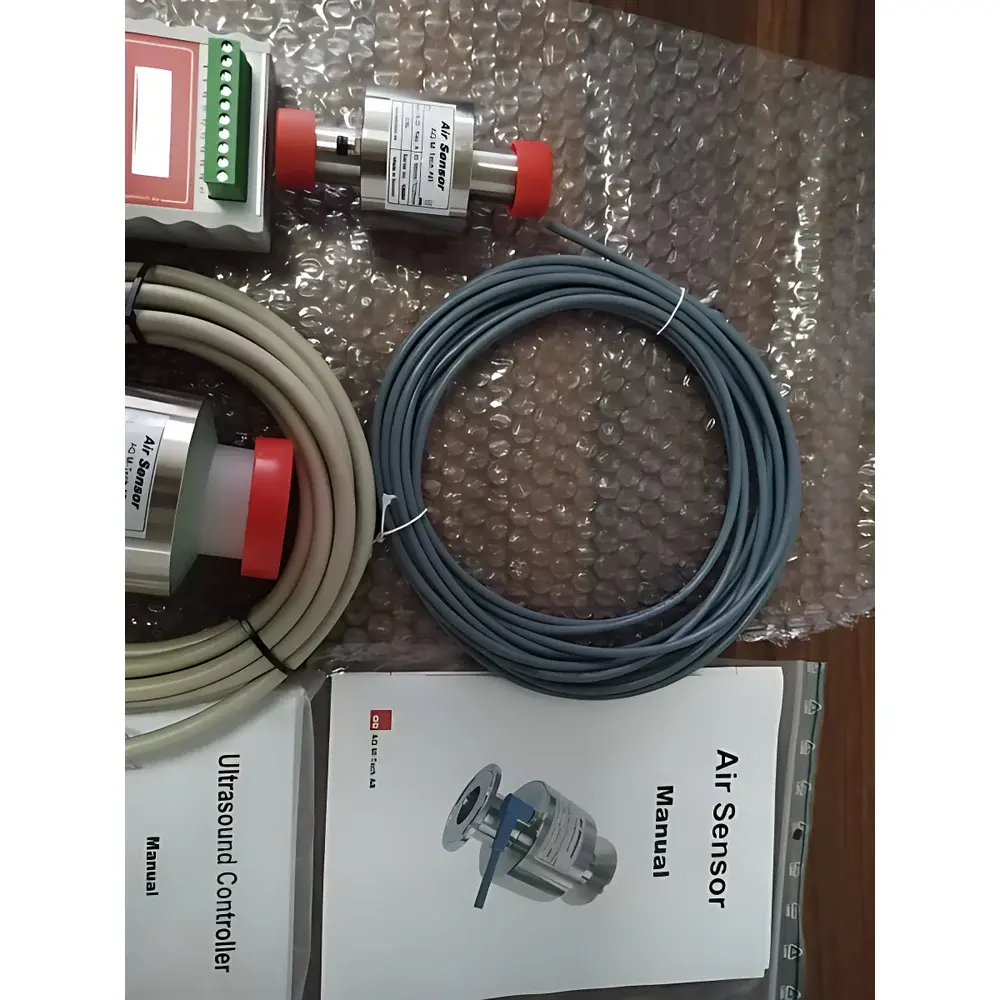
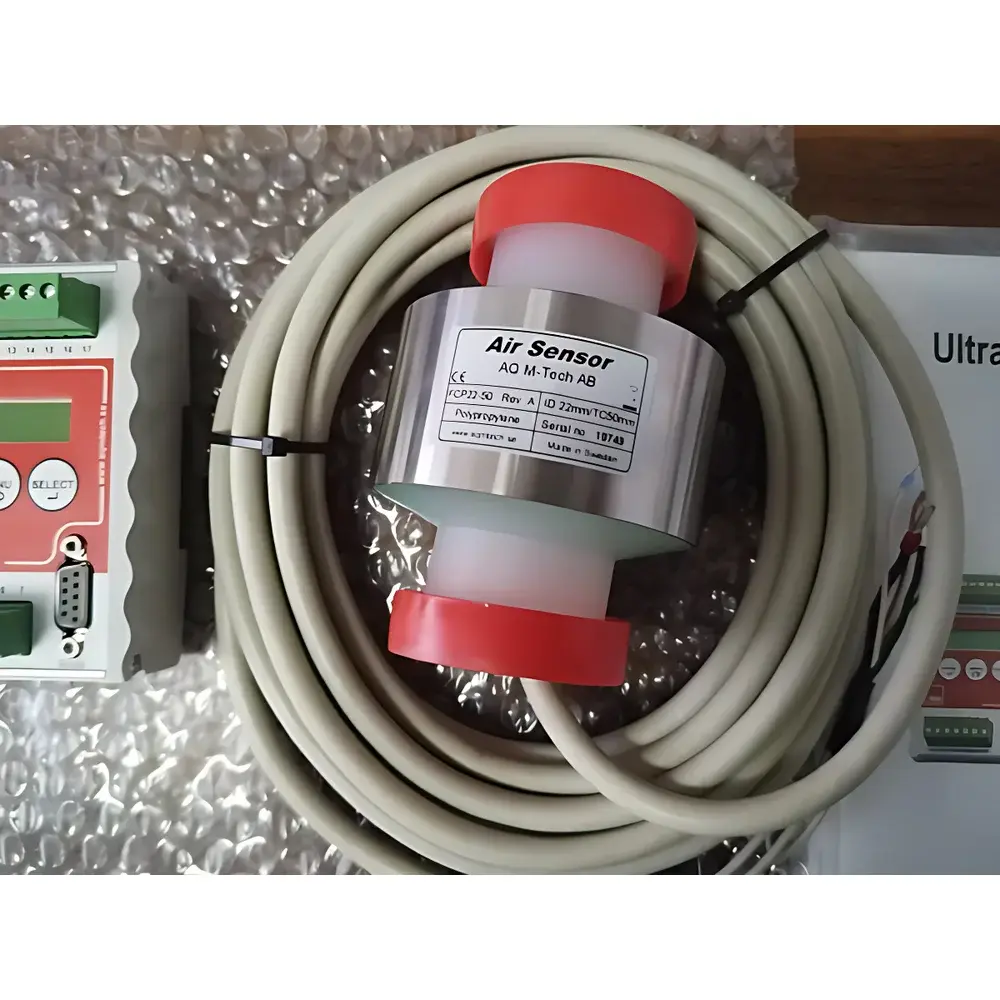
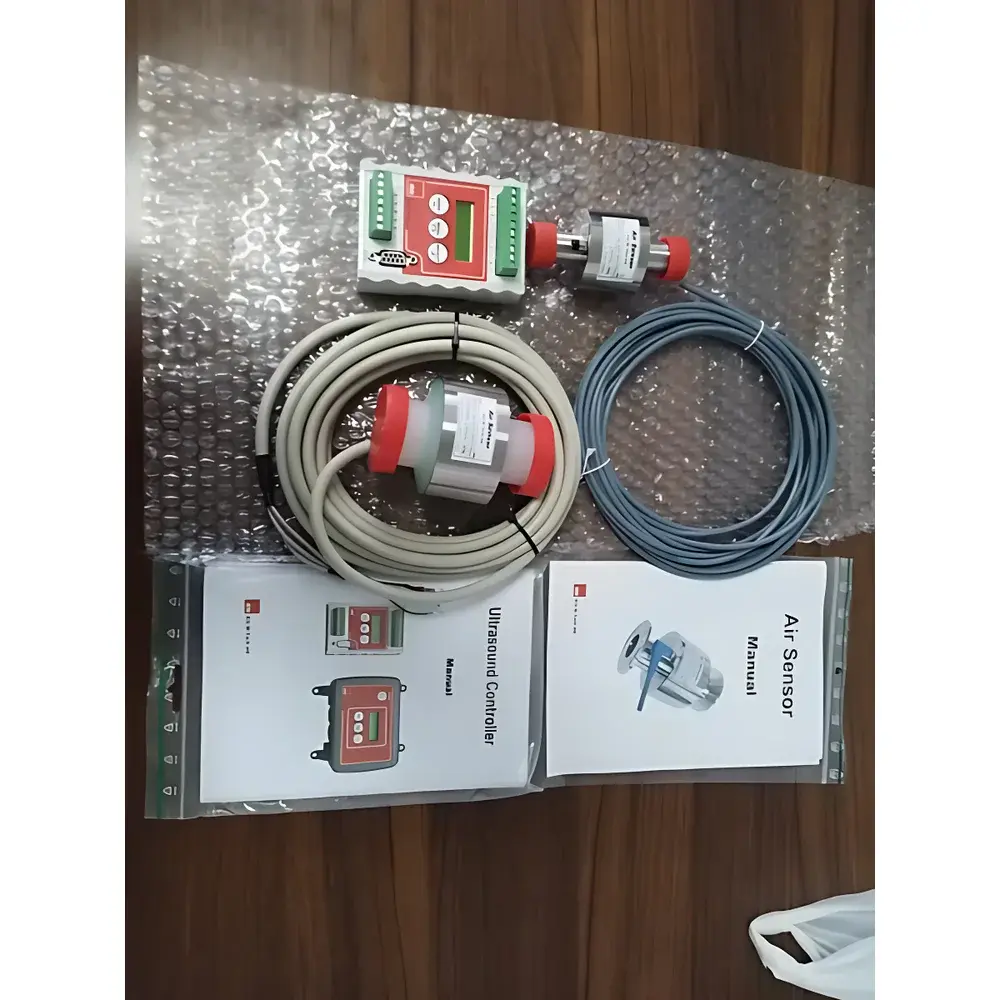
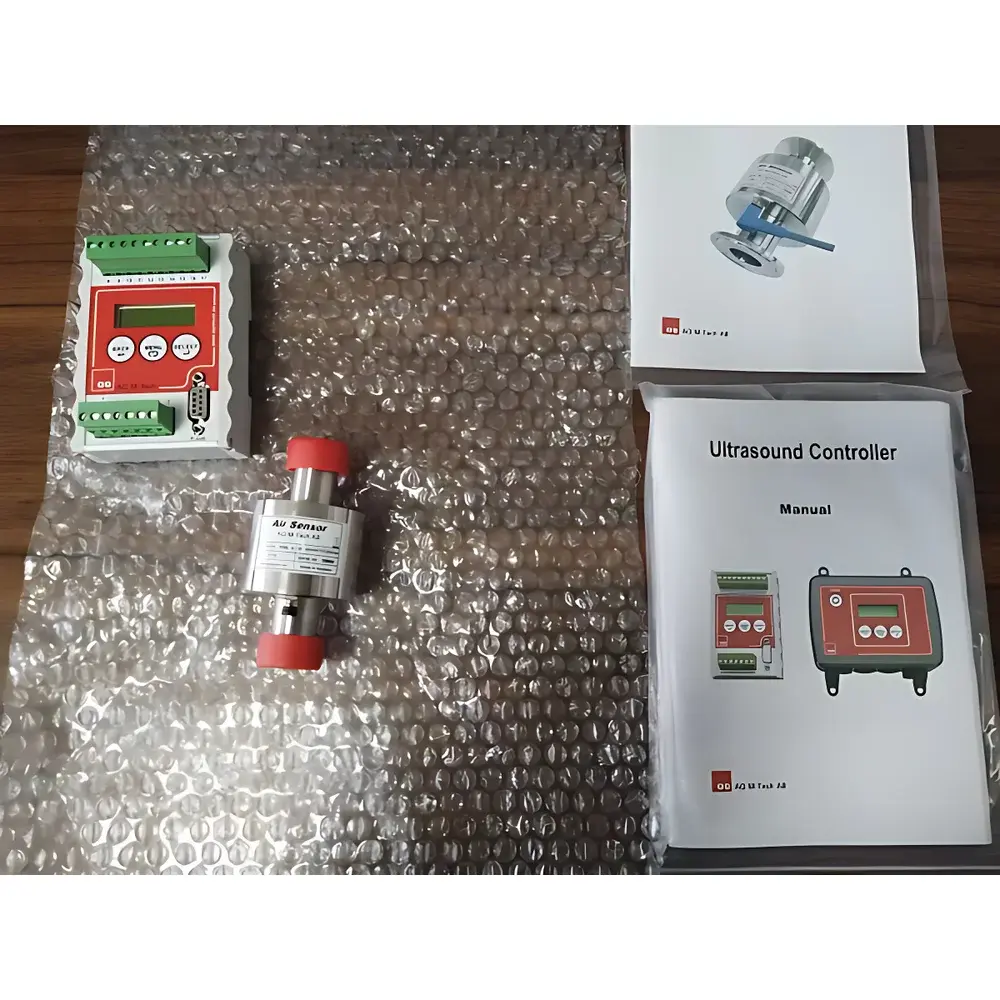
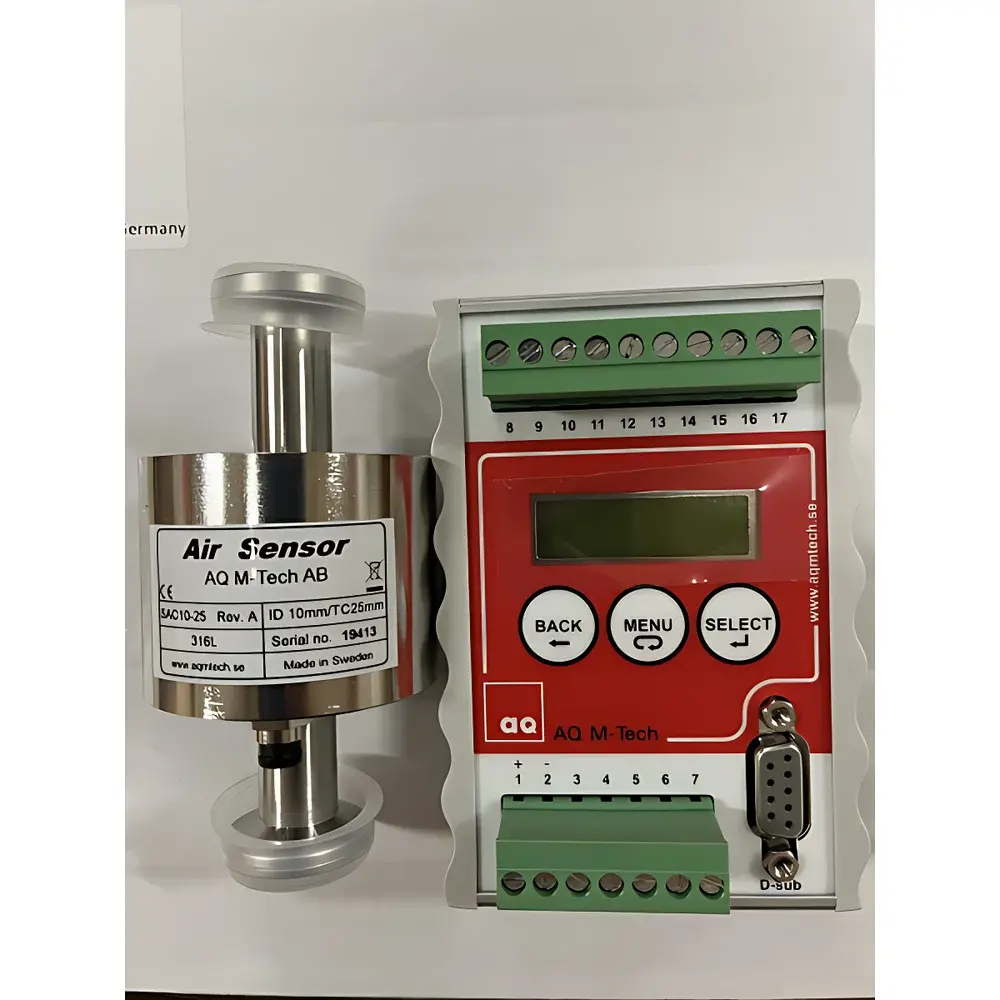
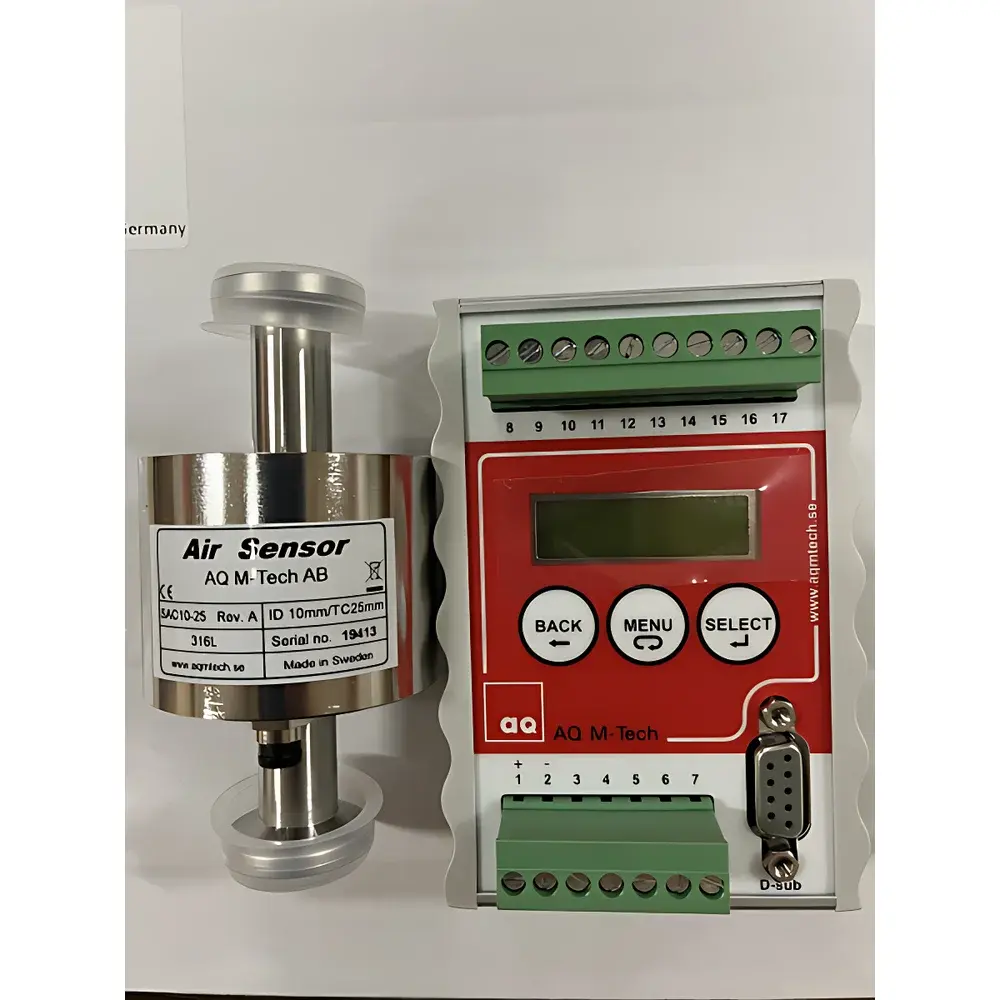
AQ M-Tech CCS9.4-25 Ultrasonic Air-in-Liquid Sensor
| Brand | AQ M-Tech |
|---|---|
| Origin | Sweden |
| Model | CCS9.4-25 |
| Housing Material | 316L Stainless Steel |
| Inner Diameter | 9.4 mm |
| Outer Diameter | 51 mm |
| Tri-Clamp Connection | 25 mm |
| Cable Length | 7 m |
| Operating Principle | Ultrasonic Transit-Time Differential Detection |
Overview
The AQ M-Tech CCS9.4-25 is an ultrasonic air-in-liquid sensor engineered for non-invasive, real-time detection of entrained gas bubbles and suspended particulates in flowing liquid streams. Unlike optical or capacitive sensors, it operates on the principle of ultrasonic transit-time differential measurement: two opposing transducers emit and receive high-frequency sound waves across the pipe cross-section. The presence of gas voids or solid particles alters the acoustic impedance and propagation velocity of the ultrasound—resulting in measurable changes in signal amplitude, time-of-flight, and waveform distortion. These perturbations are processed by the external ultrasonic controller to generate quantitative alerts or analog outputs proportional to gas volume fraction (GVF) or particle concentration. Designed for hygienic and industrial process lines, the CCS9.4-25 requires no wetted electronics, zero mechanical moving parts, and no direct contact with the process medium—ensuring long-term stability, minimal maintenance, and compliance with sanitary installation practices.
Key Features
- Non-intrusive clamp-on design: Mounts externally on stainless steel tubing without penetrating the pipe wall or interrupting flow
- 316L stainless steel housing with tri-clamp (DIN 11851 / ISO 2852) 25 mm connection for seamless integration into sanitary process systems
- Ultrasonic transducer pair operating at 1–2 MHz frequency range, optimized for water-based and low-viscosity aqueous solutions
- Temperature-rated for continuous operation from −10 °C to +80 °C; compatible with CIP/SIP protocols when installed per manufacturer guidelines
- Robust signal processing architecture that discriminates between transient microbubbles, stable gas pockets, and solid-phase contaminants based on acoustic signature decay profiles
- Configurable analog output (4–20 mA) and digital interface (RS-485 Modbus RTU) for integration into PLCs, DCS, or SCADA systems
Sample Compatibility & Compliance
The CCS9.4-25 is validated for use with clean-to-pasteurized liquids including deionized water, cooling glycols, process solvents, boiler feedwater, and pharmaceutical-grade buffers. It is not suitable for highly viscous fluids (>500 cP), opaque emulsions, or slurries with >5% solids by volume due to ultrasonic attenuation limits. The sensor meets IP67 ingress protection rating and conforms to CE marking requirements under the EU Electromagnetic Compatibility Directive 2014/30/EU and Low Voltage Directive 2014/35/EU. Its hygienic construction supports compliance with 3-A Sanitary Standards #63-03 and EHEDG Doc. 8 (2022) for equipment used in food, beverage, and biopharmaceutical manufacturing. When paired with a validated ultrasonic controller, the system supports audit-ready data logging aligned with FDA 21 CFR Part 11 requirements for electronic records and signatures.
Software & Data Management
The sensor operates in conjunction with the AQ M-Tech UC-200 series ultrasonic controller, which provides embedded firmware for real-time spectral analysis, baseline drift compensation, and adaptive thresholding. Configuration is performed via web-based GUI or local HMI, supporting user-defined alarm levels for bubble count rate, cumulative gas exposure time, and signal-to-noise ratio degradation. All operational parameters—including transducer gain, sampling interval (100 ms to 5 s), and filtering bandwidth—are stored with timestamped revision history. Raw acoustic waveforms and processed metrics can be exported in CSV or HDF5 format for offline trend analysis. Audit trails record all configuration changes, calibration events, and operator logins—enabling full traceability during GLP or GMP audits.
Applications
- Monitoring degassing efficiency in recirculating cooling loops for power plant condensate systems
- Detecting air ingress in sterile fluid transfer lines during bioreactor harvest and purification skids
- Verifying bubble-free conditions prior to filling operations in aseptic pharmaceutical vial and syringe lines
- Early warning of pump cavitation or seal leakage in chemical dosing circuits handling corrosive reagents
- Validation of filter integrity in high-purity water distribution networks (e.g., WFI, PW)
- Quality assurance in automotive electrocoat (E-coat) bath circulation systems where air entrapment causes coating defects
FAQ
Can the CCS9.4-25 detect dissolved gases?
No—it detects discrete gaseous phases (bubbles) and suspended particulates, not molecularly dissolved gases such as CO₂ or O₂.
Is calibration required before installation?
Factory calibration is performed using reference flow loops with controlled air injection; field recalibration is not necessary unless mechanical damage or extreme temperature cycling occurs.
What is the minimum detectable bubble size?
Under optimal conditions (clean water, laminar flow), the sensor reliably identifies discrete bubbles ≥150 µm in diameter.
Does pipe wall thickness affect performance?
Yes—maximum allowable wall thickness is 3.0 mm for 316L stainless steel; thicker walls require model-specific transducer tuning or alternative mounting configurations.
Can multiple CCS sensors share one UC-200 controller?
Yes—the UC-200 supports up to four independent sensor channels via daisy-chained RS-485 communication.