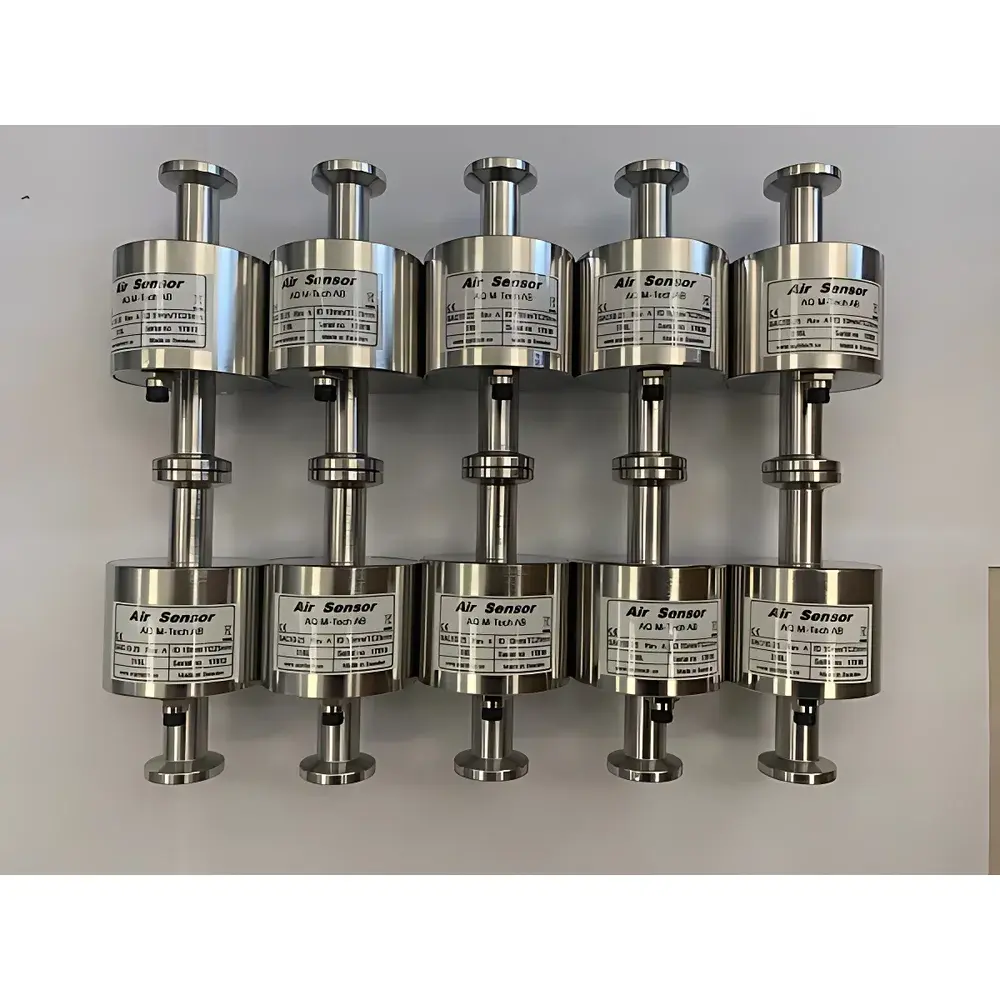
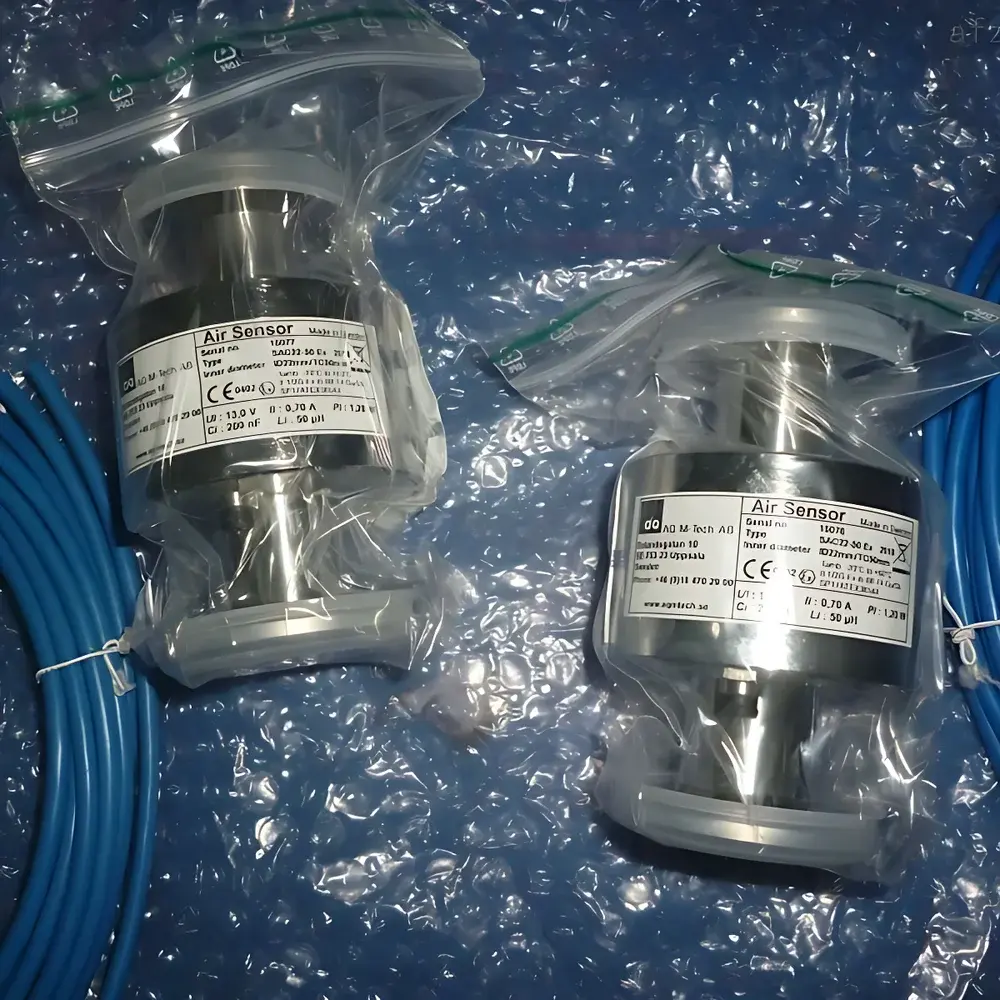
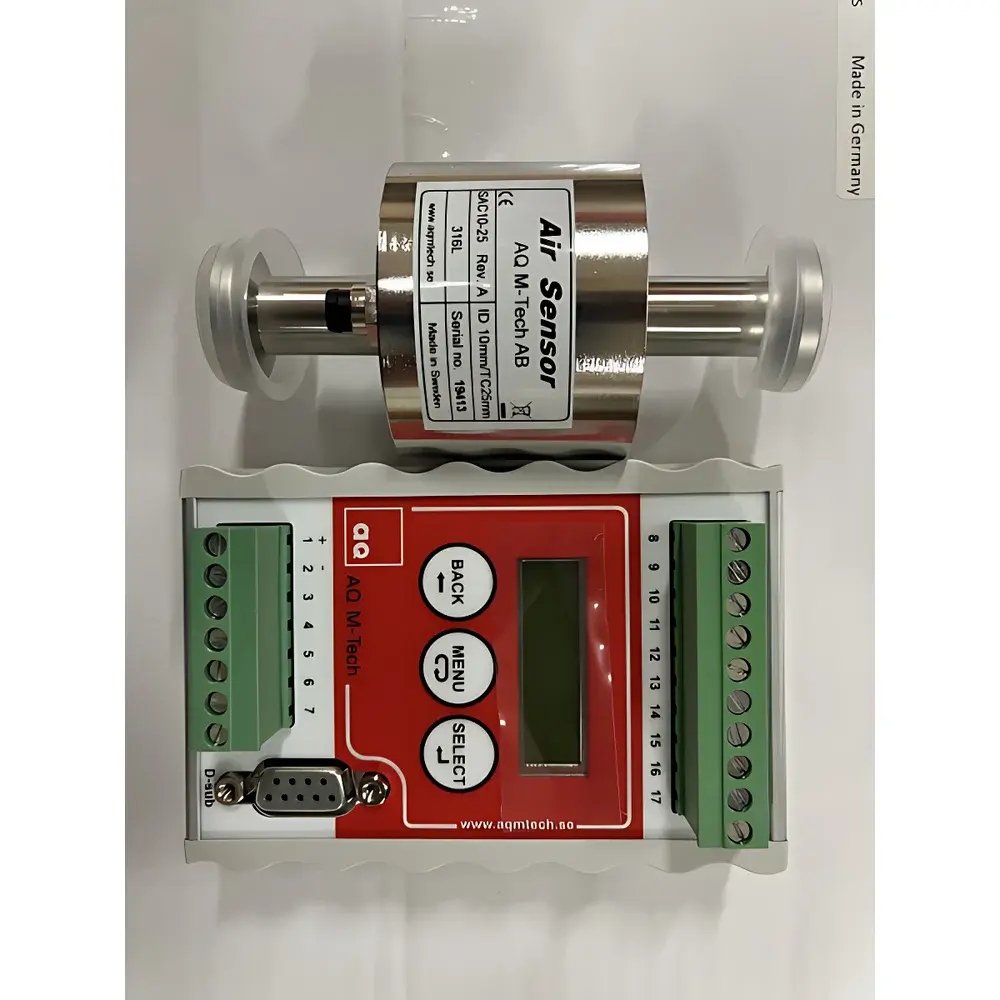
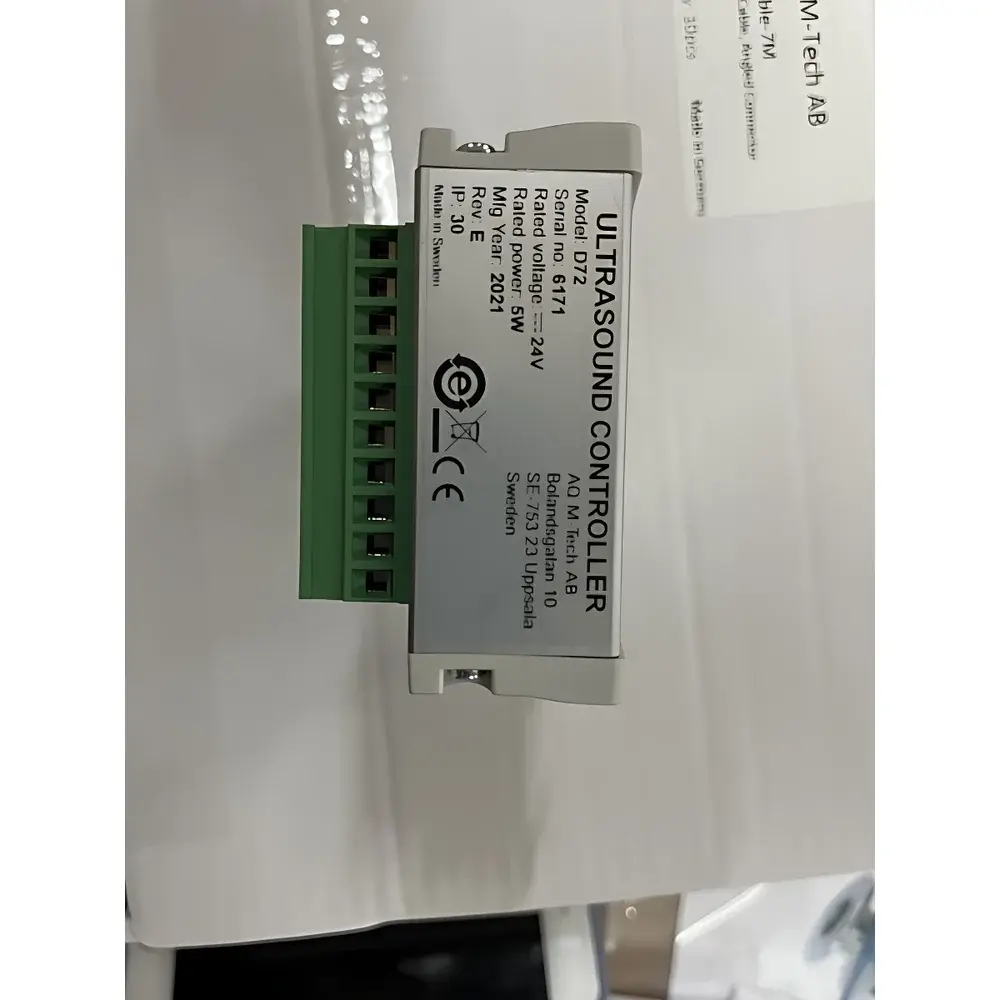
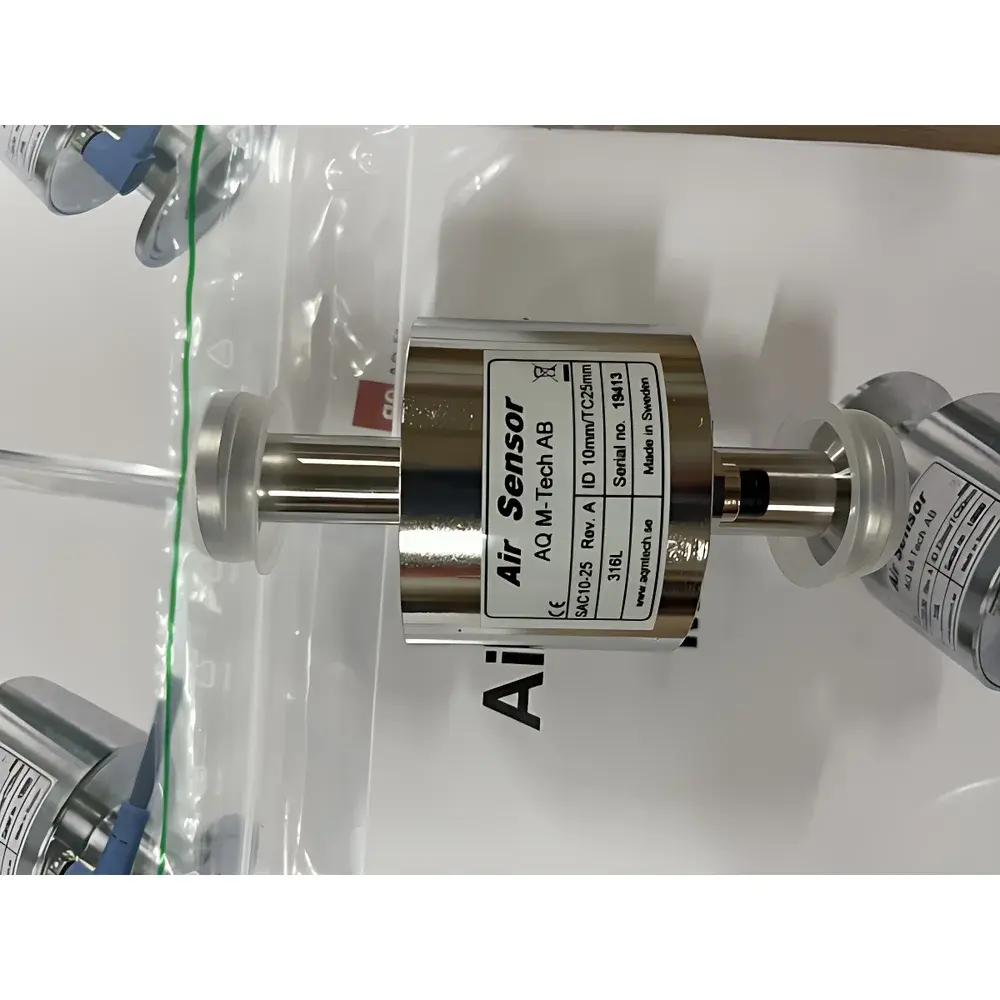
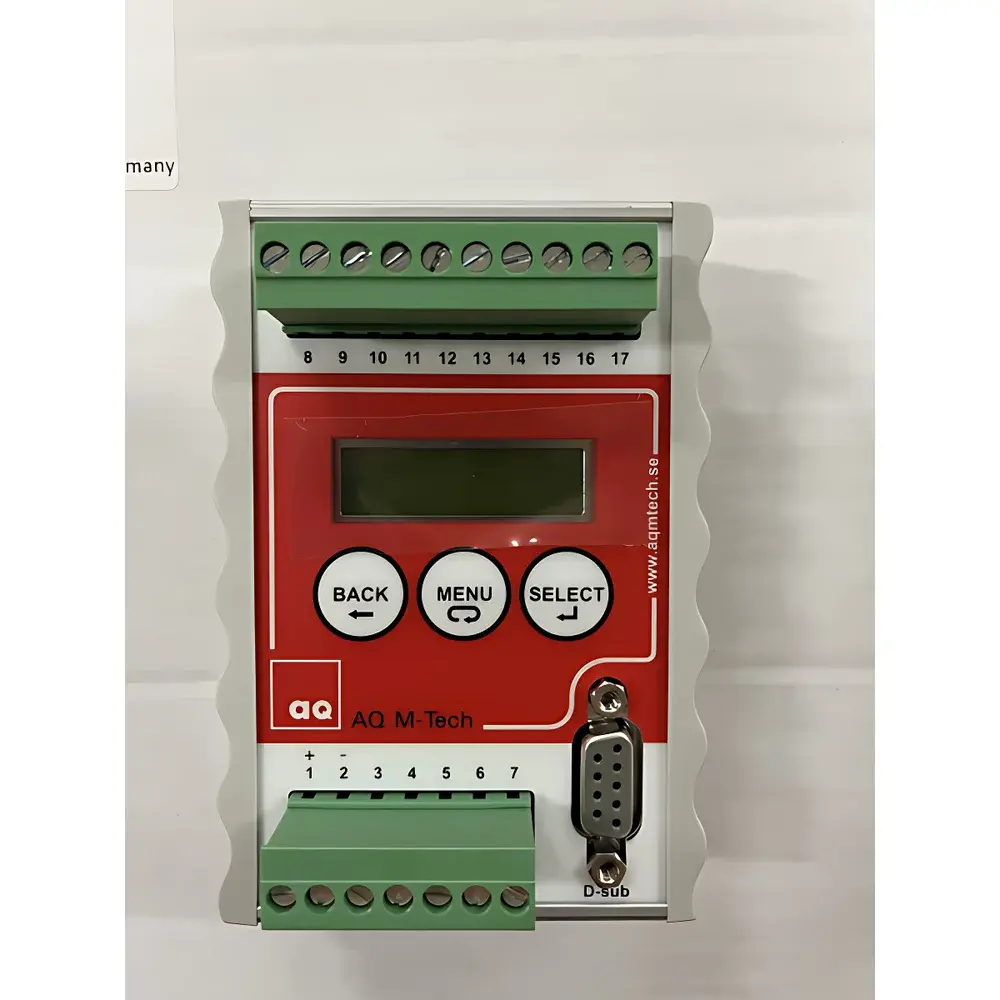
AQ M-Tech PAC4-25 Polypropylene Air Sensor
| Brand | AQ M-Tech |
|---|---|
| Origin | Sweden |
| Model | PAC4-25 |
| Inner Diameter | 4 mm |
| Outer Diameter | 50 mm |
| Tri-Clamp Connection | 25 mm |
| Standard Cable Length | 7 m (optional: 20 m or 40 m) |
| Housing Material | Polypropylene (PP) |
| Compliance | CE, RoHS, FDA-compliant for food-contact applications |
Overview
The AQ M-Tech PAC4-25 Polypropylene Air Sensor is a precision-engineered in-line air detection device designed for continuous, non-invasive monitoring of gas presence in liquid process streams. Operating on the principle of ultrasonic transmission and reflection time-of-flight (ToF) analysis, the sensor detects entrained air, microbubbles, or vapor pockets by measuring changes in acoustic impedance at the liquid–gas interface. Unlike optical or capacitive alternatives, this ultrasonic design ensures stable performance across turbid, opaque, or particulate-laden media—common in food, pharmaceutical, dairy, and chemical processing environments. Its polypropylene (PP) wetted housing provides inherent chemical resistance to organic solvents, weak acids, alkalis, and cleaning agents (e.g., CIP caustics up to 2% NaOH at ≤60°C), making it suitable for sanitary and corrosion-sensitive installations where stainless steel is unnecessary or cost-prohibitive.
Key Features
- Ultrasonic bubble detection with adjustable sensitivity thresholds (0.1–10% v/v air content range)
- Polypropylene (PP) body and wetted components compliant with FDA 21 CFR §177.1520 for indirect food contact
- Tri-Clamp (DIN 11851) connection standard: 25 mm (1″) for hygienic, tool-free installation and disassembly
- IP67-rated electronics enclosure with integrated signal conditioning and analog (4–20 mA) + digital (RS-485 Modbus RTU) outputs
- Zero-drift calibration architecture with automatic temperature compensation (−10 to +60°C operating range)
- Low-power consumption (<1.2 W), suitable for explosion-safe zones when paired with intrinsically safe barriers (certified per ATEX/IECEx Zone 2)
Sample Compatibility & Compliance
The PAC4-25 is validated for use with aqueous solutions, syrups, milk, juice concentrates, buffer solutions, and low-viscosity process fluids (up to 500 cP). It is not intended for high-pressure steam sterilization (SIP) or autoclaving; maximum allowable process pressure is 6 bar (g) at 20°C, derating linearly to 3 bar at 60°C. The PP housing meets ISO 10993-5 cytotoxicity requirements and carries full CE marking under the EU Machinery Directive 2006/42/EC and Electromagnetic Compatibility Directive 2014/30/EU. Documentation includes Declaration of Conformity, material traceability certificates (PP grade: Copolymer PP-H, ASTM D4101), and RoHS 2011/65/EU compliance reports.
Software & Data Management
The sensor integrates natively with SCADA, DCS, and MES platforms via Modbus RTU over RS-485. Configuration and real-time diagnostics are accessible through AQ M-Tech’s free PC-based utility (AQ-SensorConfig v3.2), supporting firmware updates, alarm threshold setting, and event logging with timestamped CSV export. Audit trails comply with FDA 21 CFR Part 11 requirements when deployed with validated IT infrastructure—including user access controls, electronic signatures, and immutable log archiving. Optional cloud gateway (AQ-EdgeLink) enables secure MQTT-based data forwarding to AWS IoT Core or Azure IoT Hub for predictive maintenance analytics.
Applications
- Continuous air detection in filler lines prior to sterile filtration in biopharmaceutical manufacturing (aligned with USP and guidance)
- Monitoring degassing efficiency in beverage carbonation and pasteurization loops
- Preventing pump cavitation in CIP return circuits across dairy and food plants
- Verifying bubble-free flow in chromatography buffer delivery systems
- Early-warning detection of air ingress in closed-loop cooling water systems for energy and rail infrastructure
FAQ
Can the PAC4-25 be installed vertically or horizontally?
Yes—orientation-independent mounting is supported due to symmetric ultrasonic transducer alignment and absence of gravity-dependent sensing elements.
Is the polypropylene housing resistant to hydrogen peroxide (H₂O₂) sanitization?
It withstands intermittent exposure to ≤3% H₂O₂ at ambient temperature (≤25°C); prolonged or heated contact (>40°C) is not recommended per ISO 15883-5 validation guidelines.
Does the sensor require recalibration after cable length extension?
No—signal integrity is preserved across all factory-configured cable options (7 m, 20 m, 40 m) due to active impedance matching and differential signaling.
What is the minimum detectable bubble size?
Under laminar flow conditions (Re 92% detection probability (per ISO 22197-3 test protocol).
Can multiple PAC sensors share one RS-485 bus?
Yes—up to 32 units can be daisy-chained on a single Modbus RTU network using unique node addressing and termination resistors at both ends.