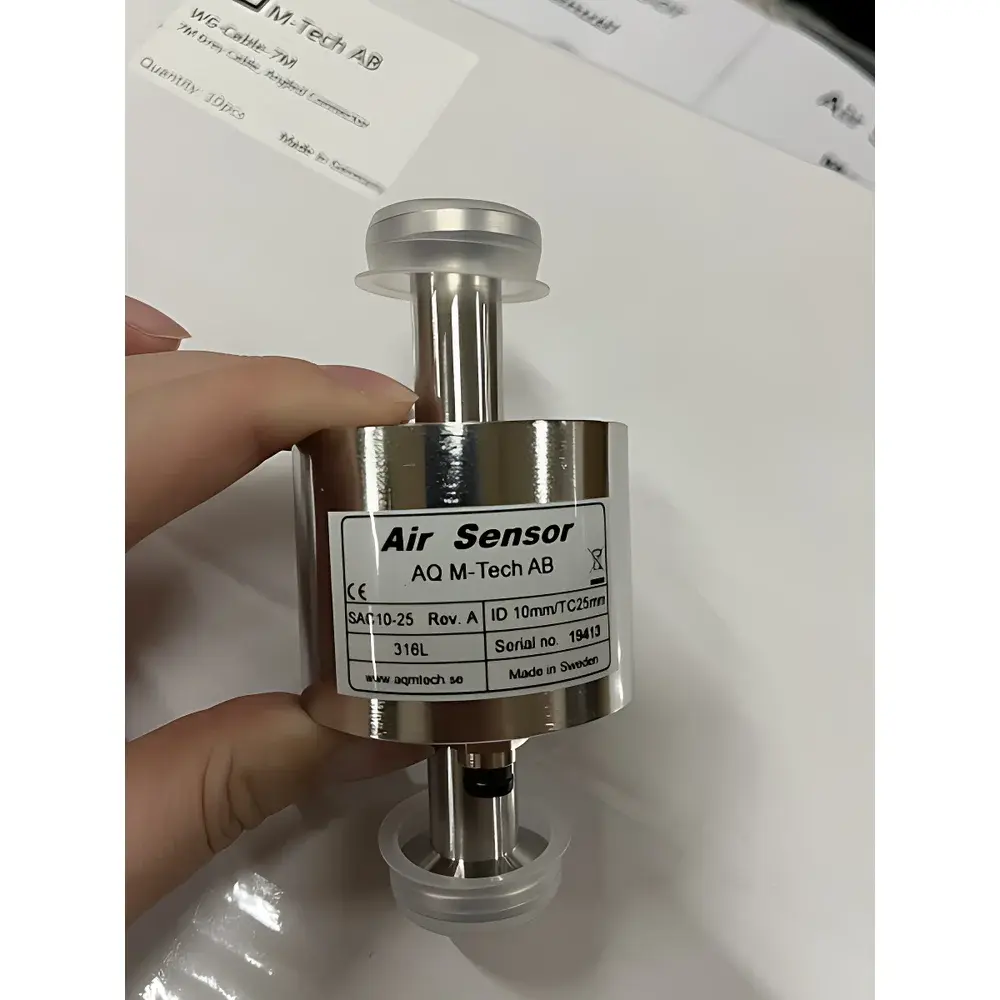
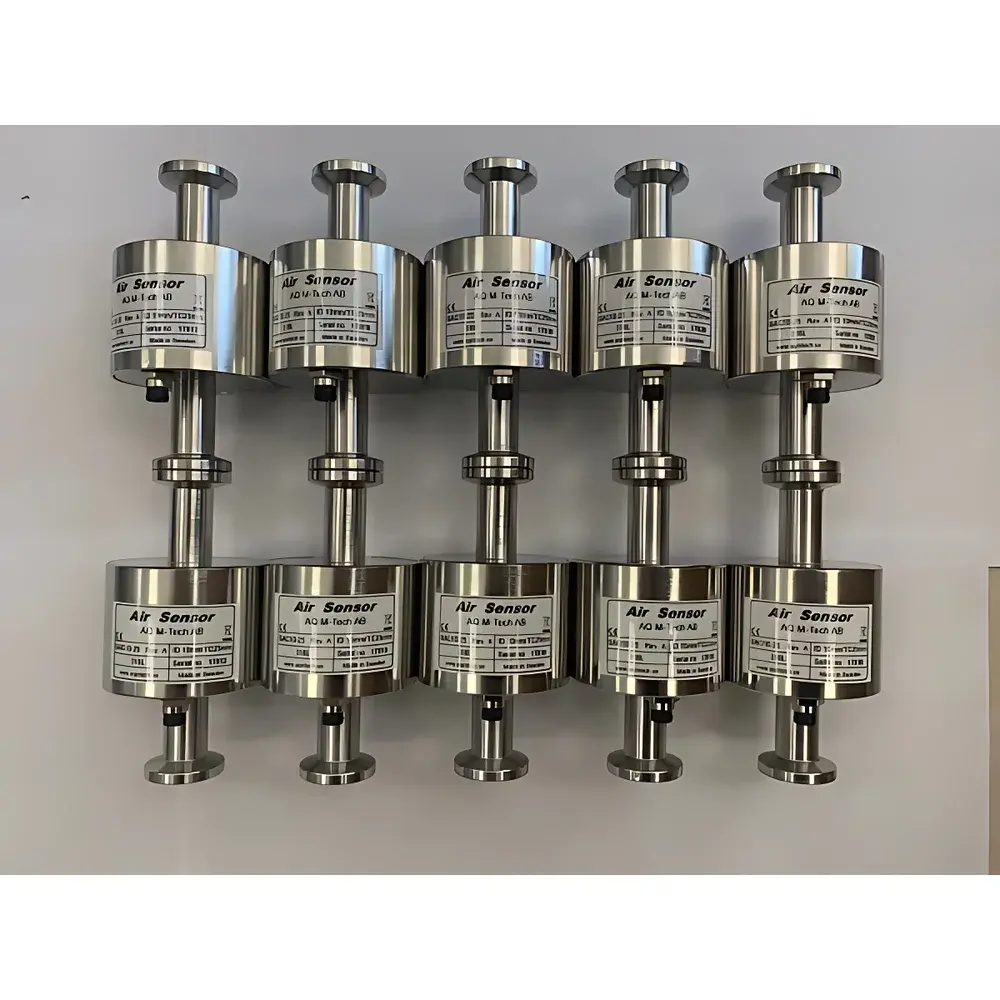
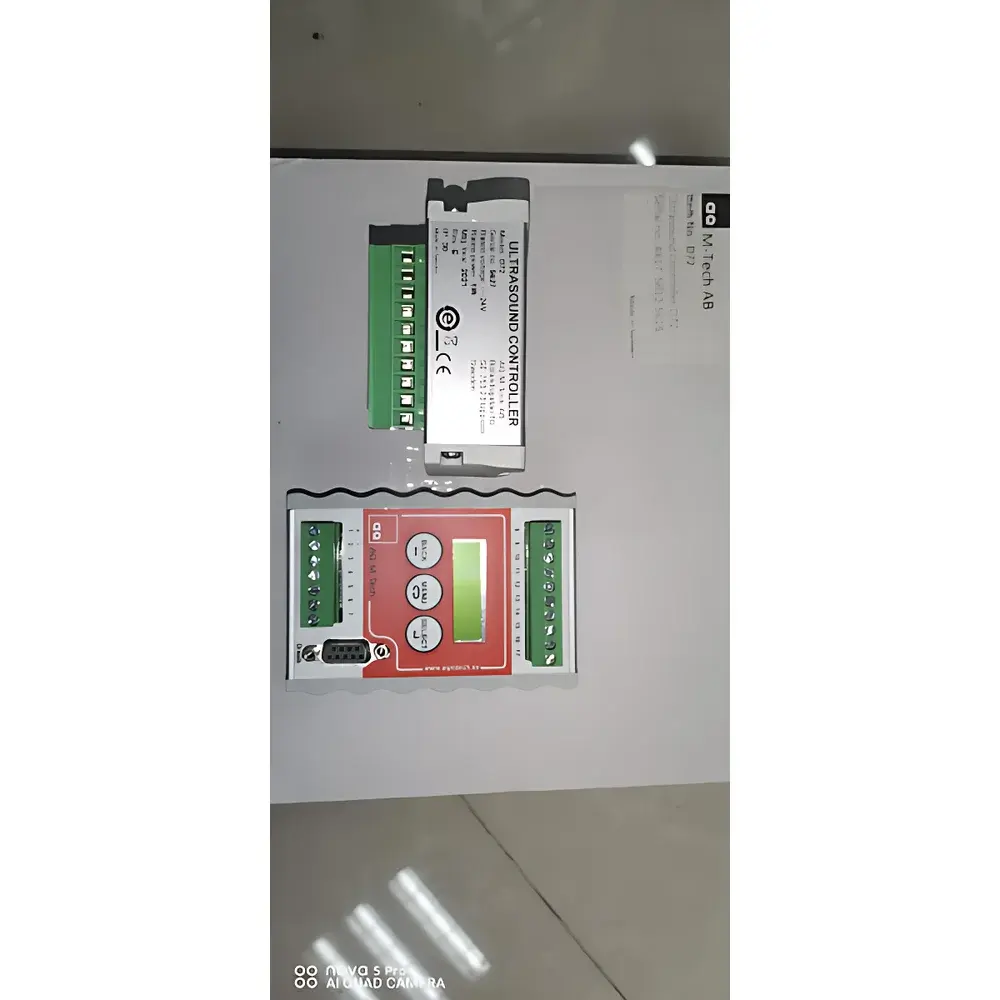
AQ M-Tech RS27/KS27 Capacitive Level Switch
| Brand | AQ M-Tech |
|---|---|
| Origin | Sweden |
| Model | RS27/KS27 |
| Operating Temperature (Continuous) | -20°C to 170°C (Ex model: ≤60°C) |
| Operating Temperature (Short-term) | up to 200°C (Ex model: ≤60°C) |
| Mounting Vessel Diameter | 26–28 mm |
| Housing Material | PEI (Polyetherimide) |
| Standard Cable Length | 7 m (optional: 20 m) |
| ATEX Certification | II 2G Ex ia IIB T4 Gb (SP13ATEX3645X) |
Overview
The AQ M-Tech RS27/KS27 is a compact, intrinsically safe capacitive level switch engineered for reliable point-level detection in demanding industrial liquid and bulk solid applications. Based on robust dielectric constant discrimination, the device operates without mechanical moving parts or direct contact with process media—eliminating wear, clogging, and calibration drift associated with float or paddle-based systems. Its PEI (polyetherimide) housing provides exceptional thermal stability, chemical resistance, and dimensional integrity across wide temperature excursions. Designed and manufactured in Sweden, the RS27/KS27 complies with stringent European performance and safety requirements, making it suitable for continuous monitoring in pharmaceutical, food & beverage, chemical, and water treatment facilities where hygiene, repeatability, and explosion protection are critical.
Key Features
- Capacitive sensing principle enabling non-invasive, maintenance-free operation with high immunity to foam, coating, and turbulence
- PEI thermoplastic housing rated for continuous service from –20°C to +170°C; short-term exposure up to +200°C (non-Ex models)
- Intrinsically safe Ex ia IIB T4 Gb certification (SP13ATEX3645X), suitable for Zone 0/1 hazardous areas handling flammable vapors including hydrocarbons and solvents
- Precision-engineered probe geometry optimized for vessels with internal diameters of 26–28 mm—ensuring stable field coupling and minimal false triggering
- Standard 7 m PVC-sheathed cable with IP68-rated gland; optional 20 m length available for extended installations
- Two-channel configuration: RS27 (single-point detection) and KS27 (dual-point, high/low level monitoring) within identical mechanical footprint
- No field calibration required; factory-set sensitivity optimized for typical conductivity ranges (0.1–100 µS/cm) and dielectric constants (εr = 2–80)
Sample Compatibility & Compliance
The RS27/KS27 is compatible with conductive and non-conductive liquids—including water, acids, alkalis, oils, solvents, syrups, and slurries—as well as free-flowing powders and granules. Its capacitive architecture eliminates reliance on conductivity, unlike conductive probes, thereby extending applicability to deionized water, ethanol, and low-dielectric hydrocarbons. The device meets EN 60079-0, EN 60079-11, and EN 61000-6-2/6-4 for electromagnetic compatibility and intrinsic safety. It supports compliance with GMP Annex 1 (sterile manufacturing), FDA 21 CFR Part 11 (when integrated with validated control systems), and ISO 22000 hygiene requirements due to its smooth, crevice-free PEI surface and absence of seals or O-rings subject to degradation.
Software & Data Management
While the RS27/KS27 operates as a standalone two-wire loop-powered switch (20–28 VDC, <5 mA), it is fully interoperable with distributed control systems (DCS), PLCs, and SCADA platforms via standard 4–20 mA or relay output configurations (model-dependent). When deployed in networks using AQ’s optional RS485 interface modules, real-time status, fault diagnostics (e.g., electrode contamination, cable break, power loss), and configurable hysteresis settings can be accessed via Modbus RTU. Audit trails, configuration history, and event logging align with GLP/GMP documentation expectations when integrated into validated instrument management systems. Firmware updates are performed offline using AQ’s certified configuration utility, ensuring traceability per IEC 62443-3-3.
Applications
- High-purity water storage tanks in biopharmaceutical clean utilities (PW, WFI, pure steam condensate)
- Intermediate bulk container (IBC) level verification during batching and filling operations
- Chemical dosing tanks containing aggressive media such as sodium hypochlorite, sulfuric acid, or caustic soda
- Explosion-hazardous solvent recovery units in paint, coating, and adhesive manufacturing
- Food-grade silos holding sugar, flour, or dried dairy powders under ATEX Zone 21 conditions
- Wastewater equalization basins where sludge buildup would impair mechanical switches
FAQ
What is the difference between RS and KS model designations?
RS denotes single-point detection (one switching threshold); KS denotes dual-point detection (independent high and low setpoints) — both share identical mechanical dimensions and environmental ratings.
Can the RS27/KS27 be used in pressurized vessels?
Yes — the PEI housing and integral sealing system are rated for static pressures up to 10 bar at 20°C; derating applies above 80°C per EN 1515-1 guidelines.
Is cleaning-in-place (CIP) or sterilization-in-place (SIP) supported?
The unit withstands repeated CIP cycles with 1.5 M NaOH at 80°C and SIP with saturated steam at 134°C for 30 minutes — validated per ASME BPE-2022 surface finish and extractables protocols.
Does the device require grounding for proper capacitive operation?
Yes — a low-impedance (<10 Ω) earth ground connection to the vessel wall is mandatory to establish a stable reference potential and ensure repeatable sensitivity.
How is sensitivity adjusted for different media?
Sensitivity is pre-configured at the factory based on dielectric constant and conductivity data provided by the end user; field adjustment is not supported to maintain Ex certification integrity.