
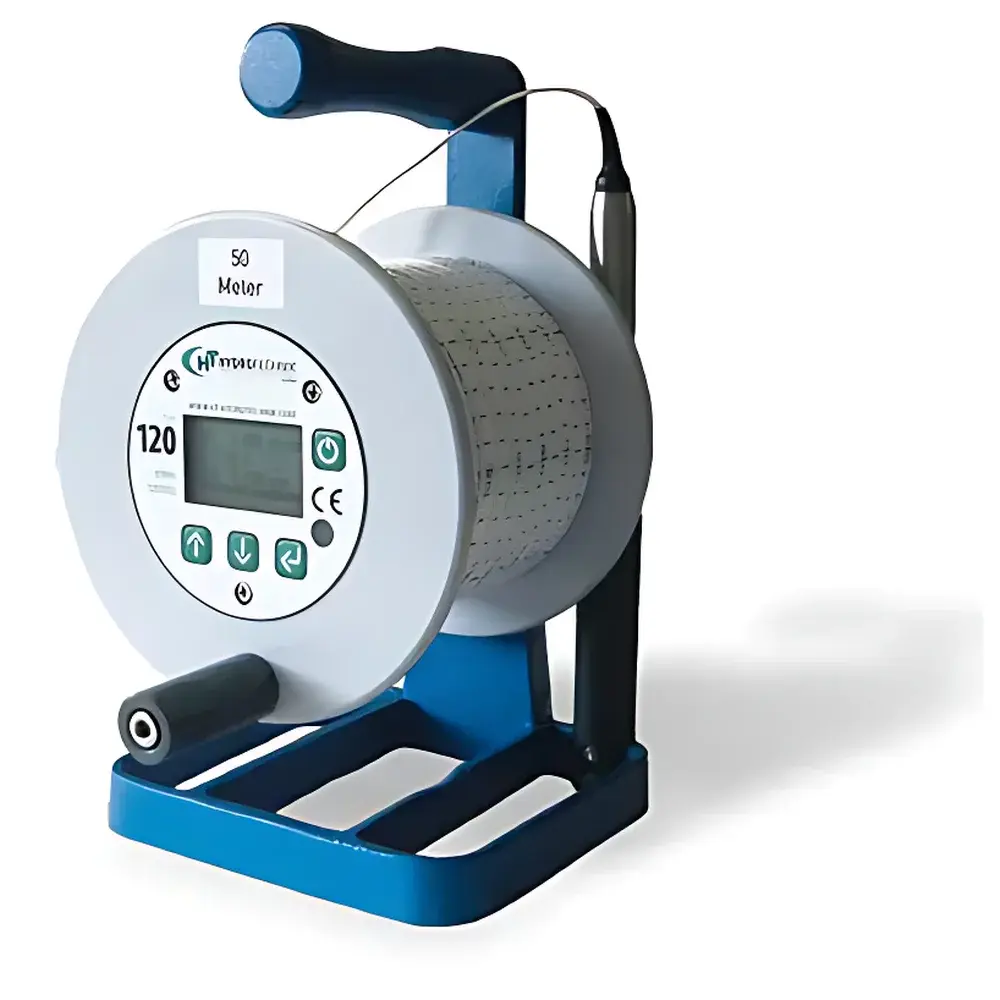
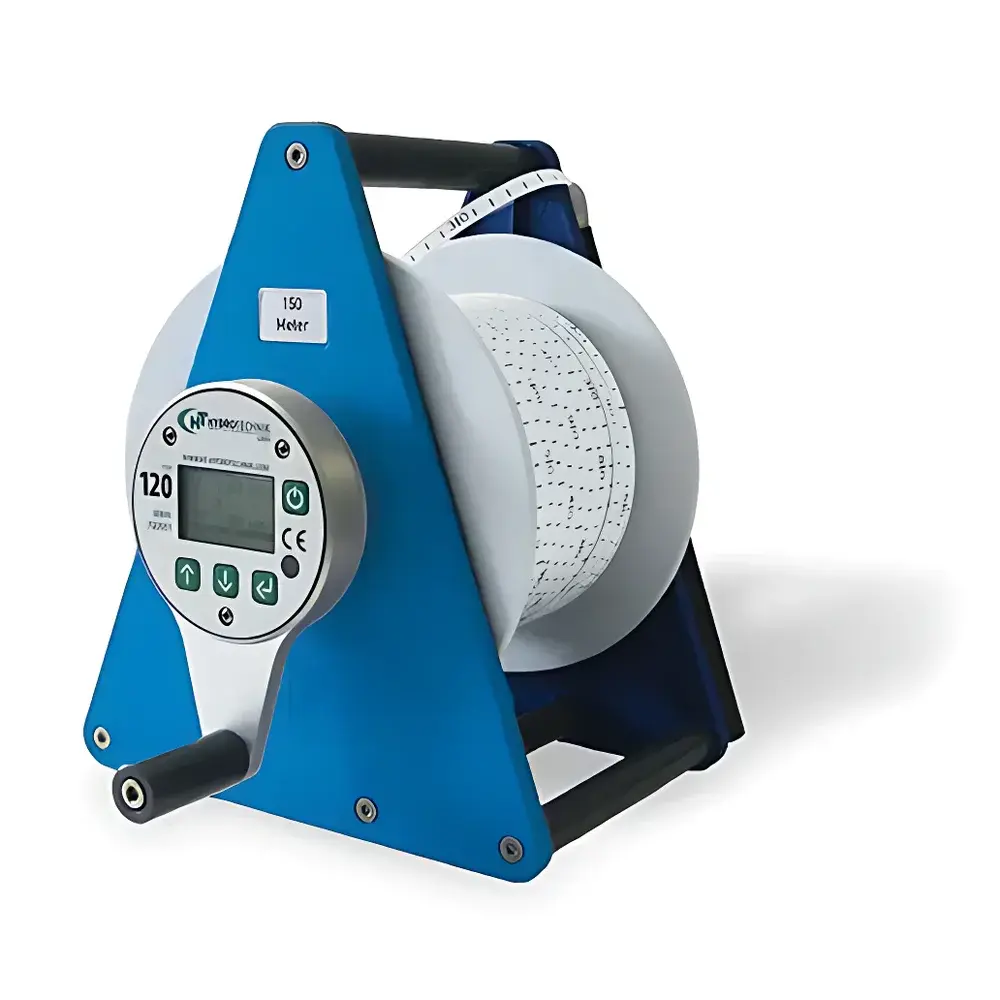
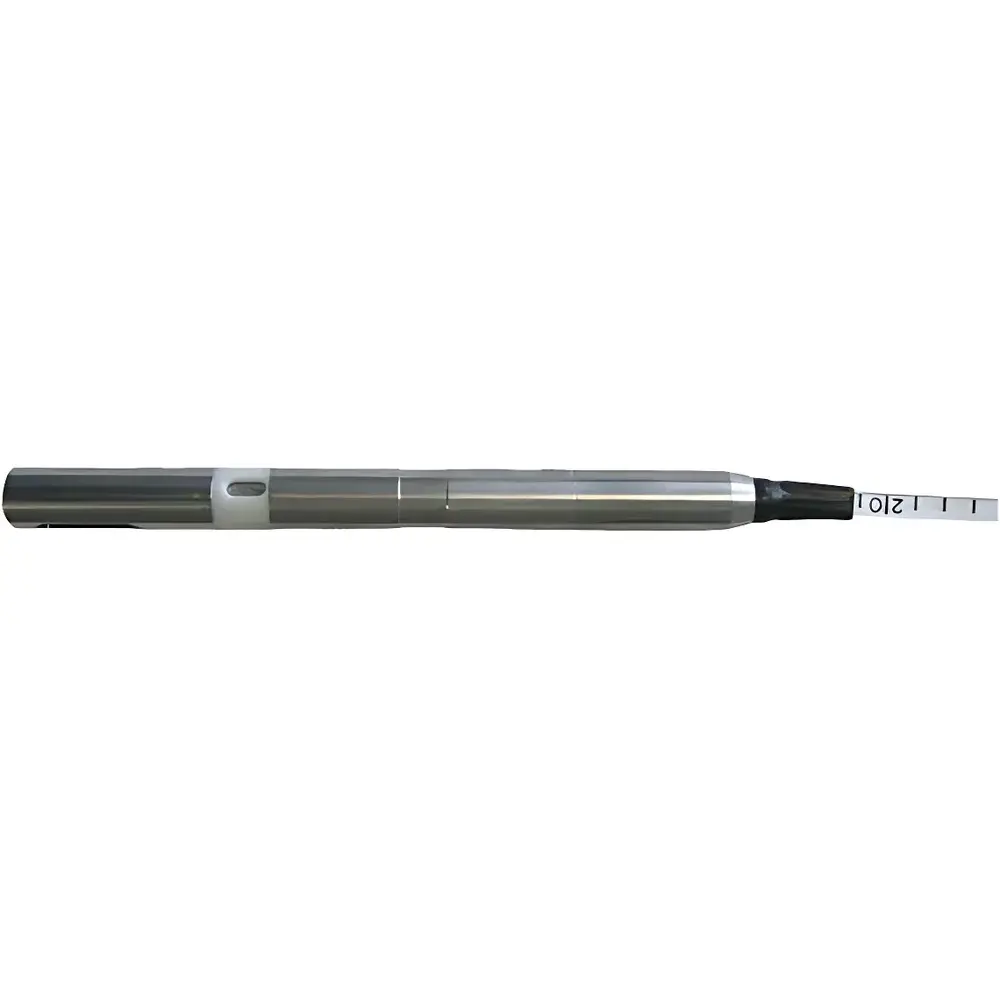
AQUALABO 120-LTC Portable Water Level, Temperature, and Conductivity Meter
| Brand | AQUALABO |
|---|---|
| Origin | France |
| Model | 120-LTC |
| Instrument Type | Portable |
| Temperature Range | −20 °C to +75 °C |
| Conductivity Range | 0 to 200 mS/cm |
| TDS Calculation | Yes (ppm, user-selectable or standard seawater factor) |
| Sensor Diameter | <25.4 mm (1 inch) |
| Cable Length Options | 15–100 m (aluminum frame) or 120–500 m (acrylic tripod) |
| Display | Backlit LCD with simultaneous real-time readout of level, temperature, conductivity, and TDS |
| Power | 4 × 1.5 V C-cell alkaline batteries (~180 h operation) |
| IP Rating | Sensor IP68, Handheld Unit IP64 |
| Sensor Material | 316 stainless steel & titanium alloy |
| Accuracy | Temperature < ±0.1 °C |
| Temp Compensation Modes | DIN EN 27888 (25 °C ref), user-defined %/°C coefficient, or none |
Overview
The AQUALABO 120-LTC is a field-deployable, multi-parameter water profiling instrument engineered for precise, real-time measurement of water level, temperature, electrical conductivity (EC), and derived total dissolved solids (TDS) in open water bodies, groundwater observation wells, boreholes, reservoirs, and surface water systems. Its operational principle integrates hydrostatic pressure sensing (for depth-to-water determination), high-stability thermistor-based temperature measurement, and four-electrode conductivity cell technology—designed to minimize polarization errors and ensure robust performance across wide salinity gradients (0–200 mS/cm). Unlike laboratory-based analyzers requiring discrete sampling, the 120-LTC enables in-situ, non-invasive profiling through apertures ≥1 inch (25.4 mm), eliminating cross-contamination risk and preserving native geochemical conditions during data acquisition. The device complies with fundamental metrological requirements for environmental monitoring as defined in ISO 5667-3 (water sampling) and supports traceable calibration via certified standard solutions (e.g., 1.413 mS/cm at 25 °C).
Key Features
- Integrated dual-signal water-level detection: visual LED illumination and audible buzzer activation upon probe submersion—adjustable sensitivity for freshwater, brackish, or saline media.
- Three configurable temperature compensation modes for conductivity: automatic correction per DIN EN 27888 (reference 25 °C), user-defined linear coefficient (%/°C), or raw uncorrected output for comparative analysis.
- Real-time TDS calculation using either a single-user-defined conversion factor or preloaded coastal/seawater default (0.64–0.71 ppm per µS/cm), aligned with regional reporting conventions (e.g., US EPA Method 120.1).
- Dual mechanical configurations: compact aluminum-frame reel (15–100 m cable) for rapid deployment in shallow wells; lightweight acrylic tripod-mounted spool (120–500 m cable) optimized for deep aquifer profiling with minimal mass loading.
- Backlit LCD display showing simultaneous, continuously updated values for depth (m), temperature (°C), conductivity (mS/cm), and TDS (ppm)—all accessible without external software or PC connection.
- IP68-rated sensor housing fabricated from 316 stainless steel and titanium alloy, ensuring long-term corrosion resistance in aggressive environments including sulfide-rich groundwater and coastal brines.
- Battery status indicator and low-power warning; 4 × C-cell alkaline power supply delivers ~180 hours of continuous operation under typical field duty cycles.
Sample Compatibility & Compliance
The 120-LTC is validated for direct immersion in natural waters ranging from ultrapure alpine springs (150 mS/cm). Its sensor geometry and pressure response time are optimized for stable readings in turbulent flow (e.g., river cross-sections) and low-permeability formations (e.g., clay-capped aquifers). All wetted materials meet EU REACH Annex XVII restrictions and carry no SVHC declarations. While not certified for regulatory submission under US EPA or ISO/IEC 17025, the instrument supports GLP-aligned workflows through documented calibration logs, operator ID fields (via optional firmware update), and audit-ready measurement timestamps. Data integrity is preserved via internal memory buffering during intermittent signal loss—critical in deep-well deployments where cable stretch or snagging may occur.
Software & Data Management
The base 120-LTC operates as a standalone field terminal with no embedded Bluetooth or USB interface; however, all displayed parameters are human-readable and manually recordable into standardized field notebooks compliant with ASTM D5092 (groundwater monitoring). For digital integration, AQUALABO provides optional CSV export utilities compatible with common environmental data management platforms (e.g., Aquarius, HydroOffice, QGIS). Firmware updates—distributed via secure HTTPS portal—introduce enhanced logging intervals, custom unit scaling, and extended battery diagnostics. No proprietary drivers or cloud dependencies are required; raw sensor outputs conform to SI units and NIST-traceable reference standards.
Applications
- Salinity intrusion mapping in coastal aquifers—tracking freshwater/saltwater interface migration over seasonal cycles.
- Baseline characterization of spring discharge and karst system response to precipitation events.
- Wastewater infiltration assessment in unconfined aquifers near septic fields or landfills.
- Regulatory compliance monitoring for Class I and II groundwater protection zones (per EU Groundwater Directive 2006/118/EC).
- Educational field studies requiring rugged, intuitive instrumentation for undergraduate hydrogeology labs.
FAQ
Does the 120-LTC require annual recalibration?
No mandatory annual recalibration is specified; however, AQUALABO recommends verification against certified reference standards (e.g., 1.413 mS/cm KCl solution at 25 °C) before each major campaign or after exposure to extreme pH or suspended solids >100 mg/L.
Can the device measure resistivity instead of conductivity?
Resistivity is the mathematical inverse of conductivity and can be calculated manually (Ω·cm = 1 / [S/cm] × 10⁶); the 120-LTC does not display resistivity natively but supports post-processing via spreadsheet tools.
Is the sensor suitable for use in oil-contaminated groundwater?
Yes—the titanium/316SS construction resists hydrocarbon adsorption, and the four-electrode cell minimizes fouling artifacts; however, post-use cleaning with isopropanol is advised to prevent dielectric film buildup.
What is the maximum recommended deployment depth for the 500-m version?
The 500-m cable variant is rated for static head pressures up to 50 bar (equivalent to ~500 m H₂O column); dynamic tension limits apply during winch retrieval—consult AQUALABO’s mechanical load chart for safe winding speeds.
Does the instrument support data logging with time stamps?
Standard firmware displays real-time values only; time-stamped logging requires optional firmware upgrade (v3.2+) and external serial capture via RS-232 adapter (sold separately).
Related Products







