
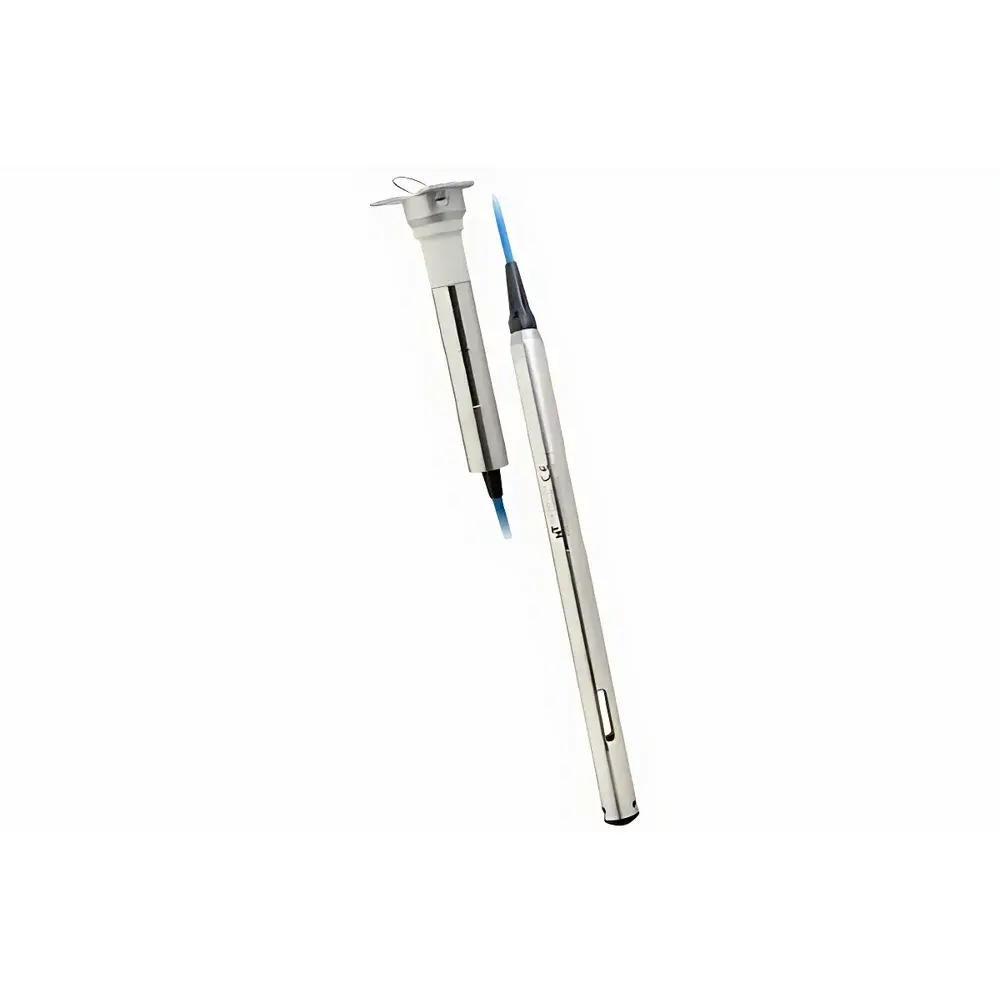
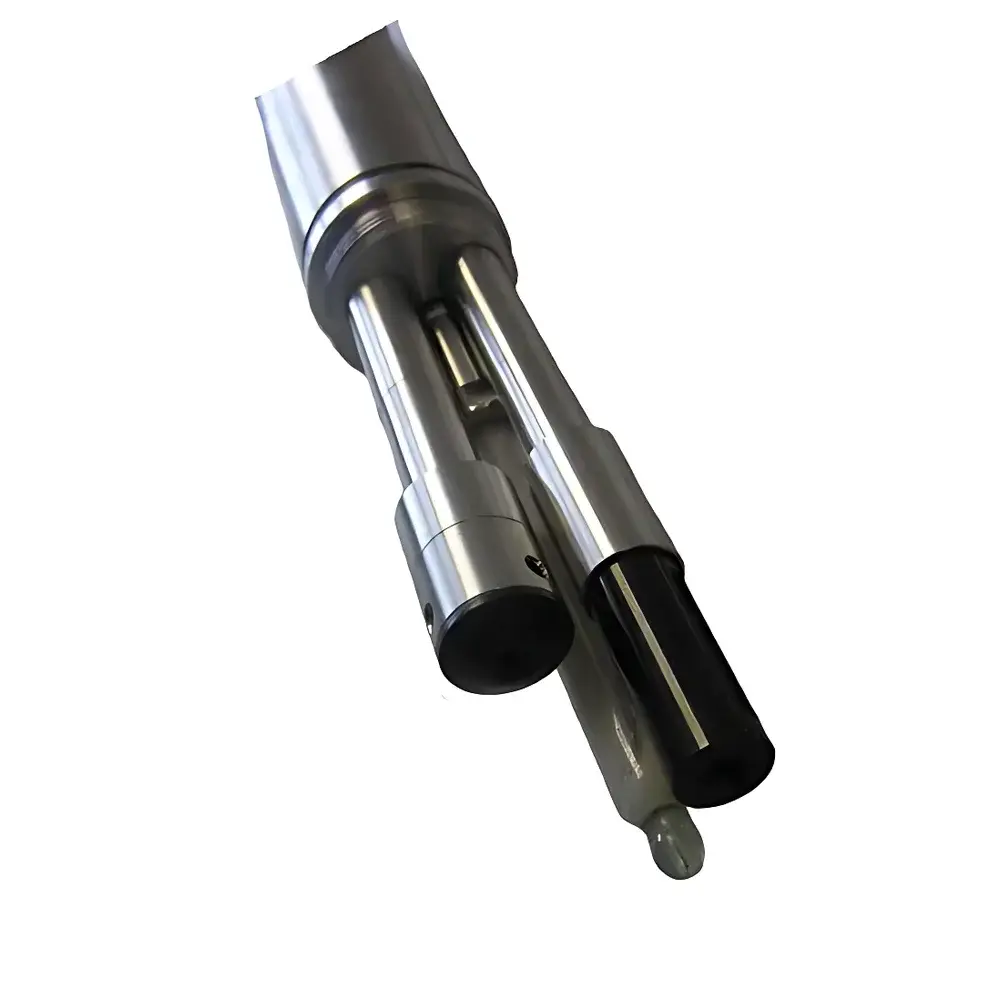
AQUALABO 575 MP1 Portable Multiparameter Water Quality Meter with Level Sensing
| Brand | AQUALABO |
|---|---|
| Origin | France |
| Model | 575 MP1 |
| Instrument Type | Portable |
| Temperature Range | –5 to +50 °C (optional: –5 to +70 °C) |
| pH Range | 0–14 |
| Conductivity Range | 0–200,000 µS/cm |
| Water Level Range | 0–100 m |
| Accuracy (Level) | <0.05% FS |
| Accuracy (Temp) | <0.1 °C |
| Accuracy (Conductivity) | <0.5% of reading, min. 2 µS/cm |
| Accuracy (pH) | <0.02 |
| Resolution (Level) | 1 cm (standard), 1 mm (optional) |
| Resolution (Temp) | 0.1 °C (standard), 0.01 °C (optional) |
| Resolution (Conductivity) | 0.0005% FS |
| Resolution (pH) | 0.01 |
| Long-term Stability (Level) | <0.05%/year |
| Long-term Stability (Temp) | <0.02 °C/year |
| Cable Length | up to 500 m |
| Probe Depth Rating | 100 m |
| Housing Material | 316 stainless steel & titanium alloy |
| IP Rating | IP68 |
| Power | Internal rechargeable Li-ion battery (rated for ~3 million measurements at 2-min interval ≈ 10 years) |
| Memory | 4 MB flash storage |
| Interfaces | RS-232, USB |
| Pressure Compensation | Integrated barometric compensation tube |
| Cable | 6 mm flexible UV-resistant PUR jacket with Kevlar reinforcement |
Overview
The AQUALABO 575 MP1 Portable Multiparameter Water Quality Meter with Level Sensing is a field-deployable, integrated sensor platform engineered for long-term, high-reliability monitoring of hydrological and physicochemical parameters in natural and anthropogenic aquatic environments. It operates on the principle of simultaneous multi-sensor acquisition—combining piezoresistive pressure transduction for water level (hydrostatic head), platinum resistance thermometry (Pt1000) for temperature, glass-electrode potentiometry for pH, and four-electrode conductivity measurement to minimize polarization effects and electrode fouling. The instrument implements real-time temperature compensation for conductivity using three configurable modes: standardized DIN EN 27888 correction to 25 °C reference, user-defined linear %/°C coefficient for site-specific salinity or contamination profiles, or raw uncorrected output for research-grade data logging. Its design reflects over two decades of AQUALABO’s engineering experience in groundwater and coastal hydrometry, prioritizing metrological traceability, environmental resilience, and operational autonomy.
Key Features
- Four-electrode conductivity sensor architecture ensuring high accuracy (<0.5% of reading), minimal drift, and immunity to electrode coating in turbid or organic-rich waters
- Integrated barometric pressure compensation tube enabling true absolute water level measurement without external atmospheric reference hardware
- Hermetically sealed IP68-rated housing constructed from marine-grade 316 stainless steel and titanium alloy—certified for permanent submersion at depths up to 100 m and resistant to seawater corrosion
- Ultra-low-power embedded Li-ion battery system rated for approximately 3 million discrete measurements at standard 2-minute sampling intervals—equivalent to >10 years of continuous operation without battery replacement or maintenance
- No consumables or desiccants required; fully sealed sensor stack eliminates routine calibration drift due to humidity ingress or electrolyte evaporation
- Intuitive menu-driven interface with multilingual support (English, French, Spanish, German); no external software required for basic configuration or data retrieval
- Flexible cable options up to 500 m using UV-stabilized, Kevlar-reinforced PUR-jacketed cable—mechanically robust and dimensionally stable under tension or thermal cycling
Sample Compatibility & Compliance
The 575 MP1 is validated for direct immersion in freshwater, brackish water, estuarine systems, and full-strength seawater (up to 55 mS/cm). Its titanium-conductive cell and chemically inert sensor surfaces resist biofouling, hydrogen sulfide passivation, and chloride-induced pitting. All electrical and mechanical interfaces comply with IEC 60529 (IP68), IEC 61000-6-2/6-3 (EMC immunity/emission), and ISO 9001-certified manufacturing protocols. Data integrity meets GLP-aligned requirements: timestamped measurements include sensor diagnostics (e.g., electrode impedance, temperature stability flag, pressure diaphragm hysteresis), and memory writes are atomic and wear-leveled across the 4 MB flash array. While not pre-certified for FDA 21 CFR Part 11, its audit trail-capable firmware architecture supports validation for regulated environmental monitoring programs under ISO/IEC 17025 or US EPA Method 1600-series compliance frameworks.
Software & Data Management
Data export is supported via native RS-232 serial protocol (ASCII command set) or USB virtual COM port, enabling integration with SCADA systems, custom Python/LabVIEW acquisition scripts, or third-party telemetry gateways (e.g., cellular or LoRaWAN modems). The onboard memory logs time-stamped tuples containing water level (m), temperature (°C), conductivity (µS/cm), pH, compensated conductivity (µS/cm @ 25 °C), TDS (mg/L, calculated per ASTM D1125), and diagnostic flags. No proprietary software is required; raw .CSV files can be extracted directly using terminal emulation tools. Firmware updates are performed via USB using signed binary packages, with rollback capability and CRC-verified installation. Optional PC-based AQUALABO ConfigTool provides advanced setup—including custom temperature compensation coefficients, alarm thresholds, and scheduled deep-sleep cycles—to extend battery life in low-event-rate deployments.
Applications
- Salinity intrusion mapping in coastal aquifers and barrier island systems, where precise vertical resolution (1 mm optional) enables detection of sharp freshwater–saltwater interfaces
- Long-term trend analysis of baseflow chemistry in karstic or fractured-rock aquifers, leveraging 10-year battery life and annual stability specifications (<0.05%/year level drift)
- Impact assessment of stormwater infiltration or wastewater leakage on shallow groundwater, correlating rapid pH/conductivity transients with rainfall intensity and antecedent moisture conditions
- Regulatory compliance monitoring for drinking water source protection zones, supporting ISO 5667-3 and EN ISO 5667-22 sampling protocols through traceable, timestamped parameter sets
- Calibration reference for fixed-station networks, serving as a mobile verification standard for permanently installed multiparameter sondes
FAQ
Does the 575 MP1 require annual recalibration?
No—its four-electrode conductivity cell, Pt1000 temperature sensor, and solid-state pH reference system are factory-calibrated with NIST-traceable standards. Field verification against certified buffer solutions (pH 4.01/7.00/10.01) and KCl standards (e.g., 1413 µS/cm) is recommended every 12–24 months depending on deployment severity.
Can the instrument operate autonomously in remote locations without telemetry?
Yes—the internal 4 MB flash memory stores up to 1.2 million timestamped records. With default 2-minute sampling, this supports >4 years of continuous logging before manual download is required.
Is pressure compensation mandatory for accurate water level readings?
Yes—absolute water level requires subtraction of atmospheric pressure. The integrated compensation tube eliminates need for co-located barometer, reducing spatial uncertainty and installation complexity.
What is the maximum cable length for reliable signal integrity?
Standard configurations support up to 300 m; extended 500 m cables use enhanced shielding and impedance-matched drivers to maintain RS-232 signal fidelity per EIA/TIA-232-F specifications.
How is TDS calculated from conductivity?
The device applies the empirical conversion factor of 0.64 (default) per ASTM D1125, adjustable by user between 0.55 and 0.71 to match local ion composition, and reports mg/L as NaCl-equivalent TDS.
Related Products







